




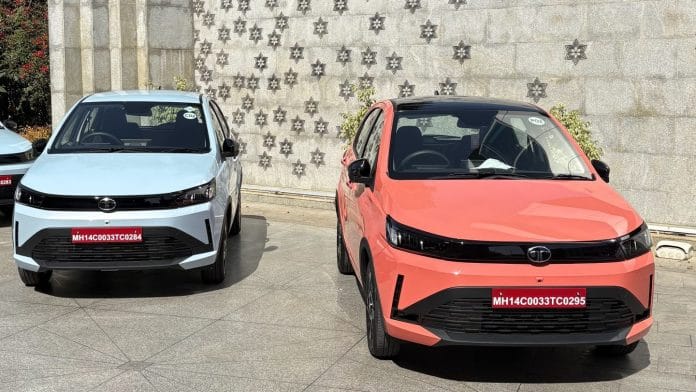

During my recent drive of the refreshed Tata Tiago in Bengaluru, I was impressed with the range of colours Tata Motors showcased for the hatchback. The featured colours for the electric were ‘Dehradun Dew’, a lovely shade of what one can call pistachio green, and a glossy beige called ‘SoBo Surge’. The colours for the internal combustion version were a pinkish-orange ‘Varanasi Vibrant’ and a lovely sky-blue shade called ‘Pangong Pulse’.
I might be revealing my age here, but that sky blue shade reminded me of the original Maruti 800 SS80, which was available in a similar colour. More than just the choice of colours, Tata Motors has also been innovative with the names it has chosen. The carmaker that puts a ‘Vocal 4 Local’ sticker on the rear windscreen has carried the theme to its colour options, too.
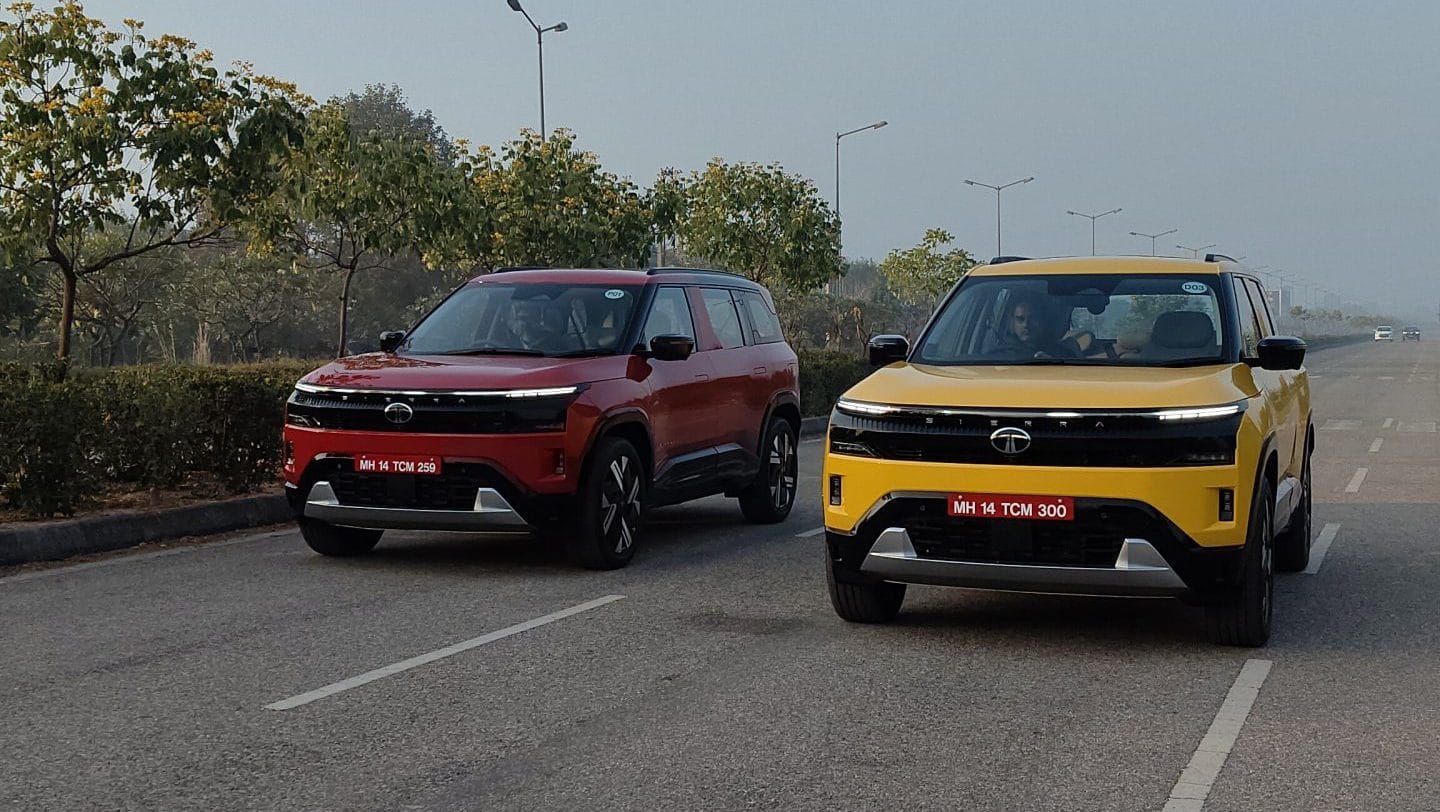
But in a sea of white and silver cars, do consumers really care for such bright colours? Speaking with Vivek Srivatsa, Chief Commercial Officer, Tata Passenger Electric Mobility, opened my eyes to some fascinating statistics. While the new Tiago has gone on sale recently, the Sierra SUV, which started sales at the start of the year, has seen buyers actively choose brighter colours.
“We have over 30,000 Sierras on the road by now, and 5 per cent of those are in Andaman Adventure (a yellow shade) and over 10 per cent are in Bengal Rogue. These were our ‘halo’ launch colours and also the colours we highlighted during the Indian Premier League,” Srivatsa told me, adding that usually colours such as yellow and red contribute only a couple of percentage points to overall sales.
“But the Indian car buyer wants to stand out now, that is why they are choosing these bright colours,” he added.
Also read: Why the new Tata Tiago EV doesn’t need a bigger battery
Darker colours
The fact remains that there has also been a huge uptick in the sale of darker colours in India, particularly for more premium vehicles. Tata Motors’ ‘#Dark’ range of vehicles, painted in black, has seen huge success.
“Even in darker colours though, buyers aren’t just going black, they’re trying different shades. In the Sierra, one of our most popular colours, which accounts for 27 per cent of sales, is ‘Munnar Mist’,” Srivatsa said. The shade is a dark green that reflects sunlight in such a way that it appears almost two different shades.
In the luxury segment, however, the story is slightly different.
“The choice of colour has always been integral to the car-buying process. While shades such as blue, white, black, and grey continue to sell the most, we are seeing a growing preference for more expressive colours that reflect personal style,” said Balbir Singh Dhillon, Country Head, Audi India. On performance sedans such as the S5 and RS5, reds and greens are in vogue.
But there is another factor in play, particularly when a vehicle costs over a crore.
“Neutral colours like white, black and grey are considered safer choices and have a higher resale value,” Dhillon noted, adding that some buyers liked the ‘sleeper aesthetic’—a vehicle whose performance belies its looks.
Advancements in paint and paint-shop technology have made it possible to get a fully customised vehicle straight from the manufacturer. Last year, I travelled to Munich with Mercedes-Benz, where I visited the ‘Manufaktur’ outlet in the middle of the city. At this outlet, customers of what Mercedes-Benz describe as ‘Top-End Vehicles’, such as the G-Class, GLS and S-Class, can play around to their hearts’ content. They can choose between thousands of options for exterior paints, interior upholstery, wheels, and even the colour of the stitching.
Kushan Mitra is an automotive journalist based in New Delhi. He tweets @kushanmitra. Views are personal.
(Edited by Prasanna Bachchhav)