




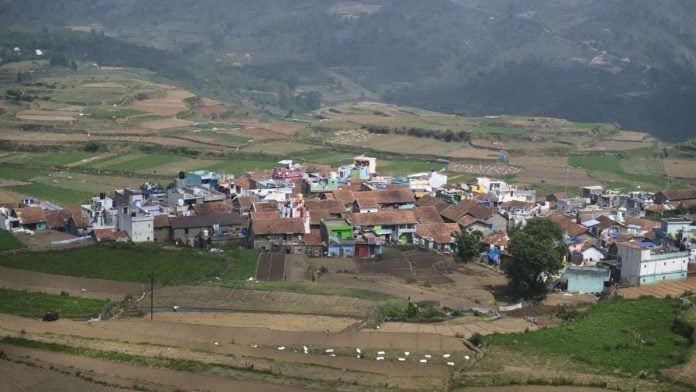

The Standing Committee on Housing and Urban Affairs presented its report on Census Criteria for Defining Urban Areas to the Lok Sabha on 25 September. The report addresses a question that affects millions of people: how should India define urbanisation, and what happens when a village begins to function like a town?
It highlights the gap between urban growth and administrative change. Of the 2,576 new Census Towns (CTs) identified in 2011, only 175 successfully transformed into towns, while 367 had been absorbed into existing urban settlements. Many other settlements have continued to be governed through rural institutions despite their changing character.
The report acknowledges that urbanisation on the ground does not always translate into a corresponding change in administrative status. It also recognises limitations in the existing Census Town criteria and the difficulties faced by settlements caught between rural and urban governance. Reading the report, however, leaves a mixed feeling. While it recognises important gaps and proposes several measures, it stops short of setting out a comprehensive approach to preparing India’s institutions for rural-to-urban transition.
What the Committee gets right
The report highlights limitations in the existing Census Town definition. The requirement that at least 75 per cent of male main workers be engaged in non-agricultural pursuits does not fully capture the changing nature of work, particularly women’s employment and the diversification of livelihoods. Similarly, calculating population density using revenue-area boundaries may not adequately reflect a settlement’s built-up character. These criteria remain useful for statistical identification, but the report rightly raises questions about whether they capture the complexity of contemporary urbanisation.
Additionally, the Committee moves beyond the definition debate. Its recommendations to examine the conversion of eligible Census Towns into statutory urban local bodies, maintain an updated database of conversions, and develop a framework for “Visionary Towns” recognise that changing Census criteria alone will not address the problem.
The proposed framework could extend basic urban infrastructure and relevant urban development schemes to settlements that continue to be governed by rural institutions. The suggested “Transition Units” at state and local levels could also help coordinate planning, financing and governance during the shift.
The first gap is the absence of a clear plan for managing the transition itself. Identifying a settlement as urban and changing its governing institution are two different processes. A Census Town does not automatically become a statutory town; that decision rests with the state. When a Panchayat transitions into Urban, responsibilities for services and ongoing development works will also change. Unless these responsibilities are mapped and transferred systematically, administrative reclassification will create uncertainty for citizens and gaps in governance.
The second gap is the limited integration of the Ministry of Panchayati Raj (MoPR) into the proposed response. Rural-to-urban transition is not solely an urban development issue. It directly affects Panchayati Raj institutions and the rural development departments responsible for delivering services and implementing schemes. The Ministry of Housing and Urban Affairs (MoHUA) and MoPR must jointly shape the transition framework, alongside other relevant ministries. Without this coordination, settlements risk falling between rural and urban administrative systems, particularly when responsibilities and scheme eligibility change.
The third gap is a missed opportunity to examine whether the constitutional framework adequately accommodates different pathways of rural-to-urban transition. Article 243Q provides for Nagar Panchayats in transitional areas. However, villages are not predominantly entering the urban system through this route.
The RGI figures cited in the Committee’s report highlight the importance of mergers with existing statutory towns. The Committee could have examined whether the existing constitutional and legislative framework adequately accommodates these different pathways, and whether any changes are warranted. Instead, its recommendations largely focus on improving existing arrangements. The question of whether the framework itself needs to evolve remains open.
The fourth gap concerns the implementation of the proposed “Visionary Towns” framework. The Committee recommends basic urban infrastructure, dedicated financial assistance and access to relevant urban development schemes for Census Towns and peri-urban areas. Yet it does not clearly establish how settlements should be identified, prioritised and prepared for urbanisation by states. This is particularly important given the ministry’s repeated position that urbanisation is a state subject. The Committee places responsibility on the ministry to ensure that statistical recognition is accompanied by financial devolution and institutional responsibility but does not sufficiently clarify how this will be achieved.
The fifth gap is the missed opportunity to link transition planning with fiscal incentives. With the Sixteenth Finance Commission Rs 10,000 crore Urbanisation Premium, the Committee could have explicitly connected this to its recommendations and highlighted the role of State Finance Commissions, constitutional bodies responsible for local government finances, in aligning resource allocation with rural-to-urban transitions. This is essential to ensure that newly urban areas receive adequate and predictable funding.
Also read: Fiscal consolidation anchors the Indian growth story after Covid-19
From recommendations to implementation
The Committee’s recommendations now need to translate into a coordinated national and state-level framework. The following steps can help turn these recommendations into a practical roadmap for managing India’s rural-to-urban transition.
First, each state should review rural-to-urban transitions over the past two decades to assess what happened to basic services, finances and administrative capacity. This should identify gaps in service delivery, funding and institutional responsibilities. These lessons can inform support for settlements that have already transitioned and help identify settlements likely to transition next, allowing states to prepare phased plans for infrastructure, financing and institutional readiness before urban notification.
Second, MoHUA and the Ministry of Panchayati Raj should jointly develop guidance and training for rural and urban local governments. Dedicated transition modules should prepare elected representatives, officials and communities for changes in responsibilities, administrative processes and service delivery. Training must cover the transfer of assets, accounts and ongoing works, alongside continuity of public services and access to relevant schemes.
Third, coordination must extend to other departments responsible for water, sanitation, housing, roads, health, education and livelihoods at both the Centre and state levels. The special committee at the Centre can provide a platform to align responsibilities and monitor implementation. Rural-to-urban transition should also feature in national deliberations among chief ministers, chief secretaries and NITI Aayog to build sustained political and administrative commitment.
Finally, the urbanisation premium should be treated as an opportunity to incentivise states to plan, rather than merely finance the consequences of conversion. The Centre and states should link transition policies to clear plans for infrastructure, staffing, service delivery and fiscal support. Finance Commissions can help shape these incentives, while state governments retain the flexibility to choose appropriate transition pathways for their settlements.
India needs to prepare its institutions, finances and public services for urbanisation well before villages acquire formal urban status. It requires institutions that anticipate change, coordinate investments and ensure continuity of public services.
The Committee has opened an important policy conversation. Its recommendations must now translate into clear responsibilities, financing arrangements and action. For Viksit Bharat, the challenge is not merely to recognise urbanisation, but to prepare settlements and their governing institutions for it. India’s villages will continue to change; governance must be ready to change with them.
Pallavi Laungani is a PhD student at O.P. Jindal Global University, researching rural-urban transitions in India, with a focus on institutional change, local governance and human development.
Tarun Arora is an Associate Dean and Associate Professor at O.P. Jindal Global University, specialising in economics, urban policy and public policy.
Views are personal.
(Edited by Saptak Datta)