



A Dalmatian named Pepper was stolen from a family farm in Pennsylvania in the summer of 1965. Her owner, recovering in hospital from a heart attack, spotted her in a newspaper photograph of a dealer’s truck crammed with dogs. By the time the family traced her, Pepper had been sold to a hospital and had died in an experiment.
The public outrage helped bring about America’s first federal law regulating the treatment of laboratory animals. It established safeguards governing where animals could come from and how they were to be kept.
India never needed a Pepper.
As early as 1960, India recognised that scientific experimentation cannot be left entirely to the discretion of those conducting it. The Prevention of Cruelty to Animals Act provided for a committee to oversee experiments and ensure that animals were spared unnecessary pain. It required smaller animals to be preferred where larger ones were not necessary, and experiments to be avoided where other means could achieve the same purpose. These principles anticipated what the scientific world now calls the 3Rs: Replacement, Reduction and Refinement.
India’s unexpected U-turn
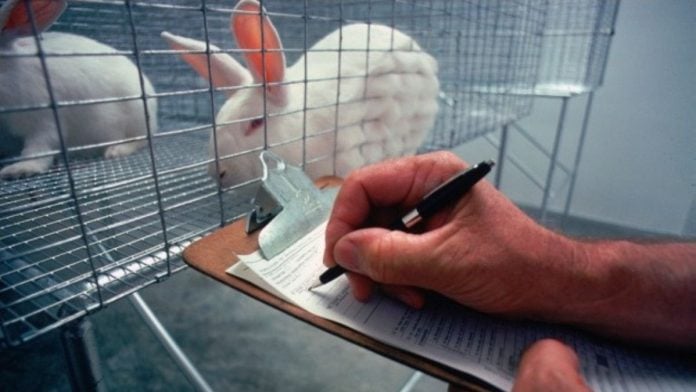
In 2011, I was authorised to inspect the animal house of a formidable medical institute in Uttarakhand. What I found would have embarrassed any institution claiming to practise science. Animals were housed in filthy cages, their food and water contaminated with urine and faeces. Records were missing, rabbits suffered from untreated skin disease and fractures, and there was little evidence of veterinary care.
Animals that survived experiments were reportedly handed to sweepers to be dumped in the forest. On a subsequent visit, I found a freshly killed king cobra in the institute’s toxicology laboratory. This was a medical institution, not a roadside circus. Following my report, the Committee for the Purpose of Control and Supervision of Experiments on Animals ordered the institute to stop experimenting on animals till necessary amendments were made. That is what regulatory oversight looks like when it works.
India was remarkably progressive for its time. It is rather unfortunate that we now seem determined to correct that mistake.
A law, of course, is only as good as the will to enforce it. When inspectors began entering Indian laboratories, they found animals sick and dying in their own filth, some confined in cages too small to turn around. There were often no reliable records of where the animals had come from, what had been done to them, or why. Experiments were repeated without any apparent scientific justification. Suffering was meticulously inflicted, but not always meticulously documented.
The rules that followed were designed to address these failures. Laboratories had to register. Animals had to come from registered breeders so that their origins could be traced. Experiments involving larger animals required approval from the committee at the Centre. These were not arbitrary bureaucratic inconveniences. Each safeguard was an answer to something that inspectors had actually witnessed.
The draft rules published this month speak generously of the 3Rs. Unfortunately, while paying tribute to these principles, they appear to dismantle several of the safeguards that gave them meaning. In 1960, we legislated to protect animals from bad science. These draft rules propose to protect bad science from scrutiny.
The most alarming change concerns where experimental animals may come from.
The draft permits stray animals to be used in experiments with permission from an authority it does not clearly identify. Farm animals, birds and fish may be procured from unregistered sources, including open markets, subject to institutional approval. The very safeguards intended to prevent animals of unknown origin from entering laboratories are being relaxed.
America had to lose Pepper to understand why this mattered. Why is India reopening a door that other countries were shamed into closing?
Pepper, at least, had a family looking for her. A street dog in India may disappear without anyone knowing where it went.
Also read: Why India and Sri Lanka need a wildlife partnership
Oversight without independence
Then there is the question of who gets to decide what may be done to these animals.
The Act envisaged a central committee with responsibility for overseeing animal experimentation. The draft shifts substantial authority to committees within the institutions conducting the experiments. These committees will approve most experiments, while institutional veterinarians will play a decisive role in assessing the suffering involved.
Institutional ethics committees have an important role in research oversight. But they cannot be treated as a substitute for independent scrutiny. A laboratory cannot be expected to serve simultaneously as applicant, approving authority and principal judge of its own compliance. That is not meaningful oversight. It is an invitation to mark one’s own examination paper.
There is also a major concern that these rules allow subordinate legislation to weaken the very powers Parliament gave to a statutory committee. The law intended laboratories to be answerable for their experiments, not merely to one another.
Even the definition of a laboratory has been broadened. The draft contemplates facilities that are not wholly enclosed or covered, as well as mobile facilities in which animals may be housed, bred or used for experiments.
Combine such facilities with animals procured from streets and markets, whose health and exposure histories are unknown, and the implications extend beyond animal welfare. Inadequate containment and disease screening can increase the risk of zoonotic infections, potentially affecting laboratory personnel and the wider community.
The danger does not end with disease. It extends to the integrity of science itself.
Also read: Elephants were India’s first ambassadors. Travelled thousands of miles to impress emperors, popes
Cruelty in the name of science
Animals used in experiments are bred under controlled conditions for a reason. Their age, genetic background, diet, health and previous exposures can all influence how they respond to a drug or chemical. An animal taken from a street or market arrives with an unknown history of infection, stress, nutrition and environmental exposure. Any of these factors can distort experimental results, concealing a genuine danger or suggesting one that does not exist.
An experiment can be cruel and scientifically worthless at the same time. Indeed, poor animal welfare and poor science often travel together.
This matters to every person who depends on the safety and reliability of medical research. The results of poorly controlled experiments can influence decisions about medicines, treatments and human health. The public deserves better than research compromised by avoidable uncertainty.
And all this is happening at a time when science is beginning to question its long dependence on animal experiments.
Advances in human-cell-based systems, organoids, organs-on-chips and computational methods are creating opportunities to study human biology more directly. These methods are not yet substitutes for every animal experiment, but in appropriate applications they can provide information that animal models cannot reliably predict. The future of biomedical research lies in developing and validating better methods, not in making it easier to procure more animals.
India once understood this. It was among the first countries to prohibit animal testing for cosmetics. It demonstrated that scientific progress and compassion need not be adversaries. Yet the current draft seems to assume that the main obstacle to scientific advancement is the inconvenience of protecting animals.
It is a peculiar understanding of progress. At a time when the world is investing in ways to move beyond animal experimentation, India is considering ways to make it easier, less accountable and potentially less reliable.
Scientific progress is not measured by how much suffering we can justify, but by how much suffering we no longer need to inflict. When a nation makes cruelty easier in the name of science, it advances neither science nor civilisation.
Gauri Maulekhi is a leading animal welfare expert, celebrated for over three decades of transformative legal advocacy and policy reform. She tweets @gauri_maulekhi. Views are personal.
(Edited by Saptak Datta)