



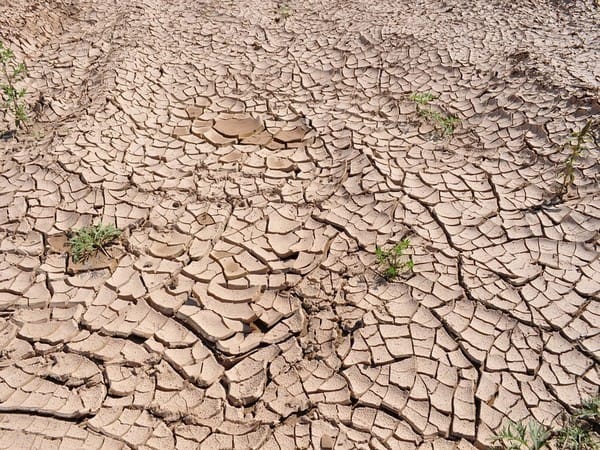
Rural Maharashtra is reeling under a severe drought. Farmers want compensation, and people need work. The lack of employment has led to a steep decline in wage rates, while migration to cities has surged.
It is not just agricultural labourers who are desperately seeking work. Eighty per cent of Maharashtra’s farmers are small and marginal, relying heavily on rain-fed agriculture. Consequently, they also work as agricultural labourers outside their own farms. These farmers need work just as much.
Against the backdrop of this drought, two glaring contradictions emerge in the state. Being jobless because of a lack of rain is understandable. However, people from areas with perennial water sources are migrating to regions with far less water in search of work. This is a major anomaly.
The second contradiction involves the Employment Guarantee Scheme (EGS), introduced by Maharashtra in 1972 and subsequently given a legislative framework under the Maharashtra Employment Guarantee Act, 1977. The state’s established, so-called farmer leadership has vehemently opposed the effective implementation of EGS (which later became MNREGA and now called as VB G RAM G) arguing that this scheme raise wages and creates a shortage of labour in agriculture. Yet, it is these very schemes that have helped drive crop diversification in many villages, enabling them to generate large-scale employment during the current drought.
A closer look at these two contradictions points to concrete solutions for tackling the drought.
The sugarcane paradox
In the villages of Yevati and Suste in Solapur district, every farm has perennial water. However, small farmers and labourers from these villages are migrating for wage work to neighbouring Khandali, which has comparatively much less water.
The reason is that Yevati and Suste, blessed with perennial water, predominantly cultivate sugarcane. This crop requires very few labourers, and only for a short period, resulting in minimal employment generation.
In Mundhewadi village of Mangalwedha taluka, some farmers grow sorghum (jowar) because of the lack of water, while others with abundant water grow sugarcane.
This season, the complete absence of rain meant that jowar was not sown at all. As a result, farmers and agricultural labourers had to leave the village in search of work, as sugarcane cultivation requires very little labour.
People from sugarcane-growing belts frequently travel to villages such as Khandali, Katphal and Shetphal in search of work. These villages have significantly less water but cultivate vegetables. The contradiction is stark.
There is no lobby representing farmers who generate far greater prosperity from every drop of water than sugarcane growers, while distributing that prosperity among a larger population. They have virtually no influence on Maharashtra’s policymaking. Instead, the state’s politics is dominated by the sugar barons’ lobby, which continues to push the questionable argument that sugarcane generates rural employment.
In Dharashiv district, the household of a farmer with 20 acres under sugarcane showed few signs of economic prosperity. Meanwhile, vegetable growers with barely a quarter-acre of land and access to significantly less water were living in far greater affluence.
If this is the case, why don’t sugarcane farmers shift to vegetable cultivation?
The answer is somewhat complex and warrants a separate discussion. But the larger point is clear: Maharashtra has used a scarce resource such as water extremely inefficiently when measured against the parameters of economic value addition and employment generation, no matter what the sugar lobby claims.
Shelgaon’s employment model
To understand the second major contradiction exposed by the current drought, one must visit Shelgaon in Barshi taluka.
The story of Shelgaon is incredibly telling. During the devastating drought of 1972, percolation tanks were constructed in the village through EGS work. Today, the village boasts four large tanks and about 10 small and medium-sized ones. All this was achieved through EGS. The main percolation tank alone spans 100 acres. These water bodies significantly raised groundwater levels across more than half of the village’s agricultural land. While surrounding villages are reeling under the drought, Shelgaon remains relatively insulated from its effects.
Water completely transformed the face of Shelgaon’s agriculture. Farmers who grew only rain-fed jowar and chickpeas before 1972 have shifted to short-duration, high-profit orchards and vegetable farming. Shelgaon became a major hub for papayas, which were transported directly to Mumbai, Panvel, Hyderabad and Vijayawada. With assured water, farmers reportedly began earning up to Rs 30,000 in just 30 to 60 days from a mere 10 gunthas (0.25 acre) of land through crops such as okra, cluster beans and leafy vegetables.
Much like the dairy business, the daily and weekly cash flow from vegetables helped ease the severe financial struggles of small farmers. They managed to afford higher education for their children, build concrete houses and purchase tractors and drip irrigation systems without falling into debt.
Milind Murugkar writes on economic issues; Satish Karande is a consultant for the Sustainable Agriculture Project at Maharashtra Knowledge Commission Ltd. Views are personal.
(Edited By Raunaq Lekhi)