





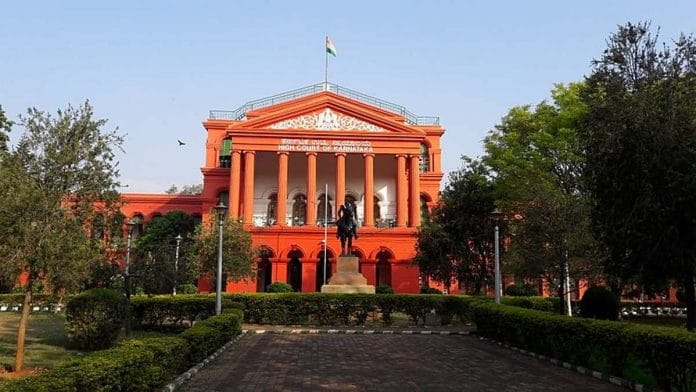

New Delhi: The Karnataka High Court last week permitted the parents of a 23-year-old woman with severe developmental and intellectual disabilities to proceed with a total abdominal hysterectomy—a major surgical procedure to remove the uterus and cervix via an open abdominal incision.
While allowing the parents’ petition, the court clarified that the 17 June order did not amount to the curtailment of the woman’s reproductive rights on the grounds of disability, but “that the proposed intervention is in the best interests of the patient”.
A single-judge bench of Justice Suraj Govindaraj said, “It is only because the patient is demonstrably incapable of exercising informed decision-making and because the overwhelming medical evidence indicates that the proposed intervention would serve her welfare, health, dignity and safety that this Court considers it appropriate to grant the permission sought.”
The parents—and primary caretakers—of the woman ‘X’ had approached the court in April this year via writ petition seeking permission to have the surgery conducted. It was their contention that their daughter’s intellectual and developmental difficulties made her incapable of maintaining menstrual hygiene. She has “irregular and unpredictable” menstrual cycles and “her inability to maintain personal hygiene during such periods has resulted in recurring infections, intermittent episodes of fever and prolonged medical complications”, they had added.
Citing the situation’s considerable “physical, emotional and psychological strain” upon them as sole caregivers, the parents said the situation could deteriorate further with the passage of time and their own advancements in age.
Also Read: SC draws hard line on foeticide law, says paperwork lapses aren’t minor errors but key violations
What the medical report said
On 2 June, the court had ordered the constitution of a multidisciplinary medical board to assess the woman’s condition and capacity, and report upon the necessity and advisability of the procedure sought. Justice Govindaraj found this necessary “considering the nature of the relief sought and the serious medical, ethical and legal issues involved”.
The medical board—consisting of a psychiatrist, a psychologist, a gynaecologist/obstetrician, a neurologist, a radiologist and an anaesthesiologist—recommended “that the patient may undergo a Total Abdominal Hysterectomy”.
The report opined that the biologically 23-year-old woman had the social age of “approximately 5 years and 4 months”, and suffered from “Global Developmental Delay associated with Moderate Permanent Intellectual and Developmental Disability, having an IQ of 36”.
This condition includes delays across multiple developmental areas, and points to a severe neurodevelopmental condition affecting how a person learns, understands, communicates, and manages daily life. It is a lifelong condition marked by impaired intellectual functioning and severe limitations in daily living skills. Further, she was found to be incapable of independently maintaining her menstrual hygiene, and in need of continuous assistance.
She was also deemed medically fit to undergo the proposed surgical procedure by the anaesthesiologist.
The court observed that while it had given the medical report its “anxious consideration”, it must approach the matter with “utmost caution, sensitivity and circumspection”.
“The issue involved in the present proceedings is not merely a medical question. It concerns the bodily integrity, dignity, autonomy, health and long-term welfare of a person suffering from significant intellectual and developmental disabilities,” the Court said.
In a landmark disability rights case, Suchita Srivastava vs Chandigarh Administration (2009), the Supreme Court had held that a woman’s reproductive choices are protected under Article 21, and that mental disability does not by itself take away that autonomy.
The apex court had distinguished between mental illness and intellectual disability, while holding that a person with intellectual disability is not automatically incapable of making reproductive choices. A subjective inquiry based on the best interests of the woman was preferred rather than a “substituted judgement” approach.
Justice Govindaraj cited the Supreme Court’s ruling, reiterating that the constitutional protection of reproductive autonomy cannot be denied merely on the basis of an intellectual disability. “The constitutional values of dignity, bodily integrity and autonomy recognised in Suchita Srivastava continue to guide the exercise undertaken by this Court,” he said.
Differentiating the present case from that of Suchita Srivastava on the basis of the medical report and other material placed before it by the parents, the Court found the woman to be “incapable of exercising meaningful informed consent”, and further “unable to independently evaluate the consequences of medical decisions affecting her person”.
‘Parens patriae’
Justice Govindaraj invoked the court’s parens patriae jurisdiction and held it necessary to independently determine which course of action would advance the best interests of the concerned person. Parens patriae is Latin for ‘parent of the country’, and refers to the inherent responsibility of the court to act as guardian for those who cannot speak for themselves.
The court decided to undertake a “holistic assessment of the medical, physical, psychological, emotional and social consequences of the proposed intervention”, highlighting the need to balance the woman’s bodily autonomy with the practical realities of her condition.
While holding that parental inconvenience cannot be a determining factor, the court added that the parents’ concerns were relevant to the overall wellbeing of the woman, and were supported by the multidisciplinary medical board. It also noted several pertinent factors to be permanent in nature—the woman’s disability, effect of the procedure, and the parents’ responsibilities.
“The petitioners have specifically expressed concern regarding their advancing age and their ability to continue providing the same level of care in future. Such concern reflects the reality of a lifelong caregiving responsibility towards a person suffering from severe developmental and intellectual disabilities,” the court said.
Saying that the medical board had not found any contraindication to the procedure or suggested any less intrusive long-term alternative, the court allowed the parents’ petition and issued directions to the Medical Superintendent to make the necessary arrangements. Further, pre and post operative care was mandated along with psychological support for the woman.
(Edited by Mannat Chugh)
Also Read: From virtue to autonomy, SC just redefined Victorian concept of chastity for the digital age