






New Delhi: Coming down heavily on Maharashtra’s power regulator in a case involving Adani Power Ltd (APL), the Appellate Tribunal for Electricity (APTEL) described its actions “deplorable and reprehensible but also contemptuous in nature”.
A statutory body under the Electricity Act, APTEL hears appeals against orders from Central Electricity Regulatory Commission (CERC), State Commissions (SERCs), and the Petroleum and Natural Gas Regulatory Board.
In its order on 19 August, APTEL bench of Officiating Chairperson Seema Gupta and judicial member Virender Bhat pulled up the Maharashtra Electricity Regulatory Commission (MERC) for holding fresh hearings in settled issues in a case involving Adani Power Ltd (APL). Setting aside a MERC order from 2020, APTEL directed immediate issuance of tariff orders within six weeks to ensure full compensation to Adani Power for domestic coal shortages at its Tiroda power plant.
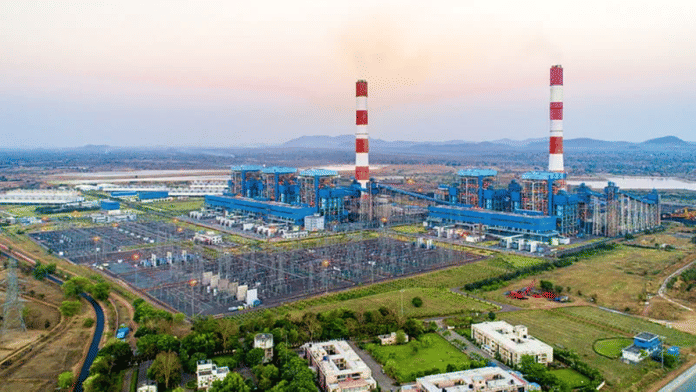
Operating under four power purchase agreements (PPAs) signed with the Maharashtra State Electricity Distribution Company Ltd (MSEDCL) between 2008 and 2013, Adani Power’s 3,300 MW coal-fired generating station at Tiroda faced domestic coal supply shortages following shifts in national coal allocation policies.
Although the MERC initially approved the shortfall under the federal SHAKTI Policy as a ‘change in law’ event in February 2019, it heavily restricted the scope of relief, leading to a legal battle. MERC owed Adani Power compensation due to changes to the domestic coal supply assurances under the New Coal Distribution Policy of 2007, which along with the introduction of the federal SHAKTI Policy constituted a contractually recognised ‘change in law’ event. Under the terms of their PPAs, this legally required the state utility to restore Adani Power to the same economic position it would have been in had the policy changes not occurred.
To minimise the payout, MERC capped the eligible compensation by restricting the domestic coal shortfall to a maximum of 25 percent of the Assured Coal Quantity (ACQ).
In September 2020, the APTEL ruled in favor of Adani Power, holding that restricting coal shortfall compensation to an arbitrary 25 percent cap ran “against the basic principles of restitution under the change in law provisions of the PPAs”.
The tribunal ordered that compensation be computed based on the “SHR (Station Heat Rate) specified in the MERC MYT Regulations, 2011 or the actual SHR whichever is lower and actual Gross Calorific Value (GCV) of coal as received as the plant site”.
It then sent the matter back to the MERC with a direct instruction to “issue the consequential orders as expeditiously as possible within a period of three months”.
Rather than executing this directive, the tribunal order noted that MERC launched a “fresh full-fledged hearing” upon receiving the case. To analyse this overstep, APTEL’s judgement unpacked Order 41, Rules 23 and 23A of the Code of Civil Procedure, 1908, which govern how appellate courts return cases to lower forums.
Meanwhile, Economic Times reported Friday that Maharashtra CM Devendra Fadnavis, without referring to any particular ruling, in a letter dated 21 August urged PM Narendra Modi’s intervention with the apex appellate body for the power sector, stating that a slew of its recent rulings favoured private power companies over state-owned power companies.
When a remand is ‘mechanical, restrictive’
Judicial member Virender Bhat, in the judgement in the Adani Power case, categorised remand orders into three distinct legal frameworks. The first, open remand is where an original decree is set aside, granting the lower court the power to “reopen the entire case, rehear the arguments and pass a completely fresh judgment”.
Second, limited remand is where the appellate court keeps the main appeal pending and sends “only a particular issue” back for a targeted hearing.
And third is consequential remand, where the court remands a matter exclusively for passing a consequential order.
Under this highly restrictive third framework, the appellate court clarified, “the power of the lower court becomes more specific, mechanical and restrictive”.
“In that case, the lower court cannot rehear the arguments or re-examine the facts or alter the substantive findings already given by the appellate court,” it added.
The MERC ignored these judicial boundaries. In its subsequent December 2020 order, the state regulator framed six brand-new issues, attempting to litigate questions that were never part of the original appellate remand.
Specifically, the MERC tried to deny compensation for any coal used for generation exceeding annual “normative PLF” (Plant Load Factor). It also sought to impose a degradation ceiling on the “as received” GCV of coal for periods after 1 April, 2020.
The APTEL ruled that the MERC had no authority to frame these issues. Since the question of capping compensation to normative generation was never raised in the original appeal, the tribunal stated that the Commission “ought not to have either framed such issue for its consideration or proceeded to give its findings on the same”.
“The Commission was only required to pass consequential orders in terms of the findings returned on the issues by this tribunal… and ought not to have conducted a fresh hearing thereby violating the judicial discipline,” it said, mincing no words regarding this breach of judicial hierarchy. “The conduct in doing so is not only deplorable and reprehensible but also contemptuous in nature. The commission has totally disobeyed and disregarded the directions issued by this tribunal… In our considered opinion, the Commission has committed contempt of this tribunal.”
While judicial member Bhat chose to “refrain from initiating any contempt proceedings” in the hope that the Commission would adhere to judicial discipline in the future, it made its displeasure abundantly clear. Setting aside the MERC’s non-compliant order, the tribunal ordered the state regulator to issue proper consequential orders in favour of Adani Power within a period of six weeks.
This is an updated version of the report
(Edited by Tony Rai)