





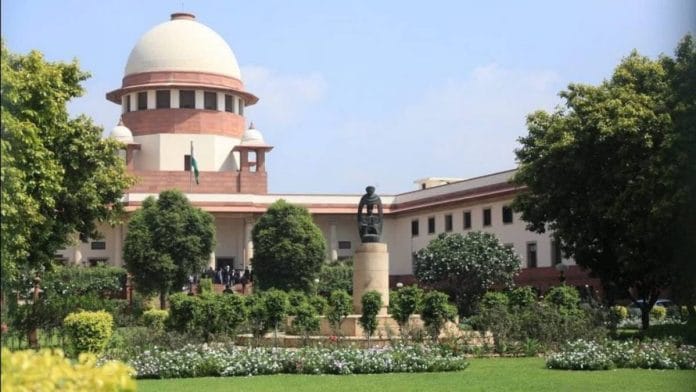


New Delhi: The Insolvency and Bankruptcy Code (IBC) cannot be used as a substitute for debt recovery in disputes that are predominantly contractual in nature, the Supreme Court has said, reaffirming the legal position that insolvency proceedings cannot be invoked in breach of contract cases.
The court’s 7 May ruling came while dismissing an appeal filed by Kerala-headquartered Dhanlaxmi Bank against borrowers and a real estate builder in a dispute stemming from a 2011 property transaction in Kolkata.
A bench of Justices P.S. Narasimha and Alok Aradhe upheld a National Company Law Appellate Tribunal (NCLAT) ruling setting aside the initiation of corporate insolvency proceedings against Emerald Mineral Exim, holding that the dispute did not involve a straightforward “financial debt and default” warranting action under the IBC.
The judgment warned that permitting the invocation of the IBC in such circumstances would amount to converting insolvency proceedings into a recovery mechanism, which is impermissible under the bankruptcy code.
“The Code must not be used as a tool for coercion and debt recovery by individual creditors,” the court said, noting that misuse of insolvency proceedings undermines the objective of resolving genuine financial distress and would amount to abuse of process.
The ruling reinforces judicial resistance to expanding the scope of the IBC beyond its intended purpose and serves as a reminder to lenders that complex real estate‑linked transactions and contractual disputes cannot be short‑circuited through insolvency proceedings.
Also Read: India’s Insolvency & Bankruptcy Code is struggling to deliver. It’ll take a decade to clear backlog
Background of the dispute
The dispute arose from a 2011 transaction involving a unit in the Synthesis Business Park project in New Town, Kolkata. Emerald Mineral Exim entered into an agreement with Bengal Shrachi Housing Development Ltd for the purchase of the unit, following which Dhanlaxmi Bank sanctioned a loan of Rs 1.5 crore to the company.
Under a quadripartite agreement between the bank, borrower, builder, and a state development authority, the borrower directed the bank to disburse the loan amount directly to the builder. Subsequently, Rs 1.34 crore was released to the builder in 2011.
Over the next few years, the borrower made partial repayments but later defaulted, leading the bank to classify the account as a non‑performing asset (NPA) in 2014.
In 2016, the bank initiated proceedings before the Debt Recovery Tribunal (DRT), which recognised the bank’s charge over the property, including the Rs 1.5 crore security deposit by the builder.
Following the transfer of pending winding‑up proceedings to the National Company Law Tribunal (NCLT), the bank sought the commencement of the corporate insolvency resolution process (CIRP) against the borrower under Section 7 of the IBC in 2019.
While the NCLT admitted the insolvency petition, holding that debt and default had been established, the NCLAT reversed the decision in 2022.
The appellate tribunal held that since the bank had not disbursed funds directly to the corporate debtor (borrower), the bank could not be treated as a financial creditor under Section 7 of the IBC. The NCLAT also cautioned against the use of the IBC as a coercive recovery tool.
The bank then approached the Supreme Court in 2022 against the NCLAT’s assessment.
Supreme Court’s reasoning
The Supreme Court dismissed the bank’s appeal and agreed with the NCLAT’s assessment, noting that the structure of the transaction showed that the bank’s disbursement was intrinsically linked to the builder’s performance in completing and transferring the property.
The court observed that the obligations flowing from the arrangement were intertwined with the contractual duties of the builder, including construction, delivery, and transfer of the unit, and could not be treated as a simple loan‑default relationship between lender and borrower.
“This is not a case of a straightforward financial debt-default warranting initiation of CIRP,” the bench held, adding that the dispute was predominantly contractual and best addressed in recovery proceedings already pending before the DRT.
Reiterating earlier precedents, the court emphasised that the IBC is a collective insolvency resolution mechanism, not a forum for enforcing individual contractual claims or compelling repayment.
Alfreza Ahmed is an alum of ThePrint School of Journalism, currently interning with ThePrint.
(Edited by Sugita Katyal)