







New Delhi: Drawing curtains on the litigation over the historic Devaraja Market and the Lansdowne Building in Mysuru, Karnataka, the Supreme Court Thursday ordered protection of the two heritage structures.
A bench of justices J.B. Pardiwala and K.V. Viswanathan made it clear that the Mysuru City Corporation will consider the reports of IIT Roorkee and INTACH on the conservation of the 19th century heritage landmarks.
The two bodies had given their reports to the court, pursuant to an inspection of the two sites on the court’s direction.
“The state agencies may have their own conservation plan, but the recommendations and suggestions of these expert bodies should be taken into consideration,” the bench told the state’s counsel, as it disposed of an appeal filed by a journalist, challenging the Karnataka High Court decision of 2023 that gave a go-ahead to the corporation to demolish the old structures to replace them with new ones.
The court further clarified that its view to protect the two heritage structures was not “prima facie” but “firm” and hoped that the state would not make any u-turn from its commitment to the court to repair and restore them.
Devaraja Market and Lansdowne Building are Mysuru’s iconic heritage spots.
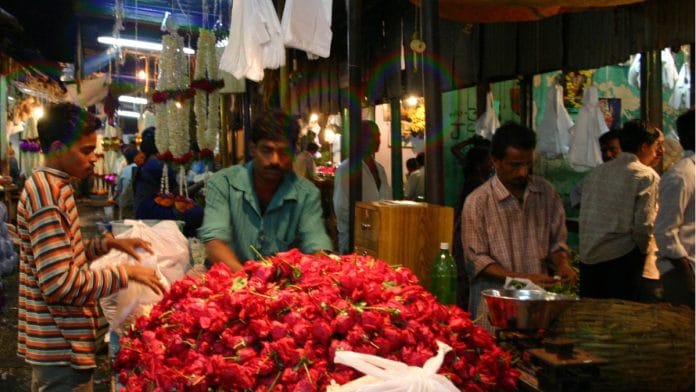
Built around 1886, the Devaraja market represents Mysuru’s everyday civic memory and is famous for sandalwood, spices and traditional goods.
Constructed in 1892, in honor of the visiting Viceroy and Governor-General Lord Lansdowne, the Lansdowne building is a two-storey structure, featuring European-influenced arches and columns.
For the Mysuru residents and tourists who visit the city during Dussera festivals, the two buildings are strongly identified with the annual rituals performed there with fanfare. The buildings offer space to the crowd that gathers to witness the grand procession taken out during the celebration.
Lawyers associated with the case say the top court order would serve as a guiding principle for protection and preservation of all heritage buildings, sites and structures that are in shambles or in some form of dilapidation or under encroachments or under any other threat in other states.
The two structures were at the center of a long-standing legal battle that commenced soon after municipal authorities decided to demolish them.
In 2019, in the face of accident risks, the city corporation proposed to pull down the iconic structures. Growing demands of vehicular traffic was another reason behind its plan to construct new buildings that would have been a replica of the old ones.
Journalist G. Satyanarayana, however, challenged the corporation’s move before the high court. But on 9 August, 2023, the high court rejected the PIL, which sought to restrain the demolition and reconstruction of Devaraja Market and Lansdowne Building.
Without losing much time, Satyanarayana preferred an appeal in the Supreme Court.
Before giving its final opinion in the matter, the top court invited experts for their view on whether the buildings could be protected, while ensuring their longevity.
It first issued a notice to INTACH. In its report submitted last August, INTACH affirmed the buildings were designated heritage structures in the masterplan and this signified their importance. For their preservation, INTACH advised stringent development controls as followed for the Mysuru Palace.
Upon the Supreme Court’s order, IIT Roorkee too constituted a team and inspected the site in October 2025. Its report disclosed that about 70 percent of vertical load-bearing elements in the two buildings were in mild-to-moderate distress and were repairable.
IIT Roorkee’s findings were consistent with INTACH’s report.
It flagged “insensitive and non-engineered alterations” in them and highlighted improper maintenance and upkeep of the buildings.
Both INTACH and IIT Roorkee asserted that the structures could have been saved and preserved with some thoughtful repairs and renovations.
However, the manner in which the repairs and additions have been undertaken in the past have led to their deterioration.
The bodies strongly recommended that the alterations and additions, such as construction of mezzanine floors, closure of many arches etc, should be removed at the time of execution of restoration works and all these buildings should be brought to their original architectural and structural forms.
Though the corporation had taken a “conscious decision to bring down the structures and rebuild them with the same façade and heritage look,” it took a u-turn after the IIT Roorkee report was placed before the court last month.
During a hearing on 30 July, the corporation said it had resolved to prepare a detailed project report (DPR) for the renovation and restoration of the two buildings.
(Edited by Amrtansh Arora)
Also Read: Karnataka judge’s remarks have riled legal community & HC live proceedings now come with disclaimer