





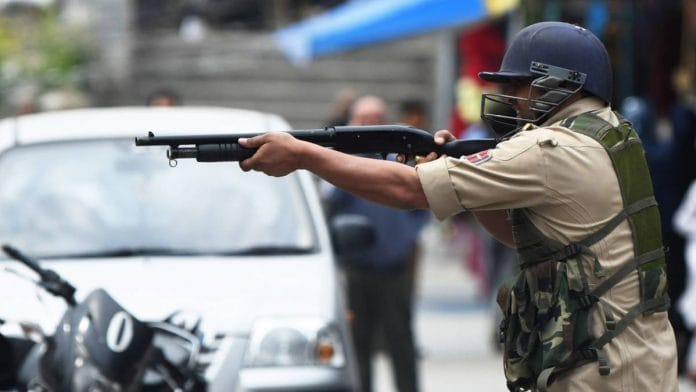


New Delhi: In response to a petition filed by former Intelligence Bureau (IB) chief Yashovardhan Azad, demanding a ban on the use of metal pellets as a crowd-control measure, the Supreme Court Thursday wondered if such a blanket ban can be imposed.
Azad’s petition was heard by a three-judge bench led by Chief Justice Surya Kant, which said use of pellet guns is part of the police’s graded response in exceptional circumstances.
Besides, the bench said Azad had not challenged the rules that permit use of such pellets, in exceptional circumstances, and in its absence, it cannot consider his prayer to ban them completely.
When advocate Vrinda Grover pointed out that no regulations on the same were available in the public domain, the bench directed the Solicitor General, appearing for the Centre, to place on record the guidelines that deal with crowd-control measures in case of protests.
However, until then, the bench said the ammunition log of the Rapid Action Force (RAF) deployed at Jantar Mantar on 20 July shall be preserved.
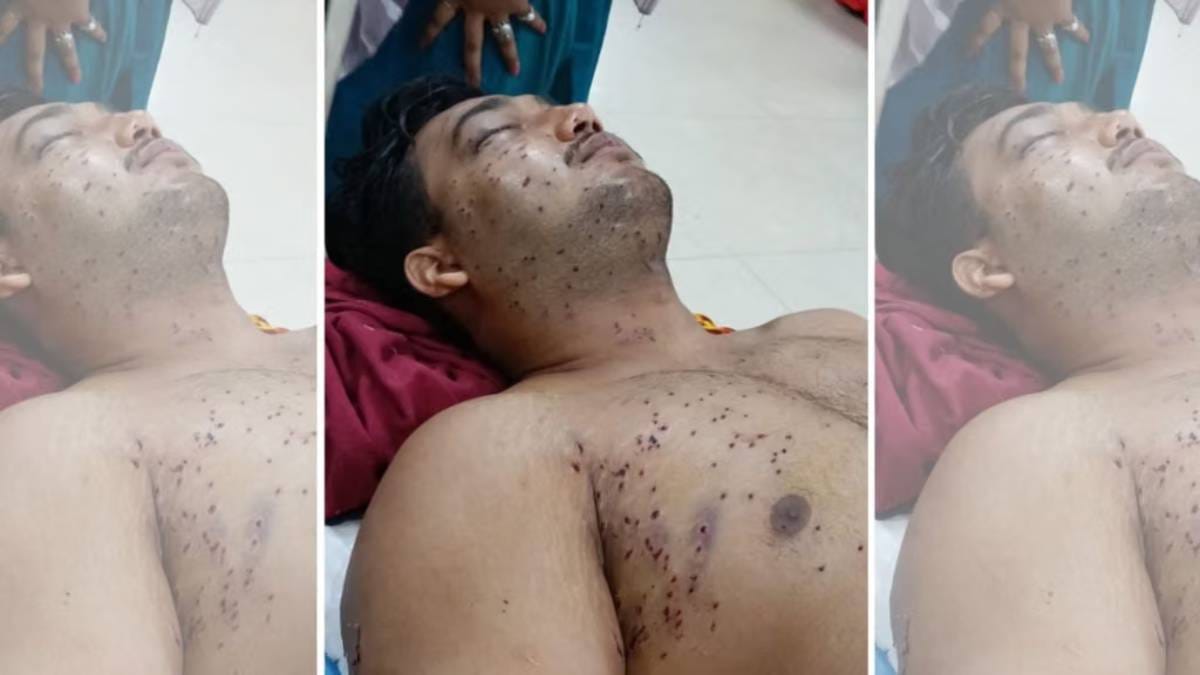
Azad has moved the top court against police excesses at protesters during the Sansad Chalo demonstration organised by the Cockroach Janta Party (CJP) on 20 July in New Delhi over the 2026 NEET paper leak.
Azad has specifically raised the issue of pellet usage. Two protesters who suffered injuries due to the pellets are co-petitioners in the case.
During the hearing Thursday, Justice Joymala Bagchi, a member of the bench, asked how the police can be banned from using pellets if they are permitted to use them in extreme situations, when violence does not get controlled by lathi-charge and teargas or an agitation is hijacked by miscreants for ulterior purposes.
At this, Grover clarified that her plea was limited to metallic pellets, prompting Justice Bagchi to once again observe that the court was not averse to examining her submission. However, for this she must show that there are rules outlining a graded approach to control or disperse a crowd, which allow use of pellets.
The judge also said that a bona fide protest may turn violent at any point due to infiltration by anti-social elements, and “graded responses” from law enforcement may be sometimes necessary.
On this, Grover agreed to modify the petition. Later, on her request, the bench directed the Delhi government to provide adequate treatment to the two co-petitioners who were injured due to pellets. Both are admitted at Lady Hardinge Medical College and have undergone surgery for removal of pellets from their bodies.
(Edited by Nida Fatima Siddiqui)