





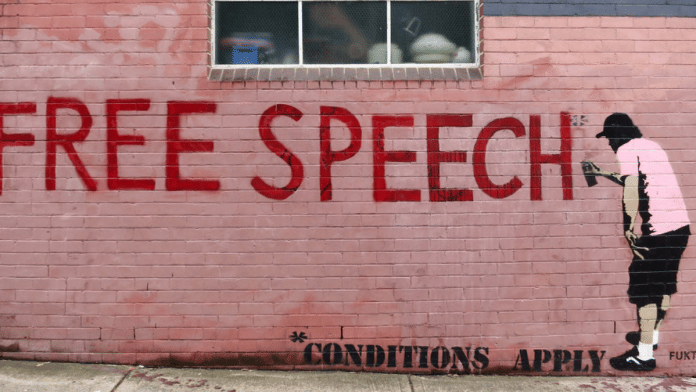


New Delhi: Emphasising that the fundamental right to freedom of speech and expression comes with its own set of reasonable restrictions, the Karnataka High Court has denied bail to four persons who were accused of posting derogatory comments against Kannada actor Darshan’s wife, Vijayalakshmi, on social media platforms.
Acting on a plea filed by Vijayalakshmi, a bench of Justice S. Rachaiah held that, “No doubt, freedom of speech and expressions are guaranteed to its citizens under the Constitution of India. However, every such right has its reasonable restrictions”.
Exceeding such restrictions or invading the personal liberty of another person, certainly would be an offence and it would be dealt with in accordance with law, the court said, adding that the accused committed a “heinous offence” and caused disrepute to the complainant’s character.
The court also said that social media has a responsibility to maintain decorum and instill confidence in the minds of the citizens, and those who are commenting on any issues there, have to maintain public peace and order.
“Baseless, false, frivolous and intimidating messages are required to be regulated” by (social media companies) themselves, the court said, adding that if this is not done, courts are required to secure the confidence of citizens of this country by interfering with such comments which violate the fundamental rights of citizens.
Rejecting the accused persons’ bail plea, the bench said courts are not just mute spectators, and that whenever interference is required, they will without hesitation safeguard the rights and interests of the public.
The case
Four men, identified as Ningaraj Gulappa, Nithin GB, Prashanth Kareepa Talavar and Chandrashekhar B, were booked for offences like publishing or transmitting obscene material in electronic form, criminal intimidation, and intentional insult with intent to provoke breach of peace, and for violating women’s dignity by criminalizing any word, sound, gesture, object, intended to insult women, under different provisions of the Information and Technology Act and the Bharatiya Nyaya Sanhita.
The case arose from a complaint filed by Vijayalakshmi, following the release of her husband’s film in December. She participated in a programme at Davangere in December last year, and made certain statements, which were allegedly misinterpreted and posted on different social media platforms by unknown people.
Vijayalakshmi then lodged a complaint with the Karnataka Police. The court noted that the investigation is still underway in this case.
The accused’s lawyers argued that the allegations made against them were of simply posting comments on social media, and not of uploading any contents or disseminating materials, so the provision under Section 67 of the IT Act, which penalises publishing obscene material, cannot be attracted in this case.
The act of posting a comment on an existing post without uploading or disseminating any obscene material does not satisfy the essential ingredients of the provision, the petitioners argued.
However, the prosecution said that the accused made objectionable and derogatory comments about Vijayalakshmi, and the investigation was still underway. Cyber crimes have become a menace to society, the prosecution argued, adding that people with devices in their hands nowadays feel entitled to do anything and to trouble innocent people online. In order to regulate such a menace to society, it is necessary to regulate it, the prosecution further said.
The court, while denying bail to the accused, said that while Vijayalakshmi was promoting the Kannada film “Devil”, the accused used “vulgar language” which could not be mentioned in the order.
“Such comments against women are ridiculous and unpardonable. The manner in which the petitioner commented on the complainant would indicate his mentality towards women in the country,” the court said.
(Edited by Gitanjali Das)
Also Read: Is freedom of speech a dangerous idea? JLF closing panel couldn’t find an answer