





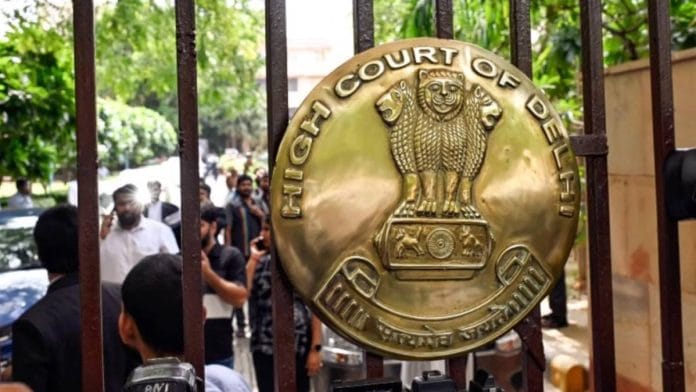


New Delhi: India’s Attorney General R. Venkataramani called Telegram a “Frankenstein” in a virtual hearing in Delhi High Court Wednesday as the Centre defended its unprecedented decision to temporarily ban the Dubai-headquartered messaging app used by 150 million Indians, amid a widening scandal over leaked NEET papers that affected affecting millions of students.
“This platform, because of its architecture, is a Frankenstein,” the A-G said, referring to Mary Shelley’s famous novel about a monstrous creation. “If a country like ours cannot take preventive action, then where do we go?”
The hearing, before Justice Tejas Karia, saw the government and Telegram’s lawyers at loggerheads over proportionality, legal procedure, and on whether blocking an app used by 150 million Indians to stop a handful of cheating rackets is defensible under Indian law.
The government also answered why Telegram alone was in the dock. Other social media intermediaries (Instagram, Whatsapp, X), the Solicitor General Tushar Mehta told the court, have their own filters, while Telegram does not.
“One Telegram account can create 40 bots but WhatsApp allows one. If one blocks a Telegram channel, the users simply migrate to another with the same members and a different name,” he said. “We have not touched any other intermediary. They are more powerful but we have not acted against them because they have their own filtration method,” Mehta said.
The ban, imposed by the Ministry of Electronics and Information Technology on 15 June under Section 69A of the IT Act, runs until 22 June. The government also issued a separate order requiring Telegram to disable its message-editing feature in India until 30 June, arguing the function was being used to fabricate evidence of leaks. Channels on the platform were allegedly operating openly under names such as “PAPER LEAKED NEET” and “Re-NEET 2026”, demanding sums ranging from a few thousand to several lakhs of rupees from candidates in exchange for purported access to the re-examination paper.
NEET-UG 2026 was held on 3 May for over 2.27 million young aspirants and cancelled days after on 12 May, after investigations showed significant overlaps between a pre-circulated guess paper and the actual question paper. Arrests were made including insiders from the National Testing Agency itself and the leak was traced to individuals involved in the question paper translation process, teachers and subject experts with legitimate access to exam material, who allegedly sold it to a network of middlemen. The paper was sold for up to Rs 12 lakh per candidate.
Why Telegram and not WhatsApp?
The bench pressed Solicitor General Tushar Mehta on why Telegram was banned and not WhatsApp—a question several experts, civil society organisations, and Telegram CEO himself have also raised. His answer: It is Telegram’s architecture that sets it apart, not just the behaviour of its users.
The government argued that the platform’s structural limits make channel-by-channel action ineffective and that the ban is “a measure of last resort, taken only after intermediate remedies, including take-down action coordinated by I4C (Indian Cyber Crime Co-ordination Centre), had been pursued.”
Mehta told the court that one Telegram account can create 40 bots, compared to one per user on WhatsApp. Remove one bot, and another appears under a different name and identifier, he said. He also pointed to Telegram’s privacy policy, under which deleting an account results in the deletion of all data, messages, and media, making it harder for investigators to trace past activity.
“Once one channel is blocked, the user is redirected to another channel where the members are the same,” Mehta told the court. The S-G added that Telegram had been flagged in MHA reports as “the most preferred platform for terrorist activities” and that other countries had taken action against it for similar non-compliance with their laws.
The S-G also made the backdating argument central to his case. Telegram’s message-editing feature, he said, allows users to post content on one date and alter timestamps to suggest it was posted earlier, creating false evidence of leaks. “Backdating is the real threat,” he said. The order disabling the editing feature, he noted, runs until 30 June, even after the exam on 21 June, which he said showed “application of mind” in how the restriction was framed.
‘How can you stop 150 million people?’
The bench did not let the government off easily. “How can we stop the rights of 150 million people just because one set of citizens are appearing in examinations?” Justice Karia asked. The court also invoked the Supreme Court’s ruling in Anuradha Bhasin, the foundational case on internet shutdowns, and questioned whether the proportionality test had been met.
“The question is, can you block somebody else’s rights to protect someone else’s rights,” the bench asked.
Senior Advocate Dhruv Mehta, appearing for Telegram, went after the blocking order itself. He argued that the Secretary’s order simply recited words from the statute without showing actual application of mind to the material. “You can’t recite words of the section. The SC has criticised this approach. You have to look at the material and then say the satisfaction arrived at is on the basis of the material,” he said.
He further asked, “In the interest of sovereignty and integrity of India? An examination like NEET will affect the sovereignty and integrity of India? What is the application of mind? I ask myself this question.”
He also challenged the government’s characterisation of this as an emergency, saying that Telegram had been actively engaging with agencies, had taken down over 900 links involving unlawful NEET-related content, and had deployed AI tools proactively. He added that the order “singles out the petitioner while similarly situated intermediaries continue to operate without restriction, without any rational basis or comparative analysis, thereby violating Article 14.” The court ultimately reserved judgment.
What Durov said
Telegram CEO Pavel Durov called the ban “a mistake” and said the decision punishes over 150 million ordinary users in India and not insiders who leaked the exam material. “The ban hasn’t stopped anything. The leaks just moved to other apps,” Durov wrote, adding that Telegram had removed hundreds of channels sharing leaked exam materials and related scams over recent weeks and was also making the “edited” label more visible to prevent backdating scams.
Durov went further. He alleged that Indian telecom operator Reliance was “sabotaging access to Telegram for millions of users outside India, including the UAE, through a rogue method called BGP hijacking” and suggested the disruption “may be part of a competitive war”, pointing to Reliance’s relationship with Meta, the parent company of WhatsApp.
Reliance Jio denied the allegations, saying it had not been involved in any such incident and that it “continues to operate its network in accordance with global Internet routing best practices”. Internet analysts who looked at the routing data concluded the disruption was most likely a misconfiguration rather than a deliberate act, and noted that the network identifier Durov cited belongs to Reliance Communications, which has been insolvent since 2019, not Reliance Jio.
(Edited by Viny Mishra)
Also read: India’s Telegram ban: What CEO Pavel Durov said on Reliance, Meta & Modi govt’s move