


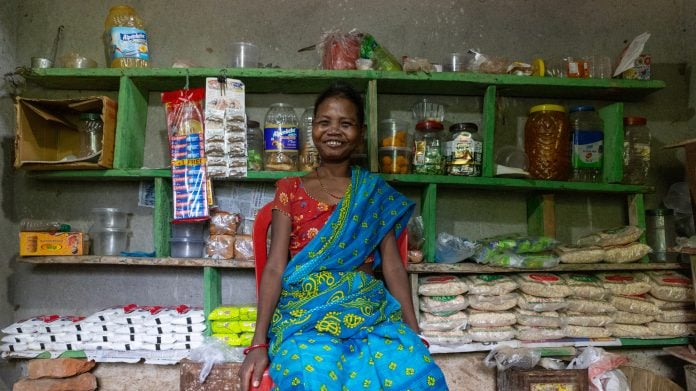
In the villages of Dumaria block in Jharkhand, women are finding their voice, managing enterprises, and forming small groups to plan, save, and share knowledge.
They are the changemakers, and “UPAJ”, implemented by the Jharkhand State Livelihood Promotion Society (JSLPS) with technical support from The/Nudge, drives this transformation.
UPAJ offers a holistic, coached, time-bound, community-owned pathway out of multidimensional poverty based on the graduation approach. Premised on the belief that progress for the most vulnerable needs to be community-led and owned, UPAJ centers rural women as active agents of development by leveraging the DAY-NRLM structure of community institutions.
The outcome shown by an independent endline evaluation conducted in 2026: across twelve of thirteen program indicators, UPAJ met or exceeded them. The story that emerges is of the centrality of government, community, and civil society partnership for transformation at scale.
Architecture for inclusion
For decades, government schemes have been facing challenges in delivering support to those most marginalised. Irrespective of the wide reach of India’s public delivery system, they fall through the cracks. This is not a last-mile problem but one of community ownership.
UPAJ’s design selects and trains women from within the community—called Ultra Poor Changemakers (UPCM)—as frontline coaches and mobilisers. Equipped with structured flipbooks, digital tools, and ongoing mentorship, they guide small groups of households through the graduation approach programme: consumption support to stabilize households, livelihood grants to build productive assets, intensive mentorship, savings discipline, entitlement linkage, and integration into formal financial systems — delivered across 36 months.
UPAJ further adds the community institution layer. At the base sit Self-Help Groups (SHG) and Village Organisations (VO)—the bedrock of JSLPS’s decade-long investment in women’s collectives. UPAJ breathes new purpose into existing structures. Each institution plays a defined role in selecting UPCMs, approving grants, and ensuring accountability.
JSLPS brings something no civil society organization can: the administrative legitimacy, funding channels, and grassroots network of a state mission. With over a decade mobilizing around 36 lakh rural women into SHGs across all 264 blocks, JSLPS has built one of the country’s most extensive rural women’s institutional ecosystems. The challenge is converting this institutional breadth into deep, sustained livelihood impact.
Here, The/Nudge’s technical and programme management expertise proves decisive. The organization brings a rigorous, evidence-anchored graduation model, contextualised to Jharkhand’s tribal and ecological realities.
Evidence from UPAJ
At baseline, nearly three-quarters of UPAJ households owned no cultivable land. Half faced regular food shortages. Only 3 in 100 reported income from livestock; 6 in 100 from agriculture. Average total household income stood at ₹24,145, of which nearly ₹10,000 came from distress migration. These were households trapped in structural exclusion.
Four years later, the endline assessment documented a profound shift:
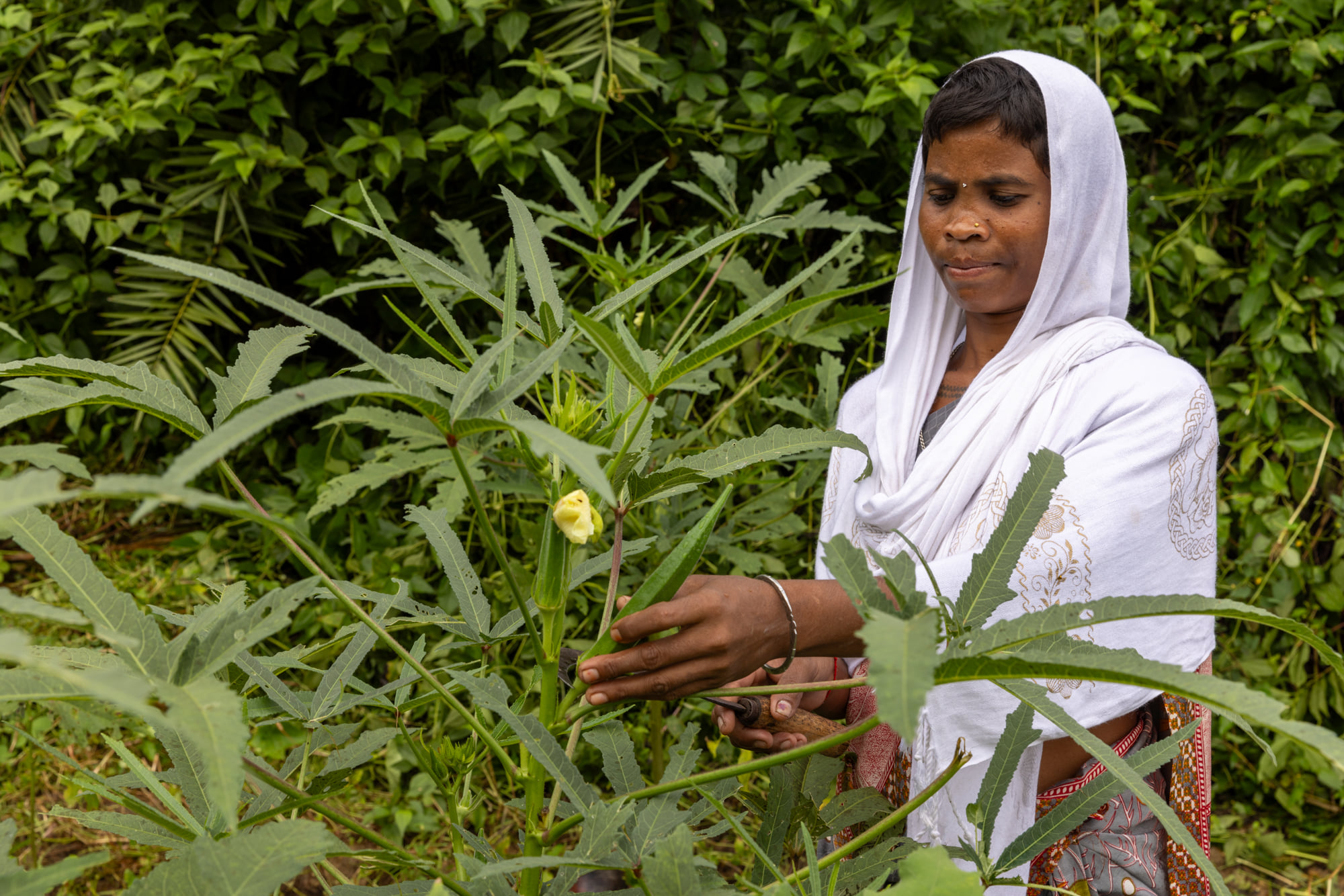
Food security: 99.8% of households now eat at least two meals a day — up from 53% at baseline. Kitchen gardens were adopted by 89% of households and maintained for at least four months a year. PDS and NFSA enrollment reached 99.8%.
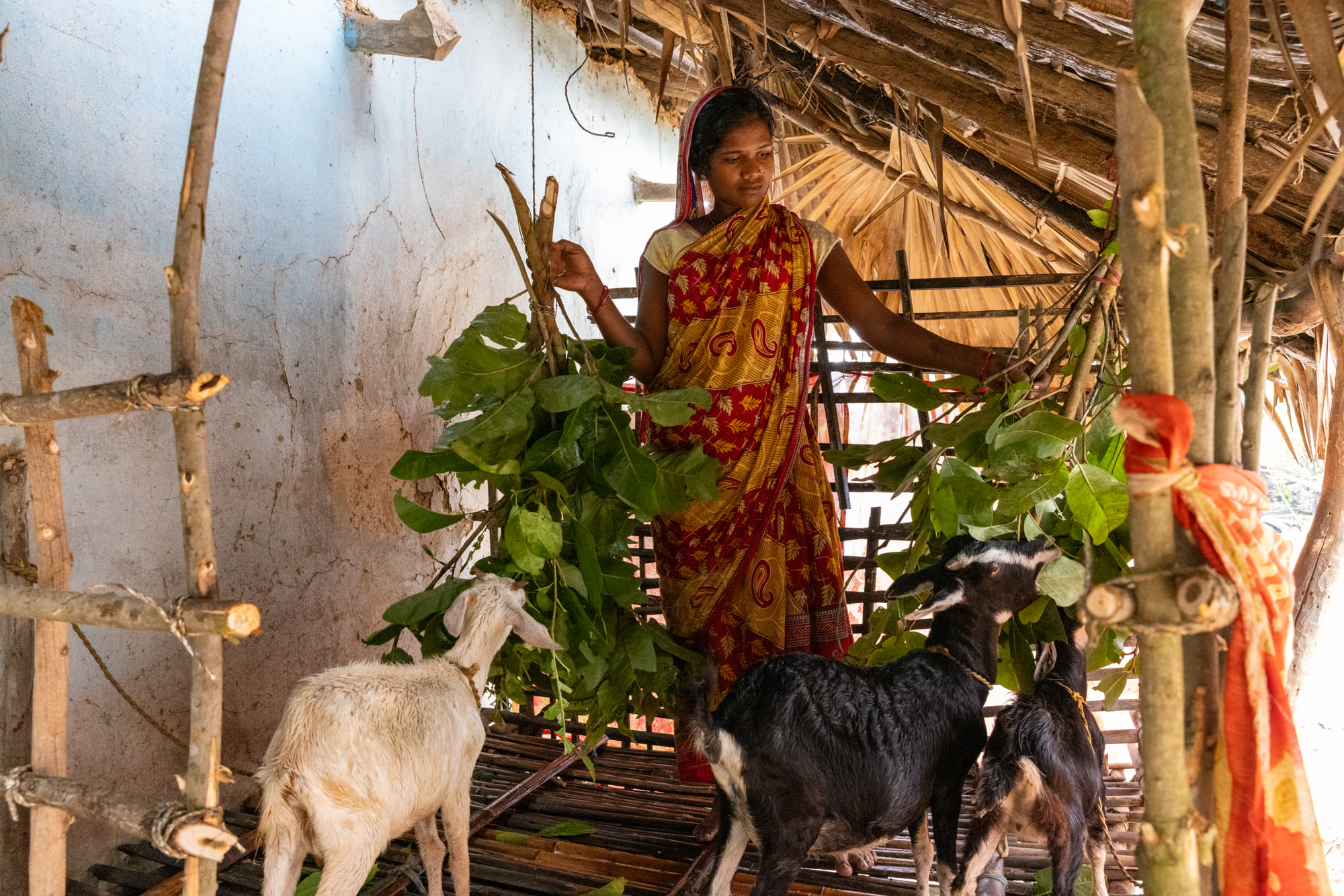
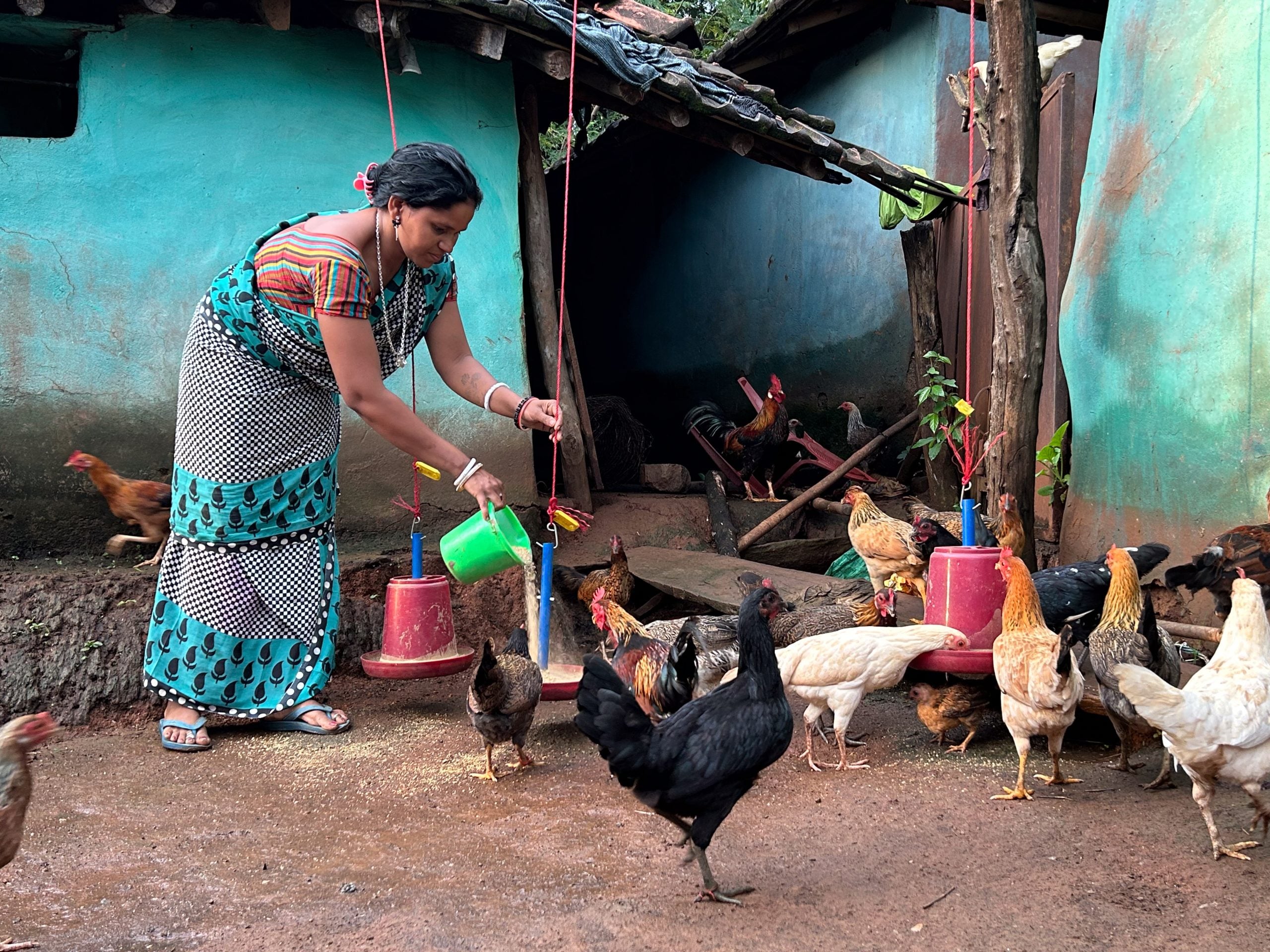
Livelihoods and income: average income from program-supported activities reached ₹19,121 — nearly double the ₹10,000 program target. Overall income change averaged ₹20,232 across households; 75% crossed the ₹10,000 income threshold through program support alone.
Financial inclusion: 100% of households now hold active bank accounts. 96% are insured under PMJJBY and PMSBY — up from 11.8% at baseline. Average annual savings reached ₹4,518 per household. Critically, SHGs have effectively displaced moneylenders: only 8.4% of households now borrow informally.
Social inclusion: SHG membership rose to 98.3% from 64% at baseline, with 96% attending regularly. 98.4% of households are now covered under pension and social security schemes. Ayushman Bharat coverage jumped from 29.6% to 91.1%. Children’s school attendance rose from 52% to 81%. And 96.1% of women participated in Gram Sabha meetings.
The programme gave women agency. Didis, who were unable to name their bank account balances, ended the program raising questions at Gram Sabhas, making independent decisions, and planning their children’s futures. “I am not just thinking about the next meal anymore,” one Didi in Nawadiha Bazar told evaluators.
National recognition and the road to scale
UPAJ was always conceived as a proof-of-concept for a replicable national model. Recognizing the evidence generated by UPAJ and Satat Jeevikoparjan Yojana (SJY) in Bihar, the Ministry of Rural Development has scaled the Samaveshi Ajeevika Yojana (SAY) across the country. It is one of the most ambitious scale-ups of the graduation approach anywhere in the world.
In Jharkhand, JSLPS, supported by The/Nudge and DAY-NRLM, is currently implementing the Jharkhand SAY for 16,000 households, with a further phase covering 25,000 households in the pipeline.
The/Nudge’s wider portfolio — operational in Jharkhand, Assam, Meghalaya, Rajasthan, West Bengal, Tripura, and Arunachal Pradesh — carries the same architecture into different ecological and cultural contexts. Across these partnerships, The/Nudge has signed agreements to support over 2.00 lakh households across government programs.
Women-led institutions as load-bearing infrastructure
UPAJ shows that when women-led community institutions sit at the center of livelihood delivery, and when the public and private sectors align to support them, the results are measurably transformational. What is being built — in Jharkhand and now across six states — is a replicable public infrastructure for economic inclusion where women-led community institutions are the load-bearing structure.
The most durable change happens not when the state delivers services to people, but when people — especially women — are equipped to demand, lead, and sustain those services themselves. That shift in the locus of agency is not just good development practice. In a democracy with 140 crore aspirations, it is essential governance.
UPAJ is implemented by JSLPS with technical support from The/Nudge under DAY-NRLM. Impact evaluation data were sourced from the independent endline study by Dialectics Services Pvt. Ltd. (April 2026).
Views are personal.