







Your Turn is a unique section from ThePrint featuring points of view from its subscribers. If you are a subscriber, have a point of view, please send it to us. If not, do subscribe here: https://theprint.in/subscribe/
After the pandemic years, it seemed for a short time that the world was going back to being predictable. Governments were talking about recovery, inflation was expected to go down, and supply chains were getting more stable. That time has come and gone.
We are not just seeing a series of short-term crises; we are seeing a deeper structural change in which instability is the norm in the global system.
Energy is back in the center of power
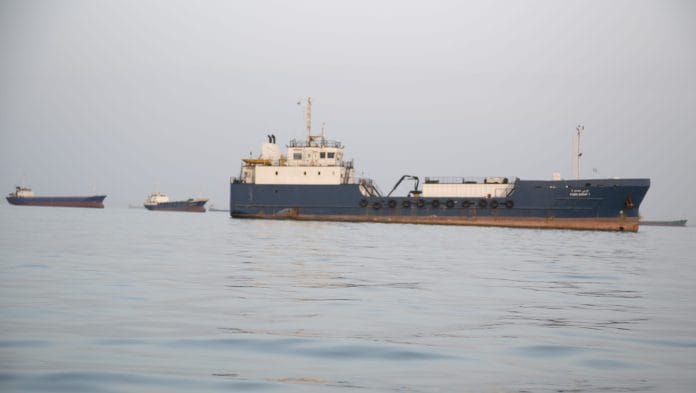
The rising tensions in West Asia have highlighted an old truth: world politics is still driven by oil. The fragility of oil transit routes has thrown markets into a frenzy, with prices rising and countries rushing to secure supplies.
But what distinguishes this time is the underlying conflict. Even as countries publicly pledge to sustainable energy transitions, their immediate responses remain heavily fossil-based. Strategic reserves are depleted, new drilling projects are reviewed, and energy diplomacy returns to its transactional roots.
The move to renewables appears to be building on top of the old system rather than replacing it. And the layering is fragile.
An economy that won’t settle.
The uncertainty about the economy today is still strangely strong. Inflation hasn’t gotten out of hand, but it hasn’t gone away completely either. Growth hasn’t stopped, but it doesn’t have any energy. It might be harder to deal with this “in-between” state than a full-blown disaster. Governments have to be careful when making policies. They can raise interest rates just enough to show that they are in charge, but not so much that they stop growth completely.
Things are worse in poorer countries. They are under a lot of stress because of high import costs, changing capital flows, and a tight budget. There isn’t much room for error, and the results of a mistake are felt right away.
Climate action is becoming a part of industrial policy.
People used to think of climate change as an environmental problem. That framework is no longer useful. Recent developments show that climate action is becoming a part of business strategy. Countries are putting money into green technologies not just to lower emissions, but also to make money. Supply chains for clean energy, battery production, and low-carbon manufacturing are becoming more competitive.
This change is important because it changes the reasons people do things. People are no longer just doing things to help the environment because they feel like they have to or because they feel like they should. They are also doing it because it is good for their own business.
But the change isn’t fair for everyone. Some places are moving toward green industrialization, but others are still stuck in energy poverty, where getting power right away is more important than thinking about how to make it last.
A world that is adjusting, not resolving.
What differentiates the present moment is that problems are managed rather than addressed. Energy insecurity is addressed by diversification rather than reduction. Economic instability is addressed by calibration rather than reform. Technological threats are mentioned but rarely addressed. This produces a system that is highly flexible but constantly unsettled.
Conclusion: Living with Instability
It’s getting harder to keep the hope that things will “get back to normal.”Instead, we’re seeing the rise of a new normal, one with needs that overlap and only partial answers.
This doesn’t mean that things are getting worse. In many ways, the world is more connected and creative than it has ever been. But this means that traditional stability may no longer be the goal. Instead, the task is to learn how to exist in an unstable environment—how to create institutions that can absorb shocks without collapsing, and how to ensure that adaptation does not come at the expense of equity.
Because, if recent developments have taught us anything, it is that the future does not move in a straight line. It is unfolding unevenly, and not everyone is progressing at the same rate.
These pieces are being published as they have been received – they have not been edited/fact-checked by ThePrint.