





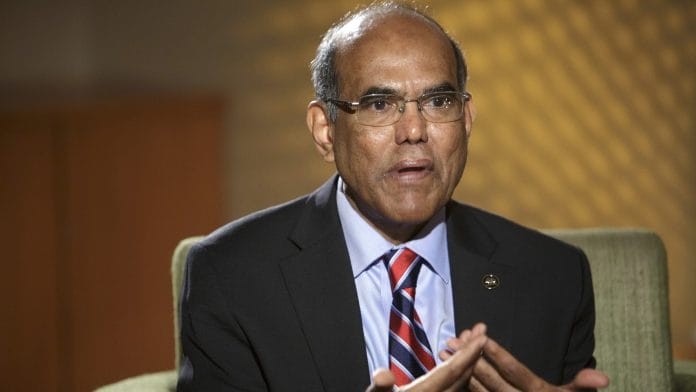


India’s waning appeal among foreign investors means short-term measures to attract capital are unlikely to stem the rupee’s weakness, former central bank Governor Duvvuri Subbarao said, adding to calls from other economists for deeper structural reforms.
Subbarao, who was head of the Reserve Bank of India between 2008 and 2013, said a move in June aimed at drawing more foreign currency by incentivizing non-resident Indians is “too costly” to justify if the main purpose is simply to bolster confidence in the rupee. The currency hit a record low of near 97 per dollar in May.
The so-called foreign currency non-resident (FCNR-B) measure has drawn $36.72 billion through July 31, and bankers and analysts expect inflows to exceed $50 billion by the time the scheme closes on Sept. 30.
Subbarao said FCNR deposits are “borrowed dollars” and have to be repaid at maturity. “They do not build confidence,” he said. “What we need is confidence-building flows,” through foreign direct and portfolio investment.
The former central bank chief pointed to a reduction in transaction and tax-compliance costs for foreign investors and further liberalizing access to equity and debt markets among potential measures.
Foreign investors have pulled out a net $17.3 billion from Indian stocks and bonds so far in 2026, adding to pressure on the currency. Even after the selloff, Indian equities trade at a 44% premium to the broader Asian gauge.
The relatively high valuations are pushing investors toward other markets, while Indians are also moving more money abroad, Subbarao said. Booming investment in artificial intelligence and semiconductors elsewhere is adding to the pressure.
The RBI’s strategy to shore up the currency has met a more muted impact compared to a similar strategy undertaken in 2013. The rupee has declined 0.5% in the first 46 days since those measures were announced, compared with a 7% gain in the same period in 2013.
“In 2013, the cost-benefit calculus was quite clear,” Subbarao said, noting that abundant global liquidity made it relatively cheaper to attract FCNR deposits. The case today is less compelling, he added.
Stronger domestic demand would also help revive investment and attract FDI, Subbarao added. “If there is demand, investment will come,” he said.