







It’s been four days since truce was called between Gen Z protesters in New Delhi and the Central government followed by the resignation of Education Minister Dharmendra Pradhan. Events are moving in different directions. The important thing is that Parliament has started debating issues emerging from the protests and the police action, as well as deeper issues emerging from examination leakages.
The latest provocation is the National Eligibility cum Entrance Test (Undergraduate) leakage of 2026 which followed the NEET-UG leakage in 2024. But examination paper leakages have now been quite routine for a long time. These cause a lot of distress.
Questions emerge from what happened during these protests and the police action to push the protesters back because a lot of what’s happening today is rooted in what happened on 20 July. That was the day when the protesters had announced a march to Parliament; the Monsoon Session was beginning.
Pellet petitions: The violence of that morning started around 11.30 am; lots of tear gas was used between 3.30 and 4.30 pm. Multiple lathi charges were carried out and two shots were fired from a pellet gun, what the police forces call anti-riot gun, or ARG.
Those pellet injuries have now landed up in the Supreme Court of India; many have filed petitions, some say they are victims of pellet injuries. In one significant petition, Yashovardhan Azad, a very senior and respected former police officer and former special director of the Intelligence Bureau, has filed a case along with victims of pellet injuries. While they seek accountability for police action, they are also demanding a ban on the use of pellets, or at least on the use of lethal pellets. So pellets are now making significant news.
Also Read: PM should sack Amit Shah, order SC-monitored probe into protest crackdown, says Rahul Gandhi
Let’s look at some facts. First, when were the pellets used? Who used the pellets? What was the sequence of events? It is only by understanding this sequence that we will come to know who used these and under what authorisation.
Then, what is the process? What is the force that used it? What is the composition of the force? How is it different from any other police force or say any other Central Armed Police Force or paramilitary force as they are called. Who commands them? What are these pellets and what are the guns that these are fired from? What is the record of the use of pellet guns in India (because it’s not that old)?
The first time pellet guns were used in India was in 2010 in Jammu and Kashmir. That’s when the United Progressive Alliance was in power and that was a season of major stone-throwing in Kashmir, particularly Srinagar. There was an enormous amount of stone-throwing, and that’s when the paramilitary forces used pellet guns for the first time.
Mayhem near Parliament: So, first, what happened on 20 July? At about 11.30 am that day, the police lathi charged protesters who were attempting to break the barricades put up right outside Parliament Street Police Station, a very busy part of New Delhi.
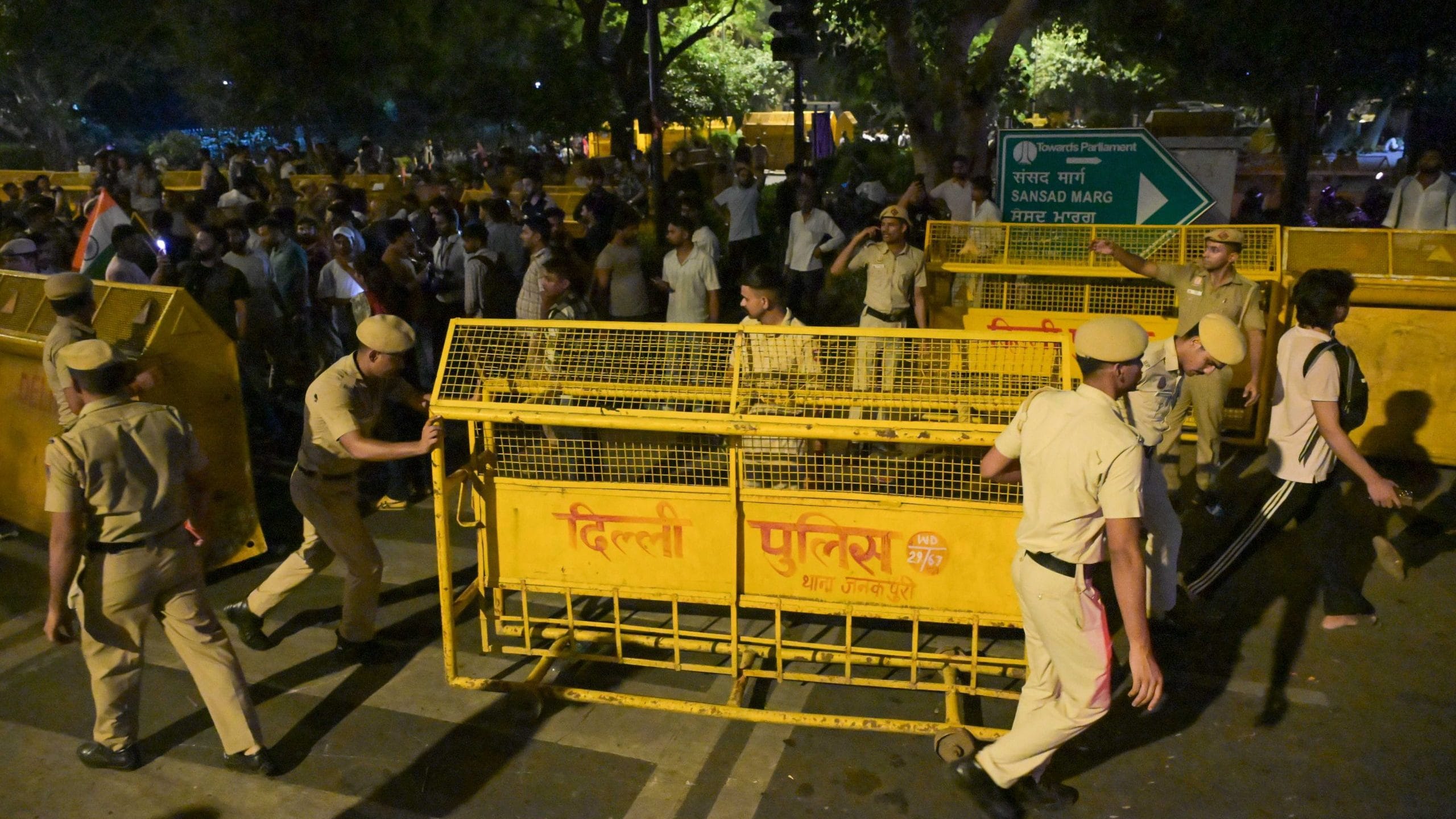
It is the most protected zone in India, particularly on the day a new Parliament session begins. All of that is within one kilometre of the Prime Minister’s residence, Rashtrapati Bhavan, and the houses of most key Cabinet members and other officials, armed forces chiefs, etc.
These barricades targeted by the protesters had been welded together; those pictures had appeared in the media a day earlier. Praveen Jain, our photo editor, believes that the people who came up in front also had lathis, and they were from not from the group of Gen Z protesters. They came in, and tried to force their way through the barricades.
The barricades broke. Then the crowds turned into a side-street and tried to go through there. That street was also barred. The police was naturally alarmed that these protesters would reach Parliament House, so a lathi charge was done. At 12.11, that is 36 minutes later, another lathi charge was carried out, this time by the Rapid Action Force and Delhi Police together.
At the same time, hundreds of protesters broke through the barricades and reached right outside the Parliament complex near the Central Secretariat Police Station, not to be confused with the Parliament Street Police Station. That’s where tear gas was used and yet another lathi charge took place.
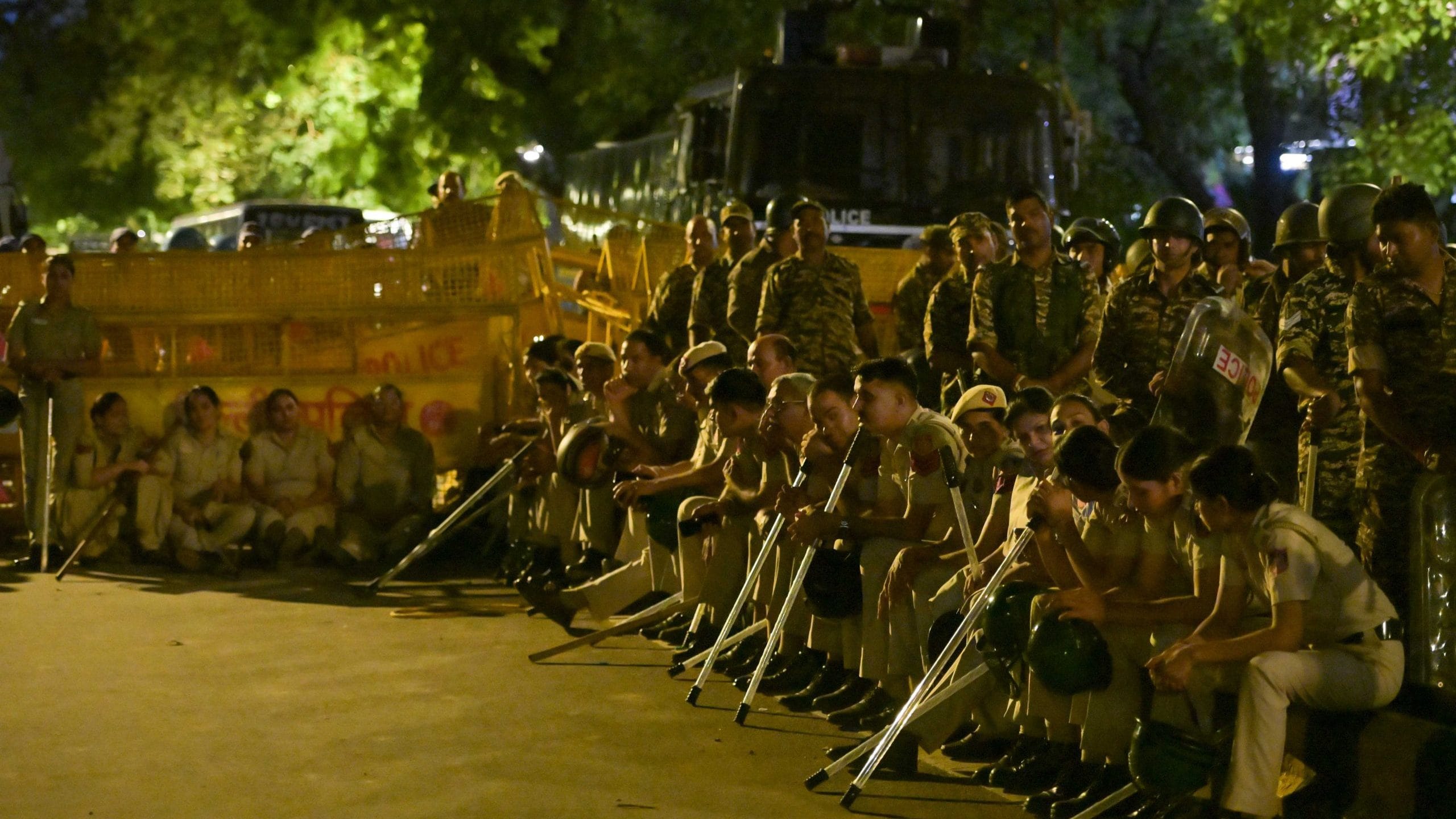
From there, the crowds were dispersed, and most reached Connaught Place. They were still not in the inner circle of Connaught Place, however. They were still around the outer circle because that’s closer to Parliament, and they were congregating or collecting near Parliament Street.
These crowds were followed by the RAF and Delhi Police personnel. This is where the situation escalated, and the RAF again responded with tear gas shelling. The key period was between 3.30 and 4.30 pm, along the stretch between Palika Bazar and the inner circle.
That’s where the Rajiv Chowk Metro Station is. It is in that stretch, between Palika Bazar in the inner circle and Sansad Marg that goes to the Jantar Mantar area, where pellet guns were fired. There are five identified victims as of now.
No rounding off: A general diary entry of Parliament Street Police Station gives us the details. In all of this, no bullets of any kind were fired. Two pellet shots were fired, but no bullets were fired. Some 55 non-electrical shells, like the old-fashioned tear gas shells lobbed from those squat, wide-barrelled guns most of us have seen, were fired. These are mechanically activated shells, and heavy. If they hit you like a projectile, they can cause injury.
People have broken bones. People have suffered head injuries because they got struck by a live tear gas shell. These are non-electrical shells.
Also Read: Delhi Police firing at protesters shows crowd-control doctrine hasn’t changed since British rule
Then there are electrical shells. Electrical shells, as the name indicates, are charged or sparked by electric current within the shells. These are fired by specialised electric shell guns, usually mounted on trucks. Fifteen of these shells were fired. Then there were five tear smoke grenades used, the kind that are thrown, and used when crowds get really close.
That makes for a total of 75 smoke shells of various kinds fired by one unit of the RAF. One person from the same unit used the pellet gun issued to him and fired two rounds.
Round means one bullet. People think round means 8 or 10 discharges. In ballistic language, a round is one bullet. So he fired two rounds or two pellet shots from his ARG or anti-riot gun.
The ammunition mentioned in the diary entry at Parliament Street Police Station pertains only to what was used in that area. There could have been additional tear gas shells or a few pellet gun rounds fired elsewhere, which is currently a matter of inquiry.
Gunning for trouble: Each company of the RAF has about 100 to 120 personnel, and a company is issued two of these pellet guns.
That’s standard issue but its use has to be authorized. It does look like from the diary entry that somebody authorised the use of these tear gas shells, lathe charge and also two shots from a pellet gun.
The RAF said they did not authorise it. They have taken that constable off duty and an investigation is being carried out. These appeals in the Supreme Court want be a ban on pellet guns; first, investigate what happened, then award compensation, and finally ban pellet guns.
Who gave the authorization for use of this force? The procedure for riot control is laid down by Bharatiya Nagarik Suraksha Sanhita, BNSS, or what used to be Code of Criminal Procedure because that provides the method and approach. Under that, unless you are in a region which is under Armed Forces Special Powers Act, which Delhi isn’t, any police force, use of any force has to be authorised by a magistrate or executive magistrate. Since Delhi is a police commissionerate, police officers also have executive magistrate’s powers.
The Deputy Commissioner of Police (North Delhi), for example, who was in charge there, exercised his powers as executive magistrate and authorised the use of force of various kinds. He did not say specifically fire the pellet guns. He said adequate force should be used for riot control.
Allowed and clear: That is what we need to understand. And the diary entry also registers this, because without authorisation nobody can fire. However, the executive magistrate who is giving this order is not saying fire this now and fire that then. He is not a platoon commander in a battle carrying a pistol telling his troops to fire on this enemy there, or that enemy there. He has given authorisation for the larger action.
Before the week ended, and even as the truce was being negotiated in Delhi, pictures came out of Siwan in Bihar, a place infamous for its own Kalashnikov culture, and the ‘karambhoomi’ of gangster Shahabuddin. Shahabuddin used to walk around with AK-47 wielding guards. He also merrily ran his empire from jail where he was locked up for a long time.
It is from Siwan that videos of a policeman, sprinting and firing from his AK-47, emerged. Now to fire an AK-47 at a crowd in India has not been seen anywhere. An AK-47 will be fired at a terrorist or when there is a threat from somebody in a crowd using firearms; in fact the current drill of Indian police forces and CAPF also is that unless you are threatened by firearms from a crowd, you cannot use firearms.
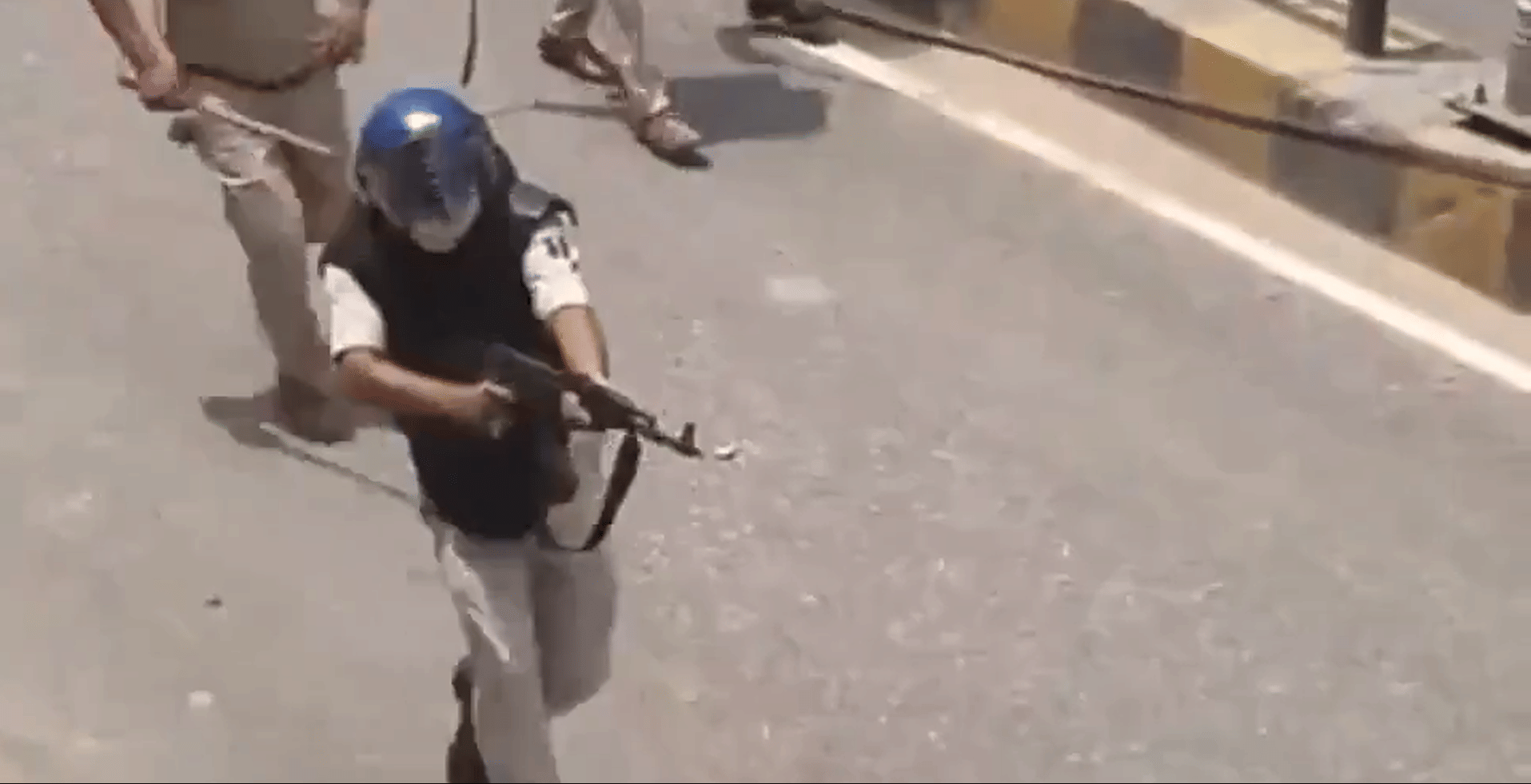
In this case, this man has been suspended. The police also say that he was firing aimlessly or that it was into the air, but there is one person in Bihar who claims that he was hit in the leg by one of these bullets. That’s again an ongoing situation.
The men in blue: All of these complicated things and built up this anger. Now a couple of things we are trying to understand. One, what is the Rapid Action Force? These are the security personnel in blue-grey, a very distinct uniform. Founded in October 1992, they are called out specifically for riot control.
They are not a new force. They are also not a separate force. They are a specialised riot control force. In fact, they are called a zero-response force which means they should be available in a zero time-frame, that is they should be available at any time.
The RAF has about 15 battalions, and is located within the CRPF. It’s a wing of the 240-battalion CRPF, and headed by an inspector general-rank officer. In this case, it’s a woman officer called Seema Dhundia. On the day the protests took place, the RAF had eight companies in Delhi. More RAF companies have been brought in. At this point, Delhi has 15 companies of the RAF.
The smallest unit of RAF is led by an inspector and each RAF team has three different elements. One element is for riot control. You can presume that they have shields and their lathis. The second is the tear smoke element. They carry the wherewithal for firing tear gas shells.
The third is the fire element, which may have rifles for firing live ammunition if needed or pellet guns. They also have units with water cannons, and coloured water.
Also read : Protocol violated in CJP protest crackdown, pellet guns shouldn’t have been used—ex-home secy GK Pillai
The idea behind coloured water is that people don’t like to get their clothes ruined, and it can irritate you, get in your eyes. And then, because water will first hit the leaders, the people in front. It can be later used to identify the leaders of a crowd. Again water cannons have to be used from 75 metres away, because if you get closer they can cause injury because water comes out with force.
If used within 25 to 30 metres, it can knock down an adult. Again, for firearms, there is a drill that you only use firearms, with real bullets if you are threatened with actual bullets or actual firearms. Even then, the drill mandates shooting low so as not to cause fatalities.
I would say that over the past 10 years or so, deaths in police firing in India have declined. It is an irony of sorts that I am saying all this on a day when we have seen multiple firings in Pakistan occupied Kashmir during their election process, where at least 20 confirmed deaths have been reported by this time.
Riot control is a policing job. It is a specialised policing job. It is not the army’s job anywhere because the army is trained to treat any adversary as an enemy. The minimum force an army can use is automatic rifles, and that’s when you have the kind of result that you are seeing in Pakistan occupied Kashmir right now.
Of pellets and protests: These pellets have had a checkered history in India. In 2010, they were used for the first time in Kashmir during the days of stone-throwing. Then they came back in 2016 when again massive riots and stone-pelting followed the death of Hizbul Mujahideen commander Burhan Wani.
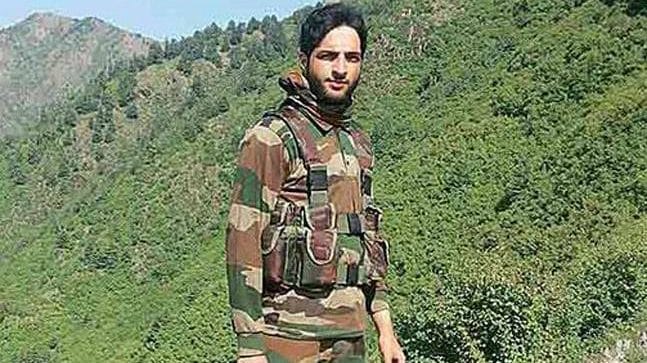
At that point a lot of pellets were used and they became very controversial. That is when then home minister Rajnath Singh made a statement in Parliament, saying that the use of pellet guns had killed one protester in Kashmir and caused injury to many others, including to the eyes of 53 protesters.
He also said that the government was looking for more non-lethal methods. Then the next round of extensive pellet gun use took place after the action on Article 370 in August 2019. Then again, quite a few injuries took place but there were fewer than in 2016.
That’s because some changes were carried out. Now the pellet gun comes with a deflector. The deflector is fitted on top of the barrel so when the shot is fired pellets don’t spread horizontally but are directed downward. So pellets don’t hit people in the chest or head, and we don’t get stories of pellets lodged in somebody’s brain or in someone’s spine.
With the deflector, the gun directs the pellets downwards so they only hit the lower half of people’s bodies, making them more a deterrent than something that causes grave injury. It’s quite clear in this case, however, that the pellet gun used did not have the deflector.
The second change that’s been carried out is that the pellets these guns discharged are not made of lead now, but now come with a plastic tip. So what pierces the body is a plastic-tipped lead pellet.
Out of a barrel: Let’s understand what pellets are and what a pellet gun is. A pellet gun is basically a 12-bore gun, the kind that security guards outside banks are armed with. Every shell contains hundreds of tiny pellets, measuring between 2 and 3 millimetres.
What is a 12 bore gun? In ballistics, bore refers to the inside diameter of a gun barrel. For 12 bore, it’s 18.5 millimetres. Americans call it 12 gauge. A simple way of understanding what a 12 bore gun is to think of a pound of solid lead. If you take a pound of solid lead and divide it into 12 identical spheres, the diameter of each sphere will be same as the inside diameter of the barrel of a 12 bore gun.
The RAF has two types of pellet guns. One is the anti-riot gun and the other is the pump action gun. Some of the visuals that we have seen of an RAF cop firing a pellet gun look like it was the latter. A pump action gun has greater range and greater lethality than an anti-riot gun.