



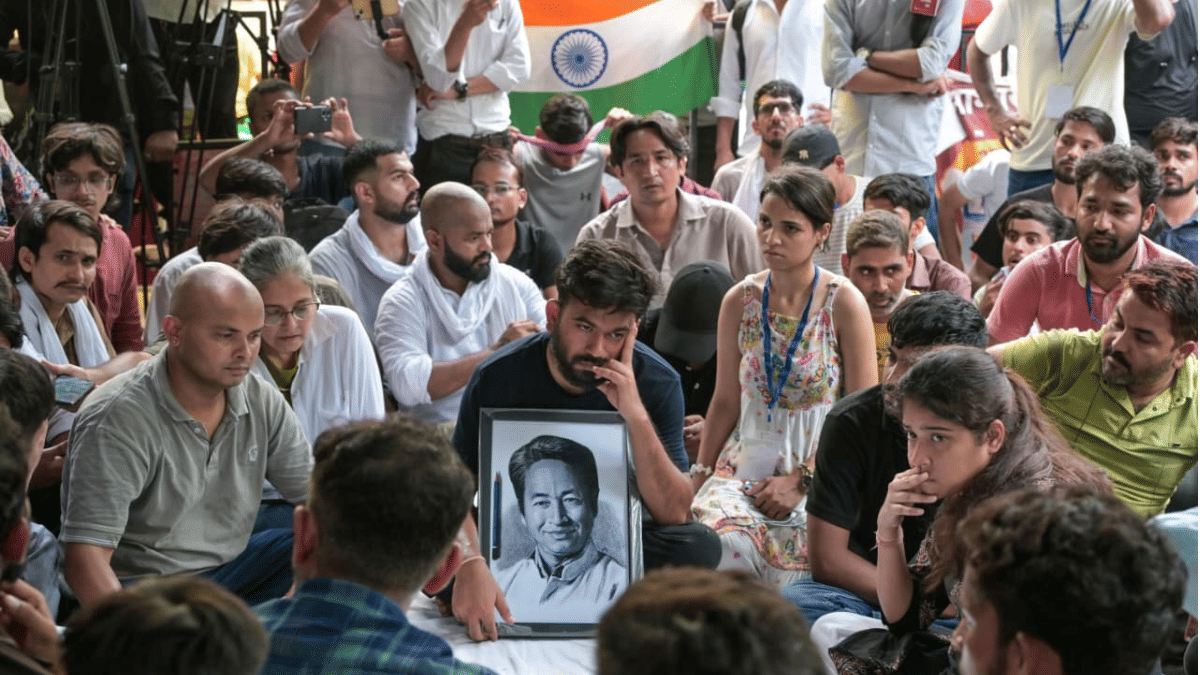
New Delhi: The situation in Delhi took a dramatic, regrettable, and painful turn on the 22nd day of the Cockroach Janta Party (CJP) protest, featuring an indefinite fast by climate and education activist Sonam Wangchuk and other students at the same time.
Monday was the day they fixed for a march on Parliament, because this is when it was meeting for the Monsoon Session. It had to be stopped; the police had not permitted the march to go beyond a point, but the marchers broke through the barricades, which had actually been welded together. The crowd was quite sizeable.
ThePrint had a large team of reporters and camerapersons covering this very difficult situation. All of them came back with eyes burning with tear gas; some may have taken a few knocks also. All that coverage was on our platform through the day, indeed through the past many days, in text, video and audio.
This is also when a couple of political elements came in. Chandra Shekhar Azad of the Bhim Army from Uttar Pradesh, a charismatic leader in his own right, came with a bunch of supporters. A group from Akhilesh Yadav’s Samajwadi Party was there; his wife and Member of Parliament from Mainpuri Dimple Yadav also visited the protest site and spoke about it on the day of the march. All of this led to a situation where Sonam Wangchuk was picked up by the police over the weekend and taken to Safdarjung Hospital because his health was slipping.
The high court refused to intervene when Wangchuk’s wife sent in an application to have him handed over to her or taken to another hospital. At the same time, the court said he’s not detained, but in the hospital for his health. It noted an issue with his potassium levels.
Party’s on: This is still a developing story. We are going to talk about what is at the root of this, for the implications of the story are much wider. Not everybody at this protest appeared for the National Eligibility cum Entrance Test (NEET) exam which triggered this crisis.
Protestors also came because there is large-scale unemployment—or really massive underemployment or hidden unemployment— in India. For large categories of people, incomes are not rising as they should have, and people’s aspirations have gone up too. There is also a sense that the government doesn’t listen, it talks down to us, the government thinks it keeps getting re-elected so it must be very popular.
A sense of arrogance seems to have set in, and the government is not willing to listen; that’s got a lot of young people angry. That anger is also reflected in the quick cache value that the Cockroach Janata Party found for itself. We had featured it on Cut the Clutter in May.
In no time, nearly 3 crore people started following the Instagram handle of CJP which had no real manifesto or ideology but was just a vehicle for grievance. The fact that so many young Indians had this grievance was a stunning realisation. At the same time, it’s also good for our democracy that these angry young people found a forum of expression.
In the fast lane: This reflected finally in this protest led by CJP founder Abhijeet Dipke and co-founder Ashutosh Ranka; the profile of the protest suddenly went up when the famous activist from Ladakh Sonam Wangchuk— who’s not quite young as the rest of them and by no means Gen Z which most of the rest of are— joined and started an indefinite fast. He’s done this before. In this case it went into the 22nd day.
The immediate spark came from the ‘cockroach’ comment by the Chief Justice of India, irritated by some lawyers making demands that he saw as unfair. He tried to clarify, saying that he meant unqualified people, busybodies who come and make a nuisance of themselves.
But that metaphor stuck, and that was the one spark. Dipke picked it up and said, look all of us unemployed Indian young people or Indian young people who are not getting justice, who have this mass cancellation of exams, we are cockroaches. It caught on.
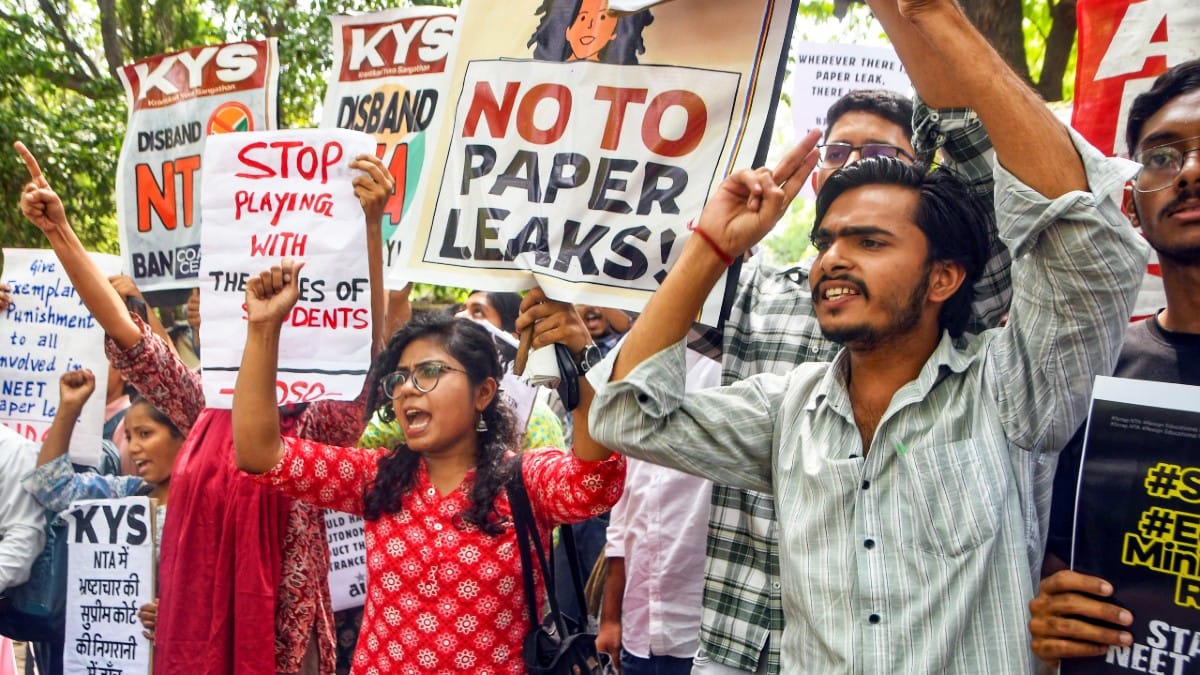
NEET and untidy: The second spark came from the successive failure of the NEET examination. NEET is for medical college admissions, or MBBS courses. The government in its eternal wisdom centralised everything. In my view, this is a case of over-centralisation, something that the Tamil Nadu government has been protesting about and others have also complained about. This is about tens of thousands of seats all over the country.
This is not a public examination to select less than a thousand; it is a very large exercise. All of that has been centralised and handed over to the National Testing Agency, which has its own methods and, by this time, a sterling record of failures too.
In 2024, the leakage was in Bihar. The Central Bureau of Investigation (CBI) got involved, lots of people were arrested and some of mechanics of this operation were caught because dozens got the top score at some centres, a statistical impossibility. That’s also when the Supreme Court got involved, but at that time it did not cancel the exam, because this leakage was seen to be localised to Bihar. That is how the problem was sort of cauterised and localised in that area.
Also read: ‘I didn’t fail the exam, system failed me’—NEET 2024 students go back to preparing again
The rest of the exam was held, the results declared. This time something worse happened: the leak was much more widespread, not confined to a district or two. It was across at least two large states, Rajasthan and Maharashtra; investigations were conducted elsewhere too.
At one point, government lawyers told the Supreme Court that the Prime Minister is directly seized of this matter. We saw Indian Air Force (IAF) transport aircraft used to transport these papers, the same planes that transport tanks to Ladakh.
These papers were also kept in strongrooms, and secured with QR codes. The Intelligence Bureau also got involved, and they carried out raids at students’ hostels in Bihar as well.
We took notice of this in a 50-word edit, saying that if the IAF has to be called out for something as elementary as conducting an exam, it is an institutional collapse, not administrative failure.
War footing: It’s an undergraduate examination. The Supreme Court is involved. The Prime Minister is directly supervising the process. The IAF has been called in to transport material. The Intelligence Bureau is carrying out raids. This is almost like handling a full-fledged war within ourselves. If a country’s institutional collapse is so comprehensive, what will happen when we deal with a genuine national emergency or a large-scale threat from a foreign power? This showed many gaps in our governance. And that is what has led to this widespread anger as well.
Now, for the basics of what happened, and then the details in terms of how the mechanics of this conspiracy work, of this leakage and this collusion of paper setters, paper solvers, examinees, examiners as well as distributors and sellers.
Also read: IAF isn’t India’s courier service—3 reasons it ideally shouldn’t fly NEET papers
Questions arise: This year’s exam was scheduled for 3 May. By 7 May, Rajasthan police chief Rajiv Sharma got a tip-off that there was a guess paper in circulation, and it looked like a leaked paper. That guest paper had 410 questions, of which 120 questions in chemistry and biology were the same as in the real main paper.
The main paper was now known because the examination had already taken place, and it was clear that 120 of the 180 questions in the main paper had been leaked. Not only were the questions the same, but the answer options were identical too.
All of these leaks were found in Sikar district of Rajasthan.
On 12 May, the CBI registered a case. By this time, the courts were getting involved, and people were reaching the Supreme Court. There was widespread anger; the government was embarrassed. I won’t say cover-up because they couldn’t have covered up anything.
The last time they were able to localise the leak to some areas of Bihar but this time there was no such place to hide.
Second time unlucky: The entire exam was cancelled and rescheduled for 21 June, which dutifully took place. What happened then? A fresh exam takes place, and people expected better scores than their last time, which nobody saw because that exam was cancelled. Some people at the protest also were carrying marksheets to show they scored more earlier. Where those marksheets came from is not known.
The level of distrust has now reached very high levels. How does this basically work? Months before the exam, a network of coaching centres, education consultants, middlemen, YouTubers, and Instagrammers identify those desperate for admissions and willing to pay top dollar. While they are looking for enough likely buyers or developing a market, they are also searching for who the examiners are or who the likely paper setters are.
Then they look for somebody who might leap for money; this catchment area widens because the paper is in multiple languages. For each paper, there are also translators. Some of that happened in this case.
Why are the stakes so high for the families? Every one of the 2.279 million students who appeared at the 2026 exam has a family, say six persons, including parents, siblings, grandparents, etc. That means a lot of people are directly affected by this. And there are many others who may not be directly affected but are furious because their children will take some exams too, like the Joint Entrance Examination (JEE), or public exams for recruitment.
R.I.P. Trust: Look at the financial implications. The coaching business now is massive —and cut-throat—in India. See those full-page ads in your papers every day. Besides government ads, particularly those from state governments, it’s the coaching economy that keeps the print media going. And for them to place those ads, money must come from somewhere.
Here are some indicative prices for Class 11, a year of education. Class 11 is not when you are appearing for NEET, but a preliminary stage. So you start preparing two years ahead. For Class 11, one year’s NEET-oriented coaching costs between Rs 2,00,000 and 2,25,000. That’s a lot of money for an ordinary Indian family. Then for Class 12, at the end of which NEET is taken. At one place, it’s called pre-medical enthusiast. These products have names like that; Target 2027 is another. They are brands. That is again about Rs 2,20,000.
When an exam is cancelled, like NEET, the government refunds the application money, that’s Rs 1,700, and between Rs 1,600 and 1,000 for the reserved categories. That’s chump change compared to what has already been spent on coaching. Young people and their families get very angry.
We do not need to ape everything China does but it is worth noting that it is because of this phenomenon going out of hand that Xi Jinping has banned the coaching and tuition industry.
The coaching business in China has been banned because the ruling Communist Party of China did not want young people to get angry with the system. And it’s this economics that tempts not just individual scamsters but sophisticated criminal networks.
Also read: Coaching centres are a sign of broken-window economics. See how China crushed it all overnight
And see what the government has now done. Tamper-proof packaging, GPS-tracked transport, QR code-enabled zipper locks only to be opened by authorised officials and at examination centres, all flown by the Indian Air Force supervised by the Prime Minister. How do these networks crack the system? That is something that National Security Editor Ananya Bhardwaj will explain, for she and her team have been in the thick of it.
The leak trail: How exactly did it come up and how were these wires then connected? How was this leak of 2026 different from that of 2024?
The main difference is that in 2026 it leaked from the source, that is the National Testing Agency (NTA), and it happened during transportation of these papers.
It happened from the strongroom where the papers are stacked before the examination. This of course is more dangerous and why this paper was also cancelled.
In 2026, a Professor Kulkarni, who was a Marathi translator, became the first major arrest for allegedly leaking the paper. He was in touch with a lot of those who run coaching institutes in Maharashtra.
Let’s come to 7 May, when the Rajasthan police chief first got the information about the leak. The guess paper was found circulating on WhatsApp and there were 400-odd questions of which almost 120 matched exactly. This paper was on 3 May.
On 4 May, a whistleblower emerged, also a professor. He went to the local police in Rajasthan and told them he had come across this question paper on Telegram. Nobody actually paid attention to his complaint, and the police did not register a case.
After that he went to the police again and then the Intelligence Bureau took note of this paper being circulated on Telegram, and that is when it caught the CBI’s eye. The Special Operations Group (SOG) was also informed and they started investigating.
This was a good investigation, I would say, because the CBI started from the receivers and sourced it back, uncovering where all the paper went and who procured it. The SOG actually reached one of the alleged buyers first, the Biwal family from Jaipur. This was the first link to establish the entire trail up to the NTA.
Read more: NEET-2026 leak: CBI recovers ‘136 questions’ from Latur teacher’s phone, ‘111 matched master sets’
This Biwal family has some very interesting characters. Dinesh Biwal is a member of the Bharatiya Janta Yuva Morcha (BJYM), although the party has distanced themselves from him. His Facebook page did have several pictures with BJP leaders though. His brother Mangilal was the first one who had actually offered to pay about Rs 10 lakh to procure this paper for his son. The person asked for the paper was one Yash Yadav, from Gurgaon in Haryana, bringing another state into the mix.
Yash Yadav was at a coaching institute with Vikas, Mangilal’s son. Vikas must have told his father that this guy has access to the question paper and can arrange it. So Mangilal got in touch with Yash Yadav, who was in touch with one Shubham Khairnar.
Khairnar, and this takes us back to Maharashtra, is a final year BAMS student from Nashik. BAMS is an Ayurvedic Medical Sciences course. Khairnar is identified by the CBI as the first point of leak from where the paper actually went to the Biwal family. He is alleged to have got the paper digitally from one Dhananjay Lokhande in Pune.
Yash Yadav was arrested after the CBI took over the case on 12 May. Mangilal was arrested. His son was arrested. His brother Dinesh was arrested. Dinesh’s two children had also needed the paper. Basically he told the CBI that he wanted to procure the paper for his two children.
Then how did they get to Professor Kulkarni? When the CBI started investigating Khairnar, they found that he was in touch with Lokhande and one Manisha Waghmare, a business woman who also runs this career counselling consultancy and is in touch with people running coaching institutes in Pune.
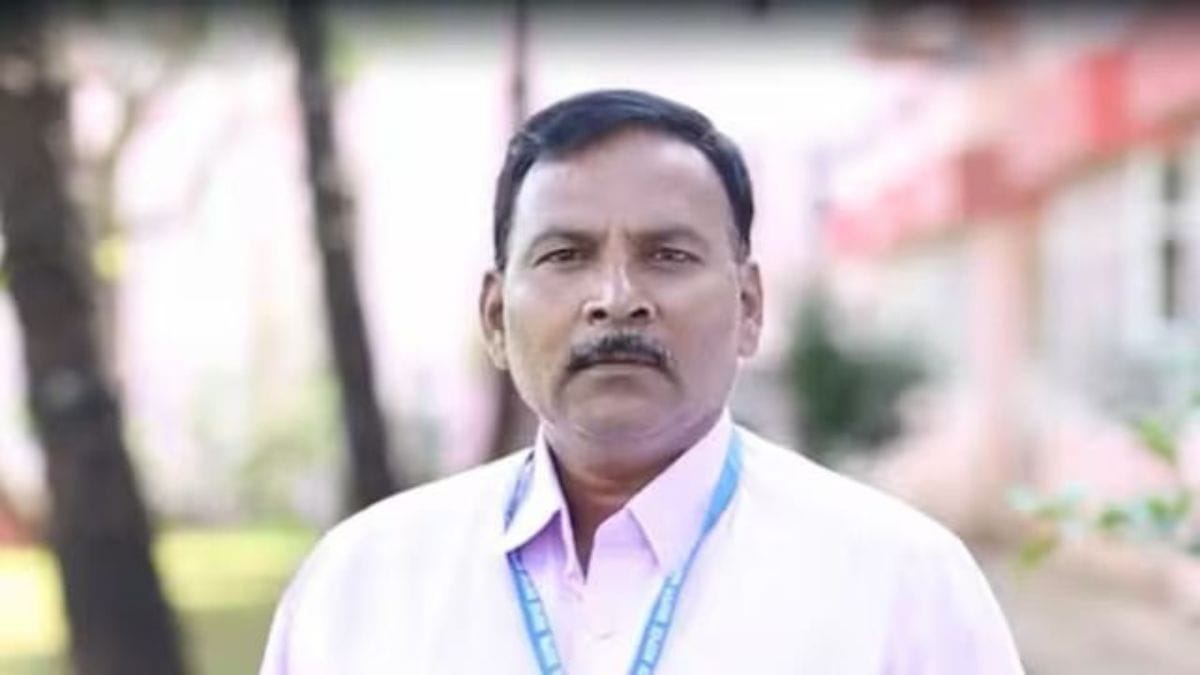
Dhananjay is based in Pune and runs a career counselling firm. He was in touch with Manisha Waghmare who is friends with Professor Kulkarni. That was the entire trail.
When Lokhande and Waghmare were arrested, the latter is alleged to have told the CBI that that she had arranged coaching classes for students and they were given questions during those classes. Basically they wrote down those questions by hand, and a lot of those questions appeared in the final exam paper. The CBI has also recorded statements of students who had attended those coaching classes where a lot of these questions were dictated to them by Kulkarni. All this is now part of the record.
Waghmare allegedly helped Kulkarni, the professor, to arrange special classes for students in Pune in the last week of April. The exam happened on 3 May. In other words, we’ll set the paper, and also leak it to you, and tell also teach you how to crack it.
All these people are in jail now. No chargesheet has been filed yet but it’s coming, and it will have the entire chain.
With the information we have, it can said that Professor Kulkarni is alleged to be the person with access to all the questions as translator—the entire set, as only translators get. Also, Kulkarni had been on the National Talent Search panel since 2019.
Past and the spurious: In 2024, the NEET paper was not cancelled but a bunch of people were arrested, and there was a huge scandal and anger.
In 2024, the Uttar Pradesh police constable recruitment examination paper was leaked. In the same year, the Bihar Public Service Commission teachers recruitment exam paper was leaked, as was the Jharkhand Staff Selection Commission (JSSC) Combined Graduate Level (CGL) paper.
In 2023, the Bihar Police Constable Recruitment Exam; in 2022, the Rajasthan Public Service Commission General Knowledge, Group C, paper leak.
In 2021, the Joint Entrance Examination mains, for engineering colleges, was leaked. Again in 2021, REET or the Rajasthan Eligibility Examination for Teachers, was leaked. Also in 2021, the Uttar Pradesh Teachers Eligibility Test or UP TET exam was leaked.
One has to stop at 2021 or just go on and on. So this kind of anger does not come from one event or one set of aggrieved people. It comes when people see this all the time, and the impression grows that the system is broken, that it’s unjust. People feel they’ve been left behind as a consequence; that it’s cost them a lot of money and nobody’s listening.
That’s when you see people from all corners of the country coming in for a protest like this.
Also read: Inside India’s broken exam system—148 frauds, crores lost, only 1 conviction