





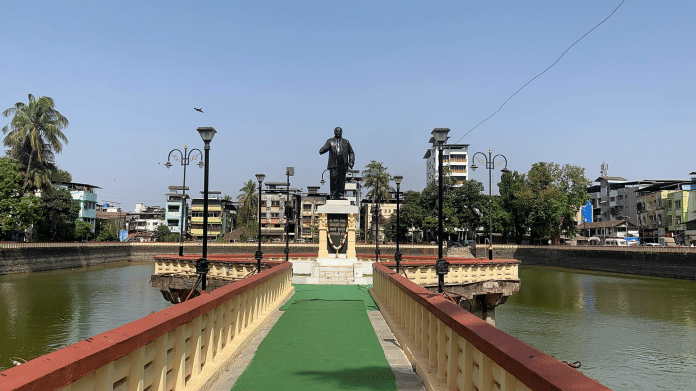



Mahad, Raigad: A historically significant pond in Raigad district’s Mahad town lies in visible neglect—its water is stagnant and covered with thick green algae, with sewage from failing septic tanks in surrounding buildings seeping into it.
This is Chavdar Tale, which became a symbol of India’s anti-caste, Dalit rights movement, following the historic 1927 Mahad Satyagraha led by Dr B.R. Ambedkar, who drank water from the pond in an act of resistance that paved the way for Scheduled Castes to drink from public water sources.
With the centenary year of the Chavdar Tale satyagraha approaching, the Maharashtra government, after a series of proposals by the Mahad Nagar Parishad over the last five years, has approved a Rs 55 crore plan for the rejuvenation and beautification of the historic tank about 115 km from Mumbai.
On 20 March, Chief Minister Devendra Fadnavis performed a groundbreaking ceremony for the Chavdar Tale Water Purification and Area Beautification Project, when he, along with other ministers of state, attended the centenary commemoration of the Mahad Satyagraha, or the Chavdar Tale Satyagraha.
“By next year, with the completion of the centenary, visitors will witness the story of struggle, history, and the sacredness of this place, ” Fadnavis wrote on the social media platform X.
The project, initially under the Mahad Nagar Parishad, has now been handed over to the Maharashtra Industrial Development Corporation (MIDC).
While the project’s deadline is 20 March next year, local residents and officials at the Nagar Parishad believe it will be difficult to wrap up by then.
A Mahad Nagar Parishad official, who wished to stay anonymous, highlighted the delay in government action.
“It seems like since the centenary year is approaching, the plan that we were proposing since 2021 has now been approved,” he told ThePrint.
“Although we worked on the plan and proposed it several times, it has now been given to MIDC. The water purification can be done before next year, but the entire project with the civil work will not be done by then,” he added.
Still, there is some optimism in the town that the centenary year has pushed the government to do what residents and Ambedkarites have been demanding for years.
For Nitin Sutar, a 45-year-old civil contractor and local from Mahad, the project has brought renewed hope for the village.
“At one time, this village had no water pipelines providing water to every household. People of the village relied on the Chavdar Tale for their freshwater needs,” he told ThePrint.
“But lately, the water is so bad that one cannot even go swimming in it. The project that has come at a time of the centenary year may as well be a good thing for the village,” he added.
Jayram Vitthal Pawar, popularly known as J.V. Pawar, co-founder of the Dalit Panthers, an organisation formed to fight against caste-based discrimination and atrocities, said that the pond had fallen into disrepair over the years as ruling parties were busy collecting votes.
“Now that the centenary is coming, they want to grab attention. All these years, when the pond was in decay, they kept ignoring it. Mahad Satyagraha was the first time Dr. B.R. Ambedkar stepped onto the streets and brought about a real revolution,” he told ThePrint.
Bharatsheth Gogawale, the Shiv Sena’s four-time Member of the Legislative Assembly (MLA) from Mahad constituency, said, “We will definitely try to complete this project that we have taken up costing Rs 55.80 crore in the next one year, and people will be able to drink the water then.”
Also Read: Casteism didn’t disappear in Indian cities. It just learned English
Mahad Satyagraha
For centuries, Shudras, once known as ‘Depressed Classes’ or ‘Untouchables’, lay at the bottom of the Indian Varna (caste) system, and were subject to severe discrimination and social ostracism.
As a result, they were denied access to all public resources like water bodies, temples and schools.
In August 1923, social reformer S.K. Bole moved a resolution at the Bombay Legislative Council, recommending that Shudras be allowed access to public water spaces, among other things.
In September 1923, the Bombay government instructed the heads of all departments to give effect to the resolution and allow access to all to public spaces belonging to and maintained by the government.
The Mahad Municipality accepted the resolution in 1924 and opened access to the Chavdar Tale water tank for what were then known as Depressed Classes. However, the resolution could not be implemented on the ground because upper caste Hindus refused to allow them access.
Consequently, on 20 March 1927, Dr B.R. Ambedkar, along with his followers, marched towards Chavdar Tale in Mahad to overcome the denial of rights. He drank water from the tank as a symbolic gesture to assert their right to equal access to public resources.
Soon after, upper-caste Hindus performed a ritual to “purify” the tank water and the Mahad municipality revoked its resolution and closed off access to the tank.
Dr Ambedkar launched another satyagraha but was stopped by the upper castes with a legal notice. On 25 December, Dr Ambedkar convinced his ally, social activist Gangadhar Sahastrabuddhe to burn a copy of ‘Manusmriti’, an ancient Indian text on the laws of Hinduism under the varna system, in solidarity, as part of his second Mahad Satyagraha.
The Chadvar Tale in Mahad has played an important role in history, and the two dates—20 March and 25 December—are revered not only by locals, but Dalits from across the state and country, who gather to pay tribute to the historic struggle that asserted their rights and transformed their social standing.
“The event on 25 December is important also because Dr Ambedkar did not burn the Manusmriti himself, as he could not bring himself to do it. His friend, Gangadhar Neelkanth Sahastrabuddhe, a Marathi Chitpavan Brahmin social activist, performed the act of burning the book instead,” J.V. Patil told ThePrint.
Also Read: The West has imagined “caste oppression” and it is being weaponised against Indians
Need for revival
Locals and officials say Chavdar Tale once had potable water and was a source of fresh water for the entire village, but it has fallen into a dire state in recent years.
A Mahad Nagar Parishad official, who wished to stay anonymous, told ThePrint the local body had been sending proposals to revive the tank to the government since 2021.
The officials said the tank’s water surface has a thick layer of algae because of failing septic systems from sewerage drains around the tank. Additionally, as the tank has stagnant water, the algae accumulates on the surface.
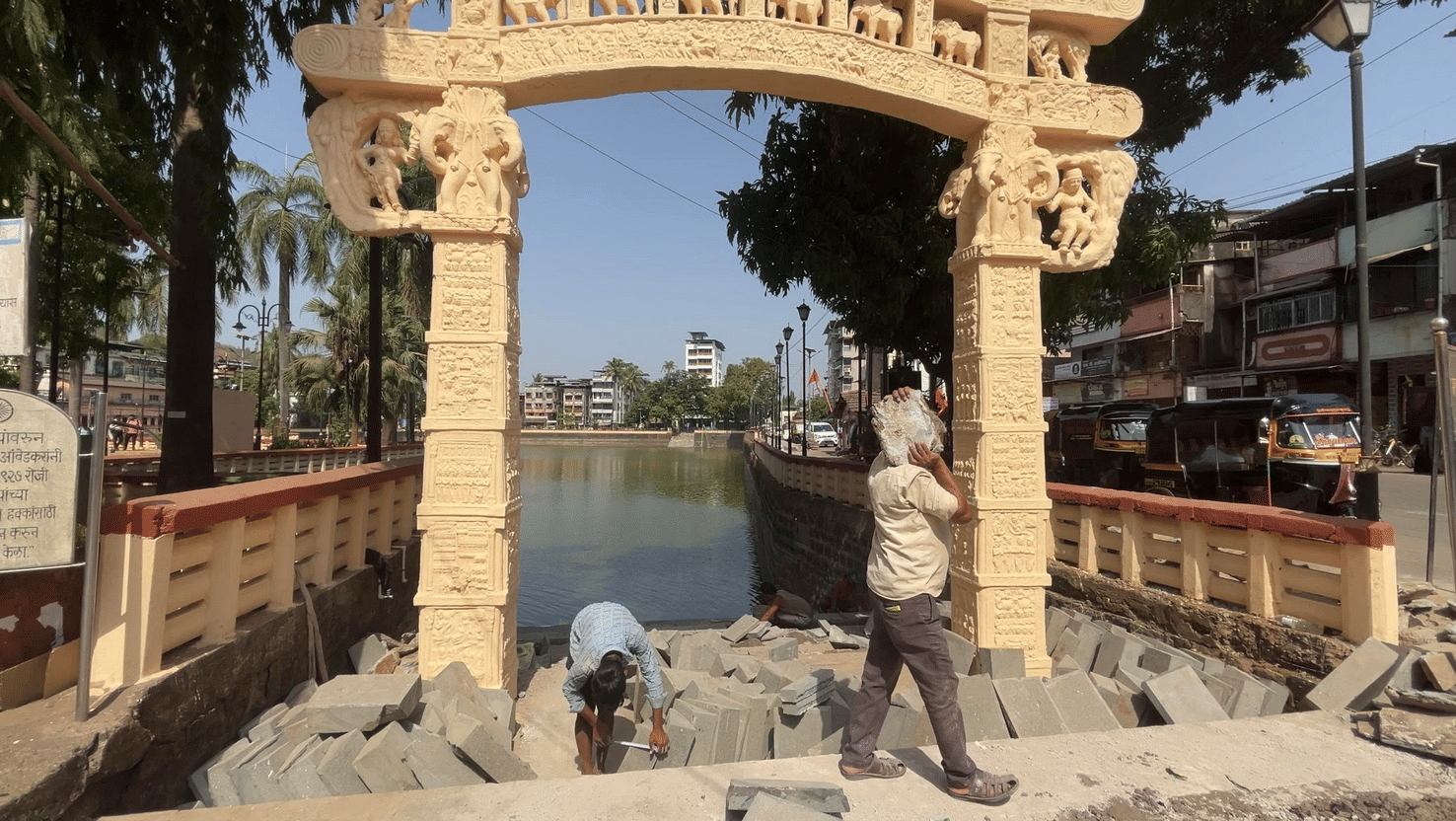
While some locals remember the tank from many years ago when it was at its glory, others said it looked different but better now because of the beautification of several spots, like a small garden next to the lake.
Usha Nagarkar, a 68-year-old woman who stays less than 10 minutes from Chavdar Tale, told ThePrint, “I have lived here all my life. In my days, it looked different. It did not have these borders, footpaths and lamps. It’s all fancy and installed much later. But it looks better now, like a tourist spot where people come all year long.”
“Some of them don’t even know the entire history of the place. They just know that Dr Ambedkar drank water from here, but they find out more about it and feel humbled when they come here, giving this place a lot of importance in history,” she added.
Not everyone has the same view.
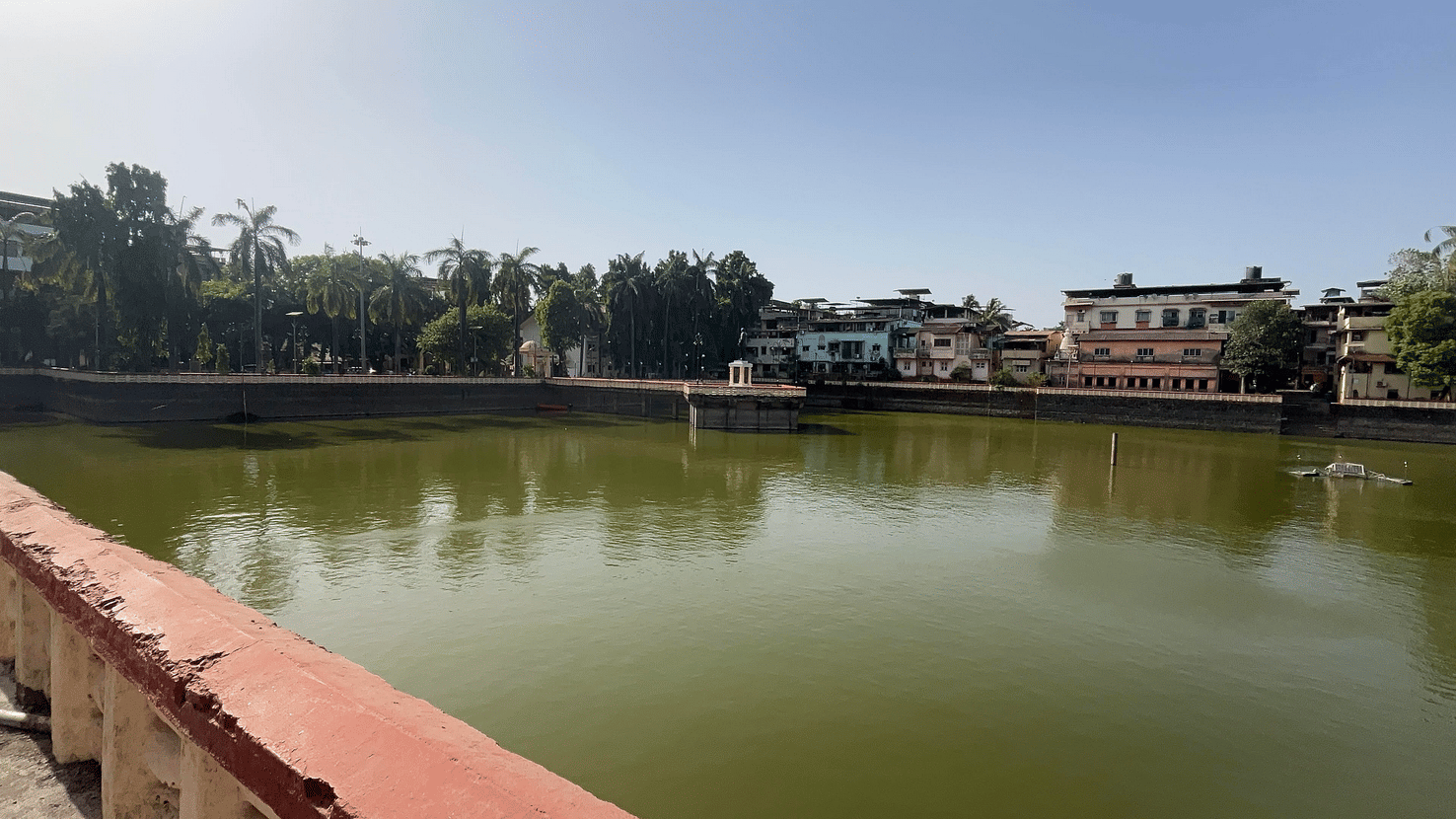
Another local, 70-year-old Jayprakash Ranade, who runs a family-owned ancestral Ayurvedic shop at the intersection of Chavdar Tale, believes the tank has lost its essence in the past few years.
“The Chavdar Tale was wider before. It has now shrunk, after road widening, fencing, barricading and the construction of touristy spots over the tank water. There was a time when the village had no water pipelines. The tank would provide fresh water to the entire village then. Today, it is nothing but a beauty spot,” Ranade told ThePrint.
“People from other parts of the state and country may come here to pay their respect, but it’s not as glorified as it used to be. It is not symbolic of the struggle anymore, just a tourist destination,” he further added.
Also Read: 6 things an anti-caste woke must be mindful of in Ayushmann Khurrana’s new film Article 15
The plan
Chavdar Tale is a well-lit rectangular tank with staircases on three sides to access the water and a narrow bridge where a statue of Ambedkar stands at the tip.
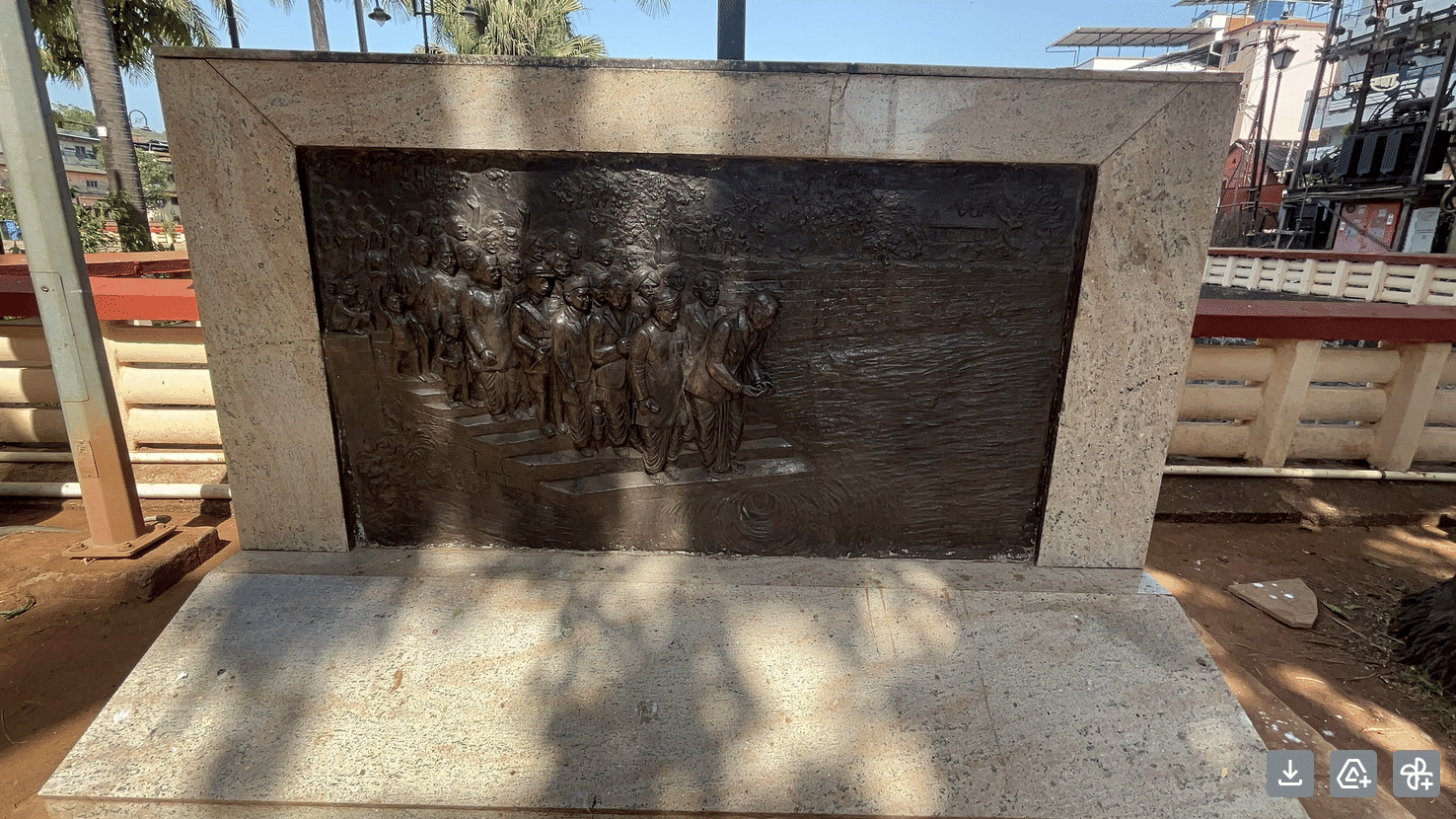
Through the Torana gate, a feature of traditional Buddhist architecture with two pillars and a beam across, a stone memorial panel depicts the Mahad Satyagraha, with Dr. Ambedkar leading the way and drinking water from the public tank.
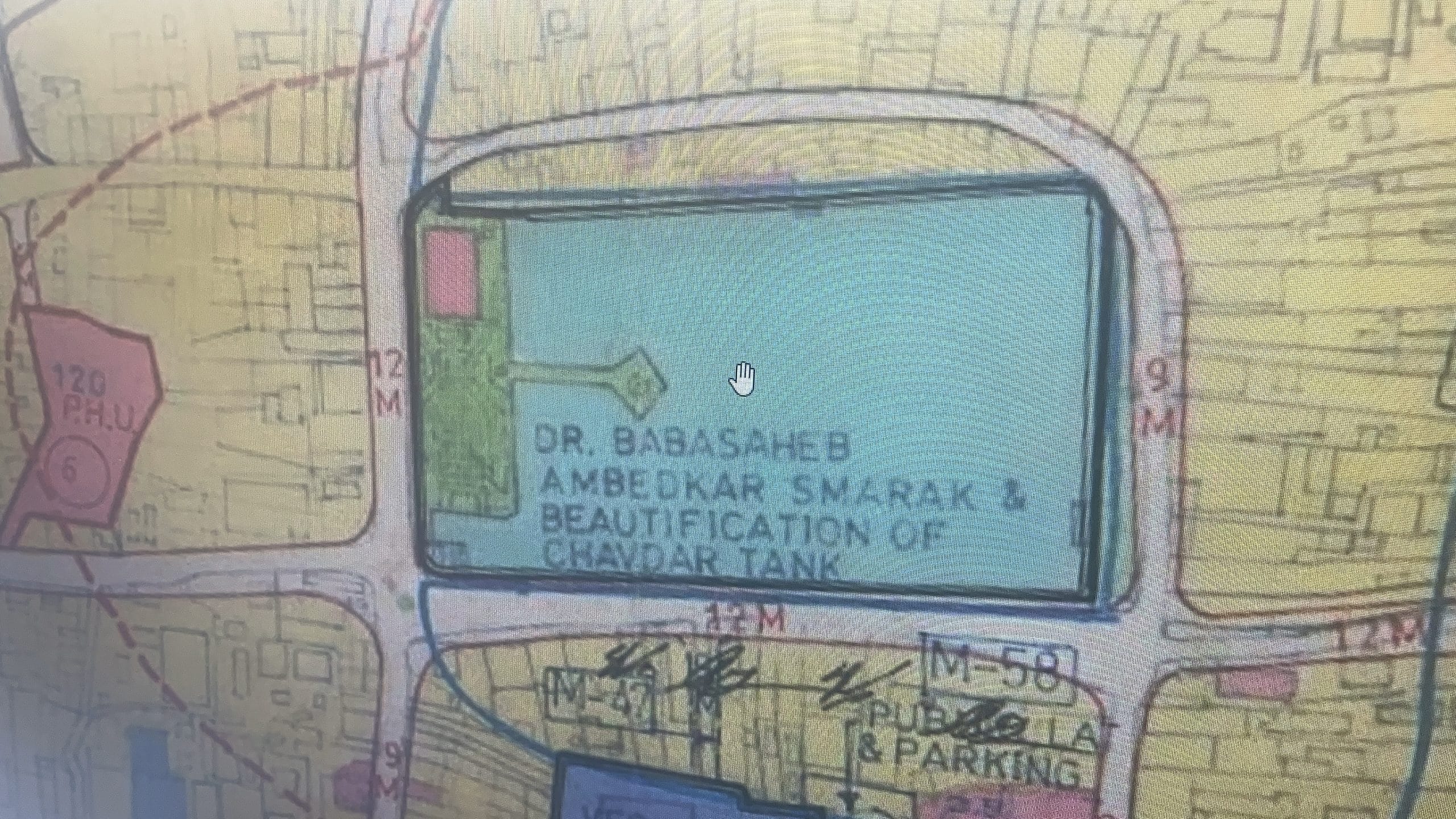
On 18 February, the Maharashtra government issued a Government Resolution (GR) sanctioning Rs 55 crore for the Chavdar Tale rejuvenation and beautification project.
The plan focuses on the purification of water, along with upgrades like the renovation of the Chavdar Tale auditorium and a Chavdar Tale Garden on either side of the tank.
It also includes more pathways and gazebos to accommodate the large number of people who come to pay their respects every year on 20 March and 25 December.
“But the main part of the project has to be the purification of tank water,” a Nagar Parishad official, who wished to stay anonymous, told ThePrint.
ThePrint has learnt that the Parishad submitted a plan to the government seeking over Rs 21 crore for the installation of an ozonation plant at the tank to purify the water.
Currently, the Chavdar Tale tank is cleaned manually every day, using three boats to clear leaves and other debris.
Once a month, 55 kg of powdered sodium hypochlorite, a chemical disinfectant used in swimming pools to prevent algae and kill microbes, is mixed with water and sprayed over the surface.
The official said that the impurities are so dense now that this once-effective process is no longer sufficient. As a result, the Nagar Parishad proposed an ozonation plant, or Ozone Water Treatment Plant, like the one used at the Golden Temple’s Sarovar (Holy pool).
The official said ozone gas, which is very unstable, is produced on site with the help of electricity. “During purification, the plant pulls in water, purifies it and sends it back. It takes about three to four months to complete the entire process and clean the entire tank. Our suggestion was to install the tank near the garden next to the tank.”
On the completion of the entire project, the official told ThePrint, “The entire project might not be completed in a year. The water purification, once the plant is installed, can be done before the centenary celebrations next year, while the civil work for the beautification can continue if not completed by then.”
ThePrint reached out to the MIDC office in Mahad for a comment on the current status of the project and is awaiting their response.
(Edited by Sugita Katyal)
Also Read: Not Manusmriti, British—caste system in medieval Tamil Nadu solidified after Cholas fell