



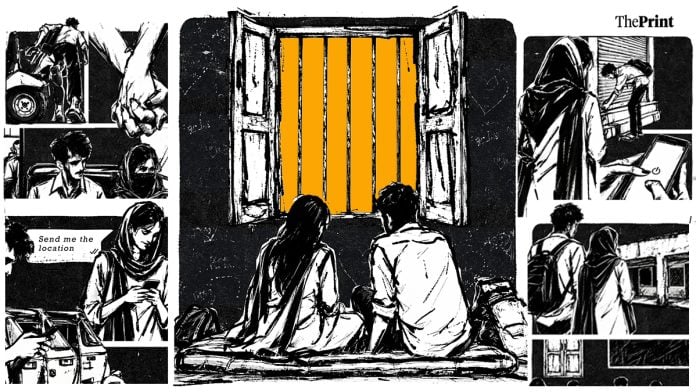
Hisar/Rohtak: Shravan and Aarti’s love story began quite simply. They met when they were 17 and 15, sitting next to each other in a classroom in Arya Nagar in Haryana’s Hisar.
When the young couple, now 21 and 19, decided to get married in May this year, they knew the people of their village wouldn’t approve. So, they went to court quietly. There was no mandap, no wedding card, no stage, no DJ, and no sweets.
And then they disappeared.
Fearing the panchayat’s response, Shravan and Aarti—both from the Kumhar (Prajapat) OBC caste—fled Hisar and remained in hiding for four months. Sometimes at a friend’s place. Sometimes at parks or malls in the city.
“Shravan called me and told me about the wedding,” recalled Mastan Singh, Shravan’s father. “I was happy. We had known Aarti for years. But then we found out Aarti’s family was not happy about the marriage. I was worried. Then, they made everything so much more complicated.”
They only returned after Mastan Singh assured them it was safe to come back.
Except it wasn’t.
Their return triggered two panchayats in the village. Marriage in the same village remains taboo, a rule older than the families who enforce it. Khap leaders defend it with conviction.
On 20 September, village elders gathered for an informal panchayat and passed a resolution calling for a complete social boycott of love marriages, targeting Shravan, Aarti, and any other “such couples” who challenged the decade-old norms.
The Haryana Police created designated shelter homes to keep couples safe.
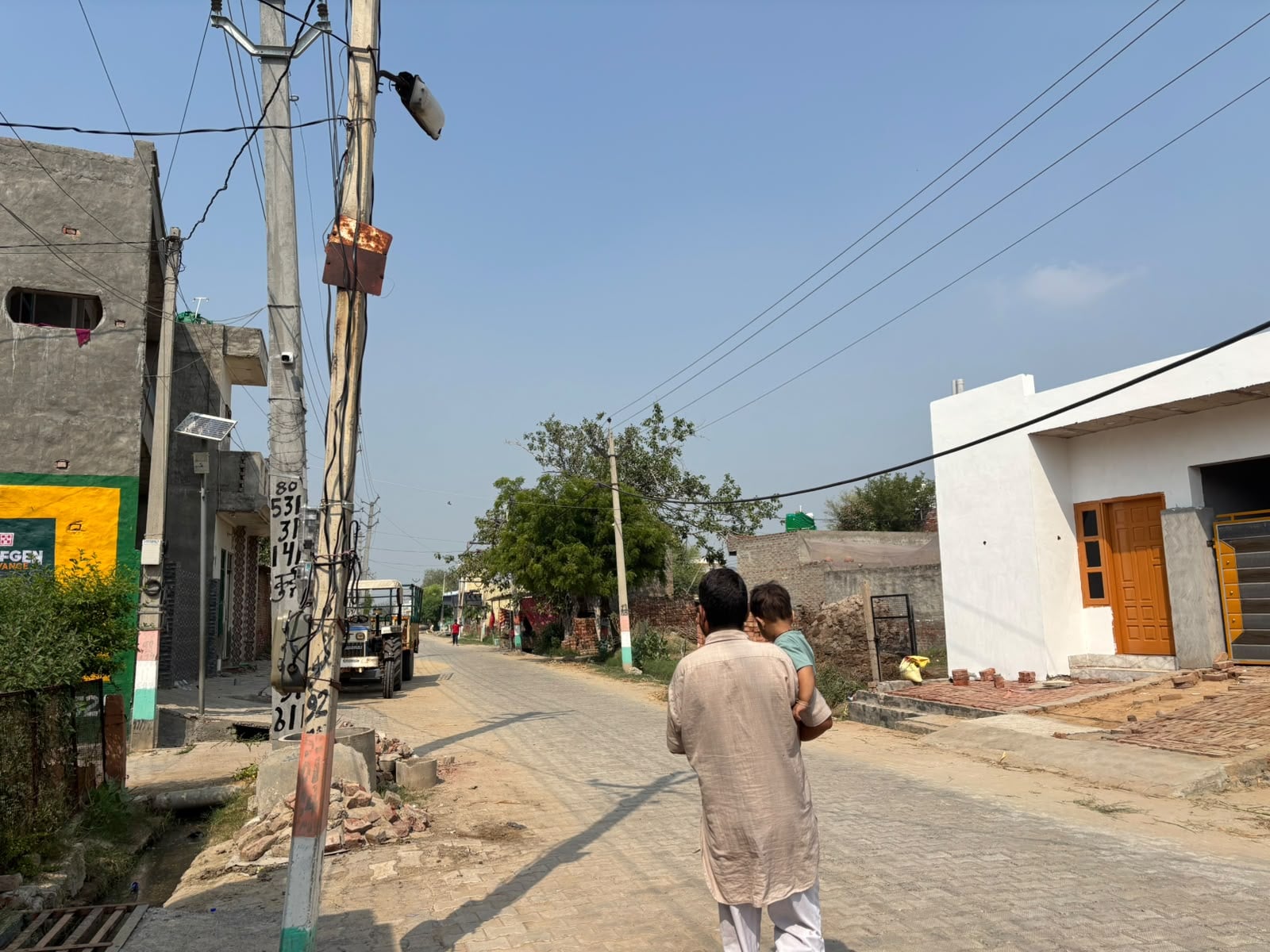
“This is not acceptable,” Kulwant Gosla, a village elder who took part in passing the unofficial resolution, told ThePrint.
“How can two people from the same caste and the same village get married? We call for a social boycott of such couples. We have to set an example so that we do not promote such marriages.”
The elected village sarpanch, Rattan Singh, tried to draw a line between official response and community action.
“The panchayat as an official body has no role to play here; the village elders have decided this,” he said. “We are not against love marriage in general, but why marry within the same village and create trouble? Let bhaichara (brotherhood) exist? In a village, all young men and women are like brothers and sisters.”
Aarti’s family backed the resolution. For them, the marriage was a “betrayal”, and they “cut off all ties with their daughter”.
“We wanted her to study. We never even asked her to do household chores, no cleaning or sweeping, which most girls are made to do,” Aarti’s grandmother, Roshni, told ThePrint.
“Look at what she did instead. She just wanted to run off, get married, and bring shame upon us. Aarti is dead for us now. She should never return or ask us for help.”
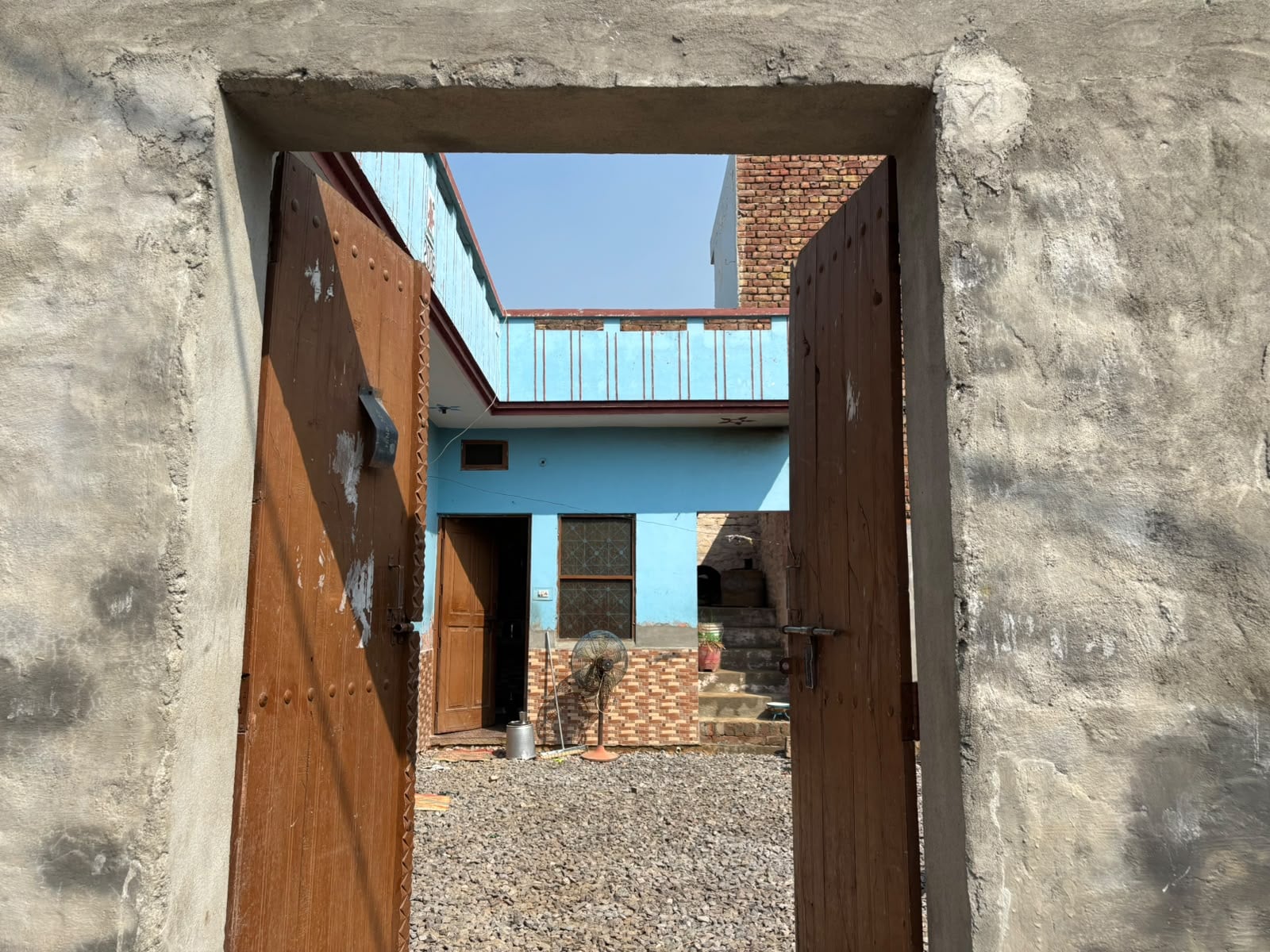
At Aarti’s family home, located just a few kilometers from Shravan’s house, her belongings have been completely removed. Her family has moved on as if she never existed.
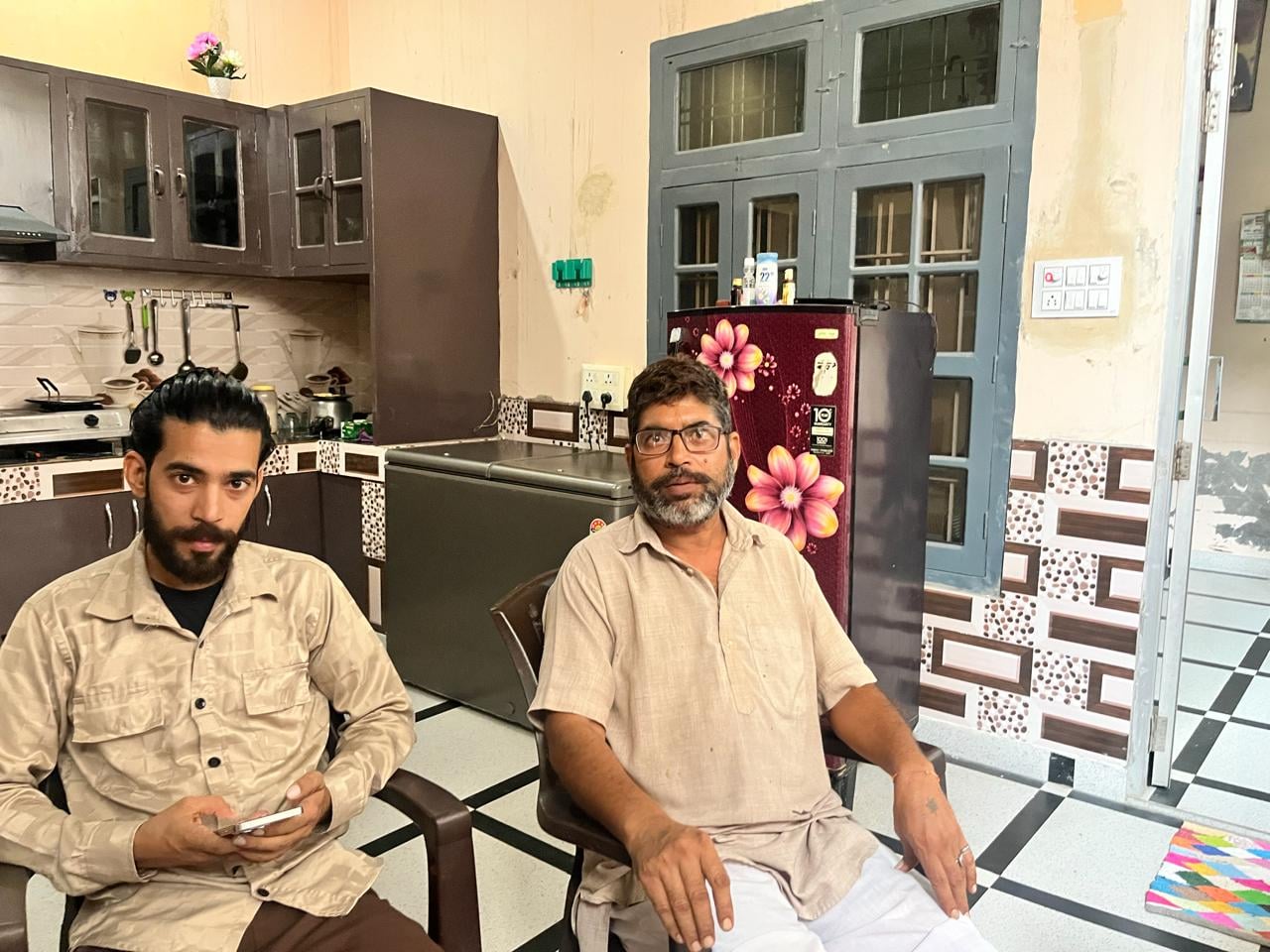
For Surender Dahiya, president of Dahiya Khap, “khap mariyada (dignity) must exist at all times”. He said that children of villages must know “Hindu parampara (tradition)”, and what they can and cannot do to hurt their family’s pride.
“Our parampara says gaon, gohand and gotra (village, neighbourhood and lineage) cannot be the same, when a marriage is being solemnised. This parampara has been going on for decades. Two people, who drink the same water, cannot get married,” Dahiya said, citing “vedic” and “scientific” reasons.
He said couples who marry within same village usually “don’t have strong DNA”. “Earlier, parents and village elders decided who one should marry, but now, these movies have ruined our youth. No sanskari movies are left, all movies show is… love affair, meeting in secrecy, getting married in secrecy, running away with your lover. This is what is impacting our youth. This is why they are choosing love marriages.”
Dahiya also believes social media platforms play a key role to influence the youth. “Reels on Instagram and Facebook have turned the youth into people who think they know best. People post such photos and videos, and they influence young couples, this is against our Hindu culture.”
Also Read: Brother shot Sapna in her sleep. She had crossed a Haryana khap red line
Laying low on WhatsApp, Facebook & Instagram
Shravan and Aarti are not the only ones.
Across Haryana, young couples who choose to marry for love take a huge risk. Fearful of the community and the threat of social boycott, they get married in secrecy, often flee their homes in the middle of the night, and end up in dimly lit, prison-like safe houses.
A love marriage means laying low on WhatsApp, Facebook and Instagram. Not posting any photos, cutting all ties with family. It also means quitting jobs and giving up a career overnight.
Couples flee their homes not knowing when they can return. The fear of honour killing looms over every single step. At no point are young couples allowed to rest, breathe, or even feel safe.
The fear is constant and has been validated by informal diktats passed by village panchayats across the state.
Marriages within the same village or gotra, though legal, are still viewed as violations of community norms and are often punished through boycott, eviction, forced separation, or, in extreme cases, murder.
In many districts, khap norms take precedence over the law, pushing couples to go into hiding or face displacement.
Khaps gained prominence as a tribal and village administration mechanism, and are most prevalent in the states of Maharashtra, Rajasthan, Madhya Pradesh, Uttar Pradesh, and Haryana.
In a rare shift, khaps in parts of Haryana broke a century-old taboo by allowing marriage between certain linked villages, ThePrint reported last year.
But for the most part, the traditional norms still prevail in Haryana. Hisar is no exception.
For decades, Haryana’s khaps enforced rigid boundaries around marriage: same-gotra, same-clan, and same-village unions were forbidden and treated like a crime.
Acting as informal courts, they decided the fate of couples who violated social codes.
Haryana is among the states with the highest rates of “honour killings”, with four cases reported in 2024, according to National Crime Records Bureau (NCRB) data. Of the total 36 honour killing cases reported that year, Bihar had six, while both Jharkhand and Punjab had five each.
Khap councils from Rohtak, Jhajjar and Sonipat meet annually to demand formal prohibitions: a ban on same-village and same-gotra marriages, a ban on live-in relationships, lowering legal marriage age from 18 to 16, and mandatory parental consent for love marriages. They warn of statewide protests if demands are not met.
Hisar-based lawyer Manoj Kush put it bluntly. “Honour killing has been happening for decades. Earlier, it was not recorded. The media didn’t report extensively. Now that is changing. These crimes are becoming national headlines.”
“Manoj-Babli honour killing case served as a landmark judgement in the history of Haryana,” he added.
This was the killing of newlyweds Manoj Banwala and Babli in June 2007.
Based on the assumption that Manoj and his wife Babli belonged to the same gotra (clan), the khap said that they were siblings despite not being directly related. Hence, they declared any union between the two to be incestuous and invalid, and ordered for them to be killed.
The accused, Babli’s family members, who were khap leaders, were convicted.
Experts call village exogamy—the idea that you can’t marry from your gotra or village—a “deep-rooted problem”.
“Classical patriarchy has left women’s sexuality to be controlled by men. Be it a brother or a father,” JNU professor and sociologist Surinder Jodhka said.
For Jodhka, this has less to do with the rules broken, and more about bruised egos, threatened masculinity, and authority that collapses in front of a village.
Young couples vs Panchayat
A few kilometres away in Hisar’s Bharat Nagar, Himanshu, 27, from the Balmiki community and Bimla, 25, from the Saini community met three years ago while working together at a local doctor’s clinic.
Their friendship turned into love, but they were aware of the panchayat’s opposition to the marriage. Without informing their families, they left their respective homes and got married in December 2022.
“When they disappeared, I immediately informed the police to launch an inquiry into the matter,” said Rajesh Bagri, Himanshu’s father, who works as a safai karamchari with the local municipal corporation.
“Later, they were tracked down and found staying at a police safe house. We went to meet them there, and with the intervention of local activists, we were finally able to bring them back home safely,” he added.
Bimla’s family refused to accept her. But Himanshu’s father stood by them and refused to accept the demands of the panchayat.
“I told Bimla’s father that if he opposes this marriage and the village elders are unhappy with it, then they should just end it once and for all,” Rajesh said. “My children have done nothing wrong by choosing each other. They lived a terribly difficult life after that.”
The panchayat asked them to leave the village, and this decision was enforced informally.
The two stayed in a high-security safe house for a week. After leaving the shelter, they remained in hiding for another 15 days in secret accommodation.
Eventually, they fled to Sirsa, where they remained in hiding at a relative’s house for three months. During the time, they didn’t post anything on social media and didn’t make a single phone call to their families.
Both Himanshu and Bimla were forced to resign from their well-paying clinic jobs to avoid being tracked down.
Now, even though they have returned, the fear lingers.
Bimla stays indoors and hasn’t been able to find a new job. Himanshu leaves for work during broad daylight and returns before dark. Neither of them ever leaves the house alone. They remain connected on the phone at all times.
Also Read: Haryana khap breaks 100-yr-old marriage taboo between villages. Now waits for 1st wedding
Protecting couples
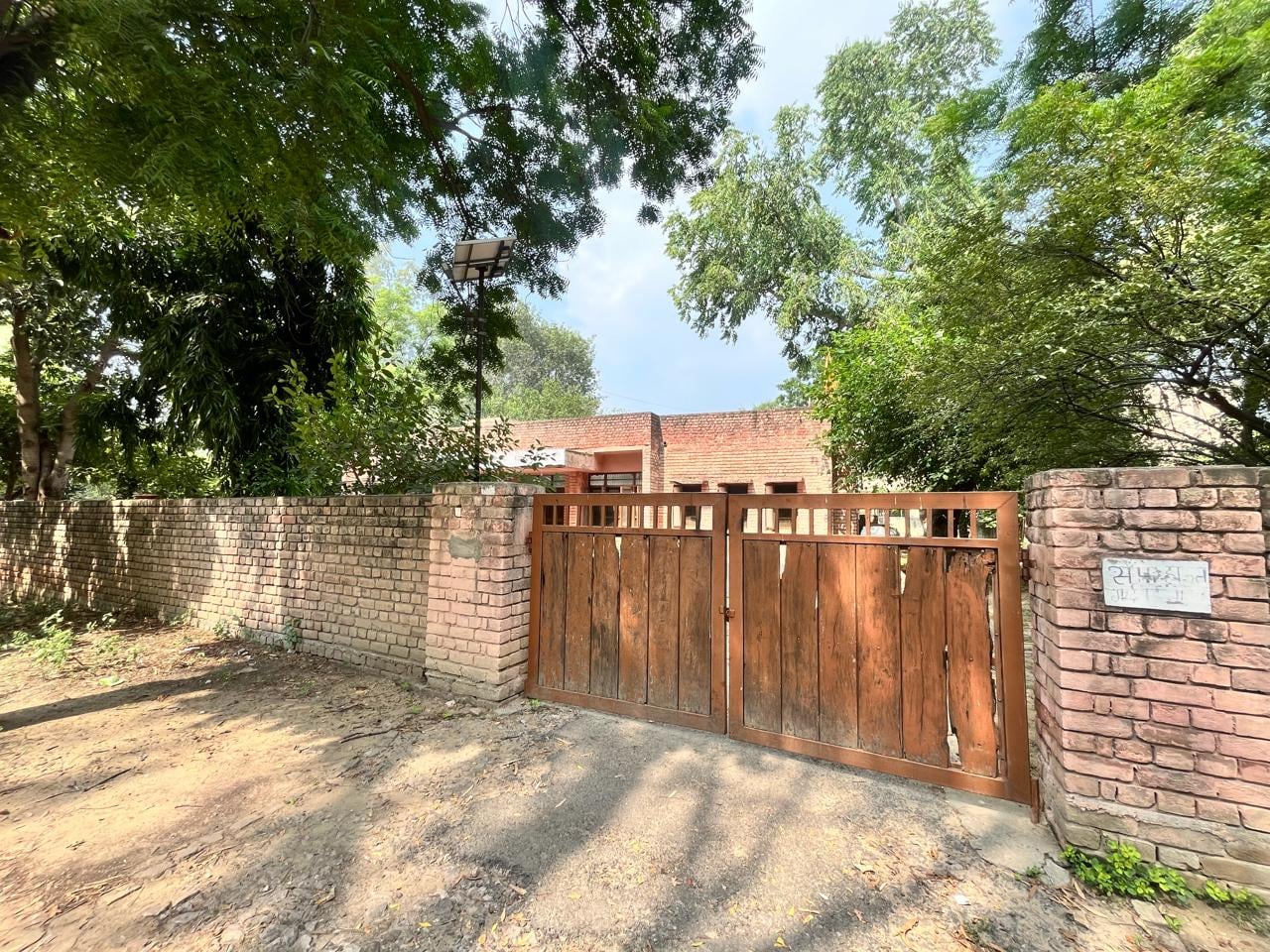
In Hisar, hidden deep inside a forest behind the central jail, is one of Haryana’s state-designated protection homes.
The forest acts as a cover that keeps visitors away. From the outside, the safe house looks like an ordinary residential building. It has young men and women peeping cautiously through the windows to see who has arrived.
Inside, 10 to 12 runaway couples, who fled their villages fearing for their lives either before or after love marriages, share a dormitory-style setup equipped only with basic beds and mattresses. Blankets are provided when official budget allocations arrive.
Although light illuminates the rooms, there is no air-conditioning, creating suffocating air and foul-smelling toilets that the couples clean themselves.
There is a verandah with ample sunlight; clothes like kurtis and t-shirts dry on wires as couples sit cross-legged, talking quietly and passing the time.
Daily routines are simple. The couples clean their bikes, fill water tubs, and wash clothes.
For those inside, the protection house makes them feel safe, but at the cost of basic human comfort and personal liberty.
Himanshu recalls the days he spent inside the Hisar safe house alongside his wife, Bimla, after fleeing their homes. “Both our families were not okay with our relationship because it was an inter-caste marriage,” Himanshu told ThePrint.
“When we realised there was no other way, we decided to get married at the Hisar court on 22 December 2022. We had no idea that safe houses even existed until we searched on Google and spoke to a lawyer who advised us to go there.”
After their marriage at around 12.30 pm, they arrived at the Red Cross premises housing the safe house by 3.30 pm.
“When we entered, we were shocked. It was difficult to live or breathe; this was like an open hall,” Himanshu recalled. “The place was stuffy and uncleaned.”
The couples had to clean the rooms and washrooms because no outside cleaning staff was allowed. The house was partitioned into smaller sections, each with a single bed and a chair.
“Two people had to squeeze onto one narrow bed. Since it was very cold, six or seven couples had to fit into that congested space with only thin blankets to share.”
Fleeing home in desperation, they brought nothing with them. Bimla could not even pack any clothes due to fear of getting caught by her family.
Himanshu managed to carry only Rs 35,000 in cash to cover legal costs and emergency expenses.
“You feel completely like a prisoner inside. We were strictly forbidden from using mobile phones, and were only allowed to step out onto the veranda, not outside the gate,” he said.
“On cold winter evenings, all the couples would gather together, light a small fire, and talk quietly. We would wonder what was happening back home. It was difficult to pass days; nights were easier,” he added.
The couples, from different villages of Hisar, shared their anxieties about their families, court hearings, and losing jobs.
“I spent every day wondering what the judge would say or what action would be taken against us,” Himanshu said.
“People in society have no issues when a marriage ends in divorce or when someone is getting beaten up,” he said. “But because we chose love, we had to fight a massive battle just to survive. It was a terrifying episode, one that I’ve tried hard to erase from my memory.”
In that “shared confinement”, couples from nearby villages like Hansi, Adampur, and Barwala formed bonds of solidarity.
Two police officers, one male and one female, guard the house round the clock. Couples rarely leave the premises, and only leave for necessities like food and medicine.
“Most couples stay between 7 and 15 days while initial threats cool down,” said a senior police officer from Jind.
Maintaining these spaces remains an administrative struggle.
Senior police officers from Jind and Hansi districts say infrastructure remains a challenge.
An officer from Hansi said there is no separate budget for the protection of couples. “The homes are located in police lines, and there is no separate designated space. Sometimes, there is only one available room; sometimes there are two,” said the officer from Jind.
“Some couples who file a petition after fleeing a district end up in safe homes in the same district. That can be dangerous.”
(Edited by Sugita Katyal)
Also Read: Khap panchayats — the role & history of complex social institution in Haryana & western UP