



New Delhi: The government has tightened foreign funding rules, requiring organisations to provide more detailed information on how overseas funds are spent as part of a broader effort to increase transparency in foreign-funded activities.
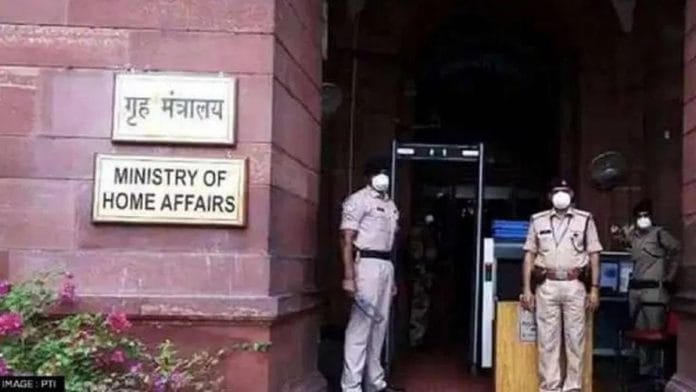
The Ministry of Home Affairs, on 22 June, notified the Foreign Contribution (Regulation) Amendment Rules, 2026, marking a significant strengthening of compliance obligations that represent a shift from broad registration and financial reporting to purpose‑specific, state‑specific, and digitally transparent compliance.
The Foreign Contribution (Regulation) Act, 2010 (FCRA) is India’s law that regulates how foreign contributions are accepted and utilised by individuals, associations, and companies, ensuring that such funds do not undermine sovereignty or public order.
Over the years, the Act has been supplemented by the Foreign Contribution (Regulation) Rules, 2011, which laid down procedures for registration, reporting and utilisation of foreign contributions.
At present, an FCRA Amendment Bill (March 2026) is pending in Parliament.
The 2026 FCRA rules reshape the regulatory landscape for NGOs, trusts, societies and registered companies. NGOs are most prominently affected because they are the largest recipients of foreign funds.
Compliance obligations under the new rules
Under the new rules, applications for renewal of registration and cancellation consideration now require proof that at least Rs 10 lakh of foreign contribution has been utilised for approved purposes in the last two financial years, ensuring that funds are not merely accumulated but actively deployed for social benefit.
Further, the release of instalment-based approvals and subsequent instalments of foreign funds is conditional: entities must demonstrate that 75 percent of the previous instalment has been utilised and this utilisation must be verified through field inspection before the next instalment is sanctioned.
In addition, annual returns must now include a detailed activity report alongside expenditure statements.
Schedule of permissible purposes
Every entity must now obtain purpose‑specific registration, clearly declaring the activities for which foreign contributions will be used and the states or Union Territories where they will operate.
Existing associations are required to file Form FC‑6F within one year, specifying their chosen purposes and geographical scope.
The new rules introduce a comprehensive schedule of approved activities drawn from broad sectors. These include permitted activities under religious, cultural, economic, educational, and social welfare categories, ensuring that foreign contributions are tied to clearly defined objectives.
Several activities under the religious category are permissible but are limited to those “excluding proselytisation”.
The 2026 framework also expands transparency obligations. Entities must disclose their websites, social media accounts and publications, ensuring that digital communication is monitored alongside financial reporting.
A new rule, 17B, which deals with changes in the scope of registration, has been added,
Under this rule, any association already registered under the act that wishes to add or remove a purpose or expand or reduce its geographical area of operation (states or union territories) must formally apply to the Central Government in Form FC‑6F. Therefore, any changes after registration are not automatic.
Earlier, compliance obligations were tied to the executive committee of an association. The 2011 Rules streamlined this by introducing the concept of the Key Functionary to include directors, trustees, partners and office bearers among others.
(Edited by Sugita Katyal)
Also Read: ‘Designated authority’, takeover clause: What FCRA Amendment Bill means for NGOs under govt lens