



This is part 2 of a series on the aftermath of the Noida workers’ protest and subsequent crackdown. Read part 1 here.
New Delhi: At a time when her name was at the centre of heated court hearings and news headlines, 25-year-old law student Akriti Chaudhary—accused of inciting workers to violence after the April Noida wage protests—was in solitary confinement, having “FOMO”.
She regrets missing the CJP protests over the NEET paper leak, and the DUSU elections. Incarcerated, she spends her time reading, recreating Van Gogh’s Sunflowers, and when she gets the chance, discusses the Mahabharata with other women inmates.
Speaking to ThePrint on 16 September from behind the mesh that separates visitors from inmates at Gautam Buddha Nagar district jail, Akriti said jails are spaces used to create fear in the minds of the young and old who step out to protest. “After reaching the corridors of jail, I no longer fear what they want me to be afraid of.”
But Akriti isn’t the only Gen Z member in jail in connection with the Noida workers protest. Away from the spotlight, those still imprisoned five months on include young factory workers, and other students and activists—all in their 20s—whose lives were only beginning to take shape. Some have since missed exams and lost jobs, while others have their studies and careers put on hold. And for their families, prolonged incarceration has also brought the burden of mounting legal costs and debt.
Among them is Anshu Kushwaha, who left his Hardoi home in February and headed to Noida. He had two things on his mind: supporting his aging parents and continuing his education. By September, both had been put on hold.
“I have not earned a single penny,” the 20-year-old told ThePrint from behind bars in the Gautam Buddha Nagar district jail. “Instead my father had to borrow money to pay lawyers up to Rs 34,000 for the two separate cases.”
“When he (his father) last visited me two months back, he told me he will have to borrow again to get a lawyer for the third FIR,” said Anshu.
From behind the prison’s iron grills, several faces frantically looked for their loved ones among the visitors. Those on the wrong side of the bars included men and women accused of crimes of various degrees and nature—as well as some like Kushwaha who were arrested in connection with the workers’ protests.
“When the police began indiscriminately picking us up (on 14 April),” Anshu recollected, “I kept telling them that my semester exams were just a week away and I would miss it for no fault of mine.”
The Noida Police picked him up from near Motherson International, where he worked.
Anshu was pursuing a B.Sc degree while also working nearly 10 hours at the private factory in Noida. He has been named in three separate FIRs registered in connection with the April protests.
‘When police began indiscriminately picking us up, I kept telling them my semester exams were just a week away and I would miss it for no fault of mine,’ Anshu Kushwaha, lodged in Noida jail.
“I was standing in front of the office gate that had been closed due to the protest, unsure if we would work or not. I was just waiting for official communication,” he said. Within minutes, the police began lathicharging and indiscriminately picked up everyone present at the spot, he added.
The Noida Police has registered 11 FIRs in connection with violence and vandalism during the protests. According to ThePrint’s investigation, at least 11 people are yet to get bail, among which at least seven are between the age of 21 and 28—either pursuing degrees or starting a career.
‘Scraping together every penny’
When the lathi’s impact subsided, Anshu realised he was surrounded by several workers from across Noida squeezed into a cell in the commissionerate’s police station. “I was brought to Gautam Buddha Nagar jail on 17 April, along with many of my coworkers.”
Anshu was his family’s sole bread-winner, and left his home in Hardoi to look for ways to support his family while studying. “Not all of us can spend time just studying, so I came to Noida in search of a job in February to help my aging parents.”
When the first paycheque came, Kushwaha was left with only Rs 12,000 after the deductions. After paying for rent, groceries and commute, he was hardly left with anything substantial to send back home, he said.
‘I have begun borrowing small sums of money from relatives & neighbours to hire a fourth lawyer who could apply for his bail plea in the FIR no 164,’ Anshu Kushwaha’s father.
It has been five months of his incarceration and five months without a paycheque.
The three FIRs Anshu has been named in are FIR numbers 164, 165 and 169. He has been granted bail in 165 and 169, but not in FIR number 164.
Under FIR numbers 165 and 169, registered under various sections of the Bharatiya Nyaya Sanhita, Anshu was accused of rioting, attempt to murder, voluntarily causing hurt to a public servant, house trespassing for causing hurt, wrongful confinement, criminal conspiracy, mischief by fire or explosive.
Additionally, he has been booked under BNS sections related to wrongful restraint, wrongful confinement, house trespassing for causing hurt, intentional insult with the intention to provoke breach of peace. He is yet to secure bail in this FIR.
Speaking to ThePrint over the phone, his father Parmanand Kushwaha said he has begun scraping together every penny to get his son out. “I have begun borrowing small sums of money from multiple relatives and neighbours to hire a fourth lawyer who could apply for his bail plea in the FIR no 164 before the Allahabad High Court.”
Parmanand also said he lost some money because the first lawyer did not pay any heed to his son’s case despite charging him Rs 10,000. “Then a second lawyer charged Rs 15,000 for just one bail, and another Rs 14,000 to a third lawyer for Anshu’s second FIR.”
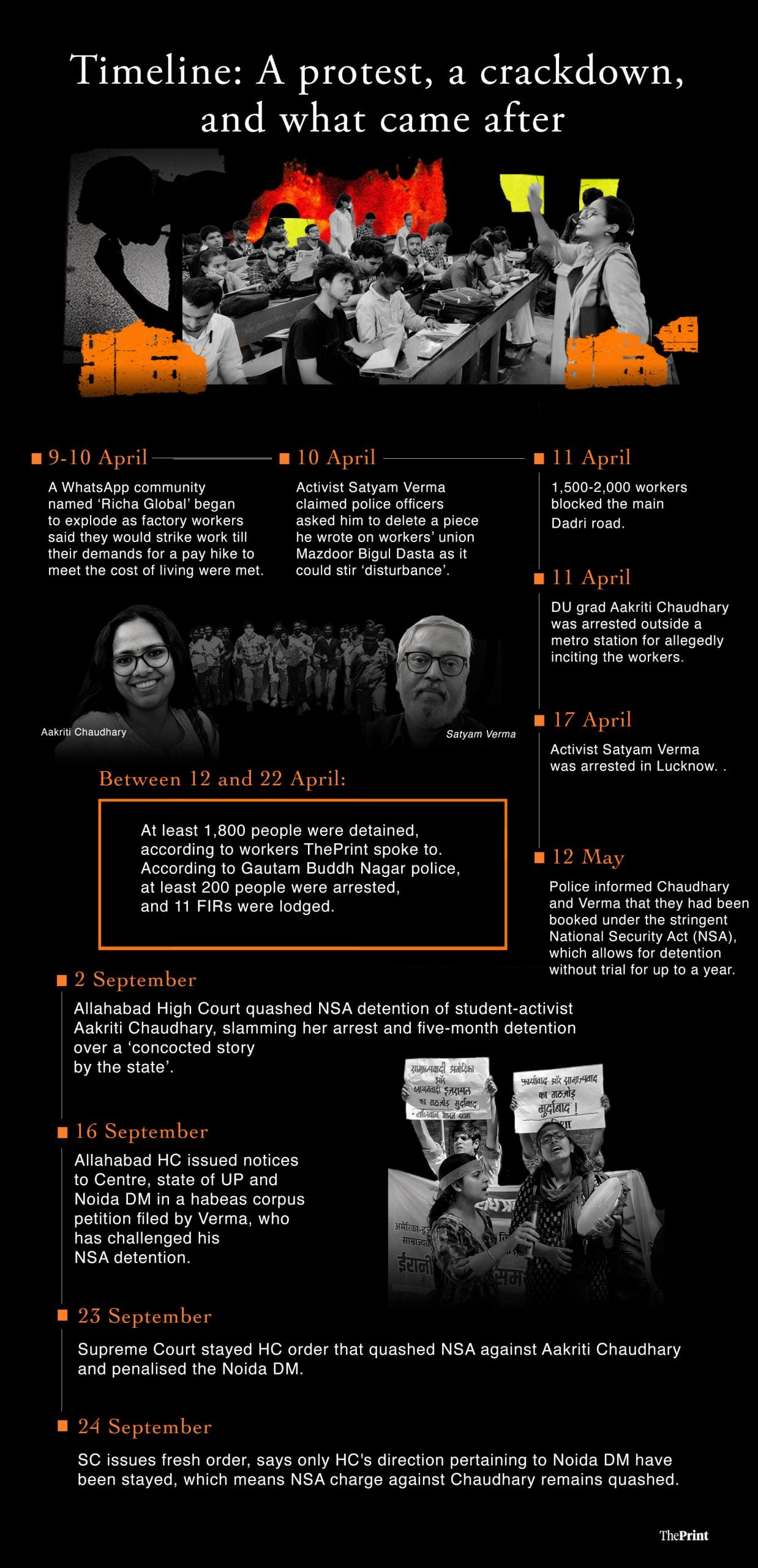
Anshu Kushwaha said his is not the only family struggling to put together the money to pay their lawyer. “Akash and Bhupi were also struggling to pay lawyers, but now they too have received bail after their families begged and borrowed to cover the legal fees.”
Uphill task of finding surety bail signatories
Next to Anshu, stood a frail looking man who had not seen his parents in five months. “My father has mental health problems and my mother is old and has never stepped foot outside our house alone,” 28-year-old Aman Soni told ThePrint from behind the bars. “So for the past five months, my brother-in-law is the only person who visited me—and just once.”
Aman has also been booked in the same three FIRs. “I got bail in 164, 165 and 169 FIR but my family is not able to arrange five people who are eligible to provide sureties, which is why I am still behind the bars.”
A surety bail bond is a document where a third party—family, friend or employer—submits a sum of money or property which could be forfeited if the accused absconds.
‘I have received bail in FIR No. 164, 165 & 169 FIR but my family is not able to arrange 5 people who are eligible to provide sureties which is why I am still behind the bars,’ 28-year-old Aman Soni.
Aman told ThePrint that his family in Uttar Pradesh’s Amethi has been able to arrange three sureties, but requires two more for him to be released. “I come from a family that does not own land or property, so my family has had to endure a lot to find the three people who possessed property to be my surety. Now, they are looking for two more people.”
Aman had joined Motherson International in October 2025, right after completing his Industrial Training Institute (ITI) course. “I used to work at a kirana store in Amethi before joining Motherson’s Lucknow factory. I had only recently moved to Noida, six months after which I landed up in a jail,” he added.
Being the sole bread winner of the family, Aman does not know what awaits him after this jail term. “Many workers who were arrested alongside me said that they would never come here (Delhi-NCR) for jobs. They would start their own small business or work as farm labourers, but never come to the big cities,” he said.
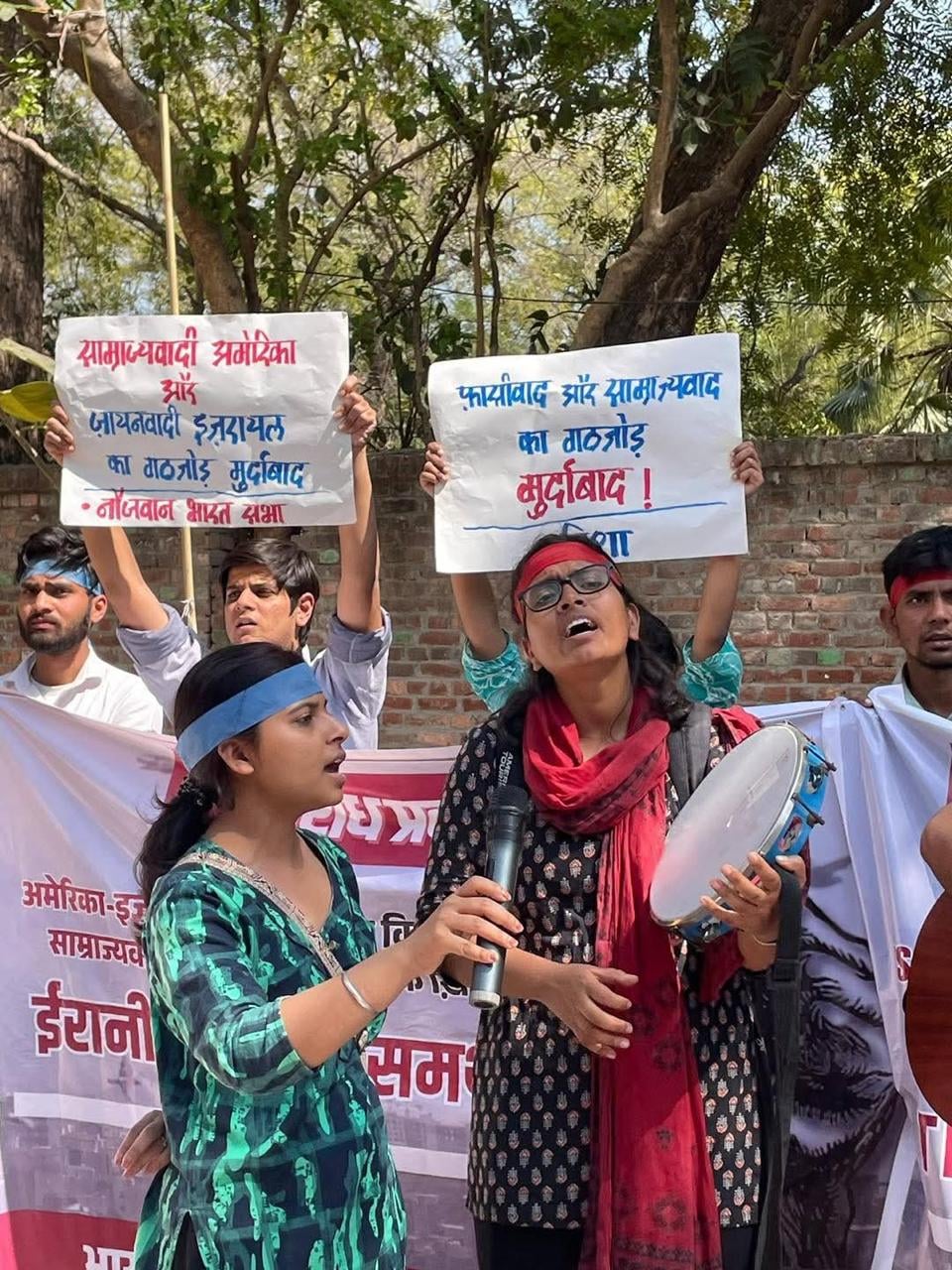
But that was not an option for Aman. “I will have to go knock on every factory’s doors to seek a job. My family is already drowning in debt due to the legal fees,” he added.
Sanjay Soni, Aman’s brother-in-law, told ThePrint over a phone call, that he had to borrow Rs 1.7 lakh for Aman’s legal fees. “I work as a decorator in Uttarakhand. I had to scrape out my little savings and borrowed the rest from my friends to pay for Aman’s legal fees and the commute to Noida. Many of the sureties also asked for some payment in exchange for sharing their property documents.”
Aman waits each day to hear jail authorities to call his name. “Each time they call me, I wait with bated breath to hear that they are about to release me.”
The consequences of the police action extend beyond those who came to Noida for factory work. Among those still in jail are young activists and graduates who had been pursuing higher education and careers.
Beyond the fear and doom of jails
While Anshu and Aman are kept with other inmates, a few others arrested in connection with the protests are kept in solitary confinement as they are considered high risk prisoners.
In solitary confinement, Himanshu Thakur (24) and Akriti (25), told ThePrint that despite the difficult times, they have not stopped doing what they have always cared for: reading, writing and community building.
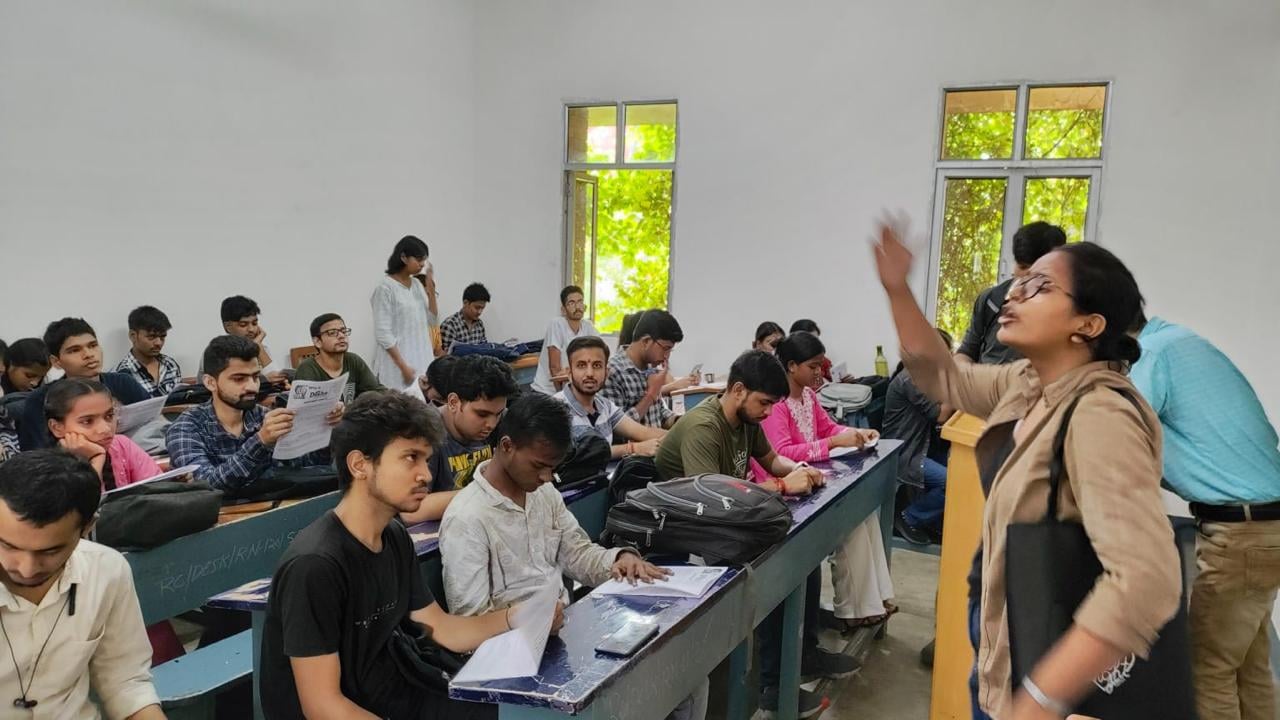
Himanshu and Akriti, two of eight activists booked in all the 11 FIRs, face cases under BNS sections related to attempt to murder, wrongful confinement, mischief, causing grievous hurt to public servant, rioting while armed with dangerous weapons, criminal intimidation, to name a few.
Delhi University student-activist Akriti Chaudhary was also booked under the stringent National Security Act (NSA) on 13 May. On 2 September, the Allahabad High Court criticised the basis of this detention, calling the state’s narrative a “concocted story” and quashed the NSA order. It also directed the state to pay Rs 5 lakh in compensation, to be recovered from the salary of Noida District Magistrate Medha Roopam who signed off on the order.
The District Magistrate challenged the order in the Supreme Court. Hearing the appeal on 23 September, the court stayed the quashing of the NSA charge, while striking down the fine imposed on IAS officer Roopam.
Akriti, meanwhile, is yet to get bail in six of the 11 FIRs, including FIR numbers 169, 116, 117, 151 and 157 in which she has been booked under charges related to attempt to murder, criminal conspiracy, wrongful confinement, among others.
‘No longer fear what they want me to be afraid of’
Akriti told ThePrint she no longer feels afraid, but she does have a serious case of “FOMO”.
“I learnt from my friends who visited me that the youths of India took to the streets to protest against the NEET scams, I felt a strong sense of FOMO then. Most of us here would have wanted to support the cause and stand by them,” she said.
She also wanted to be on ground during the September DUSU elections. “Days behind the bars make you miss such big societal events.”
Akriti said she has tried to use her time in jail meaningfully. “We painted the shelves of the library, recreated Van Gogh’s Sunflower series, and have been discussing excerpts of the Mahabharata with the women inmates here.”
Akriti, who has finished reading a long list of “to-be-read” books, said her friends have been supportive enough to get her more books on workers rights, labour unionisation and political movements in India.
Meanwhile, 24-year-old Uttarakhand-resident Himanshu, a History graduate from Hansraj College, cleared his NET UGC exams, qualifying for junior research fellowship with a 99.3 percentile while he was in the lock-up.
“We have tried sending him the books needed for his exam but it is purely his determination that even during such times, he excelled at the exam,” said Neha Thakur, his sister. Neha was granted the permission to appear for the NET UGC exam after his legal counsel sought permission from the magistrate. The jail authorities accompanied Neha to his examination centre and brought him back after the completion of the exam.
She said Himanshu was just days away from his PhD interview at Delhi’s Jamia Milia Islamia university, when the Noida Police picked him in the matter and named him in the 11 FIRs. “Himanshu has received bail in eight cases, and is awaiting the court’s decision in three other pending cases,” she added.
Out of the three FIRs in which Himanshu is yet to receive bail, the police have booked him under sections of the BNS relating to attempt to murder, rioting, rioting with armed weapons, criminal intimidation to name a few.
According to his lawyer Colin Gonsalves, their legal team has approached the Allahabad High Court for his bail. “Our legal team has already applied before the Allahabad High Court for Himanshu’s bail in connection with FIR no. 149, 158 and 172. We are hopeful,” Gonsalves told ThePrint over call.
Himanshu is interested in environmental and labour history research. For now, however, his academic plans remain on hold, but the books he is reading in jail are tied to the research he hopes to pursue outside it.
“Masters, Servants, and magistrates- Edited by Douglas Hay, and Paul Craven, Working lives and Worker Militancy: The politics of labour in colonial India – Edited by Ravi Ahuja, The everyday politics of Labour: Working lives in India’s informal Economy- by Geert De Neve,” he named a few.
(Edited by Ajeet Tiwari)