





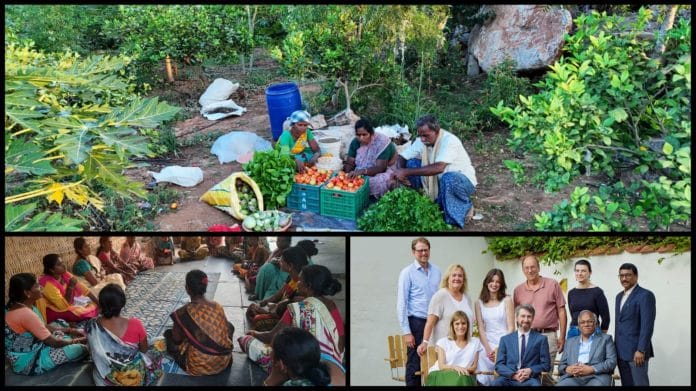


Anantapur: Two years ago, every farming season began with anxiety for Nagendramma and her husband, Narasimha Reddy, in Bathalapalli village of Andhra Pradesh’s Anantapur district.
The couple owns a five-acre sweet lime orchard, while Narasimha Reddy’s brother, Venkatrami Reddy, cultivates a neighbouring five-acre field. Like thousands of other farmers in the drought-prone Rayalaseema region of the state, the brothers began each day spraying chemical weedicides and pesticides in their fields—not because they believed in the practice, but because they saw no alternative.
Speaking to ThePrint, Nagendramma recalls that her heart was never in chemical farming. To keep their farm running, she operated a small hotel in a nearby town, using its earnings to meet mounting agricultural expenses.
Venkatrami Reddy and his wife, Gangamma, faced a similar reality. Despite spending nearly Rs 2.5 lakh on fertilisers and pesticides, their groundnut crop continued to deliver poor yields while debt kept mounting.
The experiences of the two couples reflected a much larger crisis unfolding across Andhra Pradesh’s arid Rayalaseema region, particularly in the poorest districts of Anantapur and Kurnool.
For decades, farmers battled recurring droughts, repeated borewell failures, inadequate micro-irrigation facilities and limited non-farm employment opportunities—a combination that proved devastating, Lakshma Naik, district project manager, told ThePrint.
Between 1995 and 2015, according to the Andhra Pradesh State Disaster Management Authority, Rayalaseema experienced drought-like conditions in 14 of 20 years.
The poor economics of farming only deepened the crisis. The Centre’s 2019 Situation Assessment Survey of Agricultural Households found that the average monthly income from crop cultivation in Andhra Pradesh was just Rs 3,800, a government officer said.
It was against this backdrop that the state launched the Andhra Pradesh Community-Managed Natural Farming (APCNF) programme in 2015—a women-led agricultural movement designed to reduce farming costs, restore soil health and help farmers escape cycles of debt.
Refusing to let debt claim their lives, over 3.5 million women organised through 340,000 self-help groups and took control of their fields—becoming the driving force behind the initiative.
Over the years, champion farmers such as Nagendramma and Gangamma helped demonstrate that natural farming can transform livelihoods while making agriculture more resilient.
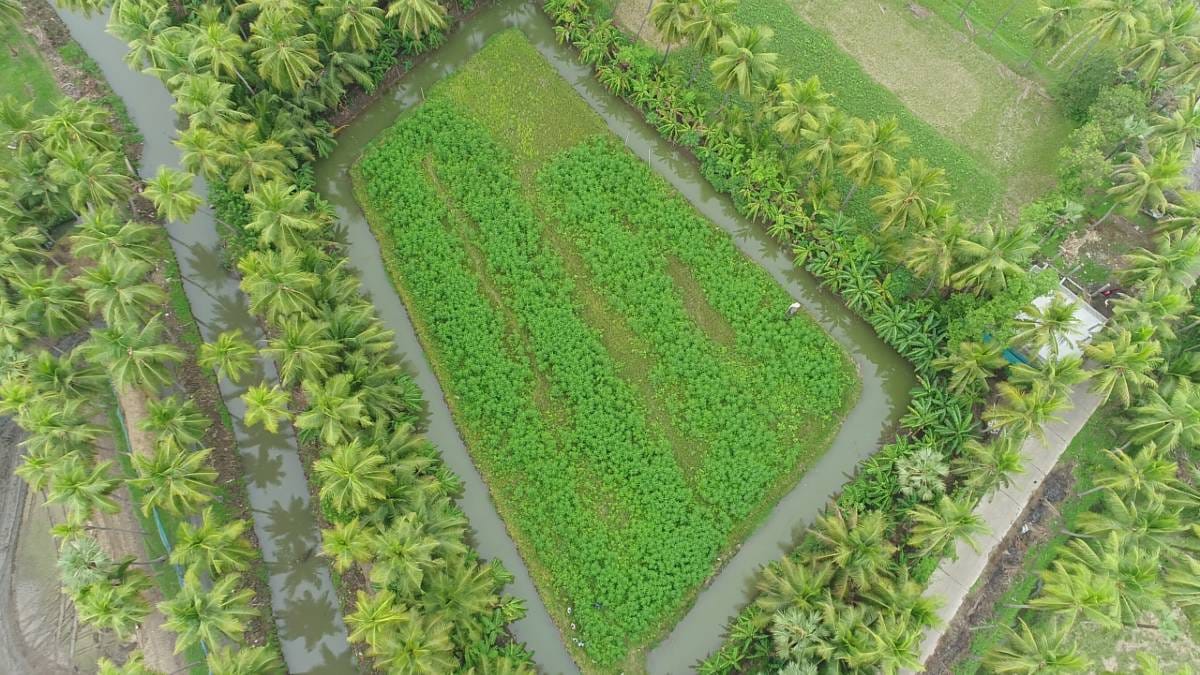
By replacing expensive synthetic inputs with home-brewed biological resources, these women restored life to barren soils and scaled APCNF into a global model.
The APCNF has since emerged as one of the world’s largest natural farming programmes and is being considered for replication across 18 Indian states and 55 countries, according to O. Anand, Collector, Anantapur district.
It also won the 2026 Food Planet Prize from the Curt Bergfors Foundation in Sweden—the world’s largest environmental award for changing global food systems—after being chosen from over 1,000 nominations worldwide.
APCNF & its origins
After the bifurcation of Andhra Pradesh in 2014, said Naik, who is Chief Technology and Innovation Officer for APCNF, Chief Minister N. Chandrababu Naidu was looking for a solution to address the decades-long struggle of the Rayalaseema farmers.
“It was at that crucial juncture, when the state was staring at farm losses, debt carried forward from the bifurcation, and an imminent cyclone that threatened to destroy crops further, when IAS officer T. Vijay Kumar was brought in,” he explained.
A 1983-batch officer who spent 27 of his 39-year government service in large-scale community mobilisation and promotion of livelihoods of rural women and farmers, Kumar decided that APCNF would be a women-led initiative.
He now leads the programme as executive vice chairman of Rythu Sadhikara Samstha (RySS), which implements it, and has a team of five other IAS and IFS officers who help in scaling and managing it.
RySS is a not-for-profit organisation established and fully owned by the government of Andhra Pradesh. It nests in the department of agriculture and cooperation and leads natural farming initiatives in the state.
Speaking to ThePrint, Kumar explained that the movement was anchored by women SHGs to build peer trust and social capital.
“A compounding crisis of toxic chemical residues, ruined soils and crushing agricultural debt forced Andhra Pradesh’s smallholders to the brink, triggering an urgent need for change. It was then that I decided to look at the poor differently. They are lacking in resources, not in capability,” he said.
At its core, the APCNF trains farmers in low-cost natural farming technology. It allows them to cultivate crops without any fertilisers and pesticides. Instead, they use inputs made with farm-based resources and practice crop diversity. It thus helps reduce external input costs and supports remunerative, sustainable, and resilient farming systems. Farming without fertilisers also restores soil health, strengthens biodiversity and builds climate resilience.
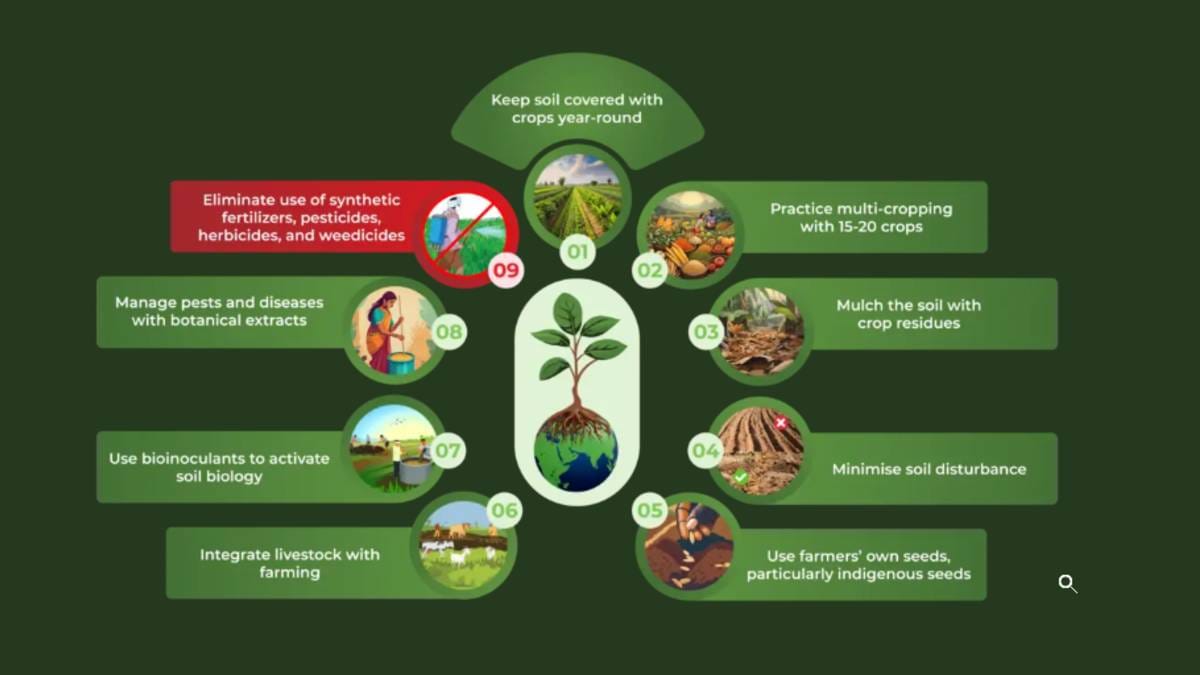
Developed through rigorous field application, APCNF-model fields have five main crops, and 12 to 18 biodiversity crops. Such A-grade model farms optimise the usage of land and sunlight while improving per-acre productivity. What makes it scalable is that these models are highly customisable based on soil type, local crops, food habits and the market.
Since its launch in 2015-16, the APCNF programme has scaled to 8,168 gram panchayats, more than 1.77 million farmers, and more than 0.92 million hectares, with verified gains in farmer incomes of 38% to 66%, water savings of up to 50%, and greenhouse gas (GHG) emission reductions of up to 46% per acre, according to its website.
Also Read: Indian agriculture is ‘a walled-off garden stuck in the 60s’. Private investment is the answer
‘Sharing knowledge gave me joy’
With community-managed natural farming, farmers such as Nagendramma and Narasimha Reddy can now grow sweet lime, guavas, and bananas in the same orchard rather than depend on a single crop (sweet lime).
And for Gangamma and Venkatram Reddy, who had low-yielding groundnut crop, growing rice and vegetables in the same field has helped them earn more from the same five-acre plot.
“This natural field is a beautiful world of coexistence where biodiversity prospers, keeping the field busy and soothingly noisy,” said Gangamma, looking at the rainbow variety of vegetables and fruits in her plot.
By their own admission, both Gangamma and Nagendramma now make Rs 5-6 lakh per crop season growing fruits, vegetables, groundnut, and paddy as opposed to the barely lakh or so they made previously.
But for Gangamma, her biggest moment was not the enhanced income or freedom from debt. It was her trip to Zambia and Nigeria, organised by the Andhra Pradesh government.
Impressed by the success stories of farmers in the state, a few countries in Saharan Africa asked for a familiarisation tour of the women-led initiative. The tour, organised by the state to six African countries, was aimed at helping local farmers learn the art of natural farming from champion farmers such as Gangamma and Nagendramma who had perfected their craft.
“Sharing my knowledge with the farmers in Africa gave me joy. We didn’t speak each other’s language, but I showed them everything I learnt. When I saw a woman farmer visit the field with a 15-day baby in her arms, I realised how important it was to help each other transition out of poverty,” Gangamma told ThePrint.
Nagendramma, on the other hand, chose to share her learning with women SHGs in Marathwada and Saurashtra regions of Maharashtra and Gujarat, respectively.
The programme’s expansion has depended not only on the extensive SHG network but also on its farmer-to-farmer extension model, where farmers learn directly from fellow cultivators through demonstration and practice.
Even so, abandoning decades of dependence on chemical farming was not easy, both farmer couples admitted.
“I used to wonder if the season of bumper yields and a good market rate will last and bring me a fortune in the long term,” Narasimha Reddy said. “Years of stable yields and consistent income eventually replaced those fears.”
Recognition & replication
Andhra Pradesh’s women-led farming revolution has been recognised by several agriculturists and ecologists in India and worldwide.
During a field visit in April 2024, Australian soil biologist Phill Lee, founder of Regenerate Earth, an agriculture consultancy, observed the brothers’ farms. According to Lee, the natural farming plot appeared healthier, with crops looking more vigorous than those in the conventionally farmed field.
Lee has worked with APCNF/RySS as an adviser and has made multiple visits to Andhra Pradesh.
“The farmer is reaping the benefits of this system every day, harvesting vegetables of diverse colours. More colours mean more phytonutrients, which help fight inflammation and reduce chronic diseases, especially cancer. This is food that is not grown with synthetic NPKs and pesticides, but with a whole range of nutrients made available in the soil by natural farming technology. This is the food that truly nourishes the human body,” Lee noted.
Followers of the late Japanese farmer and philosopher Masanobu Fukuoka, known for pioneering natural farming and restoring desertified landscapes, also approached APCNF officials with offers to help expand the model internationally, Naik said.
But the biggest pat on the back came when APCNF won the 2026 Food Planet Prize from the Curt Bergfors Foundation in Sweden.
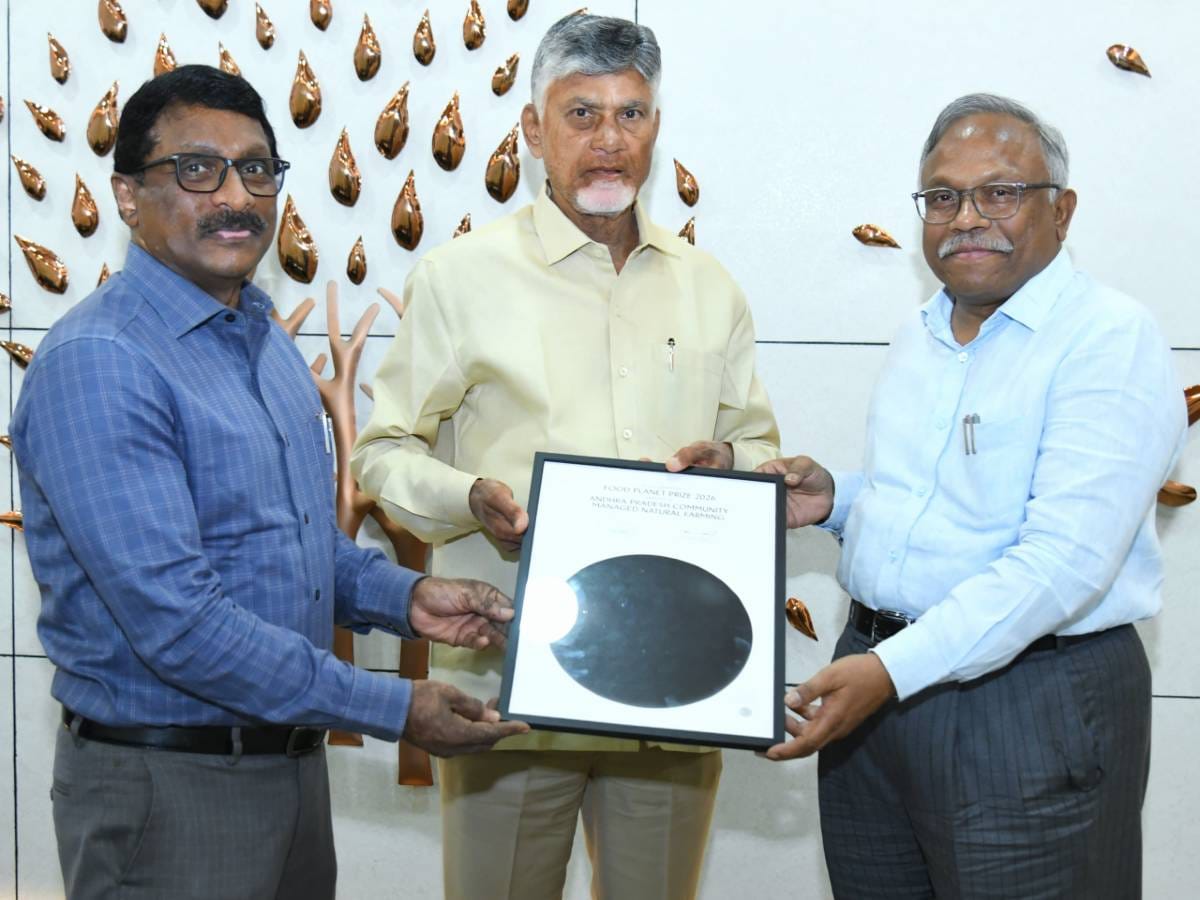
When the award was announced in May, APCNF was described as one of the world’s largest scaled natural farming and agroecological programmes.
The RySS team is now supporting the Ministry of Agriculture, NITI Aayog and the Ministry of Rural Development in expanding natural farming across India.
To help implement the programme successfully across many nations and regions, Vijay Kumar was also appointed the Vice Chair (Production) of the Champions Network for the United Nations Food Systems Summit held in September 2021.
“APCNF is showing the way forward for the next green revolution in India,” said the collector of Anantapur, and an active supporter of the programme.
“Farm entrepreneurship in Andhra is helping not just the ryots (farmers) but all of us adapt to the pressures of climate vulnerability. That drought-prone Anantapur has been at the forefront of scaling the social capital of SHG federations will go down as one of the biggest farm revolutions India has ever seen in recent times,” he asserted.
(Edited by Nida Fatima Siddiqui)
Also Read: How to climate-proof Indian agriculture through innovation – from fertiliser to farmer networks