





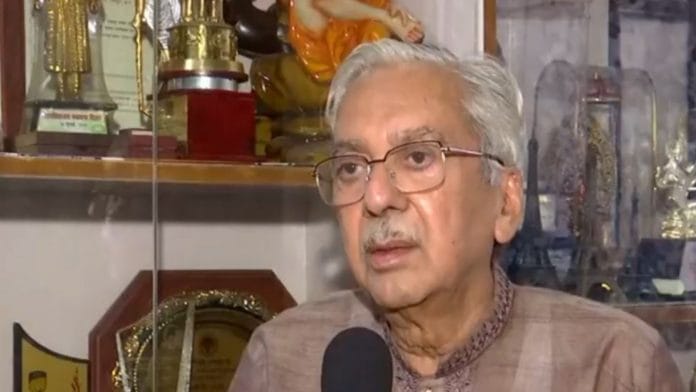


Noida: Former NCERT Director JS Rajput on Friday defended the inclusion of a verse from the Manusmriti in the new Class 9 Social Science textbook, saying that old literature should be studied and understood even if some parts are debated or not accepted today.
Rajput said that he does not agree with calling the Manusmriti a controversial text, adding that many ancient writings contain ideas that modern society may not accept but are still studied by scholars.
He said he has read the Manusmriti, including disputed sections, and believes it contains important ideas that reflect the thinking of that period.
Speaking to ANI, Rajput said, “… I don’t agree with calling Manusmriti a controversial book. Many texts across the world contain ideas that societies today no longer accept, yet they are not labelled controversial. Manusmriti has been studied by scholars.”
“I have read the Manusmriti myself, including the disputed sections, and discussed them with scholars. It contains profound insights that still surprise modern thinkers, showing how advanced the thought was for its time. Old literature, whether we like it or not, deserves to be known,” he further added.
The National Council of Educational Research and Training (NCERT) had added a verse from the Manu-smriti in its new Class 9 Social Science textbook to illustrate that women were respected during the Vedic era.
NCERT quoted a verse from the Manu-smriti to illustrate that women were accorded respect in the Vedic period, while also emphasising that their position “fluctuated, even declined” over time.
The chapter, State and Society up to 1000 CE, says the Vedic period is “often described as a period during which women held a high and respectful position in society”.
It notes that women participated in scholarly learning, performed rituals alongside men in certain contexts, attended public gatherings, and that several hymns of the Rig Veda are traditionally attributed to women sages, including Apala, Visvavara, Ghosha and Lopamudra.
The textbook further states: “The tradition of respect for women is evident in texts composed after the Vedic period, too. For instance, Manu-smriti mentions.” (ANI)
This report is auto-generated from ANI news service. ThePrint holds no responsibility for its content.