






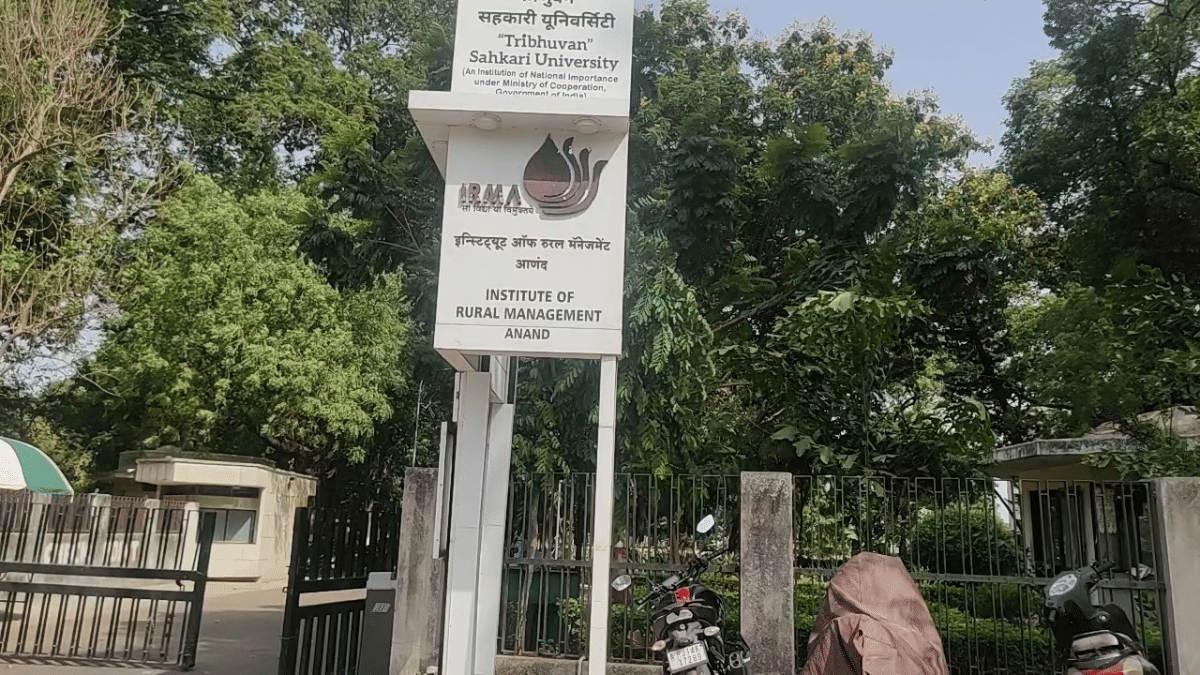
Anand (Gujarat): At the entrance to the campus on Mangalpura Road in Anand is a new signboard. At the top, it reads in bold: Tribhuvan Sahkari University. Below it, in slightly smaller type: IRMA (Institute of Rural Management Anand).
The second line is not a footnote. It is the name that the institution’s graduates, over 46 years, would introduce themselves with—at job interviews, at dairy cooperatives across Gujarat, in the villages of rural India where they spent months doing fieldwork that no other management school asked of them.
It now sits beneath another name, one that did not exist until 14 months ago.
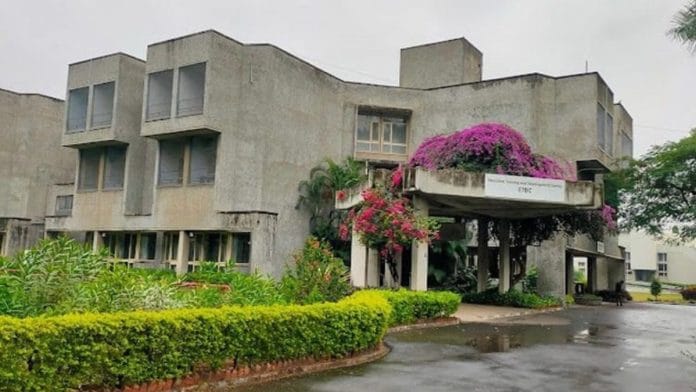
Walk through the gate, and the campus looks largely unchanged. The buildings are the grey concrete that architect Achyut Kanvinde designed in the 1970s—unassuming, built for the long run.
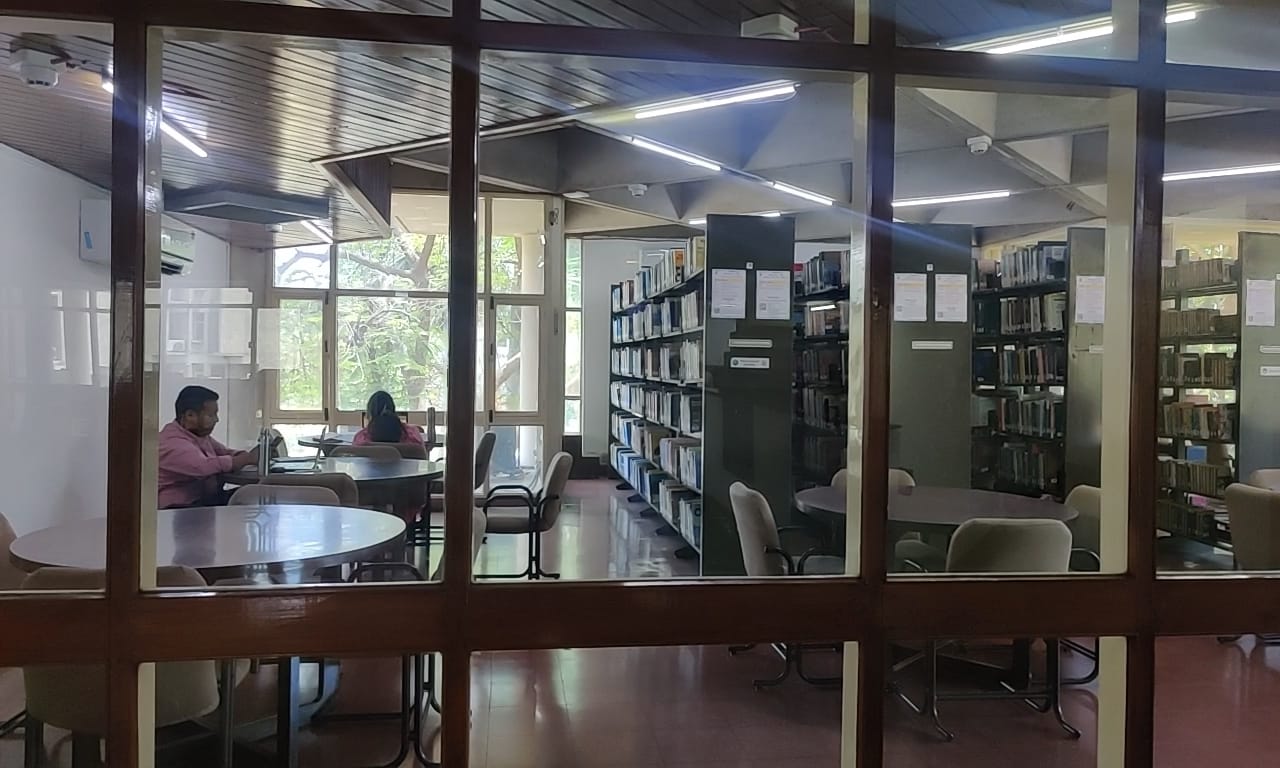
The Ravi J. Matthai Library—named after the founding director of IIM-Ahmedabad who helped shape this place—still anchors the centre of campus. The winding, shaded paths are the same.
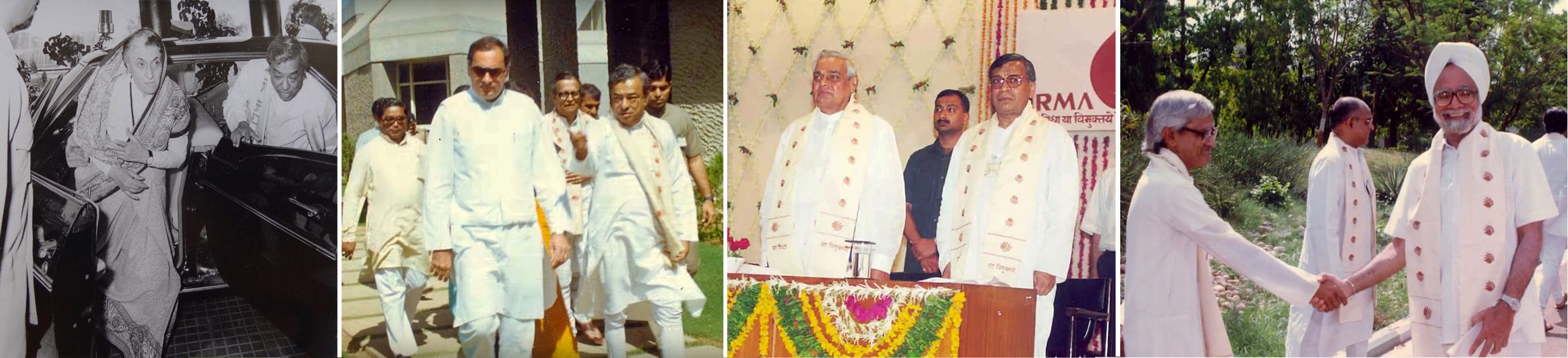
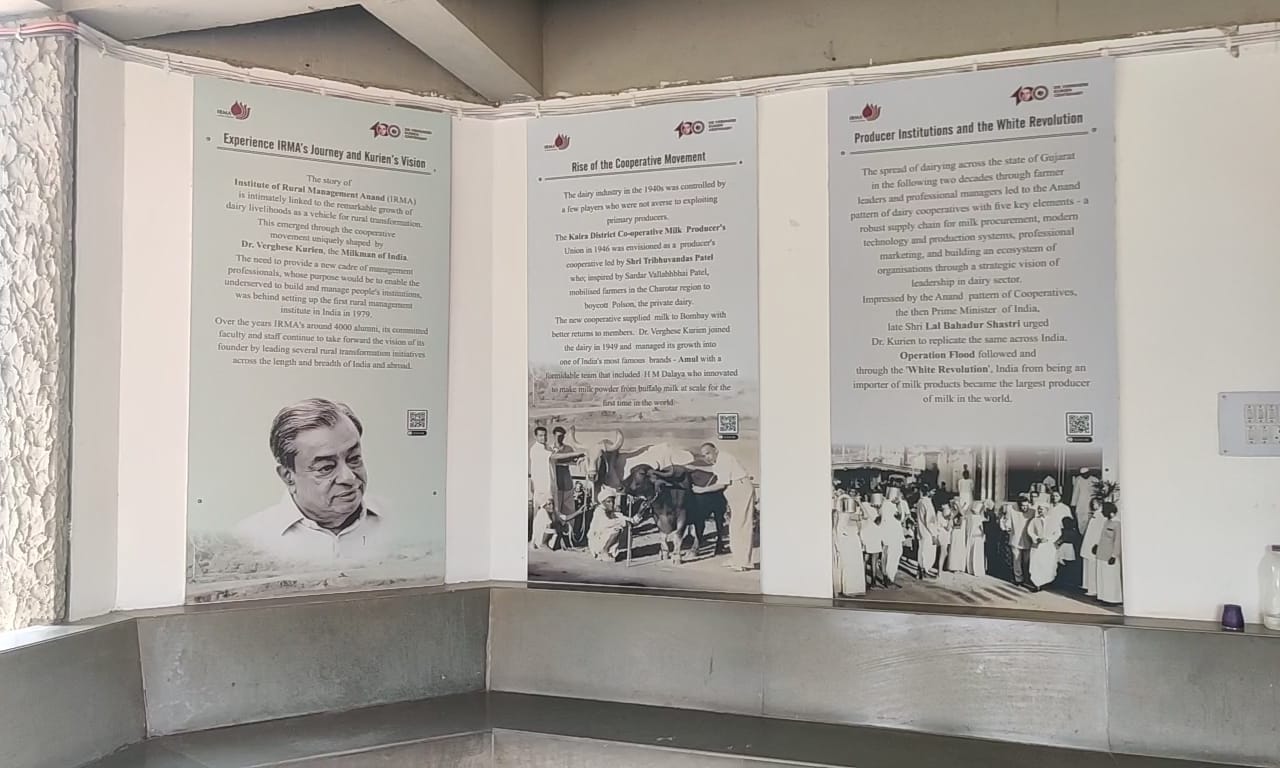
Near the Executive Training and Development Centre, a stretch of corridor wall tells the institution’s entire history in photographs. Tribhuvandas Patel, the father of India’s cooperative movement. Next to him, Verghese Kurien—the man who built Amul and, in 1979, built IRMA.
Further along: Indira Gandhi, who visited for IRMA’s first convocation in 1982… Rajiv Gandhi… Vajpayee… APJ Abdul Kalam.
And in the newest frame: Amit Shah, at a more recent convocation.
The change
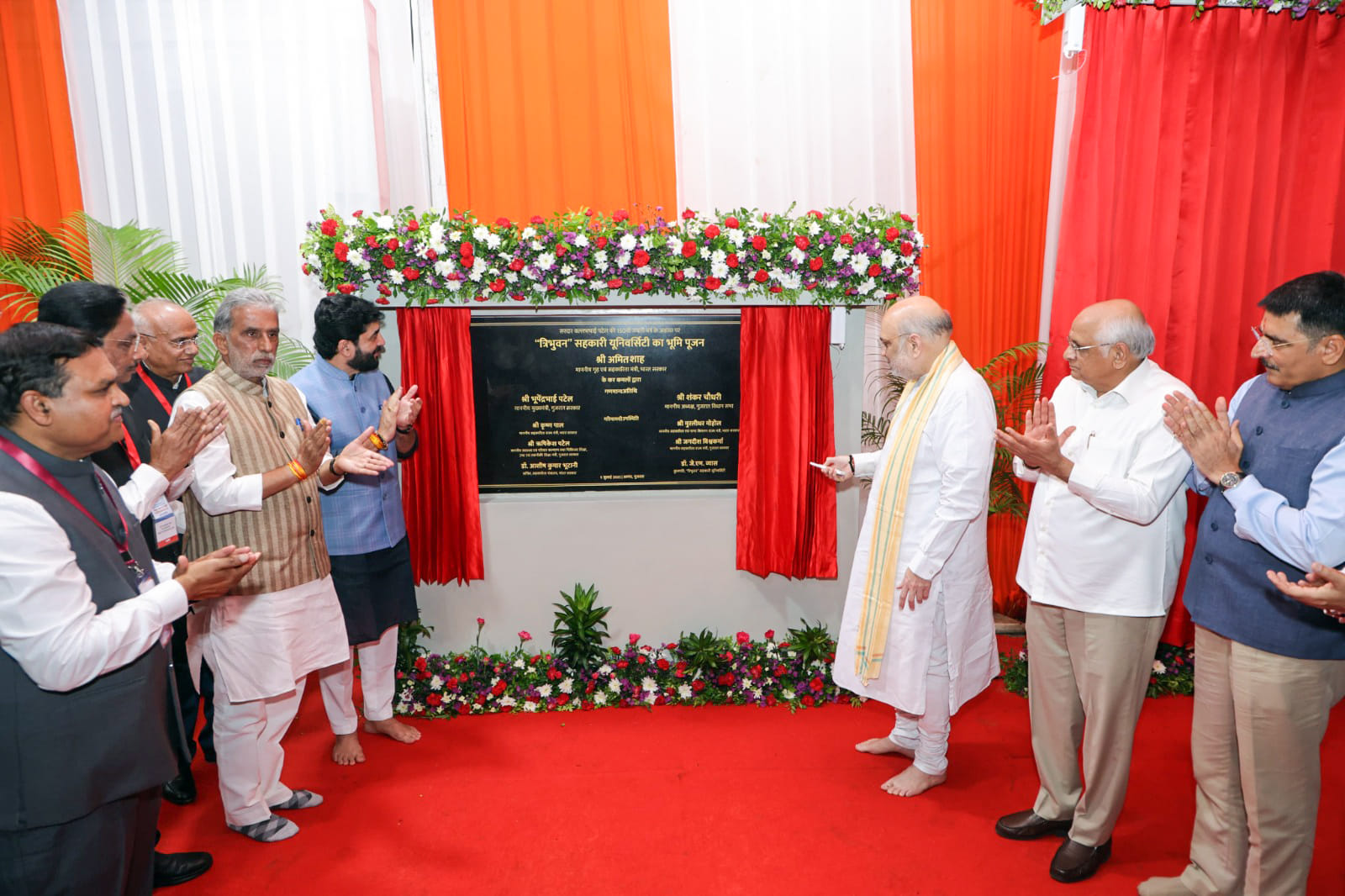
On 3 February, 2025, Union Home Minister Amit Shah introduced a bill in the Lok Sabha. The Tribhuvan Sahkari University Bill proposed to take IRMA—registered as a society since 1979—and reconstitute it as a school within India’s first national cooperative university, under the Ministry of Cooperation.
The Lok Sabha passed it on 26 March last year; the Rajya Sabha on 1 April. Presidential assent came on 3 April. On 6 April, the gazette notification was issued and IRMA, as a legal entity, ceased to exist.
In its place came Tribhuvan Sahkari University (TSU), an Institution of National Importance. Three new MBA programmes were launched alongside the old flagship—Cooperative Management, Agribusiness Management, and Cooperative Banking and Finance. J.M. Vyas—founder and vice chancellor of National Forensic Sciences University—was appointed TSU’s officiating V-C.
The government’s argument for the change was straightforward. India has over 8 lakh cooperatives and 30 crore cooperative members. Historically, the sector has been short of formally trained professionals. IRMA has been producing 60-90 graduates a year. TSU was meant to fix the scale problem.
It has been just one year since the transition. Changes of this scale—absorbing a 46-year-old institution, launching three new programmes simultaneously, and building an entirely new university structure—take time to settle. The teething troubles on campus are real, but so is the momentum.
Also Read: Anthropic’s Claude Mythos: The AI model that India cannot access but cannot ignore either
The choice nobody took
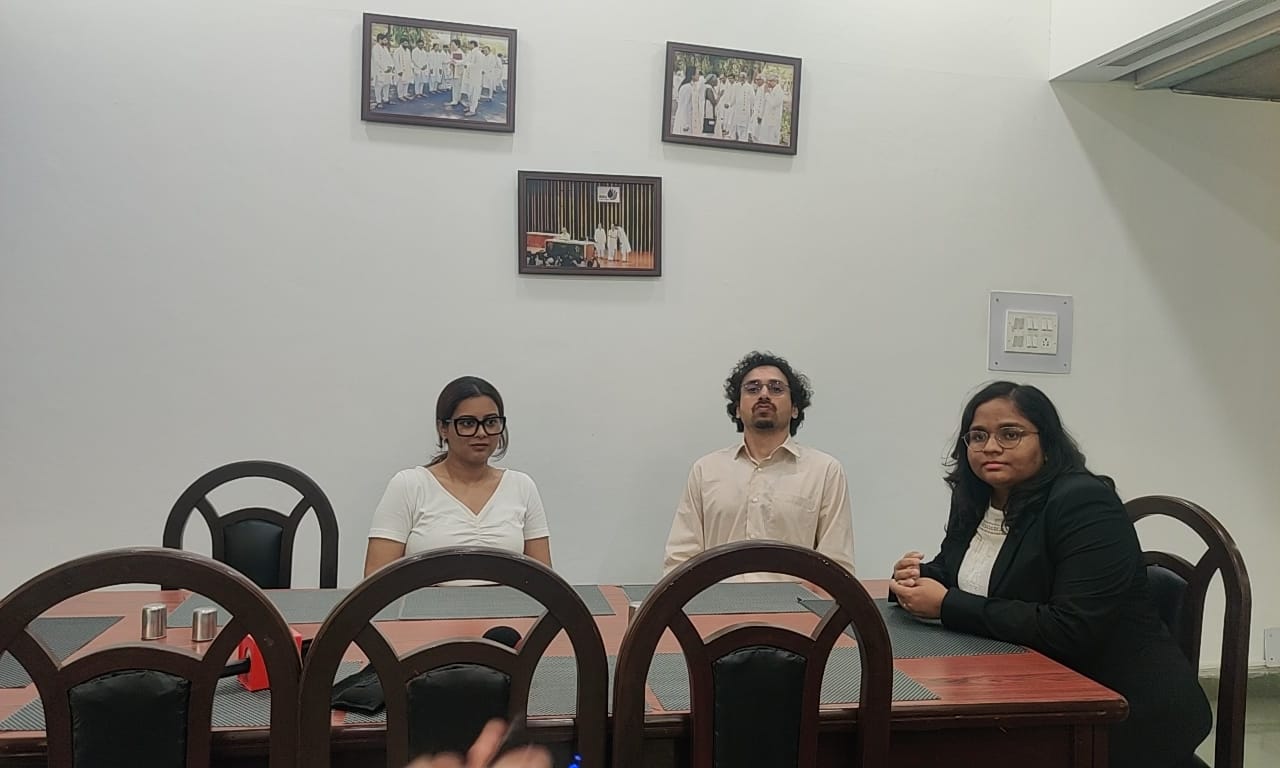
When the three new TSU programmes were rolled out, students in IRMA’s MBA in Rural Management—the 46th batch of what was once the PGDM(RM), a cohort of 240 students—were formally given a choice: stay in Rural Management, or migrate to one of the new courses.
Every single student stayed. Not one switched. ThePrint spoke to six of them on campus.
“There was a GBM (General Body Meeting) where dean academics, dean placements, all of them were present,” said Alok Tindwani, MBA (Rural Management). “They addressed what was going to happen, how they would facilitate the new students. They gave us a clear opportunity—if we want to stay, or if we want to get out. But all of us stayed. IRMA has a rich culture of 46 years. We were pretty sure it was not going to impact our placements.”
Sharmistha Kale, also MBA (Rural Management), described the uncertainty that preceded the GBM.
“Although during my interview I was informed about the transition into Tribhuvan Sahkari University, we weren’t sure how long it would take to implement. When three new programmes were rolled out after we arrived, it wasn’t properly finalised what courses would be offered, what the placement scenario would be like. There was a lot of uncertainty.”
Somit Gutch put the confusion differently. “It was only later that things were getting clear—that IRMA is now a central university; it has become TSU; there are going to be a few more colleges and courses. The confusion was mostly about how the curriculum and placements would look.”
The apprehension is understandable, and not unique to IRMA—any institution undergoing transformation of this scale would produce similar anxieties in its students. The MBA in Rural Management requires clearing CAT or XAT at the 80th percentile or above, followed by a written ability test and personal interview. The choice to stay is, in its own way, a vote of confidence in the institution—old name or new.
The institution’s director, Prof. Saswata Narayan Biswas—who has been at IRMA for over three decades and took over through the transition—acknowledged the anxiety directly. “Academics depend upon legacy,” he said. “When you go ahead and choose any course, you check who has passed out, what are the alumni, what are the placement records. The first year with such a transition is always difficult because of that.”
He offered a longer view. “When IRMA started, the first batch had 44 students. Today we have 360 students. It continued with under 60 for over one and a half decades. Then slowly we started expanding. That is exactly what is going to happen. I have been here for 34 years. I know that it will take time. We are not an impatient lot.”
The new courses
The new programmes—each running with a first batch of 40-60 students—have their own cohort of students, who came in knowing they were the first batch, with no alumni to call and no placement history to point to.
Sakshi Dhole, enrolled in the inaugural MBA in Agribusiness Management, said the mix of doubt and excitement was real from day one. “From the beginning itself, there was some doubt as well as excitement because we were the first batch,” she told ThePrint. “There were confusions regarding how the course would go on. But the curriculum is very much aligned with the industry—agri-supply chain, risk management in agriculture, agri-finance. It is very much grounded in what the sector needs.”
Regarding placements, she said the administration had been proactive. “Since the day we started onboarding, we have been communicating periodically about placements. The administrative team ensured from the start that there won’t be any problem. They said: We are there to hold your hands and guide you.”
Prof. Biswas described what the Ministry of Cooperation’s backing has meant concretely. “Today, the secretary of the ministry is writing to every state, every cooperative, every chief secretary—to make them aware of TSU and encourage them to engage with and recruit from the university. That sort of support—we had never thought we would get such support. A new type of ecosystem is being created.”
New recruiters have come in alongside the old ones. Students in the new programmes pointed to organisations like National Cooperative Development Corporation (NCDC) that had not previously recruited, but are now on campus.
What numbers show
For the current batch, the headline number is 100 percent. Every student across all four programmes secured a summer internship placement this year.
For the 2023-25 batch, 113 recruiters made 563 offers for the Summer Internship Segment (SIS), with the highest stipend at Rs 2.40 lakh for the two-month period. For the 2025 final placements, the highest package stood at Rs 31.84 LPA, with an average of Rs 15.64 LPA—a 10 percent increase over the previous year.
“After our SIS placements, our entire batch is placed right now,” said Vanshita Mahajan, MBA (Rural Management). “So, I am sure that all of us feel like we are really taken care of.”
Nihar Darekar, who had converted an offer from IIM Raipur to remain at IRMA, got placed at Amul-GCMMF. Asked if he had second thoughts about his degree carrying the TSU name rather than IRMA’s, his answer was direct.
“Actually, no. I strongly believe that IRMA itself is a brand name, and TSU is an addition to what IRMA already was. They were complementing each other, and not supplementing each other.”
To a question on the name he uses when someone asks where he studies, the answer was prompt—“IRMA.”
With just a year since the transition, TSU as a name is still finding its way into common recognition—that will change with time and with the batches that follow.
Some students ThePrint spoke to raised concerns about what comes next. The recruiter pool—historically sized for 60-90 students a year—has not yet grown proportionally to the expanded student body of 360 across four programmes. “It is very unlikely that the next batch will be 100 percent placed with the same quality of packages,” one of them said.
Prof. Biswas was careful about what he could promise. “TSU does not guarantee placement. We don’t guarantee, and that has to be underlined. But there was a pent-up demand. For each of our students, some years back, we had one-to-three, one-to-four jobs available. By increasing the size marginally, we will not have any difficulty.”
Building fast
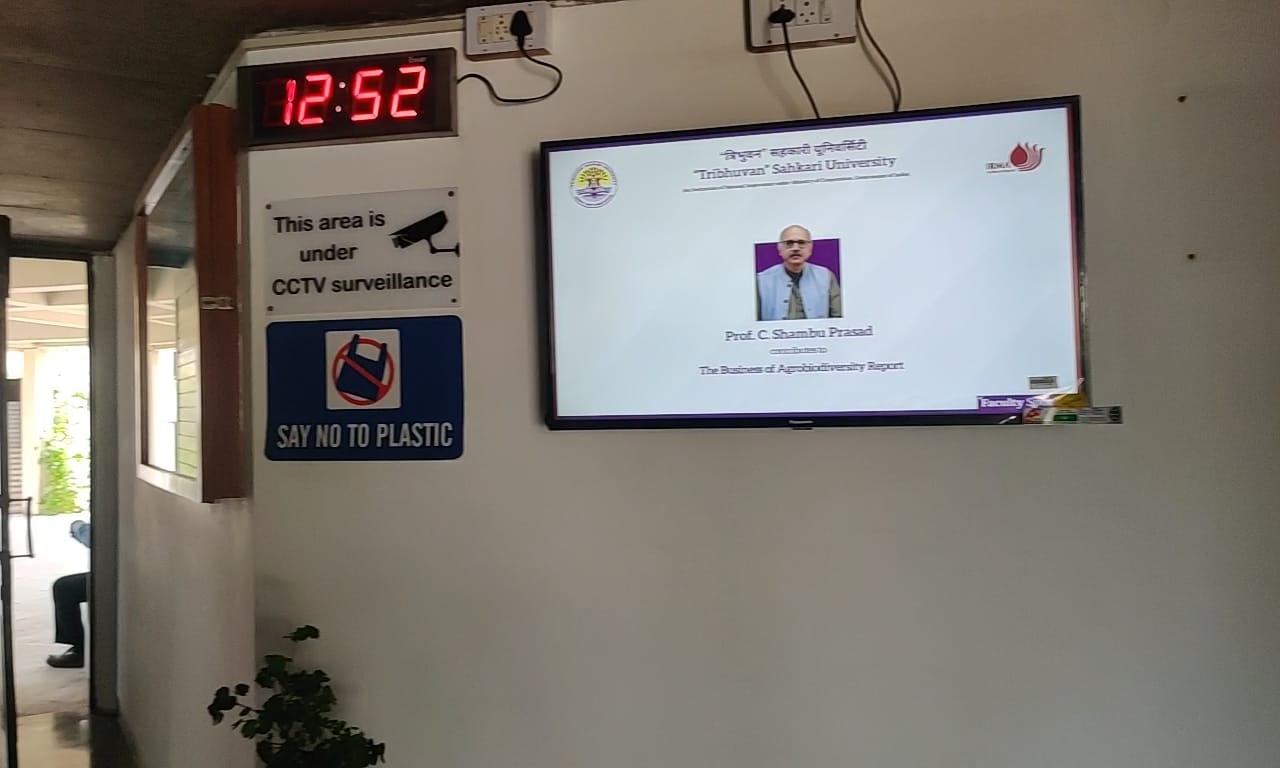
Away from the student conversations, the pace of TSU’s expansion in its first year is significant. VAMNICOM—the Vaikunth Mehta National Institute of Cooperative Management in Pune, India’s oldest cooperative management institute—was the first to affiliate. Fourteen more institutions have followed since, from Uttar Pradesh, Punjab, Delhi, Sikkim, and other states. All in under a year.
Beyond affiliations, TSU is opening its own campuses. A campus in Bhubaneswar— on the Odisha government’s invitation—is in the works. Another in Karnataka is being explored. Within Gujarat, a campus in Gandhinagar is being readied for two new programmes—an MBA in Development Management and Cooperation—launching next year.
When it comes to faculty, the institution has moved quickly. Prof. Biswas credited his predecessor, Umakant Dash, with quietly preparing the ground. “He told me we need to increase our faculty size. At that time, I thought it would have a negative impact on our finances. But he said, no, we are going to grow. Maybe he had some inkling that we were becoming a university. So from 30, we went up to 42.”
The executive council has now approved a further 50 percent increase — over 60 faculty in total—with recruitment expected in the next five to six months.
The MBA in Rural Management now takes 240 students, up from around 90. Each new programme runs with 40-60 students.
A new campus
ThePrint has learnt that TSU’s new 125-acre campus—more than double the existing 60-acre site—will come up on land previously associated with the Water and Land Management Institute (WALMI), which has maintained a research presence in Anand for over two decades. WALMI is an undertaking of the Government of Gujarat.
The land carries rare trees accumulated over years of agricultural and environmental research. The university is currently working with the Central Public Works Department, on a plan that accounts for the existing green cover before construction begins.
Prof. Biswas outlined the timeline. “Campus development has two phases. Preparation of the ground will take about one year—there are large power lines, electricity infrastructure. Some changes we’ll have to make. After the ground is ready, Phase One construction will take about two and a half years. So, we are expecting that in another three and a half years, the campus should be ready for us to move.”
As for the scale of what TSU is attempting—a cooperative university for a country with 8 lakh cooperatives, building from one campus and 44 students in 1979—Prof. Biswas reached for a comparison.
“I remember what is known as one of the best management schools in Asia today—I am talking about (IIM) Ahmedabad—the very first generation of teachers used to go to organisations and say: please take our students. If you don’t find them useful, return them. But please take. No one used to employ them. And then slowly, slowly, it took. And now you know what it is,” he said.
“That is exactly what will happen here. We will have to go and educate the organisations. Of course it is challenging. And that is why we are interested—because it is challenging. If it is an easy task, there is no fun in that.”
Outside, students walk past in IRMA merchandise. The name on the signboard at the gate has changed—there is a larger one above it now. But on campus, in the corridors, in the way the students answer a simple question about where they study, the older name is still the one that does the work.
Whether that holds as TSU scales up—15 affiliates, new campuses in Bhubaneswar and Gandhinagar, 360 students becoming many more is the question the 46th batch will be watching from wherever their first job takes them.
This is an updated version of the report.
(Edited by Tony Rai)
Also Read: Driven by IITs, Indian universities are fastest climbers in global QS subject rankings