





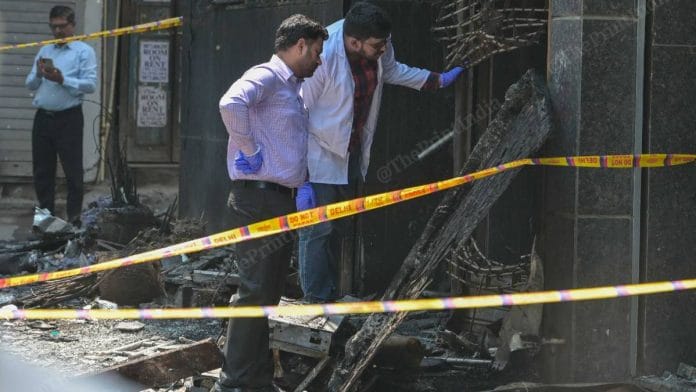

New Delhi: The deadly blaze at Malviya Nagar’s Flourish Stays B&B Wednesday that killed at least 21 people has once again spotlighted fire safety violations in the Capital. But an examination of fire tragedies in Delhi—from the 2019 Karol Bagh hotel blaze and 2022 Mundka building inferno, to the Vivek Vihar newborn hospital fire in 2024—shows a strikingly similar aftermath: swift police action, arrests and serious criminal charges, followed by bail for the accused and slow legal proceedings that have yet to reach trial.
In the previous three cases above, all owners of premises and those accused of negligence and procedural violations have been released on bail even before start of trial, and even charges haven’t been framed with the police probe appearing lax.
The Karol Bagh fire, at the six-storey Hotel Arpit Palace on 12 February, 2019, claimed at least 17 lives, with most people dying of asphyxiation in their sleep.
In Mundka, a massive fire at a four-storey building near the metro station led to the death of 27 people on 13 May, 2022. It took more than six hours and 27 fire tenders to put out the blaze.
In Vivek Vihar, eight newborns died following a fire at Baby Care New Born Hospital on 25 May, 2024.
Two years later, the blaze at the Malviya Nagar B&B, near the upmarket Max Hospital, killed 21, including 12 foreigners, and injured 37. It was a mishap waiting to happen as the premises had only one operational entry-exit gate, no fire-fighting equipment, illegal construction of 24 rooms instead of the sanctioned six and had never even applied for fire safety clearance.
The Delhi Police have arrested premises owner Lovkesh Bajaj and registered an FIR under several sections, including 105 (culpable homicide not amounting to murder) and 326 (mischief with fire or explosives) of the Bharatiya Nyaya Sanhita.
Here’s a look at the previous fire incidents and how the investigation has progressed in these cases over the years.
Also Read: How brave crane operators battled smoke & flames to save 50 women from deadly Mundka fire
Karol Bagh hotel fire
In 2019, the Delhi Police control room received a distress call about a fire around 4.43 am on 12 February, with officials and the Delhi Fire Services promptly swinging into action.
Located in the narrow lanes of Karol Bagh in central Delhi, Hotel Arpit Palace had become an inferno, trapping employees and guests, most of whom were asleep at the time. Two people had died jumping from the top floors to escape the blaze. Up to 21 people were rescued from the site, but only four survived and 17 others died.
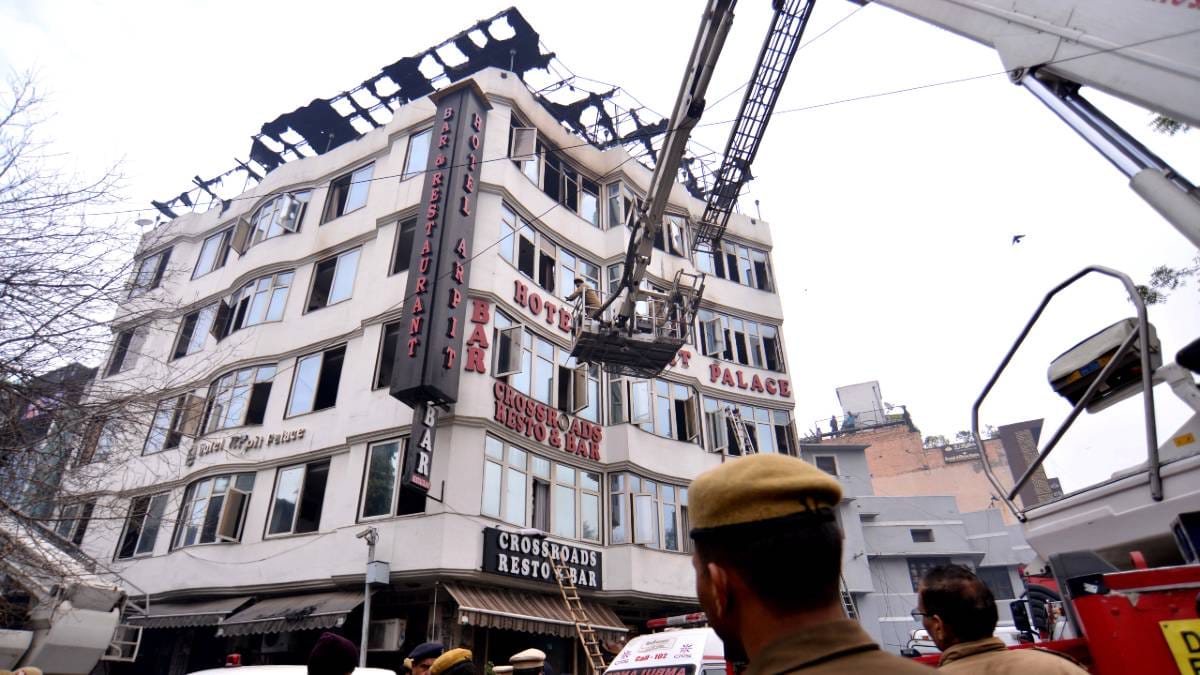
The Delhi Police booked the hotel proprietors under Section 304 (culpable homicide not amounting to murder) of the Indian Penal Code and arrested hotel manager Rajender Kumar immediately and the building was found operating with severe lapses.
Two accused owners, Rakesh Goel and Sharad Indu Goel, were arrested on 16 and 19 February, respectively. By May, the police had filed a chargesheet and also invoked IPC Sections 420, 467, 468, and 471—related to cheating and forgery—alleging that the hotel owners had forged documents to obtain operating licences from the authorities.
However, all three were released on bail by a Delhi court, which observed that the police were unable to link the accused’s specific negligence to the cause of the fire, thereby precluding prosecution under Section 304. The Delhi High Court later upheld the order.
The judge in the case had referred to the Uphaar fire tragedy of 1997, in which 59 people had died and 100 others were injured in a cinema hall blaze, but noted that the police probe was able to identify the specific failures on the part of the cinema hall management to follow norms and established procedures.
Six years later, trial in the Karol Bagh hotel fire is yet to start, and the case has not even reached the stage of framing charges, according to court records. All the accused are out on bail.
Mundka building blaze
A four-storey building on the main highway towards Rohtak in Mundka—which also housed a manufacturing unit for CCTV cameras, wifi routers and other electrical equipment—turned into an inferno in May 2022 after a fire broke out on the first floor and spread.
The Delhi Police received a call around 4.30 pm, and the death toll from the incident was initially in single digits. By the time the rescue operation was over, six hours later, 27 people were dead due to burn injuries or asphyxiation. As many as 44 others were admitted to hospital.
The police probe swiftly revealed that most of the victims were workers at the small-scale unit dealing in CCTV cameras and SIM routers. It was further revealed that the building lacked an NOC from the fire department and clearance from the municipal corporation, there was a single point of entry and exit, and lack of adequate ventilation.
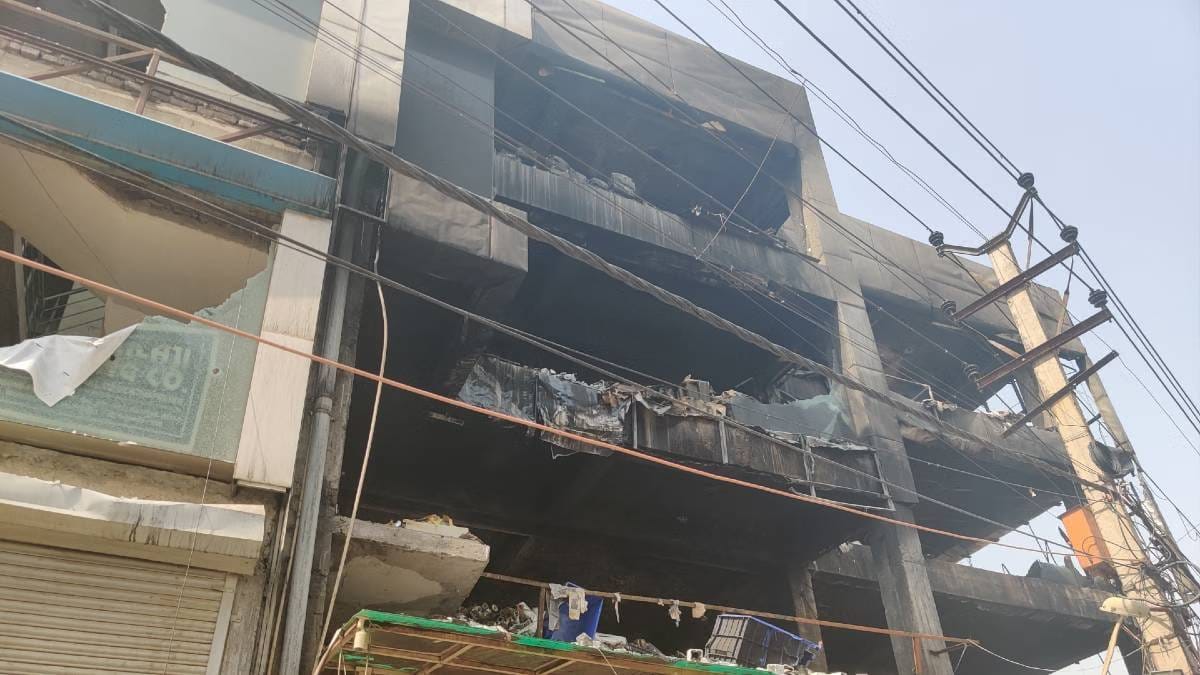
Brothers Varun Goel and Harish Goel, who had rented three floors of building and were owners of the manufacturing unit, were arrested soon after. The owner of the land housing the charred building, Manish Lakra, was also arrested the following day. Senior officials of the Delhi Police then said the case would be probed efficiently.
The police filed an FIR under Sections 304 (causing death by negligence), 308 (attempt to commit culpable homicide), 120B (concealing design to commit offence punishable) and 34 (common intention).
However, the Delhi Police did not file a chargesheet within 60 days, prompting the Goyal brothers to seek default bail. While the prosecution argued that the case attracted offences under Sections 304(1) and 467 (forgery) of the IPC, both punishable with imprisonment for life and therefore permitting a 90-day period for filing the chargesheet, the Delhi High Court rejected that contention and held that the accused had acquired a statutory right to default bail.
The court granted them bail in March 2023, and four years after the fire, the case remains at pre-trial stage, with charges yet to be framed.
Also Read: No emergency exit, fire extinguishers — how ‘illegal’ building in Delhi’s Mundka turned death trap
Newborn hospital tragedy
The Baby Care New Born Hospital in east Delhi’s Vivek Vihar caught fire on a Saturday night in May 2024. There were 12 newborns admitted at the centre at the time of the incident.
Seven of the babies died primarily from poisoning of the air, caused by the fire that was suspected to have started from an oxygen cylinder blast at the centre. One more died later during treatment.
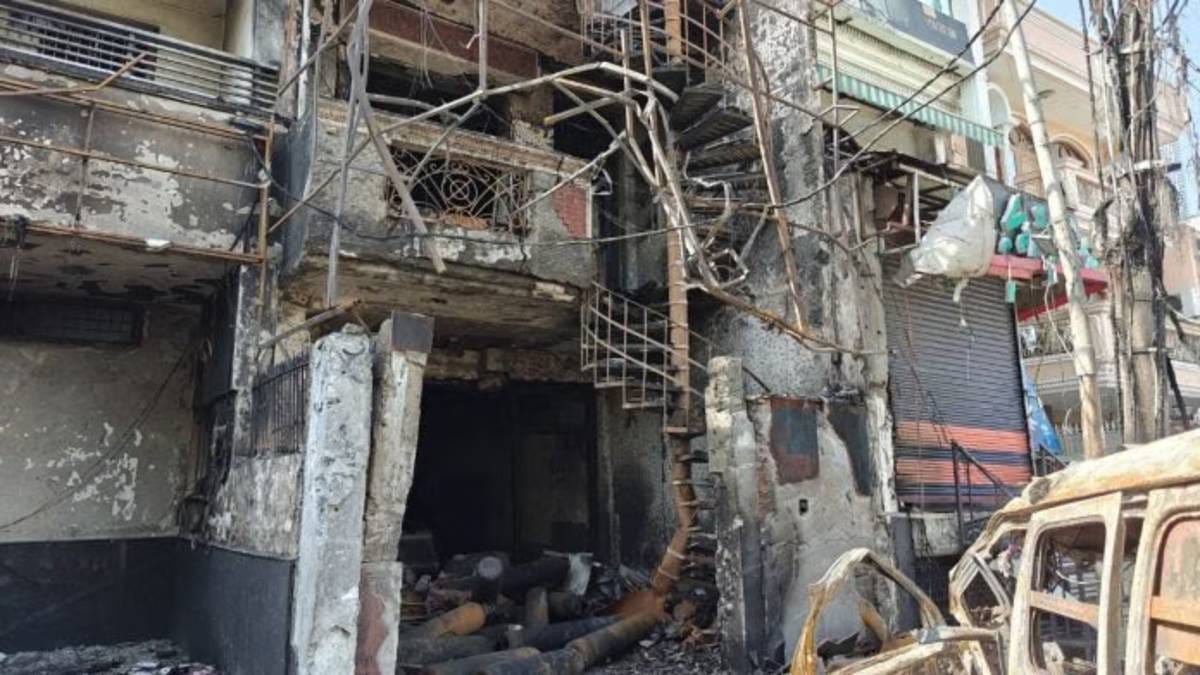
The Delhi Police swiftly arrested the owner of the centre, Dr Naveen Khichi, and his associate, Dr Aakash, who was managing the centre on the night of the incident, and fled the scene after the fire broke out. The police filed a charge-sheet against the duo under Sections 304, 308 and 34 of the IPC and Section 75 (cruelty to a child) of the Juvenile Justice (Care and Protection of Children) Act, 2015.
The police probe identified several violations, including a lack of fire safety equipment, inadequate space to operate a 12-bed Neonatal Intensive Care Unit (NICU), underqualified doctors heading the unit, the absence of qualified nurses and hazardous storage of oxygen cylinders.
The police chargesheet pointed out that Dr Khichi did not have permission from the Directorate General of Health Services to run a neonatal care centre at the time of the incident. Even the licence that had expired in March that year had allowed only five beds, compared to 12 beds, all occupied by infants at the time of the incident
The chargesheet had also pointed out that doctors holding Bachelor of Ayurvedic Medicine and Surgery (BAMS) degree were deployed as heads of the unit, while the norms clearly mention that the Resident Medical Officer (RMO) must have a postgraduate degree in intensive care or neonatal intensive care.
The Delhi High Court in March last year released Khichi on bail, drawing the same conclusion that he was neither present at the hospital at the time of the incident nor that the circumstances of the incident suggested he had any “intention” or “knowledge” about the inevitability of the incident.
According to court records, charges are yet to be framed in the matter.
(Edited by Nida Fatima Siddiqui)