


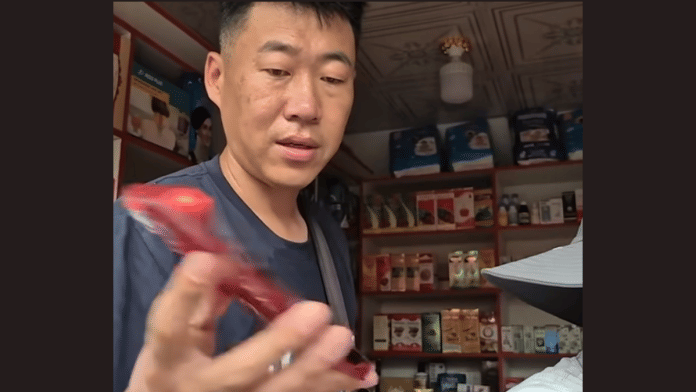
New Delhi: A strange, new phenomenon has been unfolding in Bangladesh. More than 5,000 Chinese nationals have been vlogging from Uttara, a suburb north of Dhaka, the capital of Bangladesh. Several reports on the phenomenon were filed by the local media, and then followed up by Prothom Alo, a Bengali daily published from Dhaka.
Interestingly, in the vlogs the Chinese nationals claim to be recording in New Delhi. To understand what was being said, some of the broadcasts were translated by Prothom Alo using Google Translate and cross-checked by four Bangladeshis familiar with the Chinese language.
According to locals, they bring Indian products like shampoo, soap and Kesh King hair oil (sold in India), to local pharmacies and shoot live videos. After it is done, they pay the pharmacies Taka 500.
A local news channel Bangla Vision tried to speak to some of the vloggers, who can be seen moving away from the reporters, saying, “No English”, refusing to communicate through Google Translate. Others gave their names and nationality before walking away.
Another video shot by ATN Bangla News four months ago shows vloggers in the Dhaka suburb running after rickshaws. “If you come to Tekpara in Dhaka, it will seem like you are in Beijing,” the narrator says in Bangla.
The locals are clueless about who these people are, often confusing them with local journalists.
The vloggers livestream footage from the neighbourhood and even get into houses. “They have been livestreaming in this manner for months. Their broadcasts run from morning until night. At times, they even enter people’s homes and record videos. This has left local residents confused,” a Prothom Alo report noted.
According to local reports, residents estimate that more than 5,000 Chinese nationals are involved, although no official count is available. They say they have no idea where the footage is published or what is being said during the broadcasts. Local police, too, acknowledge seeing the livestreamers but say they have not established the purpose of their activities.
The activity is particularly visible in Sector 12 of Uttara and the adjoining Tekpara neighbourhood in northern Dhaka.
Akram Hossain, a resident of Tekpara, told Prothom Alo: “It would be understandable if this were just a matter of a day or two. But they (the Chinese nationals) have been making these videos for months. They start filming before we even wake up. When we go to bed, we still see them filming. But we have no idea what they do with these videos.”
Many are baffled by the apparent fascination with an area that has few conventional tourist attractions. The area is home largely to lower-income families, with narrow lanes, crowded housing and poor sanitation.
During a visit on 27 October, a Prothom Alo reporter encountered Ritu Akhter, a Bangladeshi woman who said she had been working as a guide for the Chinese nationals for several months. She said several other Bangladeshi women were employed in similar roles.
Asked where the videos were being broadcast, Akhter called over a Chinese national called Fangyou. After explaining the reporter’s questions to him in Chinese, she facilitated a conversation through Google Translate on his phone.
Fangyou said the group livestreamed on WeChat, a Chinese social media platform, as part of product-promotion activities. But he declined to explain why they had chosen this particular neighbourhood or why they broadcast for such long stretches. He eventually called Akhter over in a stern tone and walked away.
Akhter said she earned between Taka 700 and 800 a day working as a guide. She added that the Chinese nationals made money by posting videos on Chinese platforms such as WeChat and Douyin, the Chinese version of TikTok, as well as on other platforms.
Disparaging descriptions
Their descriptions of the neighbourhood were frequently disparaging. Some portrayed Indians as poor people living in dirty, damp conditions. Others claimed that Indian men squandered money whenever they had any. Some Chinese women said they lived in the area with their husbands and families after getting married in India.
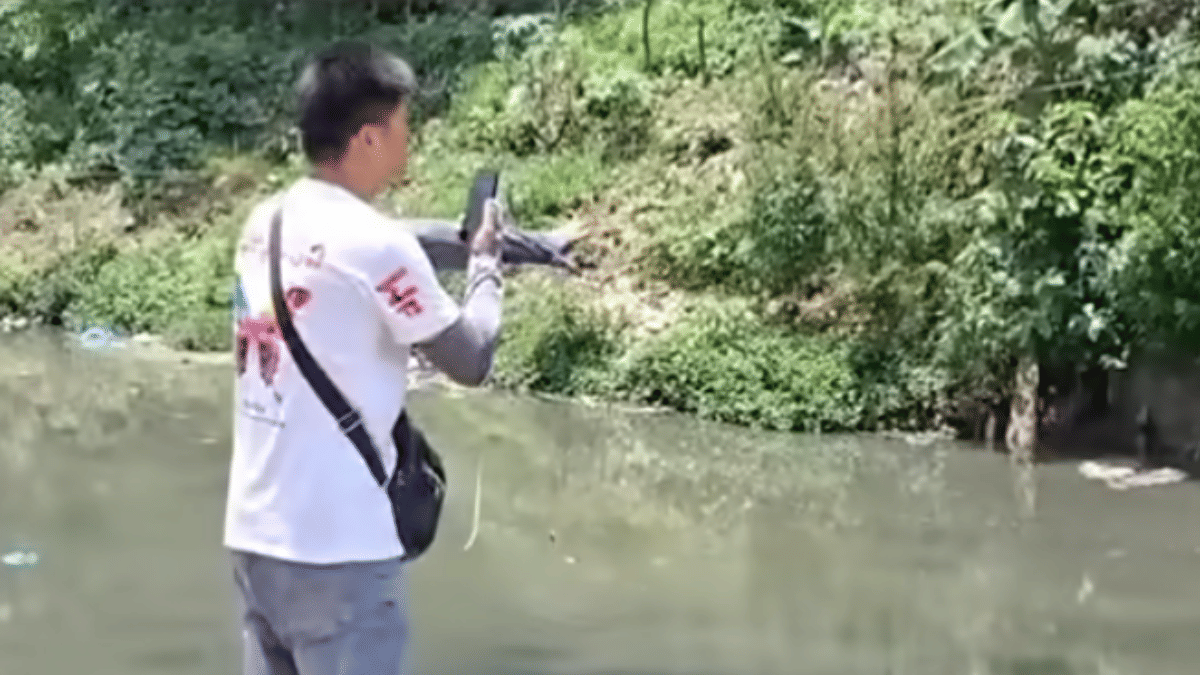
On 1 November, a Chinese woman who identified herself as Mianmian, from China’s Sichuan province, was livestreaming from beside a canal in Sector 12, showing viewers footage of Tekpara.
“This is New Delhi. Their homes are extremely dirty. There isn’t even a fan inside the tin-roofed houses. This place is quite underdeveloped, dirty and unhygienic, and the law-and-order situation is poor,” she said in the video.
She then went on to describe how people in India used toilets.
At tea stalls on either side of a small bridge in Tekpara, another Chinese national, identified as Wang Wei, was filming customers. During the livestream, he told viewers: “Look, they are drinking tea. Do you know what kind of tea this is? This is cow urine tea. They drink cow urine tea.”
At another tea stall, he claimed the tea was prepared using dirty river water and described the people as extremely unhygienic.
Residents also alleged that some vloggers have also walked into private homes and begun filming without permission.
Rozina Khatun, a resident, told Prothom Alo: “Sometimes they enter our homes and start filming. We are not always properly dressed inside our houses. Imagine how it feels when someone suddenly walks into your home and starts recording.”
Another resident, Papia Begum, said some livestreamers had even filmed their bathrooms.
“Some of them even enter bathrooms while filming. Even if we say something to them, they don’t understand. They just smile, say sorry and leave. This kind of nuisance continues throughout the day. Nobody takes any action either. If we confront them, they leave, but then come back again,” she said.
Police officials at the local station said they had seen Chinese nationals filming in different parts of Uttara but did not know the purpose of the broadcasts. Attempts to establish more details, they said, had been complicated by the language barrier and the reluctance of those involved to engage with them.
Mohammad Khalid Mansur, officer-in-charge of Uttara West Police Station, told Prothom Alo: “I actually don’t know why they make these videos. I don’t know where the videos are screened either. However, I have informed senior authorities that they are making these videos. Work is underway on the matter.”
(Edited by Viny Mishra)
Also read: Sridhar Vembu flags China’s youth unemployment as warning for India