





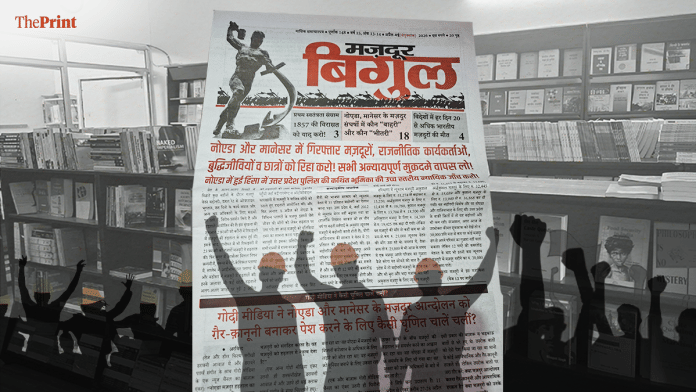


Lucknow: In the heart of Uttar Pradesh’s capital Lucknow, stacked inside a three-storey building that houses a bookstore, library and café are distribution copies of Mazdoor Bigul, a 20-page Hindi monthly newspaper dedicated to workers’ rights and labour struggles that was launched in 2004.
The publication is in the spotlight following the arrest of Lucknow-based activist and translator Satyam Verma, 65, who is associated with the newspaper as a volunteer, over alleged violence during a workers’ protest in Noida this April. Verma had previously written on social media on the workers’ union Mazdoor Bigul Dasta, and expressed support for the agitating labourers.
The National Security Act (NSA), which allows for detention without trial for up to a year, has now been invoked against Verma and student activist Aakriti Chaudhary, 25, for “inciting violence” during the workers’ protest.
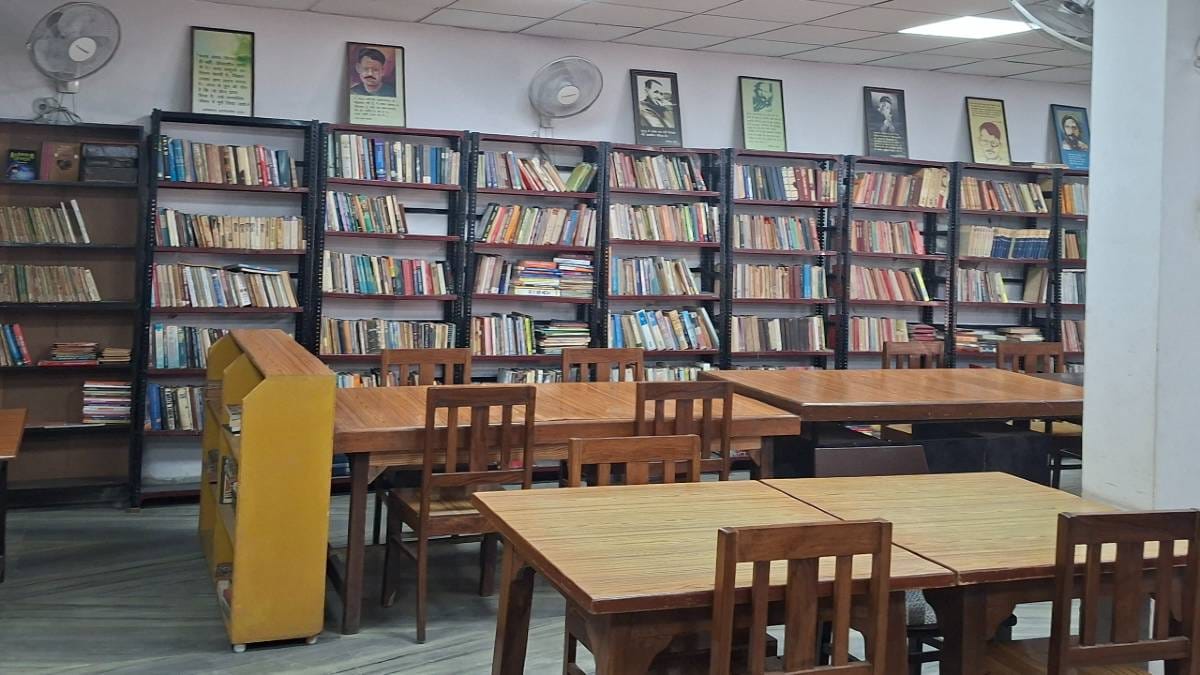
The three-story building in Nirala Nagar, just a few hundred meters away from the University of Lucknow, mainly houses Janchetna bookstore, that serves as an informal “distribution office” for Mazdoor Bigul, and Anurag Pustakalay (library), both co-founded by Verma and his colleague Katyayni Sinha. The bookstore was established in 1986 in Gorakhpur and shifted to Lucknow in the mid-1990s.
In one of the halls of the building, a wide range of international films are screened, under the banner of Lucknow Cinephiles, to broaden perspectives and develop understanding of cinema and society. The ground floor houses Jacobin Cafe.
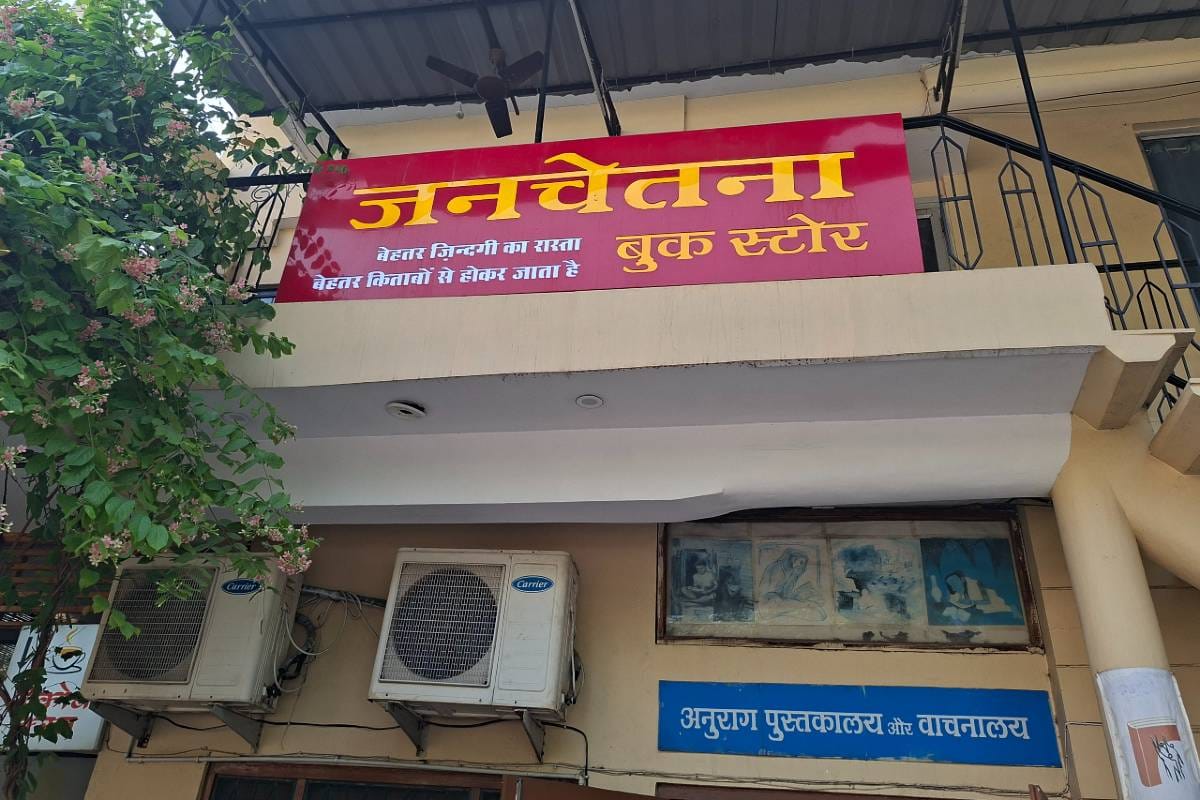
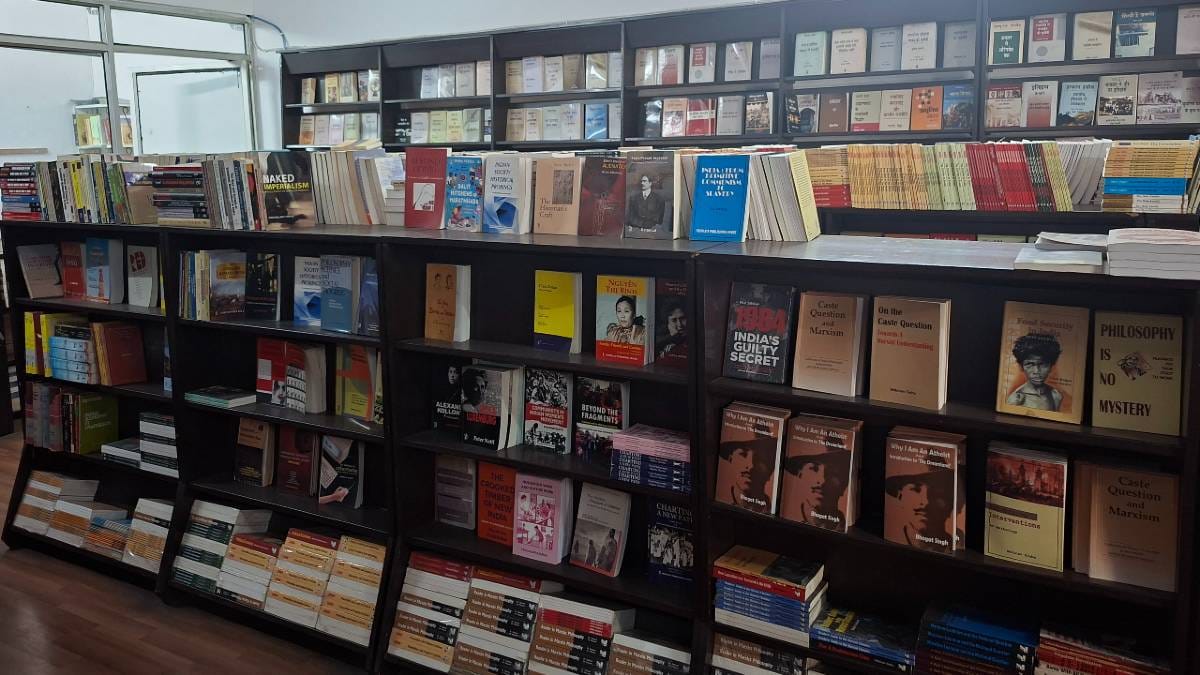
Attracting young readers interested in the works of Bhagat Singh, Karl Marx and other revolutionary thinkers and writers, the building has become known in Lucknow’s intellectual and activist circles as a hub for progressive writers and students. At the same time, Mazdoor Bigul has quietly built a readership among workers, students and activists seeking coverage of labour issues often absent from mainstream news.
The Rs 10 newspaper, circulated across states including UP, Haryana, Punjab, Maharashtra, West Bengal and Delhi, has for years documented labour agitations, campaigns on workers’ rights and trade union movements. It maintains a presence on social media platforms Instagram and Facebook as well, with over 48,000 followers.
The latest edition of Mazdoor Bigul, accessed by ThePrint, has the April workers’ protest as the lead story, along with an appeal to release those under arrest. Inside, it carries detailed coverage of worker protests across India while the editorial section has a write-up on ‘The Principles of Marxist Political Economy’. The newspaper also has quotes from Lenin, Marx and Bhagat Singh.
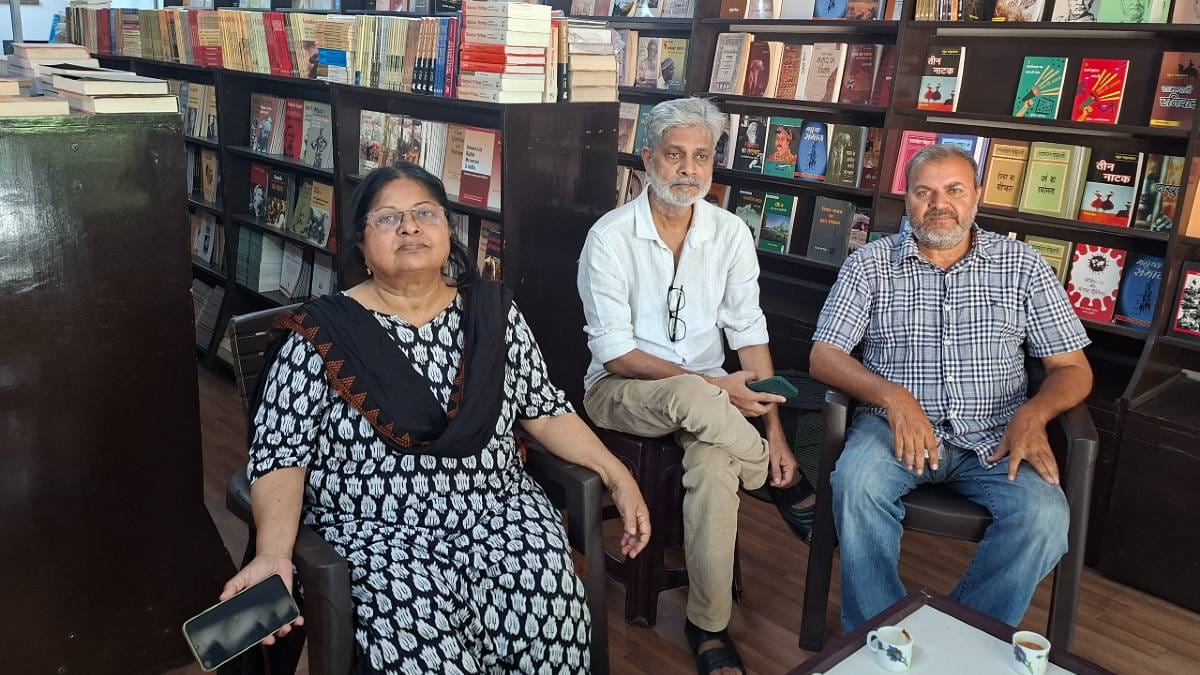
Speaking to ThePrint, Katyayni, who has been associated with Mazdoor Bigul since its inception, said “the newspaper is dedicatedly run by volunteers across the country who write for workers’ rights”.
“We all work as volunteers and the newspaper is for mazdoors (labourers). They get awareness about labour laws, their rights and freedoms of speech and expression. The newspaper raises their voice through its various columns and gives coverage to the worker protests that happen often across states. Such coverage is missing in mainstream media, so those who are associated with us purchase this newspaper,” she explained.
Mazdoor Bigul’s editorial office is located in Indira Nagar and although the exact circulation figures are not publicly available, the newspaper states that it is registered with the Press Registrar General of India. According to members of its editorial team, copies are distributed through local networks and postal services.
Sitting at Jacobin Café, Rohit Kumar, a Lucknow University student, termed the building as “a rare place in Lucknow where you can find hard-to-get books, international films and good food all under one roof”.
“You can find almost every book related to Bhagat Singh here, as well as poetry collections by revolutionary writers.”
Also Read: The anatomy of an unorganised protest—How it spread from Manesar to Noida
‘Harassment’
According to Katyayni, they were forced to publish a joint April-May edition of Mazdoor Bigul this time as the volunteers associated with it, including Verma, had been arrested.
Katyayni also alleged that the state police “tried to harass her and the others who work at Mazdoor Bigul as well as Janchetna”.
She told ThePrint that Verma has consistently raised issues concerning the public and workers’ rights, and has also been critical of government policies. This, she claimed, was the real reason behind his arrest.
Questioning the police action, Katyayni alleged that from 11 April onwards, they began harassing Verma and his associates without any notice or warrant. “On 13 April, Satyam, journalist Sanjay Srivastava and I were detained unlawfully,” she said. It was the time when workers’ protests broke out in Noida and elsewhere.
On 17 April, despite having a search warrant for only one floor of the Janchetna premises, the police searched the entire building. During the search, electronic devices, books, and personal diaries were seized, but no lawful seizure memo was provided, Katyayni added.
She also claimed that Verma was picked up without any substantive basis, denied access to life-saving medicines, and deprived of his legal rights. According to her, he was produced before a Noida court only after being kept in illegal custody for two days.
She told ThePrint that Verma had never had any direct connection with Noida, nor was he in contact with the workers or activists protesting there. Despite this, he was arrested and branded as mastermind of a “conspiracy”, she said.
Regarding Katyayni’s allegations, ThePrint reached out to the UP DGP’s office via calls and text, but did not receive a response.
According to Verma’s lawyer Ali Zia Kabir Choudhary, he was first detained on 10 April, when he was sitting inside Janchetna’s office, and asked to “delete the piece he had written on Mazdoor Bigul Dasta expressing his support for workers’ rights”. Shortly after, he was released but arrested again on 17 April, the lawyer told ThePrint. Official documents, however, show Verma was arrested on 19 April.
The other person against whom the NSA has been invoked is Aakriti, a Delhi University history graduate. She was on her way home when she was picked up by the UP Police in plain clothes along with Manisha, a factory worker, and Adit Anand, a software engineer, from Botanical Garden metro station, on 11 April, her father told ThePrint.
Verma’s friends and supporters have created two social media pages: Campaign for the Release of Workers and Activists of Noida and Satyam Verma Rihaai Manch. Their stated objective is to campaign for his release and mobilise support against the allegations.
Katyayni, Verma and others associated with Mazdoor Bigul as volunteers also describe themselves as “political activists”, even though they are not affiliated with any political party.
Son of renowned historian
Satyam Verma is the son of Lal Bahadur Verma, a renowned historian, author and academic who taught at Gorakhpur University and Allahabad University.
Satyam’s views are often considered somewhat different from those of his father. Influenced by Leftist ideology, he believed not only in raising public awareness through movements and activism but also through the power of books, for which he had a deep passion.
Satyam Verma earned recognition as a Hindi translator. Although he worked briefly as a journalist for a news agency, he has been known primarily as a translator for more than two decades.
He served as editor-translator of Bhagat Singh and His Comrades: Documents, and has also translated several internationally acclaimed works into Hindi as well as books by renowned foreign authors such as Upton Sinclair and Jack London, making their writings accessible to a wider Hindi readership.
Ram Babu, who has been associated with Janchetna and Mazdoor Bigul as designer and cartoonist, told ThePrint that he has been involved with the paper since its beginning in 2004. According to him, everyone associated with the initiative works on a voluntary basis. Some contribute as translators, others as designers, while many help organise and display books at exhibitions.
Katyayni said she herself is a poet and several of her books can be found in the library. She has been working at Janchetna alongside Verma as collaborator since the 1980s.
Despite the challenges facing them, she remains defiant. “No matter how great the crisis, the newspaper will continue to be published, and this workers’ movement will not be stopped,” she told ThePrint.
(Edited by Nida Fatima Siddiqui)
Also Read: Newspapers were strangled during Emergency, but stayed alive. Now, they’re not even breathing