



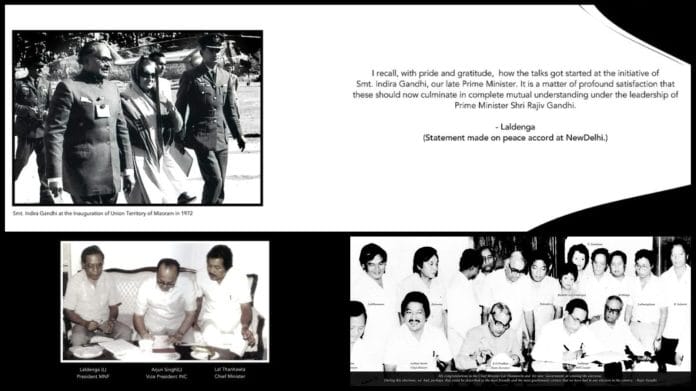

New Delhi: Soon after the sun set on 30 June, 40 years ago, there was a flurry of activity in the corridors of power in New Delhi. It was then Union home secretary R.D. Pradhan’s last day in office. As he was winding up, he had a guest.
Laldenga, who headed the Mizo National Front (MNF)—an insurgent group that was then seeking secession of the territory of Mizoram from India and was involved in long-drawn peace talks with the Centre—came calling in the afternoon.
He expressed willingness to sign the peace accord but sought some time to discuss the final contours of the agreement with his colleagues.
Time was running out as Pradhan’s term as home secretary was due to end at 6.30 pm. The significance of signing the peace accord before he demitted office was not lost on both. A new home secretary would have meant starting the process all over again.
Pradhan had been picked by then prime minister Rajiv Gandhi in 1985 to negotiate the peace accord with Laldenga. The signing of the accord would have been a fitting end to his over three-decade long bureaucratic career and a perfect parting gift for the then PM.
Soon after Laldenga left to consult his colleagues, Pradhan informed the PM about the developments. Quick to realise the gravity of the situation, Gandhi gave orders to extend Pradhan’s tenure till midnight.
Shortly after 8.30 pm on 30 June, 1986, the Memorandum of Settlement was signed between Pradhan, who represented the Centre, Lalkhama, then chief secretary of Mizoram, and Laldenga, bringing closure to over two decades of insurgency and violence in the picturesque north-eastern state.
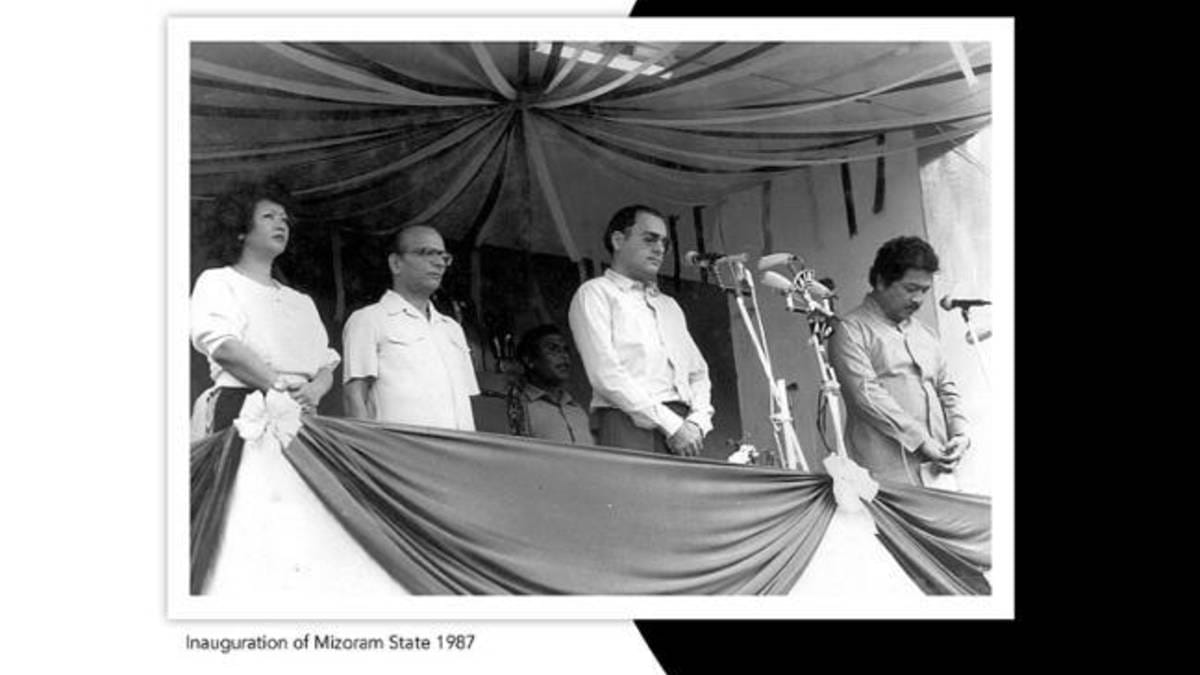
As part of the peace accord, the MNF agreed to immediate cessation of violence and abide by the rules of the Constitution. On its part, the Centre agreed to grant statehood to Mizoram, which was till then a union territory. Mizoram became the 23rd state of India with a 40-member legislative assembly on 20 February, 1987.
In a telephonic interview Sunday, Zoramthanga, former three-term chief minister of Mizoram, told ThePrint: “The Mizo Peace Accord is one of the most successful agreements signed till date. But it was not easy. Making peace involves a lot of give and take. Both sides were pragmatic.”
Also Read: MNF won’t be part of BJP-led NDA anymore if UCC imposed in Mizoram, says CM Zoramthanga
Accord that saw CM resign voluntarily
It is probably the first such peace agreement that saw a sitting CM willingly give up his chair.
The signing of the peace accord was followed by the sitting CM, Congress’ Lal Thanhawla, voluntarily resigning to allow Laldenga to head an interim government.
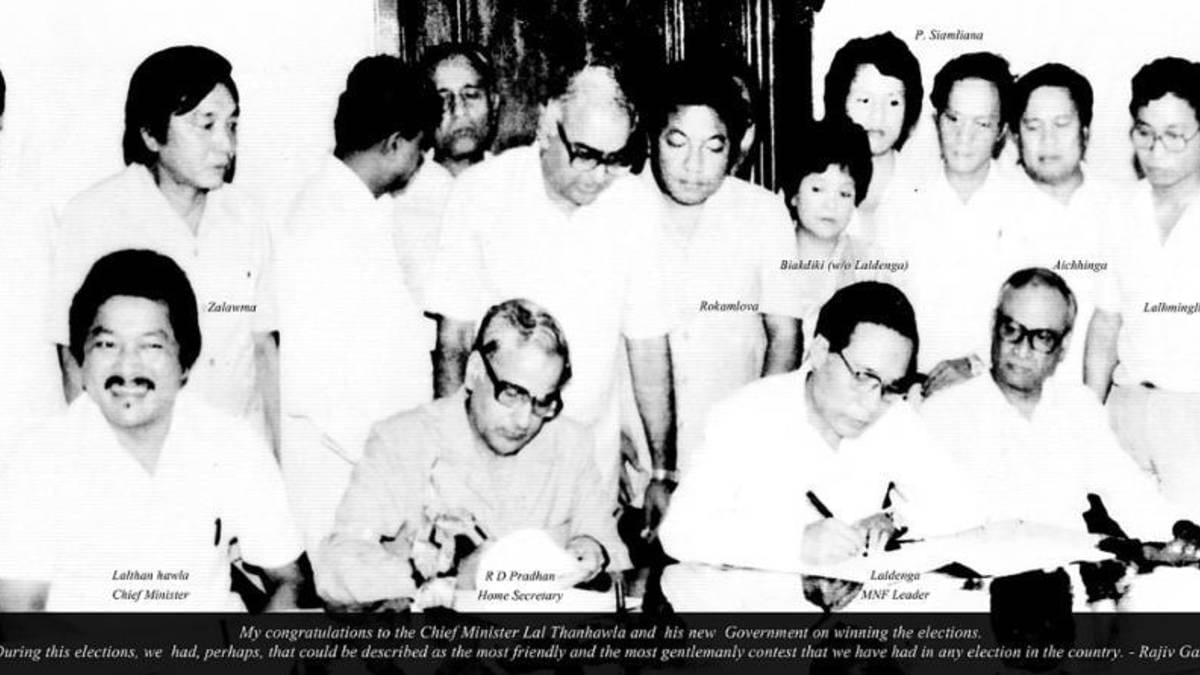
Under the political agreement reached before the signing of the peace accord, Thanhawla then became deputy CM in the coalition government until elections were held on 16 February, 1987.
The MNF won 24 seats and formed a full-fledged government.
Speaking to ThePrint, Thanhawla said he did not regret leaving the CM’s chair.
“If I had not stepped down, there would have been no peace at all in Mizoram. It was my wish that Mizo people should have maximum peace. Insurgency, regular curfews and unrest had disturbed Mizoram for 20 long years,” the former CM said over the phone from Aizawl Monday.
The long road to peace
The Mizo insurgency had reared its head in the early 1960s. Back then, Mizo hill was one of the districts of Assam.
In a June 2016 paper published by Delhi-based think tank Vivekananda International Foundation, the late retired Brigadier Sushil Kumar Sharma wrote: “A perceived sense of loss of identity to their Assamese domination together with discrimination in various fields contributed to the Mizo alienation.”
Sharma, who served in various command and intelligence roles in the North East, added that what further heightened the sense of alienation was the “delay in abolition of chieftainship, imposition of Hindi and Assamese languages and lack of financial empowerment of the district council”.
Sharma wrote that what finally “lit the flame of insurgency” was an acute famine that hit the Mizo Hills in 1959 and the perceived neglect of the government to the people’s plight. Called “Mautam”, the famine set the stage for an armed insurrection, he stated.
Laldenga, then a havildar in the Indian Army, formed the Mizo National Famine Front, a famine relief group, to help the people. It was renamed the Mizo National Front in 1961 and started an armed rebellion against India.
The year 1966 was perhaps the worst phase of the Mizo insurgency. On the intervening night of 28 February, 1966, the MNF launched Operation Jericho, as part of which armed insurgents attacked government installations, including the treasury at Aizawl, and overran security outposts in the towns of Lunglei and Champai. Five Assam Rifles personnel were killed in Aizawl. A day later, on 1 March, Laldenga declared independence from India to form what he called Greater Mizoram.
The Indira Gandhi-led Congress government at the Centre, which had come to power just about six weeks earlier following the death of then PM Lal Bahadur Shastri in Tashkent, did not stay silent. On 5 March, Gandhi ordered the Indian Air Force to bomb Aizawl and surrounding areas to quell the Mizo insurgency. It was the first and only time that IAF carried out bombing within Indian civilian territory.
The bombings forced the cadres of Mizo National Army, the armed wing of MNF, to flee to the jungles of Myanmar and East Pakistan (now Bangladesh).
Soon after, to curb the free movement of insurgents and cut their free access to villagers, the Centre decided to group scattered hamlets in Mizo hills and consolidate them into clusters near military installations. The grouping led to relocation of thousand of villagers from the hills, causing widespread anger. The grouping policy gave a fresh leash to the insurgent movement.
Zoramthanga, who led the MNF after Laldenga’s death in 1990, said those were difficult times. The long years of fighting had left the people disillusioned and, slowly, the demand for peace started gaining ground.
“After 20 years of fighting, the people of Mizoram, the church leaders, NGOs, political leaders and student unions said that we know you can fight for quite a long time but for the people for whom you are fighting, it’s becoming a big burden,” the former CM told ThePrint.
It was the push from the people, who wanted the MNF to make peace with the government, that led to the start of peace negotiations in March 1971.
“We were then (based) in East Pakistan. Mr Laldenga and his cabinet sent me to Shillong secretly, requesting the Government of India for peace talks. We decided that we should continue the peace process,” Zoramthanga said.
In his memoir From Guerilla Fighter to Chief Minister, Zoramthanga has written in detail about the support that MNF’s armed rebellion received from Pakistan and China.
The 1971 Bangladesh Liberation War, he said, put a spanner in the works.
“After the fall of Dhaka, we escaped with Laldenga to the Arakan forest in Burma and then to Rangoon and from there to Karachi. We met Zulfikar Bhutto (former PM and president of Pakistan), ISI (Pakistan spy agency) directors… they told us that we cannot help you in making peace with India,” Zoramthanga recalled.
He said that back then there was no Indian Embassy in Islamabad.
“So, we had to pick up the thread and start our peace negotiations again. We met secretly with an Indian government representative in Afghanistan. And from there we started again,” he said, recalling the ups and downs in the peace negotiations.
On 21 January, 1972, following ongoing talks with the Centre, Mizoram, which was till then a district of Assam, was made a union territory.
It was in 1976 again, following secret peace talks, that Zoramthanga along with Laldenga attended the Calcutta convention along with all their representatives.
“We called them together. There, we resolved to accept the settlement within the Constitution of India. From there, we started working on the formalities and details and continued with our peace talks for another 10 years, till 1986,” Zoramthanga said.
It was finally on 30 June, 1986, that the peace accord was signed. “It became the most successful peace accord. Now 40 years have gone by. You have unrest in neighbouring Manipur. The Naga peace deal is yet to be signed, but here in Mizoram, you can see an island of lasting peace,” the former CM said.
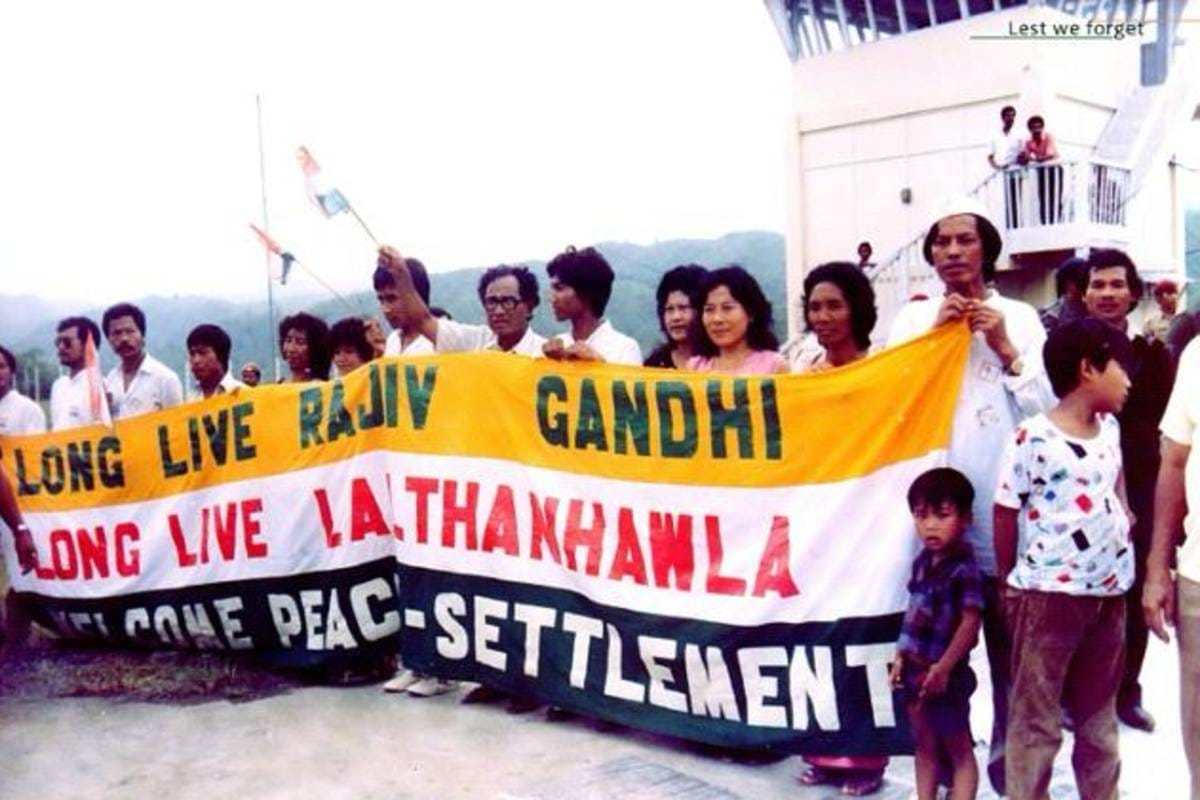
L.R. Sailo, former director of information and public relations in the Mizoram government, said there was also a lot of back and forth in the peace talks with the change in political dispensation at both the local and central level.
“In 1978, the union territory’s government changed from the Congress to the People’s Conference party led by retired Brigadier T. Sailo. He was very tough and he did not like insurgents like Laldenga,” he told ThePrint.
The general election that followed the Emergency in 1977 saw the Congress government suffer a humiliating defeat. Morarji Desai-led Janata Party government came to power.
“During Morarji Desai’s term as PM, talks with Laldenga were not very smooth. Because both Brigadier Sailo and the PM were not impressed by Laldenga’s sincerity. The talks almost broke. Laldenga went back to London,” Sailo recalled.
The talks started again after the Congress government led by Indira Gandhi came back in 1980. “Unfortunately, the peace deal could not be signed during Gandhi’s tenure. Midway through her term, she was assassinated,” Sailo said.
The peace talks resumed again after Gandhi’s son Rajiv won the general elections and took over as PM in 1984. Two years later, the Mizo peace accord was finally signed.
Success of Mizo accord
According to Ajai Sahni, founding member and Executive Director of the Institute for Conflict Management, one of the main reasons why the Mizoram accord survived while many other peace efforts have struggled was because the Mizo insurgency was far less complex than, say, neighbouring Nagaland’s.
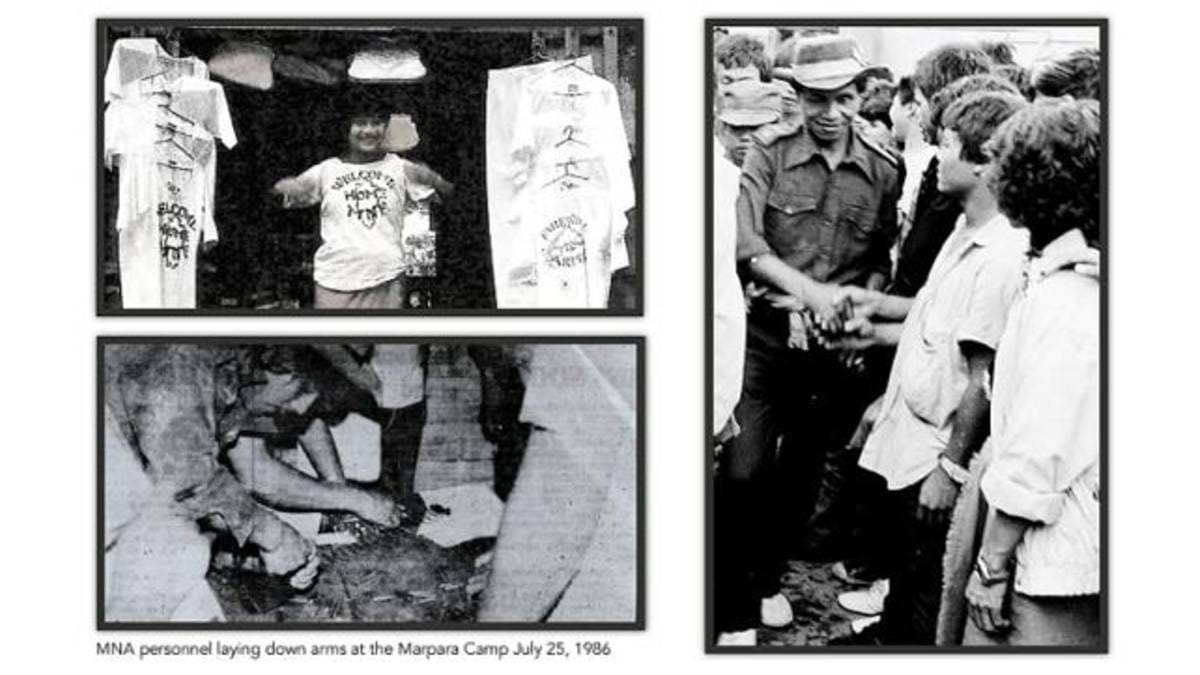
Mizoram largely involved a single community and one major insurgent group, unlike Nagaland, which has multiple tribes and several armed groups. That, he said, made Mizoram considerably less complex to handle.
Moreover, people in Mizoram had begun suffering immensely during the years of the insurgency. “It was a brutal period, and there was a strong public desire for change, which also drove the peace process. The church, too, wielded significant influence and exerted considerable pressure on the insurgent groups to pursue a settlement,” he told ThePrint.
Sahni added that the government handled the negotiations with considerable sagacity.
“It was a generous settlement that the government made. In fact, the then chief minister resigned to make way for the MNF to contest the elections and win. Which chief minister does that? It was a unique situation,” he said.
Asked whether the Mizoram model could be replicated in Nagaland, where the peace process has remained unresolved for years, Sahni said it was not possible.
“Nagaland has too many groups, competing interests, conflicting opinions, and multiple pulls and pressures. All counter-insurgency settlements are a combination of the use of force, negotiations, and softer measures to bring people back into the mainstream,” he explained.
Speaking to ThePrint, former home secretary G.K. Pillai said the one important thing that led to the success of the Mizoram peace accord was that the government did not concede early.
“It was a tough negotiation, and only then was statehood given. Keeping the lines of communication open throughout the process was critical,” he asserted.
When asked if a similar model can be replicated in Nagaland, he said: “Looking back at the history of Nagaland, the mistake in 1962-63 was giving them statehood. It had a population of just 3.6 lakh. People were persuaded, and they gave in, thinking it would solve the problem. But civil society groups and the insurgents were kept out. Having got statehood, people are still fighting. That’s why the problem continues,” he said.
Recalling the time of the Mizoram accord, Pillai explained that Mizoram groups had been told that they don’t have to pick up arms to get the Centre’s attention.
“We gave them a peace bonus—a huge chunk of funds—because there was no violence. The Mizos are highly educated. They wanted development for themselves. I went to Mizoram with (former PM and diplomat) I.K. Gujral. He asked, ‘what can I do for you?’”
“The CM said, ‘we would like about 100 posts for Hindi teachers’. Those posts were created. Much greater integration took place after that. They never looked back once they gave up arms,” Pillai recalled.
Former CM Thanhawla said the peace accord has been quite good and useful for the Mizo people.
“We lost 20 years of development activities. This should be considered, and the government should make good for the lost times so that Mizos and Mizoram can be on a par with the rest of the country,” he told ThePrint.
(Edited by Nida Fatima Siddiqui)
Also Read: Two Mizo teens ‘captured’ by Myanmar resistance group released, but with a warning