





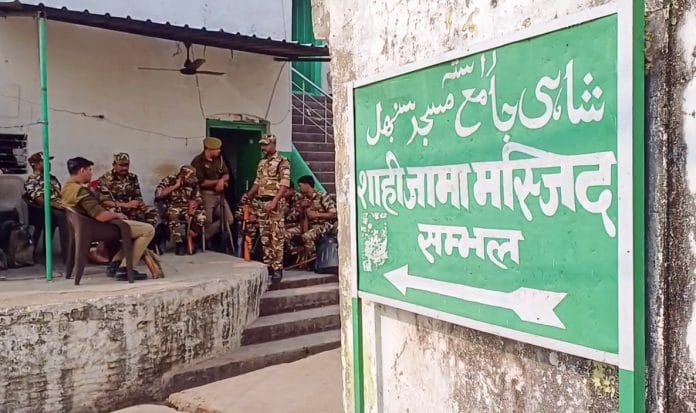


Lucknow: The November 2024 violence during a survey of the Shahi Jama Masjid in Sambhal was a “pre-planned conspiracy”, the judicial panel probing the clashes has found, giving the police a clean chit while pointing to alleged roles of local SP MP Zia-ur-Rehman Barq, and the son of the party’s local MLA.
The clashes erupted near Sambhal’s Shahi Jama Masjid on 24 November 2024 during a court-ordered survey of the 16th-century mosque. The crowd clashed with the police and engaged in arson. At least four people died and several others, including police personnel, were injured.
The judicial inquiry was ordered by the state government. The committee was headed by retired High Court judge justice Devendra Arora, with former IPS officer A.K. Jain and Amit Prasad as members.
The 854-page report was tabled in the assembly on Wednesday. Based on its investigation, the commission concluded that the bullets that killed the four people were not fired from police weapons.
The report says that the violence was not spontaneous but a pre-planned conspiracy, alleging that efforts had been made over time to create an atmosphere conducive to unrest.
The commission has referred to the alleged roles of several individuals, including Sambhal Samajwadi Party MP Zia-ur-Rehman Barq, and Suhail Iqbal, son of local SP MLA Iqbal Mahmood.
ThePrint tried to reach Barq and Iqbal Mahmood through calls and texts, but they were unreachable. The news report will be updated if and when they respond.
The judicial commission report has described the district administration and police’s response as effective and restrained.
According to the report, which has been accessed by ThePrint, misinformation was widely circulated within the Muslim community regarding the survey of the Shahi Jama Masjid, creating confusion and resentment.
The survey was ordered after a petition claimed that the 16th-century mosque had been built over the site of an earlier Hindu temple.
The commission said this atmosphere was exploited to mobilise a large crowd ahead of the violence.
According to the judicial commission’s report, preparations to create a tense atmosphere began immediately after the first survey on 19 November 2024, when it could not be completed, even though there was no violence.
The court’s order was limited to examining issues related to maintenance and public access under the Ancient Monuments Act, according to the report, but the accused allegedly spread misinformation within the Muslim community that the survey was a pretext to seize or demolish the mosque.
The report states that on the morning of 24 November—when the second survey was to take place—a large crowd gathered around the Jama Masjid. The situation soon escalated into sloganeering, stone-pelting, firing and arson.
Many people in the crowd had covered their faces. The commission also referred to the role of Jama Masjid Intazamia Committee president Zafar Ali, secretary Mashhood Ali Farooqui and other office bearers of the committee.
Also Read: Judicial panel’s report on Sambhal violence points to ‘pre-planned conspiracy’, demographic change
Attempts to snatch police weapons
The commission noted that 28 police personnel were injured, including seven who sustained bullet injuries. It further said that rioters attempted to snatch police weapons and damage government property.
The report says the violent mob attempted to attack the police and administration, posing a serious challenge to law and order. Despite the volatile situation, it noted, the district administration and police acted with restraint and took necessary steps to bring the situation under control.
The commission observed that officials acted in accordance with the circumstances and made appropriate decisions with the resources available to them. It described the administration’s handling of the situation as effective and measured.
The commission has recommended strengthening the law and order machinery to prevent similar incidents in the future. It has stressed the need to improve administrative preparedness, promote communal harmony and build trust among different communities.
It has also recommended strict action against those who challenge law and order and emphasised that strict enforcement of the law and respect for court orders are the most effective safeguards against such incidents.
The 450 page report not only probed the 2024 clashes, but also traced the district’s history of 15 communal clashes reported since 1947.
(Edited by Ajeet Tiwari)
Also Read: Sambhal: A history of violence