



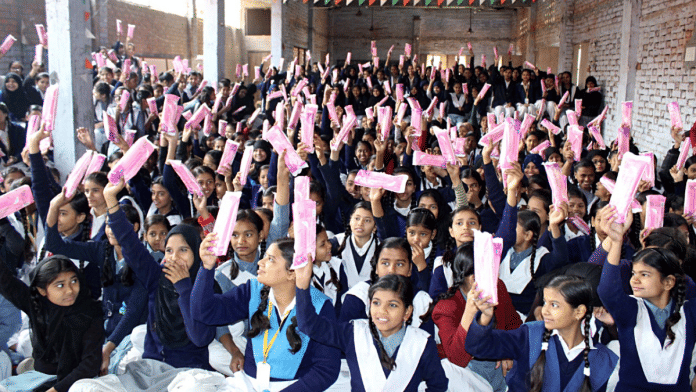
New Delhi: Between three and five percent of adolescent girls screened by a team of doctors of All India Institute of Medical Sciences (AIIMS) in New Delhi may have polycystic ovary syndrome (PCOS), preliminary findings from an ongoing school-based screening programme suggest.
The findings of the yet-unpublished study were discussed at a press conference on adolescent PCOS organised by AIIMS Tuesday. Doctors highlighted the challenges of diagnosing PCOS in teenagers, and its links to metabolic health, mental health and future reproductive health.
The AIIMS screening, which began around 2023, has covered more than 4,000 children across seven government and private schools in Delhi.
PCOS is a hormonal disorder associated with excess androgen, or male hormones, and problems with ovulation. It can cause irregular periods, excess facial or body hair, acne and difficulty conceiving. It is also linked to insulin resistance, obesity and Type 2 diabetes.
There is no single known cause of PCOS. Research shows that it develops through a combination of genetic, hormonal and metabolic factors. In some girls, insulin resistance causes the body to produce more insulin, which can in turn stimulate the ovaries to produce excess androgens. Higher androgen levels can interfere with normal ovarian follicle development and ovulation. Besides, genetic predisposition, weight gain and other environmental and lifestyle factors may influence this process.
The World Health Organisation estimates that PCOS affects 10-13 percent of women of reproductive age globally, and says up to 70 percent of women with the condition may be undiagnosed.
“PCOS affects not only the ovaries but also the endocrine and metabolic systems, so we need to look at the child as a whole and not just at menstrual irregularities,” said Dr Rajni Sharma, professor in the Division of Pediatric Endocrinology at AIIMS, New Delhi.
Dr Sharma said prevalence estimates for adolescents need to be interpreted carefully because the criteria for diagnosing PCOS in this age group have become stricter. AIIMS doctors cited estimates of around 3–8 percent among adolescents aged 10–19 years, while older estimates in some settings had put prevalence at around 10 percent.
Also Read: CCTV cameras may soon be mandatory at pharmacies as govt proposes amendments to Drugs Rules
Why diagnosing PCOS in teenagers is different
One reason adolescent PCOS is difficult to diagnose is that several features of the condition can also be normal during puberty. Menstrual cycles may be irregular in the first year after the first period, or menarche. Acne is also common during adolescence, while ovaries can naturally have a multi-follicular appearance at this age.
Dr Sharma said that this overlap between normal puberty and PCOS symptoms makes diagnosis in teenagers particularly challenging.
The international PCOS guidelines introduced specific recommendations for adolescents in 2018, with the 2023 update further clarifying the approach. Under the current recommendations, an adolescent needs both irregular menstrual cycles and clinical or biochemical evidence of excess androgen, after other conditions that can cause similar symptoms have been excluded.
A girl who has only one of these features can instead be considered at increased risk and followed over time.
Ultrasound is also not recommended to diagnose PCOS in adolescents. The 2023 guideline says the appearance of multiple follicles in the ovaries overlaps too much with normal ovarian development during adolescence to be used as a diagnostic criterion.
Dr Vandana Jain, professor in the Division of Pediatric Endocrinology at AIIMS, stressed that doctors should look at a child’s growth trajectory and not only whether she has crossed the conventional threshold for overweight or obesity.
She also noted that PCOS can occur in girls who are not overweight. The doctors referred to this as “lean PCOS”, in which normal-weight and thin girls can also have the condition.
Dr Jain also spoke about dietary and lifestyle factors. She highlighted diets high in refined carbohydrates and highly processed, calorie-dense foods, along with low physical activity and increasing screen time, as factors that can contribute to the risk of PCOS.
She recommended balanced home-cooked meals with fruits, vegetables, salads, whole grains and adequate protein, along with regular physical activity.
The doctors also discussed low birth weight followed by rapid or excessive weight gain as a possible risk pattern associated with PCOS and metabolic problems later in life.
The terminology around the condition has also changed this year. The international guideline group has proposed the term polyendocrine metabolic ovarian syndrome (PMOS) to reflect the hormonal and metabolic aspects of the condition and the fact that ovarian cysts are not required for diagnosis.
More than a menstrual problem
The AIIMS doctors said identifying PCOS early is important because its effects can extend beyond menstrual problems.
Experts said that family history is an important risk factor. Girls with a mother or close relative who has PCOS, obesity or Type 2 diabetes may be at higher risk. The condition is also associated with insulin resistance, weight gain and a higher risk of Type 2 diabetes and other metabolic problems.
Dr Rima Dada, professor in the Department of Anatomy at AIIMS, discussed yoga as part of lifestyle management. “Yoga has clear effects on insulin levels, hormonal regulation, inflammation, sleep and stress,” she said.
The condition can also have psychological effects during adolescence, said Dr Renu Sharma, child psychologist in the Department of Psychiatry at AIIMS. She discussed concerns including body image, self-esteem, anxiety, depression, eating disorders and worries about future fertility. “Weight gain, acne and excessive facial hair can also make adolescents vulnerable to bullying and difficulties in peer and family relationships,” she said. These concerns can, in turn, affect academic performance,” she added.
(Edited by Nardeep Singh Dahiya)