





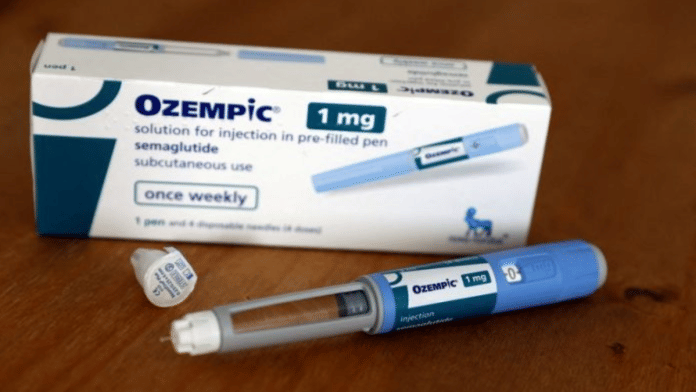


New Delhi: Ozempic and Wegovy, the drugs that have dominated global health headlines for their dramatic weight-loss effects, are now being linked to something far broader: fewer sick days, reduced hospital visits, and potentially billions in healthcare savings.
A new UK-based study presented at the European Congress on Obesity in Istanbul, and reported by The Guardian last week, has found that National Health Service (NHS) patients on GLP-1 (glucagon-like peptide-1) weight-loss jabs cut their sick days by nearly half. A separate study of 738 patients found emergency room visits fell by a quarter.
The NHS is the United Kingdom’s publicly funded healthcare system.
The study, conducted by digital healthcare provider Oviva, tracked 1,270 NHS patients enrolled in a specialist management programme. All had been prescribed GLP-1 injections.
Most received semaglutide, marketed as Wegovy for weight loss and Ozempic for type-2 diabetes, alongside treatment for at least three weight-related illnesses, most commonly anxiety, high blood pressure and type 2 diabetes. After nine months, they lost an average of 12.4 percent of their body weight.
The workplace data was also striking. Comparing equivalent three-month periods before and after starting treatment, average sick days fell from 1.19 per patient to 0.66, an overall 45 percent drop.
Long-term sickness absence, defined as five or more consecutive days, fell by 56 percent. The proportion of patients taking such leave dropped from 17 percent to 7 percent.
Face-to-face general practitioner (GP) visits fell 43 percent, from an average of 1.67 appointments per three months to 0.95. Remote consultations dropped 48 percent, and more than 60 percent of patients did not contact their GP at all during the period.
“Britain is in the grip of a productivity crisis, and obesity is one of the biggest drivers. Our data shows that when people get the right treatment–jabs combined with proper clinical support–they don’t just lose weight. They get back to work, stop relying on their GP and start living again,” Martin Fidock, the UK managing director of Oviva, a provider of digital healthcare services, told The Guardian.
With more than a quarter of adults in England classified as obese, experts said if the weight management programme were expanded to the 3.4 million people currently eligible for weight-loss jabs on the NHS, it could free up nearly 10 million GP appointments every year, saving the health service about £364 million a year, which translates to roughly Rs 4,700 crore.
GLP-1, or glucagon-like peptide-1, is a hormone the gut releases after eating. It signals fullness to the brain, prompts the pancreas to release insulin and slows digestion.
The drugs semaglutide, sold as Ozempic for diabetes and Wegovy for weight loss, and tirzepatide, sold as Mounjaro, are synthetic versions engineered to amplify these effects.
Administered as weekly injections, they have produced weight loss of 15-20 percent in clinical trials, numbers once associated only with bariatric surgery. Their popularity has been staggering. Novo Nordisk, the Danish company behind Ozempic and Wegovy, briefly became Europe’s most valuable company on the back of demand.
In India, a turning point arrived in March 2026 when semaglutide’s patent expired, prompting many pharmaceutical companies including Sun Pharma, Dr Reddy’s and Zydus to launch generics at a fraction of the earlier cost.
Also Read: Mounjaro or Ozempic? What 1st study on Indian cohort found out about efficacy of anti-obesity drugs
‘Metabolic productivity drugs’
Medical experts say the results of the latest study are plausible, but these are still early days.
“It’s early days yet, but I won’t be surprised. Everything about GLP-1, when it starts, this is how it starts,” said Dr Ambrish Mithal, Chairman and Head of Endocrinology and Diabetes at Max Healthcare.
He outlined three mechanisms that could explain the numbers. “When patients lose weight, they feel physically more agile. They are less prone to arthritic pains and general body aches,” he said.
Mental health, he said, was a second driver. “Most patients feel much more positive and good, and, therefore, they may also be less likely to miss work.”
Third, he said, these drugs may have anti-inflammatory action. Several responses may be linked to that.
The research findings mark a fundamental shift in how these therapies must be classified, said Mumbai-based diabetologist Dr Rajiv Kovil.
“GLP-1 therapies are no longer merely weight-loss drugs; they are becoming metabolic productivity drugs,” he told ThePrint.
“When patients lose 10-15 percent of their weight, we are not just reducing kilograms; we are reducing inflammation, breathlessness, sleep apnea, joint stress, absenteeism and healthcare utilisation,” he added. “The fall in GP visits and sick leave suggests obesity treatment can have macroeconomic benefits for healthcare systems.”
Studies show that emerging evidence suggesting benefits of GLP-1 drugs in asthma, migraine, and other inflammatory conditions indicates that these drugs may offer gains that go beyond weight reduction alone.
“Obesity is increasingly proving to be a systemic inflammatory disease, not simply a cosmetic or lifestyle issue. These are disease-modifying metabolic drugs, and their usage will spread to conditions driven by metabolically driven weight gain,” Dr Kovil added.
(Edited by Sugita Katyal)
Also Read: What happens when use of GLP-1 drugs is stopped?