



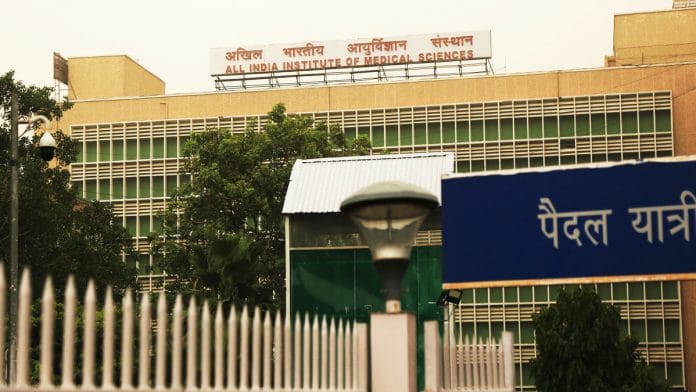
New Delhi: Several Covid-19 cases could be missed due to the over-emphasis on fever as a predominant symptom, according to a study published by the Indian Journal of Medical Research.
The study of 144 hospitalised patients with confirmed Covid-19 in north India, all admitted to the country’s top public sector hospital All India Institute of Medical Sciences (AIIMS), New Delhi, was published Thursday.
The study, conducted by 29 authors, including AIIMS director Dr Randeep Guleria, is titled ‘Clinico-demographic profile & hospital outcomes of Covid-19 patients admitted at a tertiary care centre in north India’, and used admission data from 23 March to 15 April.
Of the 144 patients in the study, 93 per cent (134) were male. Ten patients were foreign nationals.
Also read: Covid symptoms, prescription not enough, Kolkata residents face week’s wait or more for test
Symptoms present
The study stated: “Fever was present in only 17 per cent of our patients, which was far less compared to other reports across the globe, including the Chinese cohort in whom 44 per cent had fever at the time of presentation and 88 per cent developed fever during the hospital stay.
“Most symptomatic patients had mild respiratory symptoms such as nasal symptoms, throat irritation and cough, which was different from the reported symptoms in other studies.
A significant proportion of patients, about 44 per cent, were asymptomatic at admission, and “remained so throughout the hospital course”, it said. “This may be a cause of concern as these asymptomatic patients are potential carriers or transmitters of infection in the community.”
It pointed out that the top characteristics of patients were “younger age, high proportion of asymptomatic individuals, long time to PCR negativity, and low need for intensive care unit care”.
Congregation, domestic travel reasons for infection
The study stated that close contact with Covid-19 patients in congregations constituted the most commonly documented exposure, along with domestic travel to or from affected states.
“…the majority of our patients were part of a public congregation mainly attended by males, which was identified as a Covid-19 hotspot, and patients were identified on active screening,” it noted.
“…Two patients were healthcare workers treating Covid-19 patients, and one was a public official with close contact with a Covid-19 patient during work, highlighting the risk associated within healthcare and law enforcement work during an ongoing pandemic,” it added.
No correlation with age, sex, smoking
Overall, among the 144 patients, four (2.8 per cent) had severe Covid-19, whereas the remaining 140 (97.2 per cent) had mild-to-moderate infections.
At the time of admission, only 16 (11.1 per cent) patients had fever.
The study found “no significant association” between the severity of the disease with age, sex, smoking status, TLC (total lung capacity) grading or lymphopenia”.
“However, a significant association was observed between severe disease at presentation and Neutrophil-to-Lymphocyte Ratio.” N-L Ratio is used to ascertain inflammation in the body.
The mortality observed was low — 1.4 per cent, as two of the 144 patients died. Both deaths were among the patients with the severe infection.
Treatments given
The study said “majority of the patients were treated with supportive care and required only symptomatic treatment”. The top drugs used include antihistamines, vitamin C and paracetamol.
The antibiotic azithromycin was prescribed to 29 patients, whereas anti-malaria drug hydroxychloroquine was administered to 27 patients. Eleven patients received both HCQ and azithromycin.
“Only one patient required mechanical ventilation. Five patients required oxygen supplementation. None of the patients were treated with non-invasive ventilation or high-flow nasal cannula,” it said.
Also read: Lift lockdowns, protect the vulnerable, treat Covid like a health issue and not a disaster
Heartening to see some thorough Indian scientific analysis and conclusions.
Hope this gets some international publicity.
So far we have only been embarrassed with our channels promoting coronill BS