







New Delhi: A new blood test may be able to help detect the earliest biological signs of Alzheimer’s disease, years before symptoms appear. New research suggests that the abnormal tau proteins—one of the main biological hallmarks of Alzheimer’s—can be detected in the blood of adults in their fifties and sixties.
The finding suggests that the changes linked to Alzheimer’s may begin years before the visible symptoms set in, potentially opening the door to early intervention and diagnosis. Usually, Alzheimer’s is diagnosed after the age of 65.
The study found out that the people with higher levels of proteins linked to Alzheimer’s in their blood scored less in cognitive tests over the following five years compared with participants who did not have the proteins in their blood samples..
The study, ‘Alzheimer’s disease neuropathology plasma biomarkers and cognition in midlife: a community-based cohort study,’ was published 30 May, in Lancet Healthy Longevity.
Alzheimer’s is the most common cause of dementia, which is an umbrella term for neurological conditions affecting the brain. While there is no cure as of now, there are several treatments as well as medications which help in managing symptoms and, sometimes, even slow down its progression.
Early symptoms include forgetting recent events or conversations, according to private American academic medical center Mayo Clinic. Over time, Alzheimer’s leads to serious memory loss and affects a person’s ability to do everyday tasks, it adds.
“Alzheimer’s disease pathology begins years before symptoms emerge. Detecting the disease early means patients can target modifiable risk factors and maybe seek other care,” said Dr Kristine Yaffe, MD, a senior author in this research.
The World Health Organization (WHO) estimates that nearly 10 million new cases of dementia are diagnosed each year. According to the Global Burden of Disease study published in The Lancet Public Health, it estimated that 3.84 million people in India were living with dementia in 2019.
The findings
The study involved 1,350 adults in the 53-69 year age group with the average age of 61. These participants were part of a long running US health study. Of these total participants, 58 percent were women and 42 percent men and 45 percent were black and 55 percent white.
Researchers also observed and kept a track on the participants’ performance in tests which tested their memory, attention, language as well as other thinking abilities. Blood samples taken from the participants were checked for the presence of proteins, including amyloid-beta and tau, linked with Alzheimer’s.
Some of the blood samples had higher levels of these proteins. After identifying such participants, researchers undertook cognitive tests on them—the results showed that they tend to perform poorly on the cognitive tests and also experiencing a faster decline when it came to their thinking as well as memory skills over a period of five years when compared to those who did not have high levels of these proteins in their blood.
The biomarkers identified the participants who already had biological changes, which are associated with Alzheimer’s even before they developed noticeable symptoms. Only a small percentage of the participants tested positive (i.e., 4 to 15 percent of the participants) for the presence of the Alzheimer-related blood biomarkers.
Though it is still uncommon to see clear signs of Alzheimer’s in people around the age of 60, the research mentioned, when the changes related to the disease are noticed through a blood test, the participants are more likely to show subtle problems with memory, thinking, language, and information processing.
The findings suggest that blood tests could help identify people at risk of Alzheimer’s, years before major symptoms appear. This could allow doctors to recommend lifestyle changes and start treatments earlier, when they are likely to be most effective.
The science involved
According to scientists, there are two main changes that are involved with Alzheimer’s. One is the build-up of amyloid-beta plaques, which are sticky clumps of protein that gather around and between the brain cells and can disrupt communication between them.
The other change is the abnormal accumulation of tau proteins inside brain cells. These proteins can become damaged and form tangles, which then interferes with the normal functioning of the cells and eventually leading to their death.
The blood test does not diagnose Alzheimer’s directly, rather it measures tiny amounts of the proteins, including amyloid-beta and tau, which are linked to changes in the brain.
Once the level of these proteins were measured, the researchers were able to identify the people who already had Alzheimer’s-related changes in their brains despite them not developing any noticeable symptoms.
Researchers are now trying to ensure that the blood-based biomarker tests can provide a simpler and less invasive way to identify people at risk much before the symptoms appear, rather than brain scans or spinal fluid tests currently used to detect the disease.
The India situation
India will need to strengthen its healthcare infrastructure before such tests can be widely adopted and become a success, Dr Neha Pandita, senior consultant, neurology, Fortis Hospital, Noida, told ThePrint
“The healthcare system must first develop the necessary infrastructure and counseling services as well,” she said.
The blood-based biomarkers, she said, were less invasive as compared to the current ways through which Alzheimer’s is diagnosed. Currently, the diagnosis “mainly depends on a combination of detailed clinical history, clinical examination, and cognitive assessment,” she elaborated. “Cognitive scales are used, and brain imaging like MRI is usually helpful.”
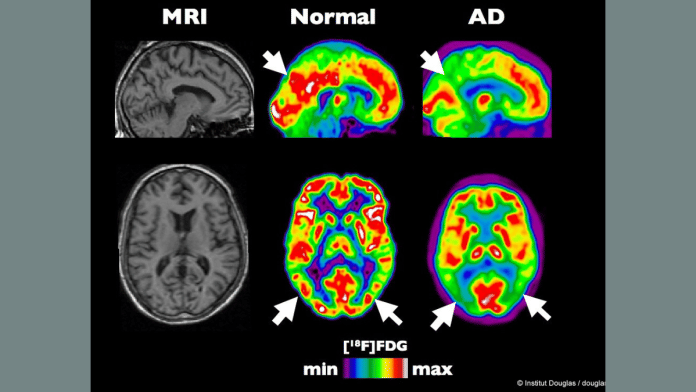
There are then more advanced PET (Positron Emission Tomography) and CSF (Cerebrospinal fluid) tests to detect the hallmark proteins of Alzheimer’s and other dementias, Dr Neha said.
“Blood-based biomarkers could significantly improve early detection because they are less invasive, more affordable, and more easily available compared with PET and CSF testing.”
However, she mentioned that the widespread use of blood-based biomarkers tests would first require certain standardized testing methods, as well as lower costs to ensure they were accessible to both rural and urban populations.
India has made progress in diagnosing dementia and Alzheimer’s disease, but several challenges still remain, the neurologist said. One of the challenges is the gap between urban and rural healthcare, which often delays diagnosis and treatment.
Many people with Alzheimer’s symptoms do not reach specialised centres in time because of limited awareness and access, Dr Neha said. “Strengthening cognitive screening programmes, physician training and diagnostic infrastructure will be very important for early diagnosis.”
(Edited by Tony Rai)