





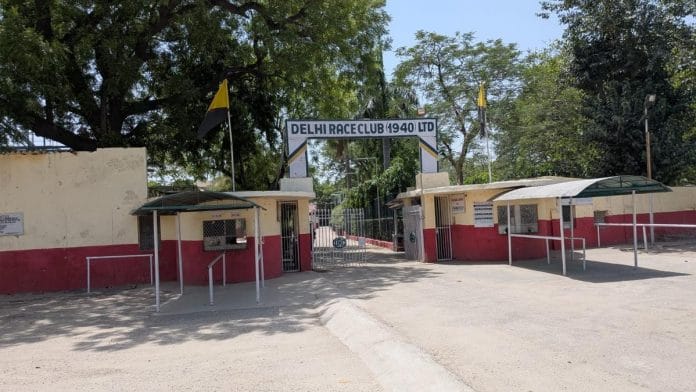


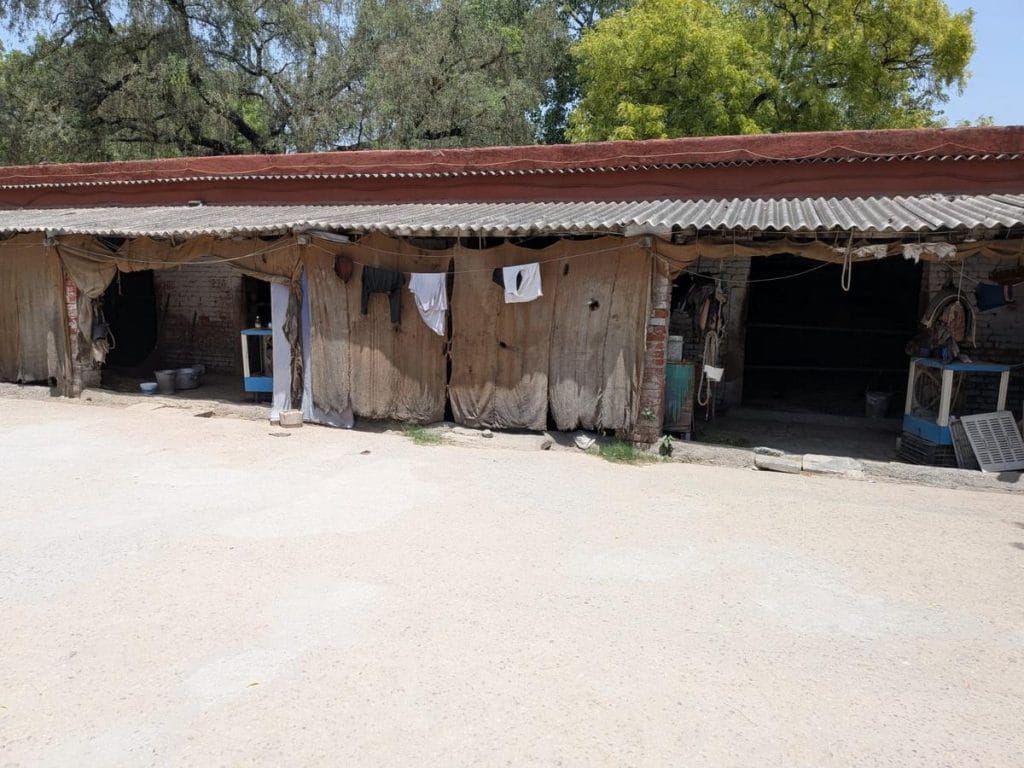
New Delhi: A few weeks ago, the Delhi Race Club was still alive with its annual racing season, just as it has been almost every year for a century. Frantic updates crackled from tinny loudspeakers, punters anxiously studied their slips, and horses thundered toward the finish line. Now, grass grows haphazardly across the turf. In the stables, horses nicker and nose at feed buckets as a solitary stray cat wanders in. This time, it is no ordinary end-of-season lull.
The Delhi institution, once a fixture of the capital’s elite social calendar, faces the looming possibility that the season that just ended was its very last. And it’s fighting a pitched battle with the central government to stop that from happening.
Four days after marking its 100th year, the Delhi Race Club was served an eviction notice on 12 March by the Land & Development Office (L&DO) under the Ministry of Housing and Urban Affairs. It was given 15 days to vacate the 53.4 acres it has occupied since 1926. Notices also went to the 15-acre Jaipur Polo Ground and three nearby jhuggi-jhopdi clusters, together adding up to nearly 100 acres of prime land near the Prime Minister’s residence at 7 Lok Kalyan Marg, formerly Race Course Road.
The L&DO has not publicly said what it plans to do with the land, beyond citing “planning and development”. While the polo association is engaging with the government’s eviction machinery and the JJ clusters have lost their case in court, the Race Club has dug in for a legal fight to protect its turf, where it houses around 250 horses and supports nearly 5,000 livelihoods.
The industry is dying in totality. Fools like us that are passionate are keeping it alive
-Angad Singh Sandhu, horse breeder
The potential eviction is the latest blow to a proud sport that has been bleeding land, money, and crowds across the country. Racing culture is a shadow of its former self, hit by land battles with the government, falling betting revenues, high GST, and a void where younger audiences could have been. In Delhi, even before the eviction notice, 1,000 spectators counted as a good crowd.
“It’s a very emotional situation,” said Angad Singh Sandhu, a horse breeder who runs Mukteshwar Stud Farm two hours’ drive outside the city. “I’ve literally grown up there. I used to go to the races after school.”
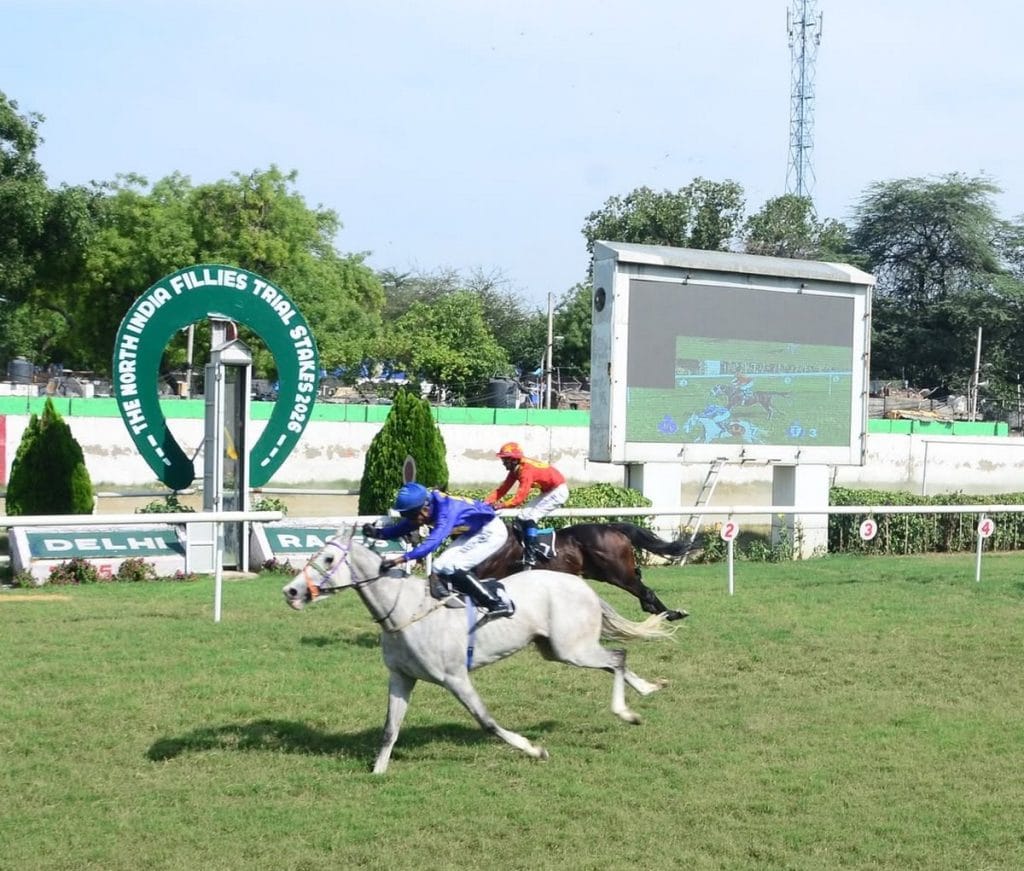
On 15 May, Delhi Race Club lawyer Suhail Dutt, a senior advocate with a mane of white hair, fenced with the government’s bespectacled counsel on increasingly technical points of law. It was the latest round in a fight that had been escalating since March.
First, the High Court stayed the eviction on 25 March, restraining the Centre from coercive action. In April, the L&DO came back with a show-cause notice asking the Club to appear before an Estate Officer: an employee of the very agency trying to evict it. The Club won a second stay, this time on the notice. Now the government was before Delhi High Court Chief Justice Devendra Kumar Upadhyaya, asking him to vacate it.
Additional Solicitor General Chetan Sharma offered a single reason for the sudden urgency: “There is now a public purpose” for the land, although he did not provide specifics.
If the stay holds, the Club will argue its full case before a High Court judge in late July. If the stay is vacated, the Club ends up before the Estate Officer — which is what it has been trying to avoid.
ThePrint has emailed the L&DO for comment; this report will be updated if they respond.
“It’s an existential issue,” said an insider involved with the administration of the Delhi Race Club. If the Club loses its legal battles, “it would be the end.”
Also Read: Delhi villages and the rush to document their vanishing stories
The legal fight
The dispute comes down to a century-old paper trail that the government has challenged twice in the last decade. This time, the eviction notice is swirling with conspiracy theories about what is in store for land next to the Prime Minister’s home.
The Club insider, quoted earlier, said talks with the L&DO have left the management with the impression that the push to evict came “from the top.” He also referred to rumours in military circles that the abutting Air Force station has “got their marching orders” too, though ThePrint could not independently substantiate this.
At the centre of the Race Club’s case is a long-term lease signed with the colonial government in 1926 and regularly extended until 1994. The Club says the lease never truly ended. Nevertheless, it got a show-cause notice from the government in 1999, and the matter dragged on in court for years. In 2013, the Club paid about Rs 7.5 crore towards past demands and continued sending annual rent. The Club’s position is that an extension of the lease was “deemed” granted by the L&DO’s acceptance of its payments.
Nobody can evict their tenants without taking recourse to the law. Every litigant must feel they can win
-Sankalp Goswami, advocate representing the Delhi Race Club
While the L&DO issued similar notices to the Race Club and four properties along the same stretch in 2017, matters had settled down. With the L&DO accepting payments, the Club assumed its legal troubles were behind it. Then came the notice, delivered with all the grace of a blunt hammer.
“It certainly came as a surprise,” said the Delhi Race Club insider.
The 12 March notice cited the expiry of the 1994 lease and said the land was needed for “planning and development”. The Club moved the Delhi High Court, arguing that since proper eviction procedure had never been followed, its 1926 lease still stood. The L&DO countered that the Club had been required to request an extension in writing, but failed to do so.
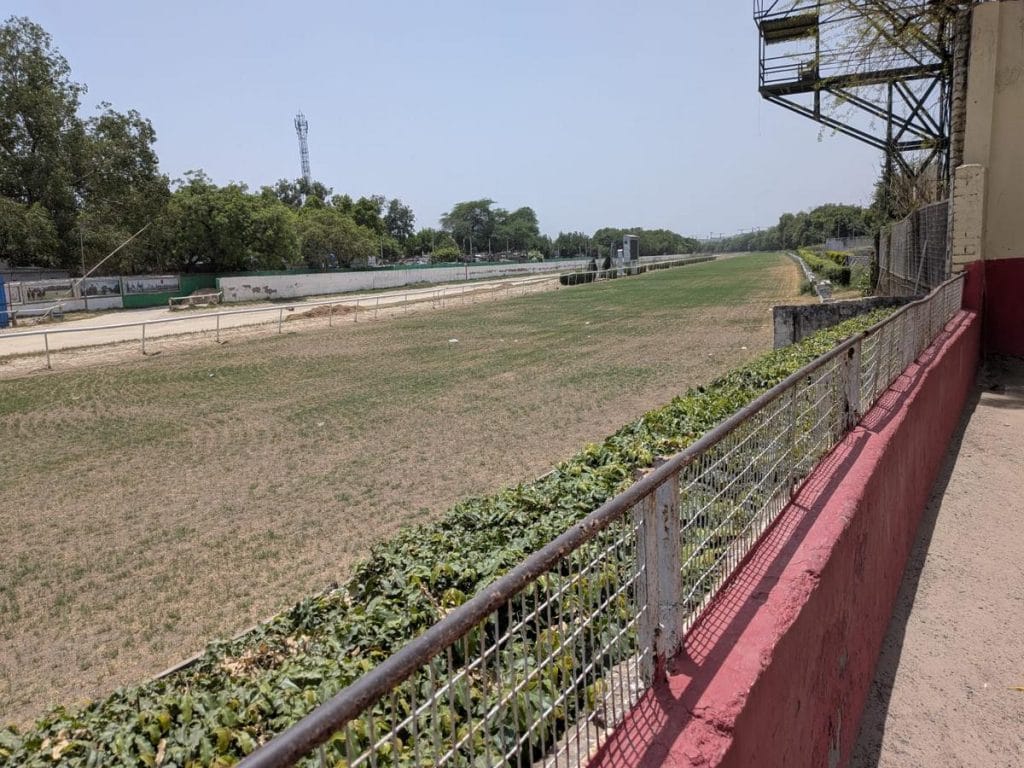
“The same lease agreement subsists. We are holding the land under that lease,” said Sankalp Goswami, an advocate who has represented the Race Club for nearly three decades.
He argued that the 2013 settlement strengthened the Club’s position.
“They said, we withdraw our right of re-entry.” That, he said, created a “deemed contract” valid until 2038. In an ironic twist, the Club’s annual rent payment fell due shortly after the eviction notice arrived. The insider confirmed it was deposited in full.
Back at the Club, there is much speculation about the rush, including the 15-day deadline in the initial notice.
“It’s a joke,” said the insider, pointing out the impossibility of relocating dozens of horses in just two weeks. He added that, earlier, informal discussions with the L&DO had floated the idea of alternate land, though nothing was ever put to paper. Those talks have since gone cold, according to him.
There are now murmurs, he added, that the land is wanted for official housing for Members of Parliament, especially in anticipation of the delimitation exercise that could add more than 300 seats to the Lok Sabha.
In court on 15 May, the government did little to clear the fog. Asked why it had waited 32 years after the lease expired to act, ASG Chetan Sharma cited an “air defence installation” only as an example, and argued that the “entire body of this land” around Lok Kalyan Marg would be needed.
“It’s been more than 10 years,” said Goswami. “But now they may have a feeling that they require the land urgently.”
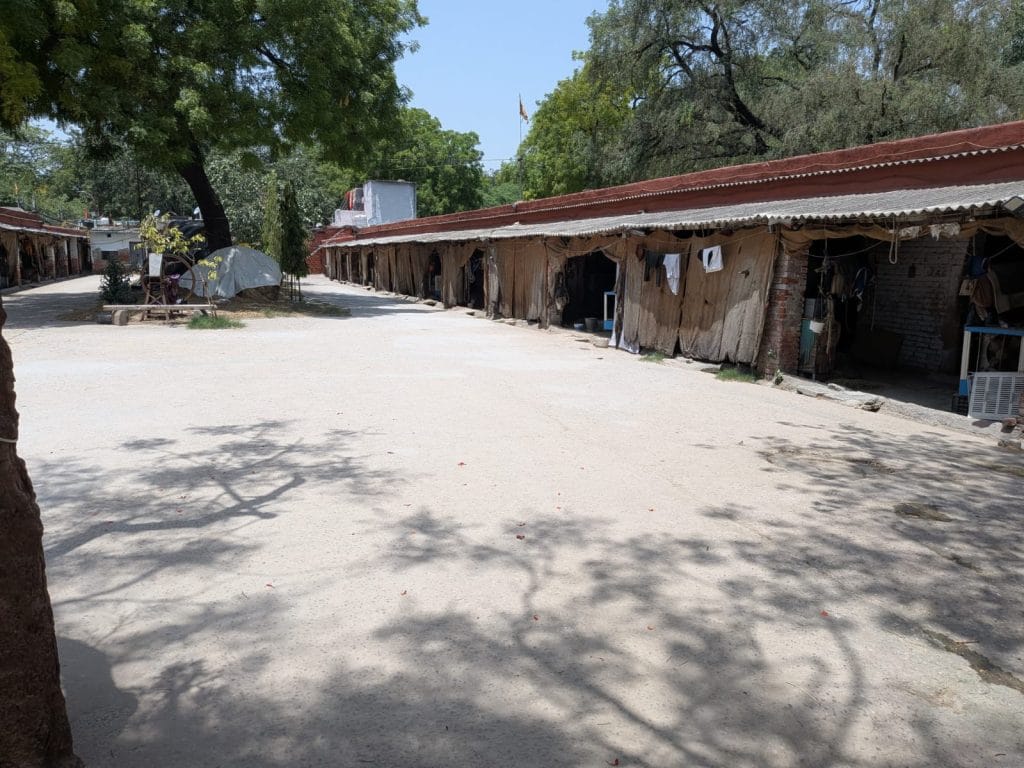
A tale of two tracks
Two of Delhi’s oldest equestrian institutions, served on the same day, are now responding in different ways. The Delhi Race Club is digging in through the courts; the Jaipur Polo Ground is taking its chances engaging directly with the government’s eviction machinery.
The Polo Association’s lease expired in 1993, with the Centre arguing it has held the Jaipur Polo Ground only as a “tenant by sufferance” since. Yet, despite initial discussions with the Race Club about coordinating a joint legal defence, the Association is no longer contesting the eviction in court.
The two neighbours parted ways when the government sent a show-cause notice on 17 April asking them to appear before the Estate Officer.
“They are appearing before the Estate Officer,” said Goswami, adding that the Race Club was actively avoiding that route because it expected its prospects there to be “bleak”.
Compared to the Race Club, the Polo Association wields considerably more institutional clout. Its office-bearers include industrialist Naveen Jindal and Jaipur royal Padmanabh Singh, whose great-grandfather originally established the Association’s polo ground in Delhi. Its president is General Upendra Dwivedi, the serving Chief of Army Staff.
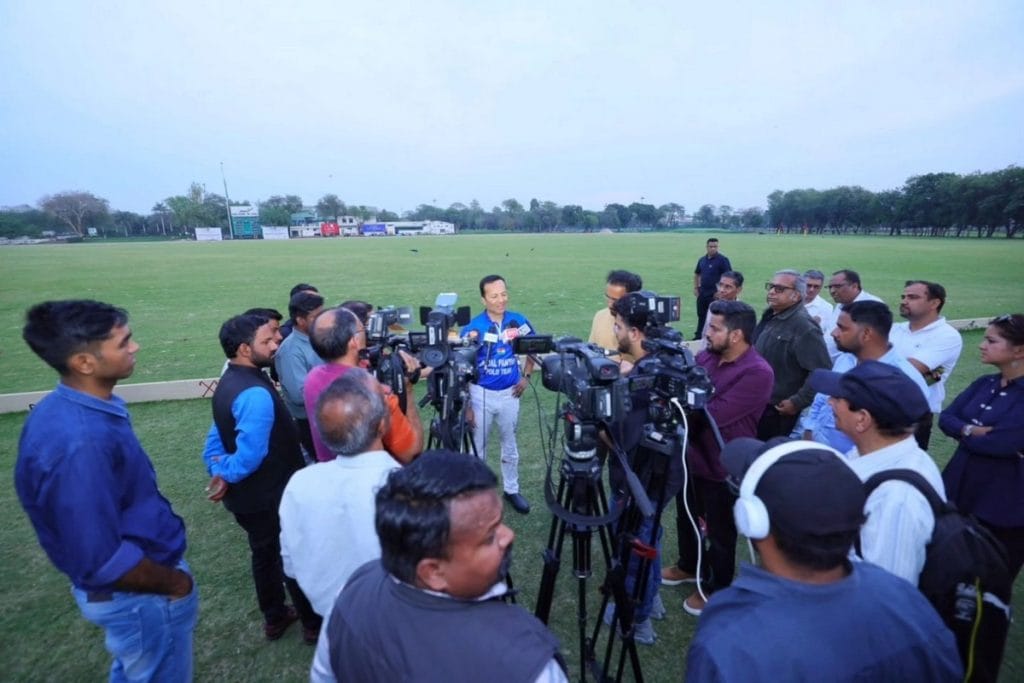
The Delhi Race Club has a more low-profile set-up. Its president, JS Bedi, is a chartered accountant, and its members largely include businessmen, horse owners, breeders, and racing aficionados. There is no conglomerate heir in sight.
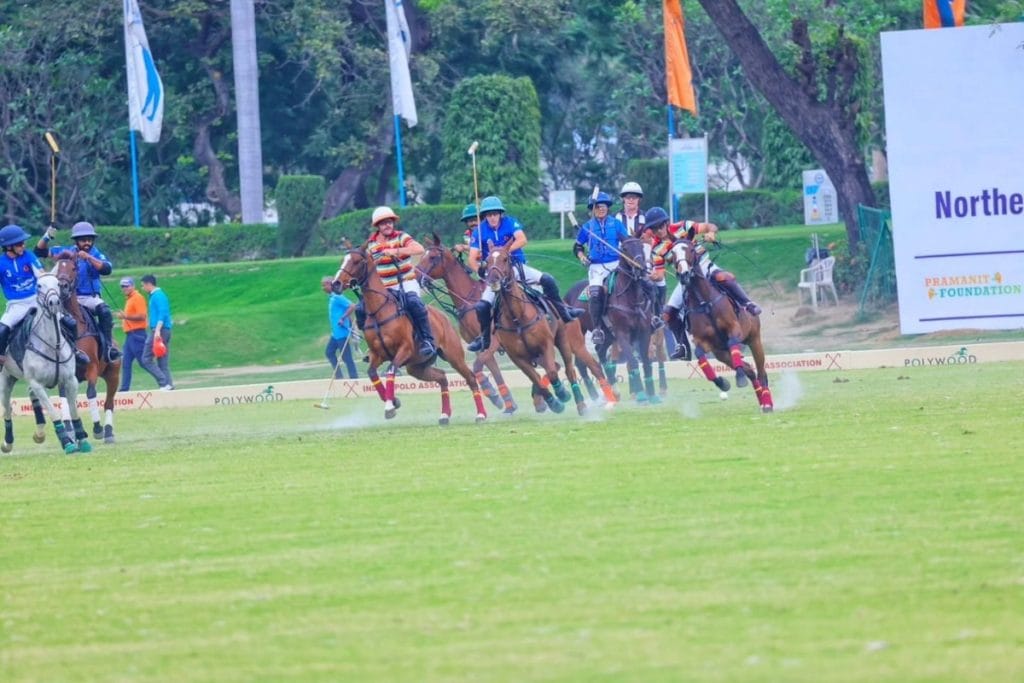
The Polo Association’s elite network has already launched a visible campaign for survival. At the final of the Jindal Steel Polo Championship, played in March right on the disputed ground, members openly appealed for support.
“We have written to the government, and are hopeful that the sentiments of polo lovers will be understood,” announced Jindal, who is also a BJP MP.
No comparable public appeal mission has materialised for the Race Club.
Gautam Kotwal, a horse owner and breeder who spent a decade on the Club’s managing committee, said he was not aware of any major, coordinated attempt either to relocate the track or to pressure the government into reconsidering. Everything hinges on how the court battle turns out.
The lack of a Plan B has caused consternation among veteran members and horse owners.
For Angad Singh Sandhu, both venues are close to his heart. He is both a thoroughbred breeder and a keen polo player. Like many enthusiasts, he inherited his equestrian associations from his father, who bought the family’s first horse in the late 1980s.
“My love for horses came from both those places,” he said.
No place to run
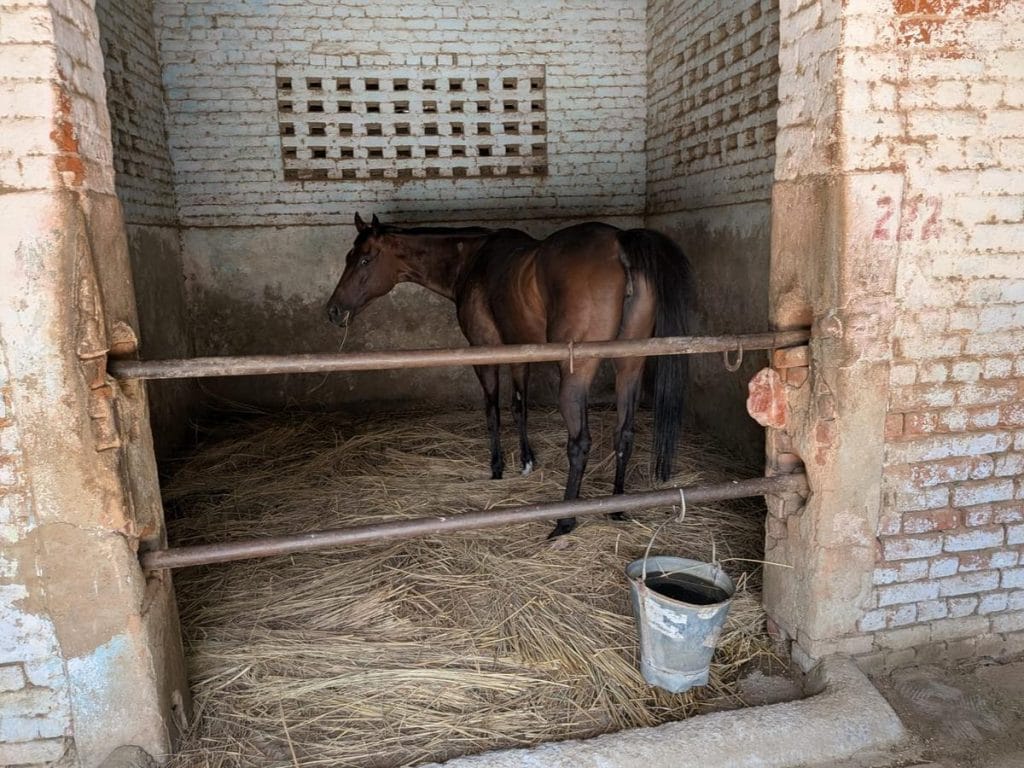
If the Race Club shuts, horses and thousands of workers will have to find somewhere else to go. And there are very few options.
The Club hosts about 250 racehorses, many of them free of charge, according to the insider.
“These are thoroughbred racehorses,” he said. “They need specialised care.”
Some owners, including Sandhu, have already begun moving their horses in anticipation of a rapid eviction.
“I would have had four or five horses in Delhi, but I’ve only got one,” he said.
His bigger fear is that the skilled staff who know how to care for the horses will leave before the animals do.
Five thousand people depend on the Club for their livelihood. When they’re born, the first thing they see is a horse. What else do they know how to do?
-Delhi Race Club member
“They’ll flee the racecourse, the horses will come under the management, and the management is already occupied,” he fretted. “The trainer I’ve trained with has asked me if it’s okay for him to move to a different racecourse.”
While Kotwal was optimistic about placing the horses in stables across the country, arguing that “they are likely to find space,” Sandhu was far less sanguine. Delhi’s horses, he said, are “second-string” compared to those in Mumbai or Calcutta, and may not easily find takers.
“To rehome this number of horses is going to be close to impossible,” he added. Sandhu expects many will end up sold to riding schools or breeding operations. To him, that fate is tragic. “They were born to run.”
Then come the people who keep the racecourse running: trainers, groomers, stable hands, jockeys.
“Five thousand people depend on the Club for their livelihood,” said the insider, adding that many of them come from families who have worked with racehorses for generations. “When they’re born, the first thing they see is a horse. What else do they know how to do?”
He pointed especially to the jockeys, most barely over five feet and around 50 kg – physiques tailored to racing but ill-suited to most forms of manual labour.
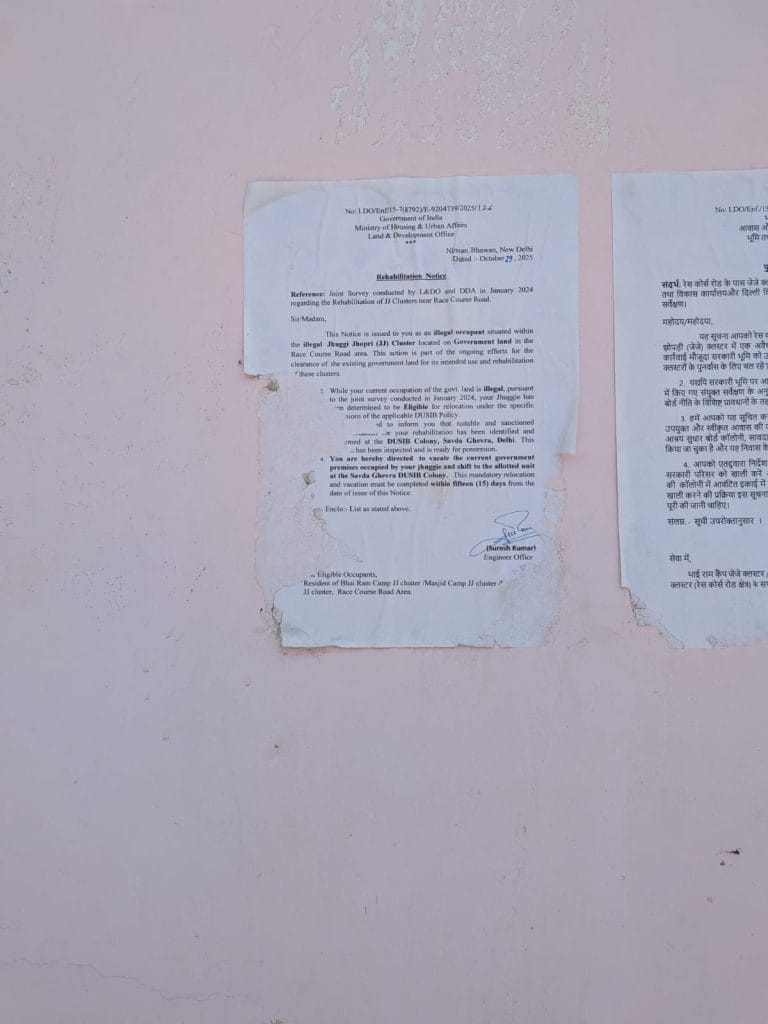
For many workers, the threat does not end at the Club gate. Many live down the road in three nearby jhuggi-jhopdi clusters, one of them separated from club land by a single gate. The settlements have also received eviction notices, pasted directly onto the walls of cramped tenements.
Residents are slated to be relocated to flats in Savda Ghevra, around 40 km from central Delhi, but many say the distance would make it difficult to keep their current jobs. On 12 May, the Delhi High Court ruled against their petition to remain, giving them 15 days to vacate.
The Club hopes for better luck with the courts.
“Nobody can evict their tenants without taking recourse to the law,” said Goswami, adding that there was significant legal precedent on their side. “Every litigant must feel they can win.”
A dying industry
What was once a Rs 300-crore industry in the 1980s, with 3,000 thoroughbreds, 100 stud farms, more than 400 racing days a year, has been steadily put to pasture. Land battles with the government are accelerating that decline.
There are now only seven functional racecourses in the country, and if the Delhi Race Club loses its land, it will be the third major venue to go in two years.
In 2024, the Tamil Nadu state government repossessed the tracks in Madras and Ooty, leaving the Madras Race Club — the country’s oldest — effectively defunct. Bengaluru is now in the firing line. Although the Turf Club reached an agreement with the Karnataka government to relocate after a prolonged tussle over land, it was handed a tight two-year deadline in February to move its racing activities to Kunigal Stud Farm, once leased to fugitive billionaire and racing enthusiast Vijay Mallya.
“Bangalore is hanging by a thread,” said Shiven Surendranath, a managing committee member at Mumbai’s Royal West India Turf Club, which operates the Mahalaxmi Racecourse. “It could go any day.”
Governments seeking to repossess racetracks increasingly argue that these clubs occupy important public land under century-old leases, many granted at minimal rates. Courts have consistently proven sympathetic to the claim that reclaiming such high-value land serves the public good. The Madras High Court, for instance, acknowledged that the Madras Race Club may have possessed a valid lease on its Guindy track, but nevertheless ruled that “overarching public interest” took precedence. The land is now being converted into an eco-park and waterbody.
Compounding the land squeeze, the punters who do attend are betting significantly less. Many point the finger at the government’s 2017 imposition of a 28 per cent GST on all bets. Because the tax applies to the initial ‘ticket value’ rather than final winnings, every Rs 100 bet has Rs 28 shaved off before it even joins the pool.
It’s quite a quaint, close-knit club around Mr Bedi. It’s been the same people. It was running reasonably well, so we didn’t try to do anything
-Gautam Kotwal, former Delhi Race Club managing committee member
But the Delhi Race Club’s internal crisis goes back even longer. Even if alternative land were eventually placed on the table, relocating the infrastructure would be financially daunting for an institution with dwindling reserves.
“We would need to have meetings… It would be a financial struggle,” said the insider, sounding unconvinced that the club could mobilise enough money in time.
Also Read: Black water panic in Delhi’s Janakpuri. No one trusts their taps
The last lap?
In its heyday, the Delhi Race Club was a favoured haunt for politicians, businessmen, and military officers. Field Marshal Sam Manekshaw’s daughter Maja Daruwala has reminisced about evenings spent at the races, feeding oats to the family’s perpetually losing horse. Celebrities such as Randeep Hooda have been spotted at the stands.
Thousands of energetic punters crowded the stands until the mid-2000s. Passions ran so high that near-riots reportedly broke out on more than one occasion, when angry bettors stormed the track to protest races they believed had been rigged.
Those scenes are now long gone. Attendance has halved since before the pandemic, the insider said. Revenue from ticket sales, bookmaker licensing, and betting commissions are drying up with it.
Apart from the GST issue, much of the decline comes down to the absence of a younger audience.
“It’s only old bettors,” said the insider.
The Club’s membership rolls have stagnated as well, with very few new members joining over the past decade. Leadership has stayed within one family — Club president JS Bedi, who succeeded his late father PS Bedi, has been elected unanimously for successive terms since 2016. For some members, that familiarity was part of the appeal.
“It’s quite a quaint, close-knit club around Mr Bedi. It’s been the same people,” Kotwal said. “It was running reasonably well, so we didn’t try to do anything.”
The only tracks doing relatively well are those that own their land, have reached long-term accommodations with their state governments, or managed to stave off institutional inertia. Hyderabad’s racecourse, for instance, sits safely on land sold to the Club for a nominal sum by the Seventh Nizam in 1956. Mumbai’s Royal West India Turf Club secured a fresh 30-year lease from the municipal corporation in 2024 — by surrendering 120 acres of its central land for a public park next to the track.

Where there are success stories, wealthy patrons are not far behind. Regulars in the members’ booths at Mahalaxmi include the Poonawallas — horse breeders before they were vaccine-makers — and Shapoorji Pallonji Group scion Shapoor Mistry.
“There’s always enough money to run the sport,” laughed Surendranath.
Some clubs have used that money to reinvent themselves. Since 2024, the Royal Calcutta Turf Club has created lounges, restaurants, and dedicated areas for under-35 visitors. Between 2022 and 2024, the Poonawallas spent Rs 12 crore renovating the Pune Turf Club. Surendranath said Mumbai has also marketed itself “aggressively” this year, with craft cocktail bars, gourmet food pop-ups, and live bands during the racing season. On 1 February, 18,000 to 19,000 people turned up for Derby Day “after a long time,” according to him.
But the Delhi Race Club has no Nizam’s grant, no municipal bargain, no wealthy patrons, and, so far, no powerful public campaign behind it. Its stands were described as ‘ramshackle’ as far back as 1986; now, it is lucky to get a tenth as many punters as Mumbai.
As the Club waits for the court to deliver its judgment, its long-term members are still looking forward to the August racing season.
“The industry is dying in totality. Fools like us that are passionate are keeping it alive,” said Sandhu wryly.
(Edited by Asavari Singh)