





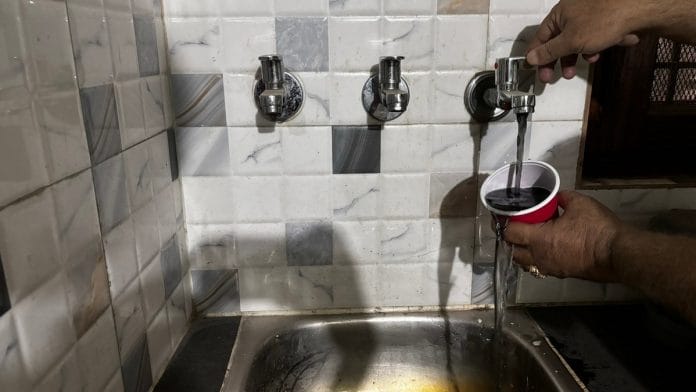

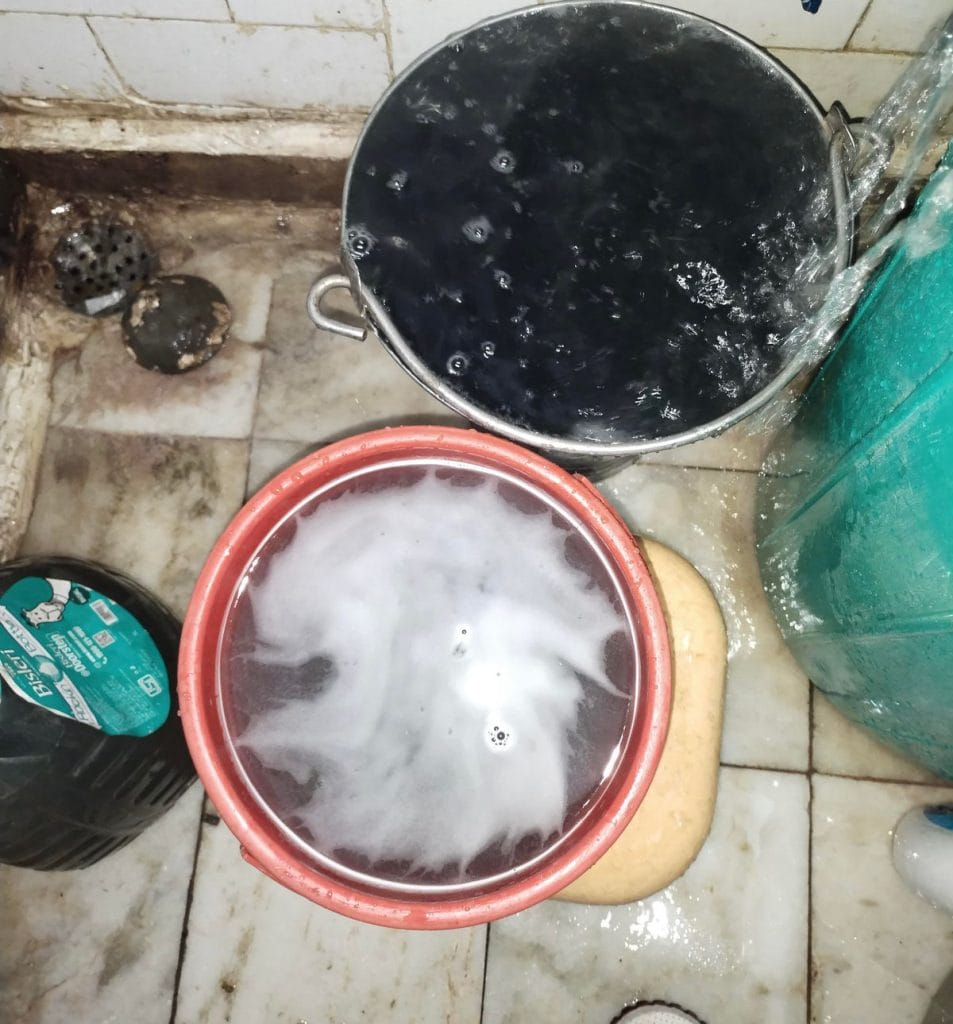
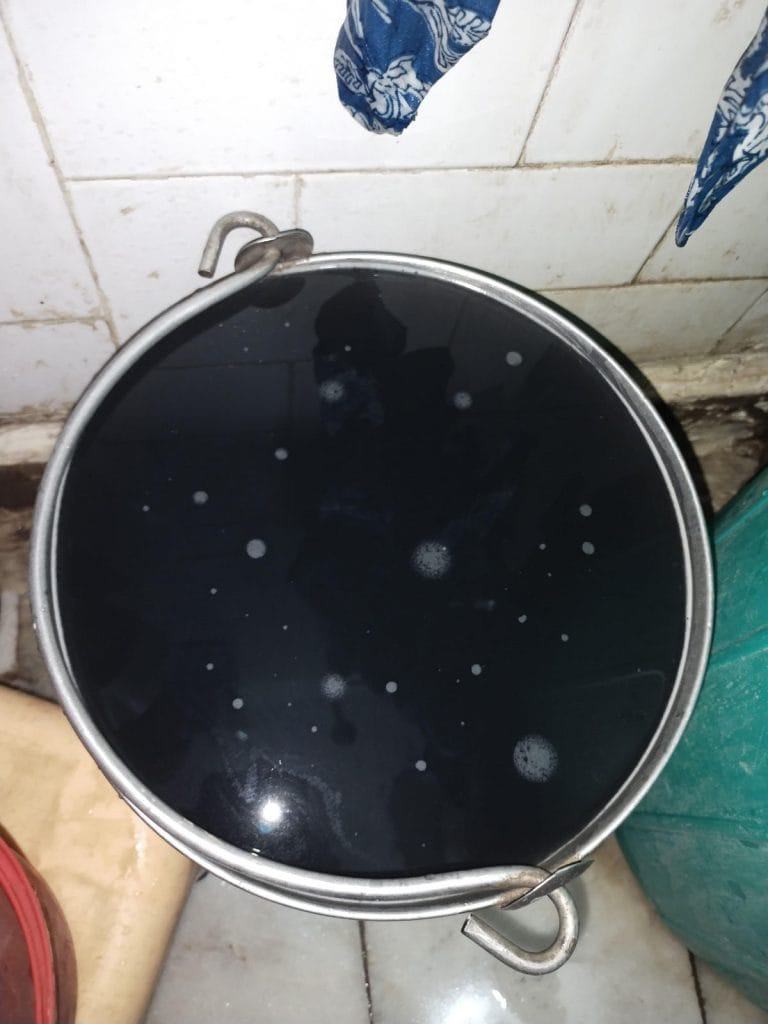
New Delhi: Sixty-eight-year-old Manju Gupta follows a strict regimen of simple meals and medicines to fight cancer. But at her home in a relatively upscale pocket of Janakpuri, there is a new threat to her health. Black, foul-smelling water has been running from her taps for six months.
“We chose to live in a gated community, thinking basic things like water would never be an issue. Turns out, that’s not true,” said her husband Vijay Gupta, a retired bank employee who moved to Janakpuri’s BE Block in the 1980s. “When you’re already dealing with illness, it makes everything worse.”
Their home is not the only one facing the issue. More than half of the 600 residents in his colony are affected by it, according to the RWA president Nakul Mehta. Past rows of Mercedes, Audis, and SUVs parked along the broad lanes, the most prominent vehicle in the colony today is a small van unloading plastic water canisters—an almost absurd sight in a neighbourhood surveilled by security guards with walkie-talkies.
It is the latest chapter in Delhi’s crisis of worsening living standards. After air pollution, choked traffic and garbage mountains, now comes sewage-like water from taps. BE Block residents are resorting to Bisleri even for baths. Complaints have gone nowhere and the basic question remains unanswered: what exactly is in the water? No current sampling has been done in BE Block.
In recent months, dirty tap water has plagued the city in several forms. In January, high ammonia levels in the Yamuna turned tap water yellow and made it smell of rotting eggs across many parts of the capital. In March, an HT survey of 18 localities found that 44 percent of samples violated basic microbiological safety standards. Social platforms such as Reddit are awash in posts about the abysmal quality of water in the city.
“This is another basic amenity being polluted,” said one Reddit post in January, receiving over 100 comments. Another in April complained about suddenly finding that the water smelled “really disgusting”.
Every second day, we see patients coming in with complaints of stomach aches, typhoid, and diarrhoea. Most of them are from lower-income households, because wealthier families can still afford bottled water or Bisleri cans
-Dr Neha Gupta, homeopathic physician in Janakpuri
A 2026 CAG report found that 8,933 of 16,234 groundwater samples tested by Delhi Jal Board, or 55 percent, failed potable water standards. The report also pointed to a deeper problem: the supplied water is not being tested regularly or rigorously enough, with staff shortages and inadequate laboratory capacity behind the failure.
At Janakpuri, once the largest planned residential area in Asia, residents in BE Block have protested the way upscale colonies often do — by writing complaints, visiting offices, and arguing with engineers. Now they are even discussing taking to the streets. The problem, meanwhile, has spread. At B1A, B1C, and B3B, residents have been logging complaints about contaminated water since February 2026. The same story keeps playing out: a few inspections, vague assurances, no resolution.
“What is happening in Janakpuri isn’t new. For years, untreated water from borewells and wells has been fed directly into underground reservoirs—and at times even supplied to households,” said Amulya Nidhi, national convenor of Jan Swasthya Abhiyan India, an NGO that advocates for the Right to Health. “This kind of direct use of raw water puts drinking water safety at serious risk, and hence the health of the citizens.”
It is time, he added, that the government took the safe delivery of clean water seriously.
From Sheila Dikshit to Arvind Kejriwal and now Rekha Gupta, every Delhi government has promised to fix the water. Campaigning for re-election, Kejriwal promised that sewer-related issues across the city would be solved on a “war-footing”. Delhi Minister Ashish Sood called the water issue “a nightmare for the people of Delhi” and pledged that clean water would be one of the government’s top priorities.
Last year, Delhi’s BJP government launched sewer repair projects to tackle the contamination in parts of West Delhi including Janakpuri, but residents say they are yet to see results.
“The pipelines at Janakpuri are as old as 50 years. Due to the lack of regulation and maintenance under previous governments, the issue of sewage management is now spilling from taps onto the streets,” said a senior Delhi Jal Board official, on condition of anonymity.
Also Read: Indian cities are a mess of overhead wires. Delhi will pay Rs 8 cr to clear just 5 km
When taps turn traitor
Every day, 37-year-old Chandrashekhar, a resident of Janakpuri’s B1C Block, walks nearly 2 kilometres to a water station in Shiv Nagar, empty cans in hand. In this lower-income pocket of the neighbourhood, other families follow much the same routine.
“Travelling every day for clean water, both for drinking and daily use, is difficult. We stand in line for hours, and then carry it back home. In our already busy schedules, this has become an added inconvenience,” said Chandrashekhar, who teaches at a local college.
In the narrow lanes of B1C Block, the stench of sewage permeates the air. At the DDA flats, an 88-year-old woman, one of the first settlers in Janakpuri, now welcomes visitors into a drawing room overrun by large empty water cans. Filled bottles line the centre table for drinking; buckets are stacked beside the washroom for daily use.
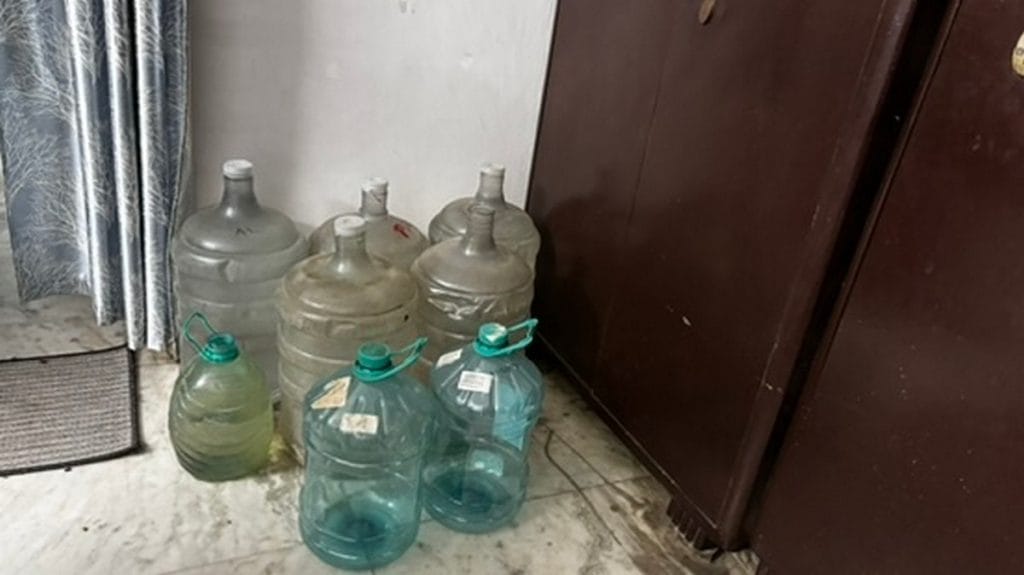
Residents say neighbours often help each other when the taps run black or the cans run out.
“The water coming out of the taps is not even fit for bathing, washing clothes, or even using in the washroom. Some days, we borrow water from our neighbours; on other days, we have to spend extra money and use canned water even for bathing,” said Manoj, her son.
The water itself changes — jet black on some days, grey on others, occasionally clear but still with an odour.
Siva, another resident of the colony, bought a Rs 20,000 water purifier in November 2025, hoping it would at least make drinking water safe. Within a month, the RO stopped working and the filter had to be replaced. The purifier now sits unused. Others in the area report the same thing: filters clog unusually fast and need replacing almost every month because of the condition of the supply.
You can’t trust it. Even when the water looks clear, there’s always doubt—what if it’s still contaminated?
-Rakhi Garg, resident of B1C Block
While more affluent families in gated societies add Dettol to their bath water or invest in Bisleri or Kinley cans for their ablutions, the anxiety is universal.
“You can’t trust it. Even when the water looks clear, there’s always doubt—what if it’s still contaminated?” said Rakhi Garg, a resident of B1C Block.
This prolonged exposure is taking a physical toll. Residents say the elderly and young children are the worst affected, dealing with constant stomach aches and recurring illness. Local chemists say more people have been walking in with complaints linked to stomach-related infections in recent months.
“We are seeing a rise in people coming in with stomach ache, diarrhoea, and typhoid symptoms. It has increased significantly—by close to 50 percent,” said Baljeet Singh Sobti, owner of Sobti Medicos, Janakpuri.
A broader public health threat is brewing; last year, doctors estimated a spike of up to 30 per cent in waterborne diseases across Delhi. In January, BJP spokesperson and former MLA RP Singh even urged the Delhi government to provide free bottled water to residents as ageing pipelines, leakages, and corrosion had made tap water unsafe.
Those from lower-income brackets are worst affected.
“Every second day, we see patients coming in with complaints of stomach aches, typhoid, and diarrhoea. Most of them are from lower-income households, because wealthier families can still afford bottled water or Bisleri cans,” said Dr Neha Gupta, a homeopathic physician at Dr D K Gupta Homeopathic Memorial Clinic in Janakpuri’s B Block. “The water situation in Janakpuri has been poor for such a long time that constant exposure to contaminated water is now visibly affecting people’s health.”
Gupta said that while avoiding tap water entirely is not practical for most residents, she advises patients against using it directly for drinking or cooking. Even at her own home, she added, tap water is restricted to cleaning and often has to be used with disinfectants to mask the foul smell.
Sewage in the water supply
Just last summer, a similar stink arose in Janakpuri’s A-1 Block, barely 2.5 km from B Block. The RWA there went to the National Green Tribunal alleging that sewage-mixed drinking water was being supplied to their homes.
In a 14 May 2025 order, the NGT reprimanded the Delhi Jal Board.
“Supply of drinking water which is unfit to the residents of the city is very serious matter but… DJB has not taken expeditious action to remediate it,” said a bench led by NGT chairperson Justice Prakash Shrivastava. He added that the Central Pollution Control Board (CPCB) had also “not done the needful” to get the water-sample report sought in its previous order.
Residents had questioned earlier sampling, saying the reports did not match the water reaching their homes. Following a tribunal directive, the CPCB collected fresh samples in June 2025. Its report found total coliform and E. coli in five of six household tap-water samples from A-1 Block. Under national drinking water standards, neither should be detectable in a 100 ml sample.
Subsequently, the DJB told the tribunal that a new pipeline would be laid. For residents of A-1 Block, this finally resolved the contaminated-water crisis, but the same problem surfaced shortly afterwards in B Block. Sampling has still not been done here.
“Engineers have come here only twice, and each time they simply clear the garbage clogging the pit, seal it again, and declare the problem fixed. Since then, we’ve been told the budget to replace the pipeline has been approved and work will begin any day now,” said Prem Prakash, a resident of B1C Block.
In Janakpuri, the core of the issue is ‘cross-connections’ between sewer and clean water lines.
“Water pipes work like a one-way road. But sometimes, because of damage or poor connections, that flow can reverse. When that happens, dirty water from drains can get pulled back into the clean water supply,” said the junior engineer who has inspected sites in Janakpuri.
Space constraints and years of unplanned urban expansion have resulted in sewage and drinking water pipelines being laid dangerously close to each other in several locations. This is in clear violation of government guidelines
-Subrata Chakraborty, director of the Water Programme at CSE
These pipelines, typically buried three to six feet underground, are in many places decades old and failing.
“In many parts of Delhi, where pipelines were laid decades ago, space constraints and years of unplanned urban expansion have resulted in sewage and drinking water pipelines being laid dangerously close to each other in several locations. This is in clear violation of government guidelines,” said Subrata Chakraborty, director of the Water Programme at the Centre for Science and Environment (CSE).
The problem is compounded by administrative friction. While the DJB manages both water and sewage, the tasks are often split between different internal teams. Confusion also frequently arises between the DJB and the Municipal Corporation of Delhi (MCD).
All that residents can do is file complaints. Data accessed through a Right to Information request filed by News18 showed that the DJB received more than 43,000 complaints of contaminated drinking water between 2021 and 2025. For the last three years, the annual complaints have crossed 9,000, up from 2,549 in 2021. The year 2022 also saw a spike with more than 12,000 water contamination complaints.
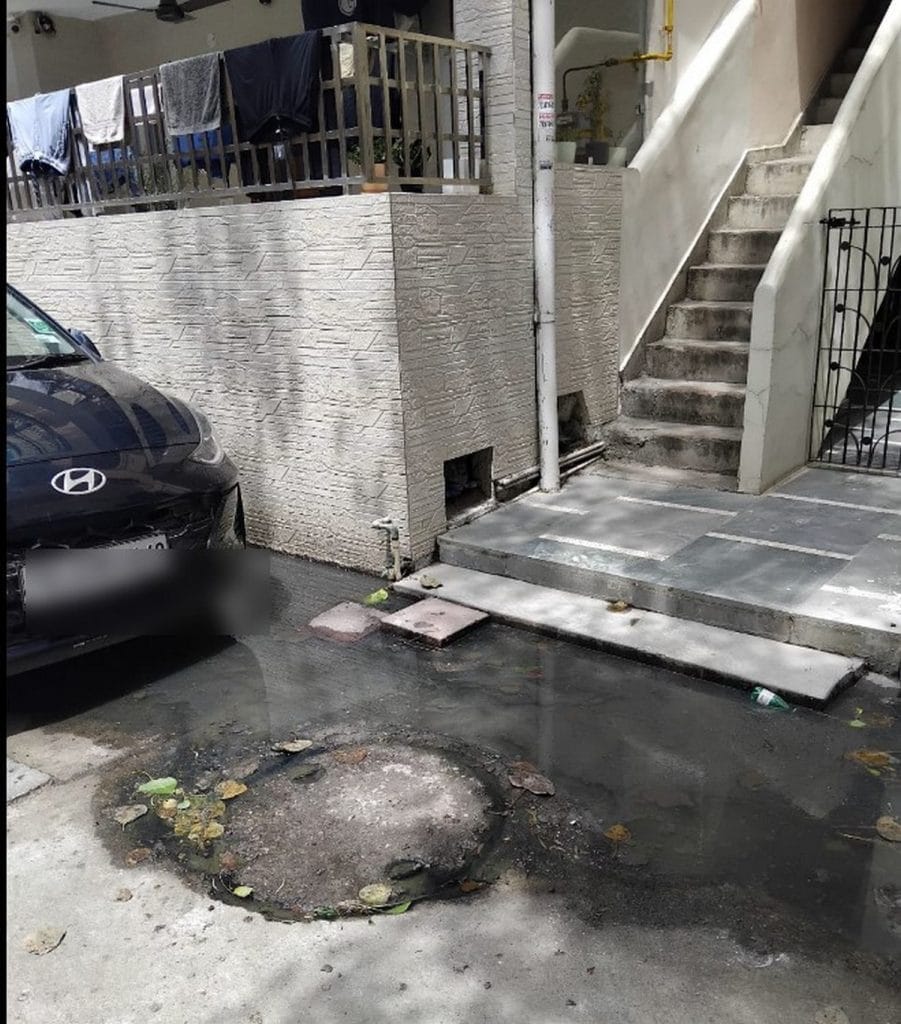
Meanwhile, years of cracks and corrosion have left engineers unable to pinpoint where exactly sewage is leaking into the supply.
“Janakpuri has dealt with sewage mixing with tap water for years. Earlier, it would happen a few times and then things would return to normal. But this time, the water has not improved. People are exhausted, frustrated, and worried about what they are using inside their own homes every day,” said Nakul Mehta, RWA president of B Block.
The complaints of residents, meanwhile, seem to have been left to corrode right alongside the pipelines.
Paper trails and PR videos
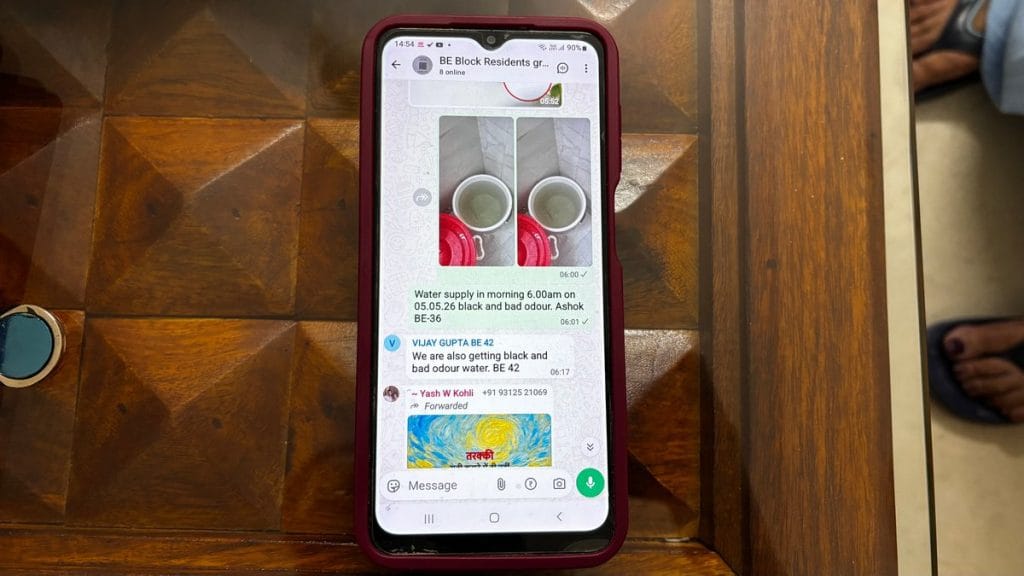
From handwritten notes to letters on the RWA letterhead, several residents of BE Block showed ThePrint copies of their complaints. The earliest one—sent to the DJB, the office of local MLA Shyam Sharma, and the MCD—went out in November 2025. Since then, residents have submitted at least 14 more.
One resident, who requested anonymity, even escalated the issue to the CM Jan Sunwai portal. Documents accessed by ThePrint show the complaint was first registered on 7 November 2025. Following an inspection, engineers carried out minor digging and removed garbage lodged in a nearby manhole.
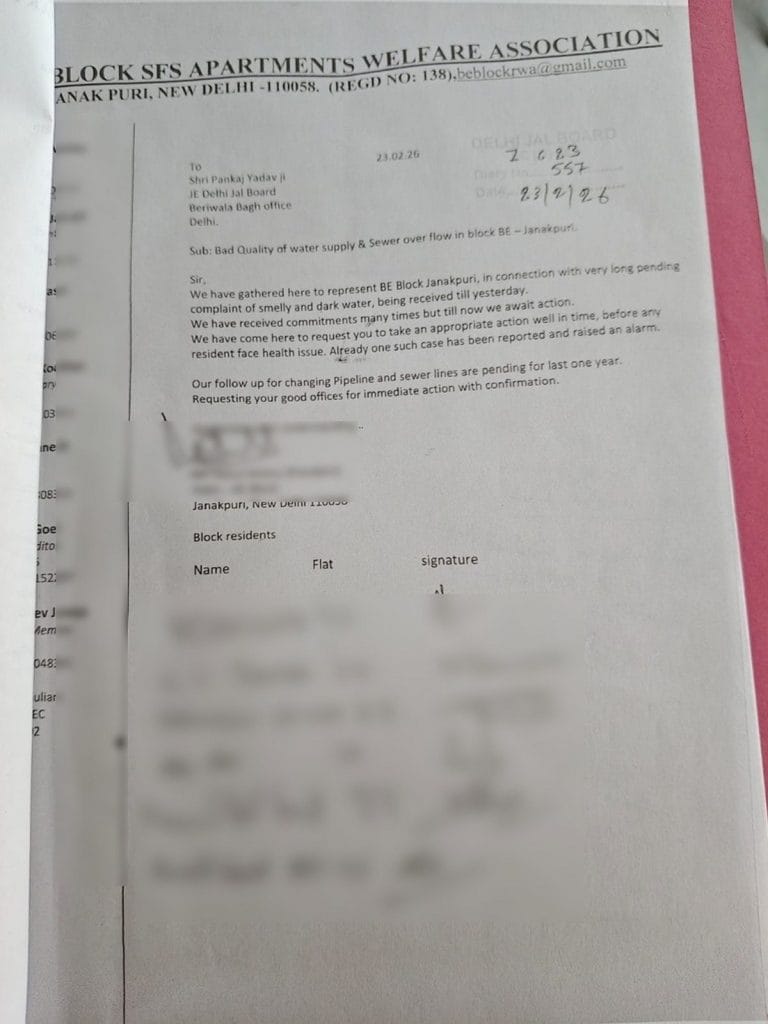
The complaint was marked as “attended” on the portal, but the tap water issue continued. The resident has since returned to booking daily water cans from a private supplier in Hari Nagar.
“On days when the water is especially bad, we make a 1916 complaint call. Some engineers come and pump out sewage or dirty water accumulated in nearby manholes,” said Rajiv Passi, a BE Block resident. “We are assured that the issue is finally resolved, but the filth is back in a few days. We don’t know how long before we can safely use our tap water.”
While residents struggle for something as basic as water, the DJB has prepared a video as a riposte to queries about Janakpuri.
The sewage problem is a major issue. There’s no denying that. On the very first day of my term, I saw a crowd gathered outside and thought they had come to welcome me. It turned out they were there with their complaints
Shyam Sharma, Hari Nagar MLA
The office of RK Lakhera, chief engineer in charge of water supply, responded to ThePrint by sharing a video titled ‘Voices of Janakpuri Reality Beyond Headlines & Claims’. It consisted of a curated compilation of residents stating they were not facing any water-related issues in their homes.
However, Hari Nagar MLA Shyam Sharma was quick to acknowledge the severity of the problem and the sheer volume of complaints he receives.
“The sewage problem is a major issue. There’s no denying that. On the very first day of my term, I saw a crowd gathered outside and thought they had come to welcome me. It turned out they were there with their complaints,” said Sharma, who served as mayor of the South Delhi Municipal Corporation between 2016 and 2017.
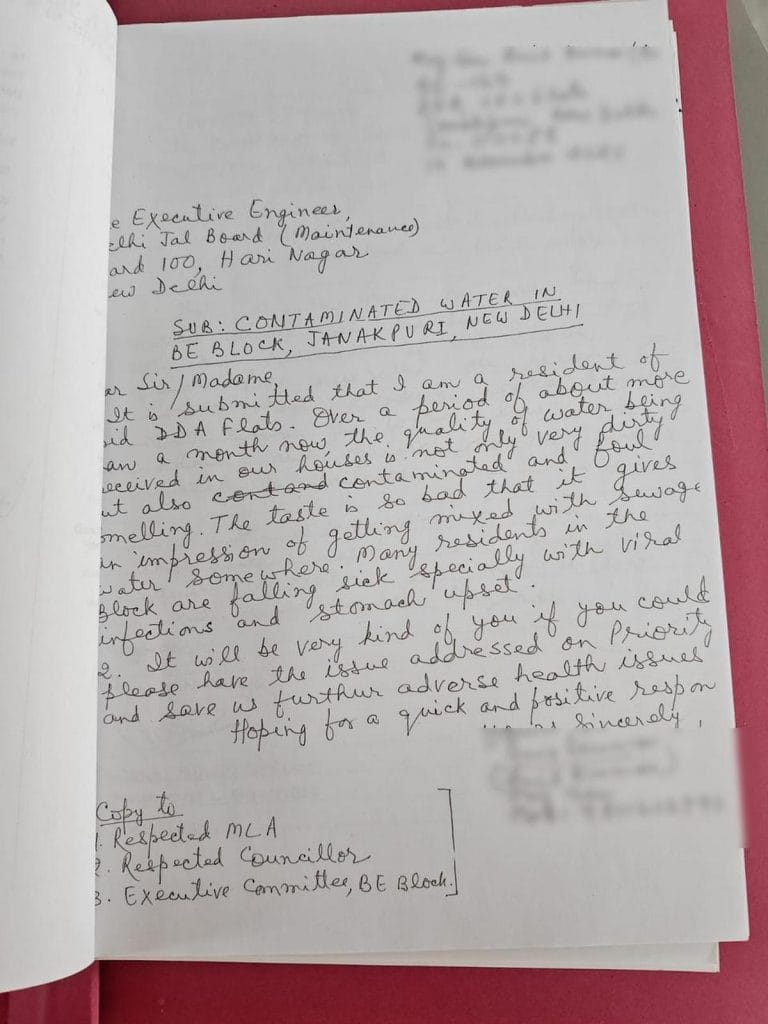
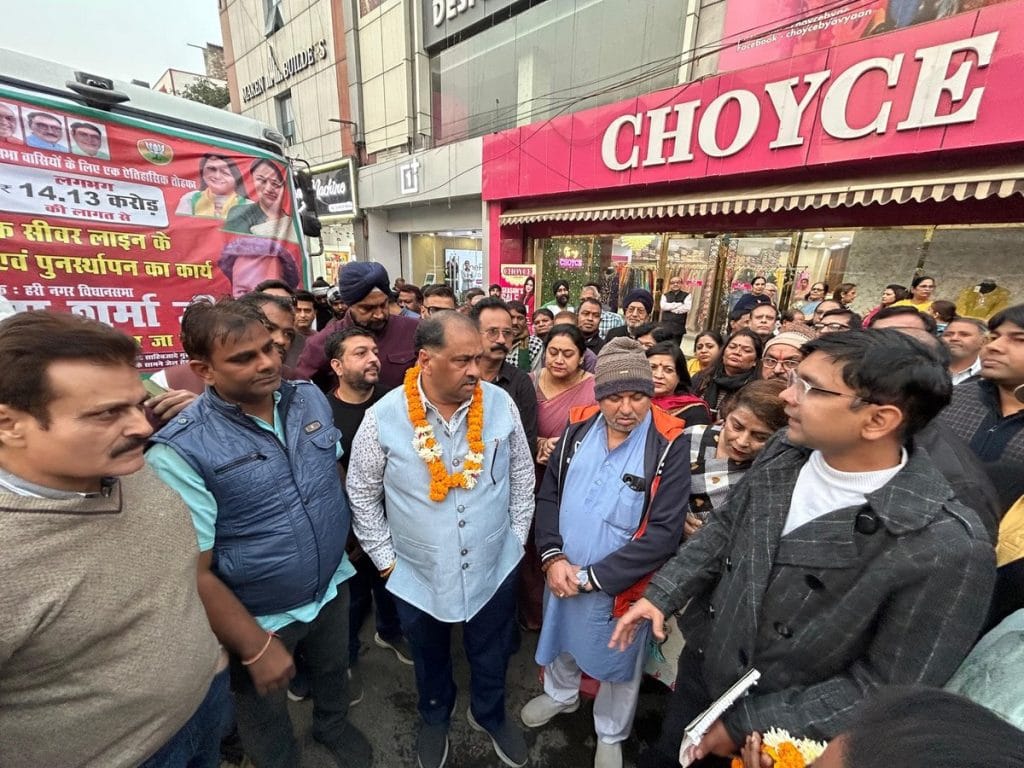
Sharma noted that work on the sewage crisis began soon after he took office as MLA in March 2025. The project—which involves first de-silting the heavily burdened pipelines and then replacing them entirely—was approved by the CM’s office and tenders were issued.
“This problem is something we inherited from the AAP government. Necessary cleaning and maintenance were not carried out, which only worsened the situation. But since this has become our top priority, I assure you that the entire project will be completed by June,” he added.
However, on the ground, the work is progressing more slowly than that.
Also Read: Delhi villages and the rush to document their vanishing stories
‘Are they waiting for Indore?’
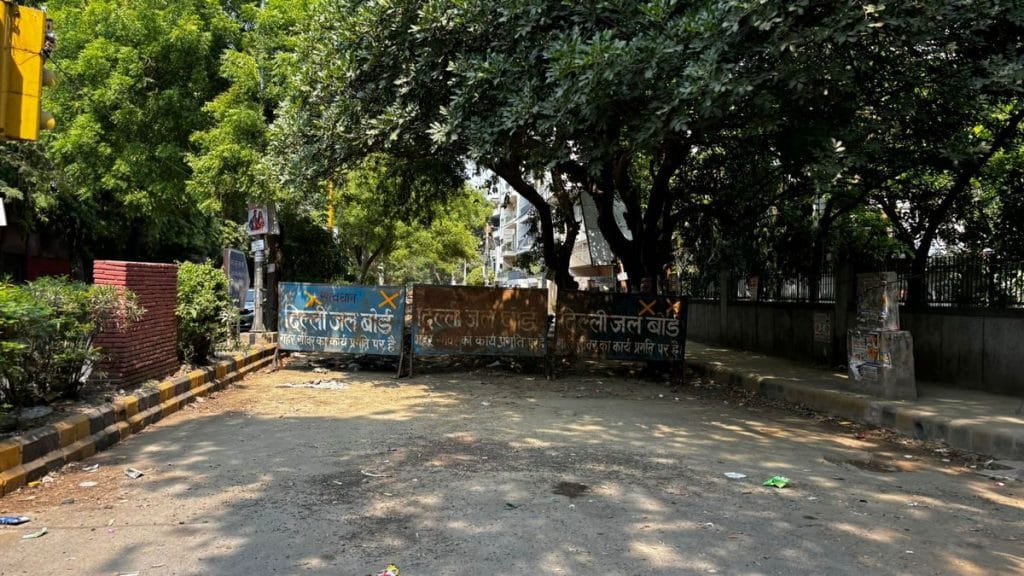
In one of Janakpuri’s main stretches, a large DJB signboard, now covered in dust and rust, carries the warning: “Deep sewer work in progress.” But for those living nearby, there has been little visible relief.
Since February 2026, work on certain stretches has been halted following the death of a 25-year-old motorcyclist who fell into a ditch dug by the DJB. While residents see JCBs and vans on the main roads, the biggest change they have noticed is that dug-up roads are jamming traffic while their taps keep running unpleasant surprises.
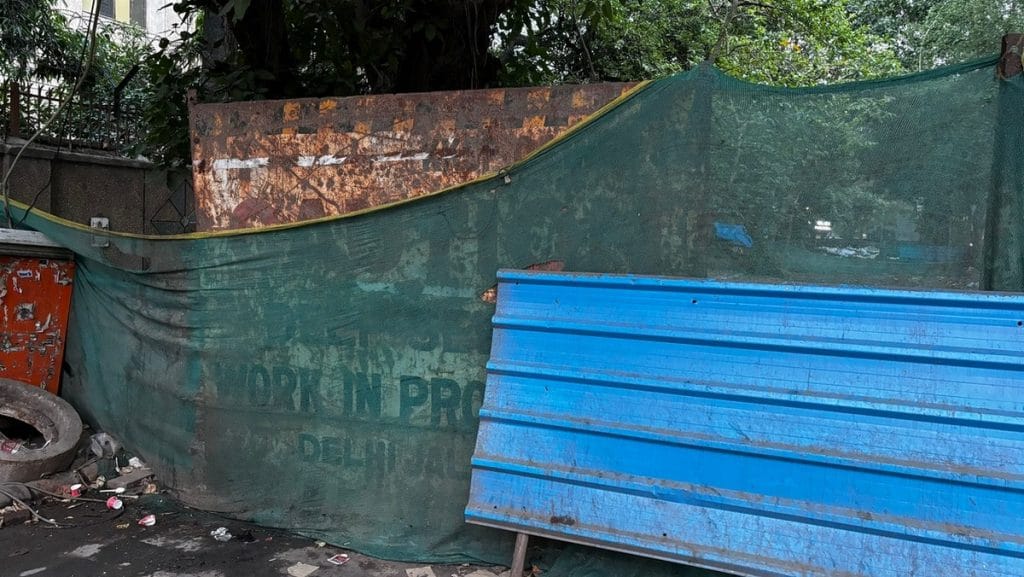
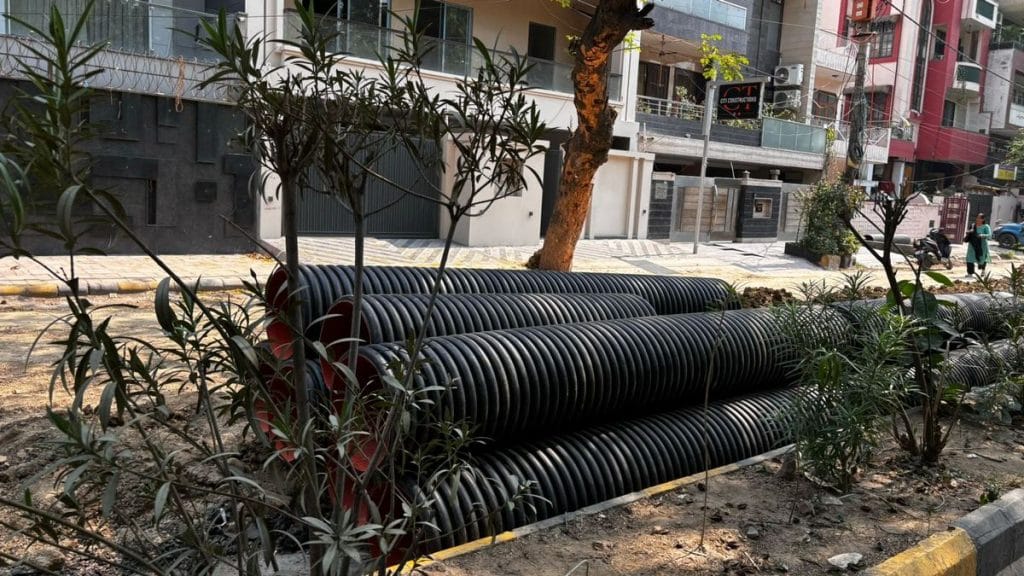
Currently, two major sewer projects are underway in West Delhi. In the first, the DJB is replacing peripheral sewer lines specifically in A-1 Block to stop sewage from leaking into drinking-water pipelines. The second, more ambitious undertaking involves the large-scale desilting of a 7-kilometre trunk sewer line that passes through Janakpuri, Hari Nagar, Shiv Nagar, and Virender Nagar.
The pipes are old and worn out, so the work to replace the entire stretch will take two years at the very least
-Delhi Jal Board official
While inaugurating the Rs 13 crore trunk sewer line project last November, Delhi Urban Development Minister Ashish Sood noted that these pipelines had not been cleaned since 2013, despite government standards requiring desilting every five years.
Sood initially provided a six-month timeline for improvements, according to reports, but the DJB official told ThePrint that it was expected to take considerably longer.
“The pipes are old and worn out, so the work to replace the entire stretch will take two years at the very least,” he said.
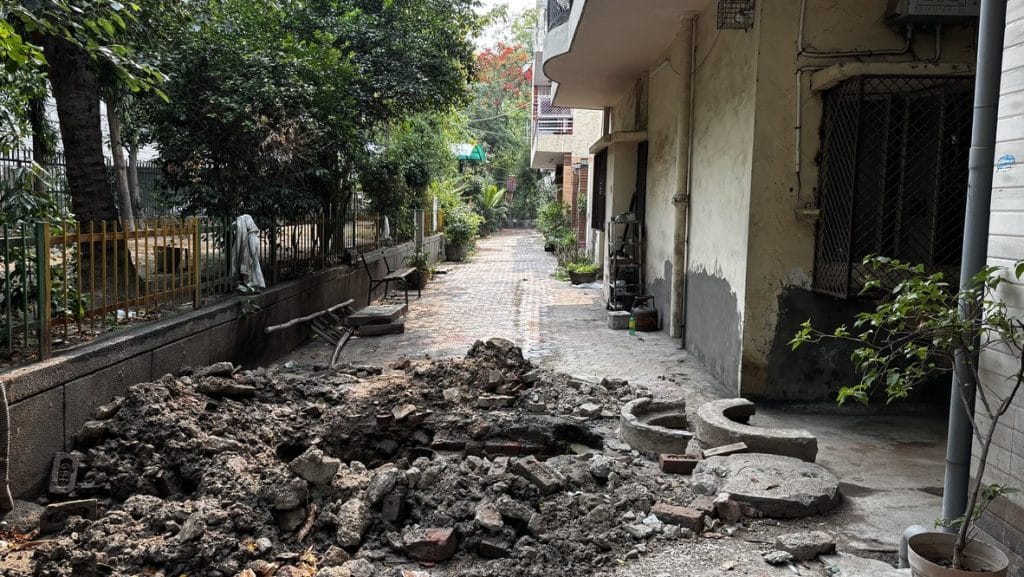
While he insisted that work is “progressing at a fast pace” under strict surveillance, the desilting phase must be finished before new pipelines can be integrated.
Engineers say that the related problems of sewage overflowing onto streets and black water flowing from taps will only be resolved once both the desilting and the replacement process are fully completed.
For some, the fact that a fix is even in motion is a relief.
“Two years is a long time, but at least they have started the process, which is more than we expected,” said one resident of BE Block.
Others are not as patient. One resident of B1C Block pointed to the deaths of at least 10 people in Indore’s Bhagirathpura locality after drinking water contaminated with E. coli last December.
“No one has landed in the ICU or died, is that why the DJB refuses to take us seriously? Are we waiting for a repeat of what happened in Indore?” the resident asked.
(Edited by Asavari Singh)