





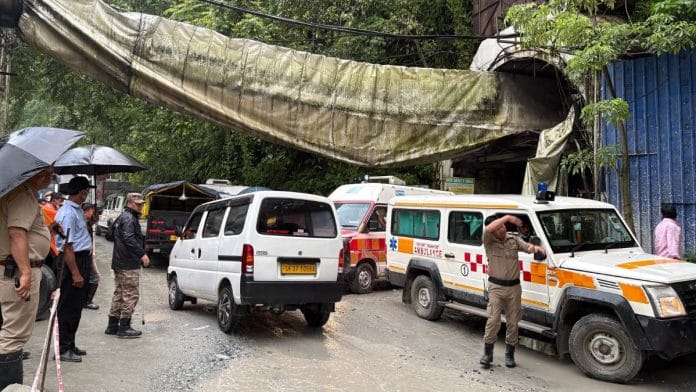
Namchi, Sikkim: For the past seven years, 27-year-old Ma Tshering Lepcha has travelled through the tunnel of the Teesta Stage VI hydropower project almost every day. An employee of Patel Engineering Ltd since 2019, he says the warning signs were visible long before the 20 July explosion that killed 25 people.
To him, the disaster was an accident that workers had repeatedly tried to prevent and warn about.
“Three or four people had already been injured earlier. Around six or seven months ago, there was another fire caused by gas inside the tunnel. The civil in-charge, the project manager, and the mechanical in-charge all knew about it. Two or three labourers were badly burnt, but no action was taken,” Lepcha alleged.
He said the workers repeatedly complained about the conditions inside the tunnel but were discouraged from speaking up.
“Whenever we raised concerns, we were threatened with losing our jobs. A few workers were even removed after speaking up,” he said.
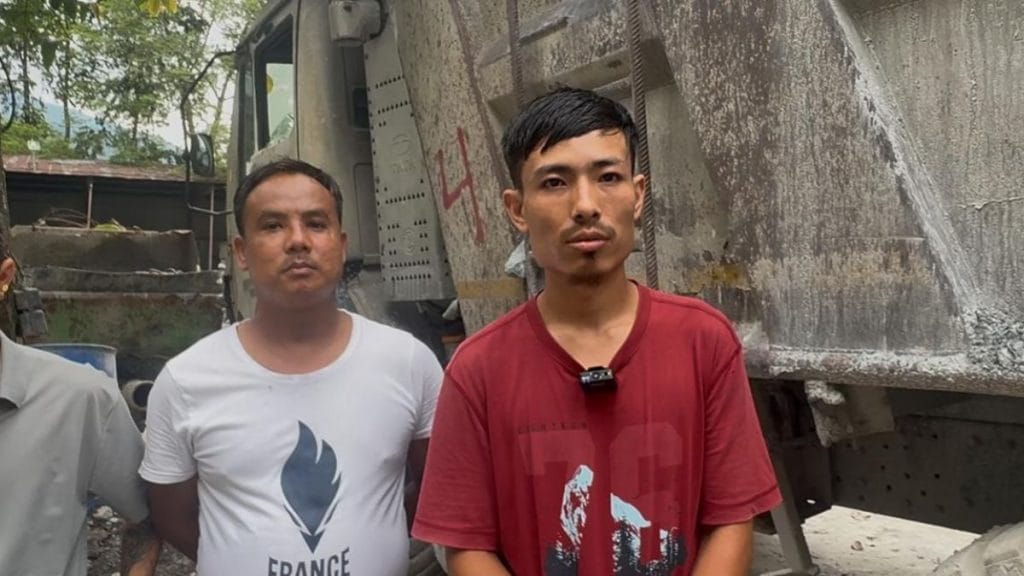
Months later, those fears culminated in one of the deadliest industrial disasters Sikkim has witnessed in recent years.
As rescue teams entered the smoke-filled tunnel this week, they were stepping into a project with a two-decade history of financial collapse, engineering setbacks, fragile Himalayan geology and repeated warnings.
Conceived almost 20 years ago as part of Sikkim’s ambitious hydropower expansion, the 500 MW Teesta Stage VI project was expected to begin generating electricity by 2011. Instead, it became a story of mounting debt, insolvency, changing ownership and repeated delays.
The latest disaster is only the newest chapter in a project that has spent much of its existence battling financial uncertainty, difficult geology and growing questions about building major infrastructure in the fragile Himalayas.
The warning signs
Engineers working on the project had documented many challenges.
A paper presented by five NHPC engineers at an international engineering geology conference in Croatia last year described repeated encounters with flammable gas during excavation, unstable rock formations, groundwater ingress and tunnel collapses that had complicated construction for years.
According to the paper, flammable gas was first encountered in November 2009, when excavation by the project’s original developer, Lanco Teesta Hydro Power Ltd, struck a gas-bearing section of rock and the tunnel face caught fire. After NHPC revived the project more than a decade later, engineers again detected methane seeping through the roof of another excavation face. Gas detectors recorded concentrations reaching nearly one-third of the lower explosive limit—the point at which methane in air can ignite.
Both incidents occurred in tunnels accessed through Adit-3—the same access tunnel where the fatal explosion took place on 20 July. Whether those earlier warnings had any role in the latest blast is now the subject of an official investigation.
NHPC said the blast was likely caused by a sudden release of methane near Tunnel 4B, leaving workers with little time to escape. The company said safety measures, including gas monitoring and tunnel ventilation, were already in place.
Official records show that 19 workers employed by Patel Engineering Ltd and six personnel from PRW Manpower were inside the tunnel when the explosion occurred. All 25 were killed.
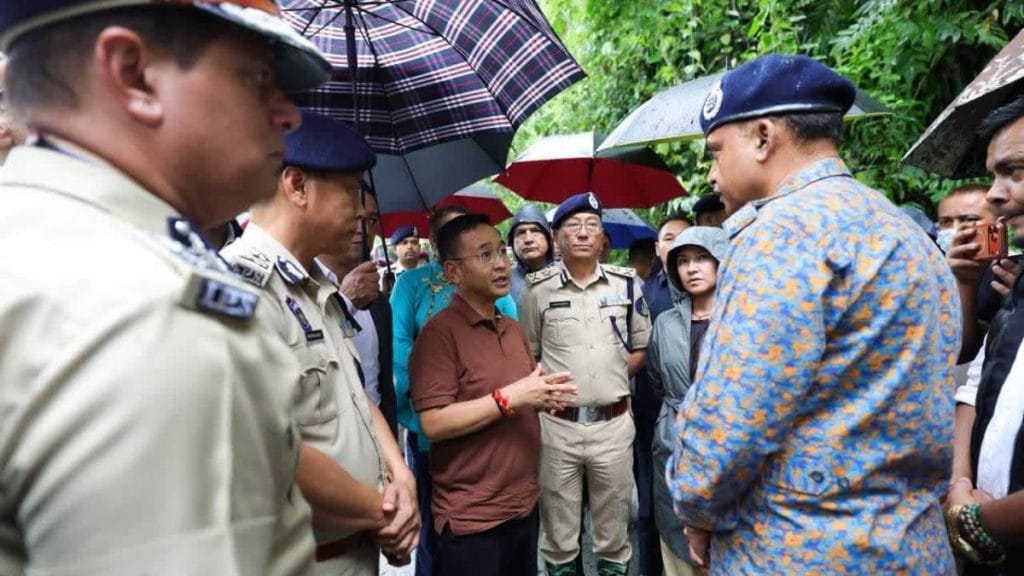
“The State Government will constitute a high-level enquiry committee to ascertain the exact cause of this unfortunate incident,” Chief Minister Prem Singh Tamang said, announcing an ex gratia payment of Rs 4 lakh to the family of each deceased worker.
NHPC has separately announced Rs 5 lakh for each bereaved family. Separately, the West Bengal government has announced Rs 5 lakh in compensation and a civic volunteer job for an eligible family member of workers from the state who died in the blast.
Also read: Rescue over in Sikkim tunnel blast that killed 25. Survivors say warnings were ignored for months
The beginning of Sikkim’s hydropower dream
When Sikkim awarded Teesta Stage VI to Lanco in 2005, officials hoped electricity would begin flowing within six years. Instead, construction slowed, debts mounted and, before long, the project itself became a casualty of one of India’s biggest infrastructure bankruptcies.
Teesta Stage VI was originally planned as a run-of-river hydropower project at Sirwani village in South Sikkim. It was designed to harness the Teesta River’s power as part of a series of hydropower projects along the basin. But it was not always an NHPC project.
The project includes a 26.5-metre-high barrage across the Teesta, two 13.76-km-long head race tunnels, each with a diameter of 9.8 metres, and an underground powerhouse with four generating units of 125 MW each.
But construction soon ran into trouble as Lanco Teesta Hydro Power Ltd faced serious financial difficulties. Work slowed, and the project remained unfinished for years.
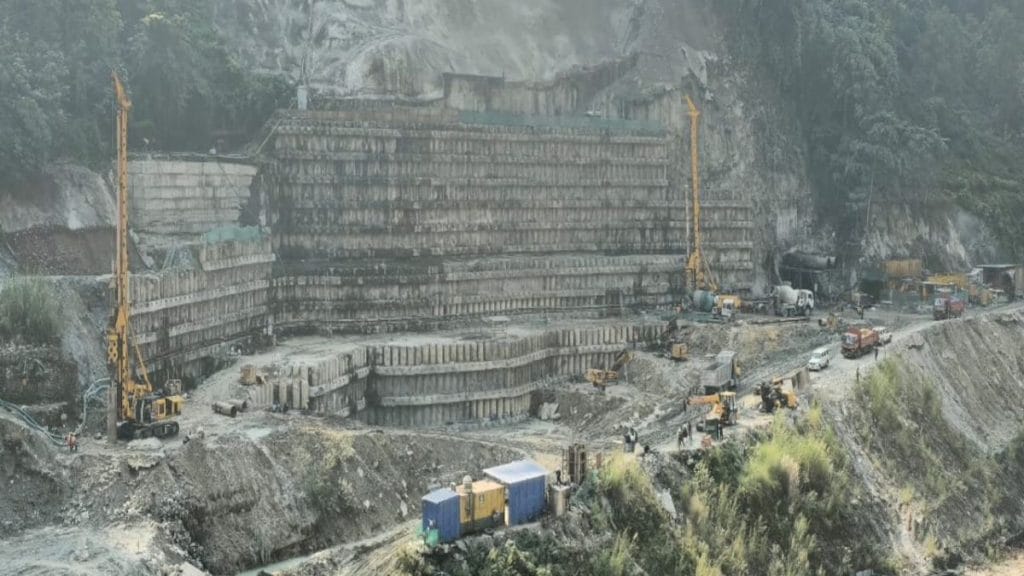
By 2018, insolvency proceedings had been initiated against Lanco Teesta Hydro Power after it defaulted on loans of around Rs 313 crore.
Lanco’s financial collapse eventually pushed the company into insolvency under the Insolvency and Bankruptcy Code. For several years, construction remained largely frozen while lenders attempted to recover investments.
As the delays continued, the Sikkim government began treating the project as a stalled asset. In 2017, it issued a notice to terminate the agreement because little progress had been made.
The turning point came in March 2019, when the Centre approved NHPC for the remaining work.
After taking over the project, NHPC revised the engineering plans, reassessed the costs and restarted construction in 2021. The long delays had increased the project’s cost from Rs 3,283 crore to more than Rs 5,700 crore.
Also read: An Irishman came to India looking for his mother’s past. Now he is Jodhpur’s Aquaman
A river under pressure
For years, environmentalists’ concern has been the cumulative impact of dozens of dams and tunnels planned across the Teesta basin, one of the most ecologically fragile regions of the eastern Himalayas.
Groups such as the Affected Citizens of Teesta (ACT) have repeatedly warned that extensive blasting, tunnelling and construction on landslide-prone slopes could destabilise the region, alter the river’s natural flow and increase vulnerability to earthquakes and glacial lake outburst floods (GLOFs). Those warnings acquired renewed significance after the South Lhonak glacial lake outburst flood in October 2023 devastated the Teesta valley, destroying the Teesta III dam and leaving widespread destruction downstream.
The disaster has revived calls to reassess Sikkim’s hydropower ambitions. Earlier this week, ACT announced a four-day march across the state to honour the Teesta River and demand stronger protection of the basin. Besides seeking the cancellation of some hydropower projects, the group has called for fresh environmental and social impact assessments of both existing and proposed projects in the Teesta basin, including Teesta Stage VI.
Gyatso Dzongu, general secretary of the ACT, told ThePrint that the march intended to draw attention to the communities that depend on the river.
Dzongu noted that his work has largely focused on the upper reaches of the basin, while the Teesta Stage VI project is located downstream near the Sikkim-West Bengal border.
“A project that has been abandoned for four or five years, and suddenly NHPC takes it over, and you just go inside the tunnel and start doing things. How can it be? This is a highly skill-demanding project in the mountains,” he said.
He also argued that the environmental conditions of the Teesta basin had changed so significantly after the GLOF that the project’s earlier environmental assessment no longer reflected the current reality.
“The Stage VI project received its Environmental Impact Assessment clearance a long time back. After the GLOF, the whole Teesta river basin has completely changed. There has been no fresh EIA,” he said.
For Dzongu, the tunnel blast also raises broader questions about the way hydropower projects are portrayed.
“We have been saying for years that hydropower projects produce methane gas. Nobody listened. But now it is proof that methane gas is there,” he said.
He further argued that methane emissions are not confined to tunnels but can also originate from hydropower reservoirs, making them a climate concern.
Despite these concerns, Teesta Stage VI itself never became the centre of a sustained local movement.
Unlike several projects in North Sikkim, where traditional institutions such as the Lachen Dzumsa led organised opposition to hydropower development, resistance to Teesta Stage VI remained relatively limited. The project is located in South Sikkim, where it displaced fewer people than many reservoir-based projects. It is also a run-of-the-river scheme, allowing successive governments to argue that its environmental footprint would be significantly smaller than that of large storage dams.
Also read: The invisible backbone of India’s medical tourism. Translators are friends & fixers
Lack of safety equipment
The 2025 paper prepared by NHPC engineers suggests that many of the project’s biggest challenges came from the geology itself. According to the engineers, the tunnels pass through highly fractured and weak rock formations in the young Himalayan mountain belt. During excavation, they repeatedly encountered flammable gas, unstable rock, cavities and heavy groundwater inflows, all of which made tunnelling more difficult.
When NHPC restarted work in 2021, it found that parts of the tunnels built by the previous developer had already collapsed. In some places, the collapses had reached the ground surface, while water had collected inside abandoned tunnel sections. As work resumed, engineers also encountered weak rock formations and heavy water seepage, with groundwater entering the tunnels at rates of up to 1,000 litres a minute.
Workers, however, allege that the risks extended beyond the mountain.
Lepcha said the appearance of the project changed whenever inspection teams visited. He claimed that basic safety practices were often followed only when inspection or audit teams visited the project.
“Whenever officials came for inspections, we were given helmets and safety shoes. On other days, we were not provided with any safety equipment,” he alleged.
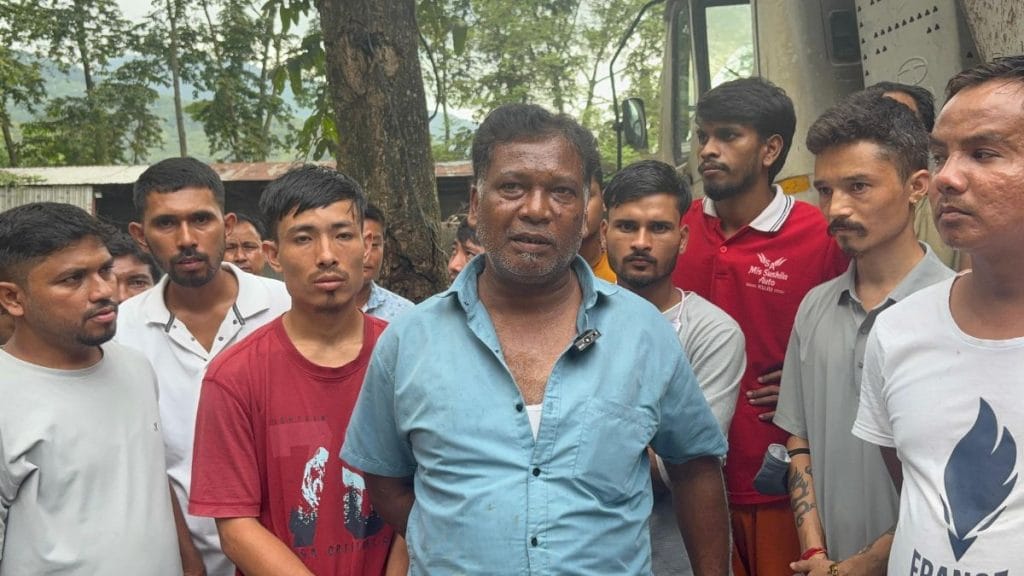
He also claimed that workers were routinely asked to eat inside the tunnel instead of coming out during meal breaks, so work would not be delayed.
“If they had been allowed to come outside for lunch that day, all of them would have survived,” he said.
Thirty-six-year-old Sangay Sherpa, another driver who has worked at the project since 2022, echoed similar allegations. He claimed even the most basic medical facilities were unavailable inside the tunnel.
“You wouldn’t even find a bandage inside. There were hardly any facilities. It was complete carelessness,” Sherpa said.
(Edited by Saptak Datta)