





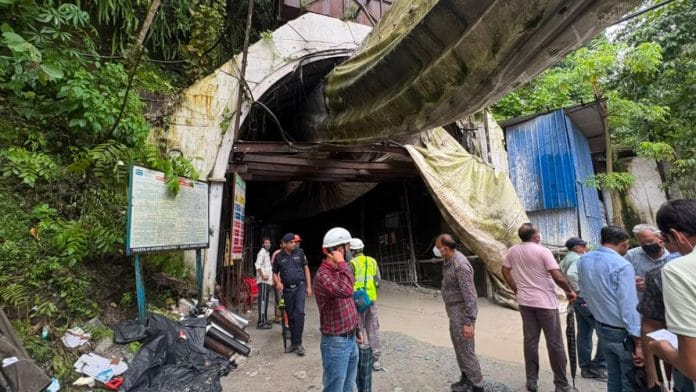


Namchi (Sikkim): Outside the Teesta Stage VI tunnel in South Sikkim, an officer of the National Disaster Response Force confronted a JCB operator, insisting that he continue clearing debris. The driver refused. His friend had died inside the tunnel. “How can I go in there? How can I face him?” he asked.
With those words, the JCB operator turned his machine around and drove away, leaving behind an angry officer and one less person to help with the overnight rescue.
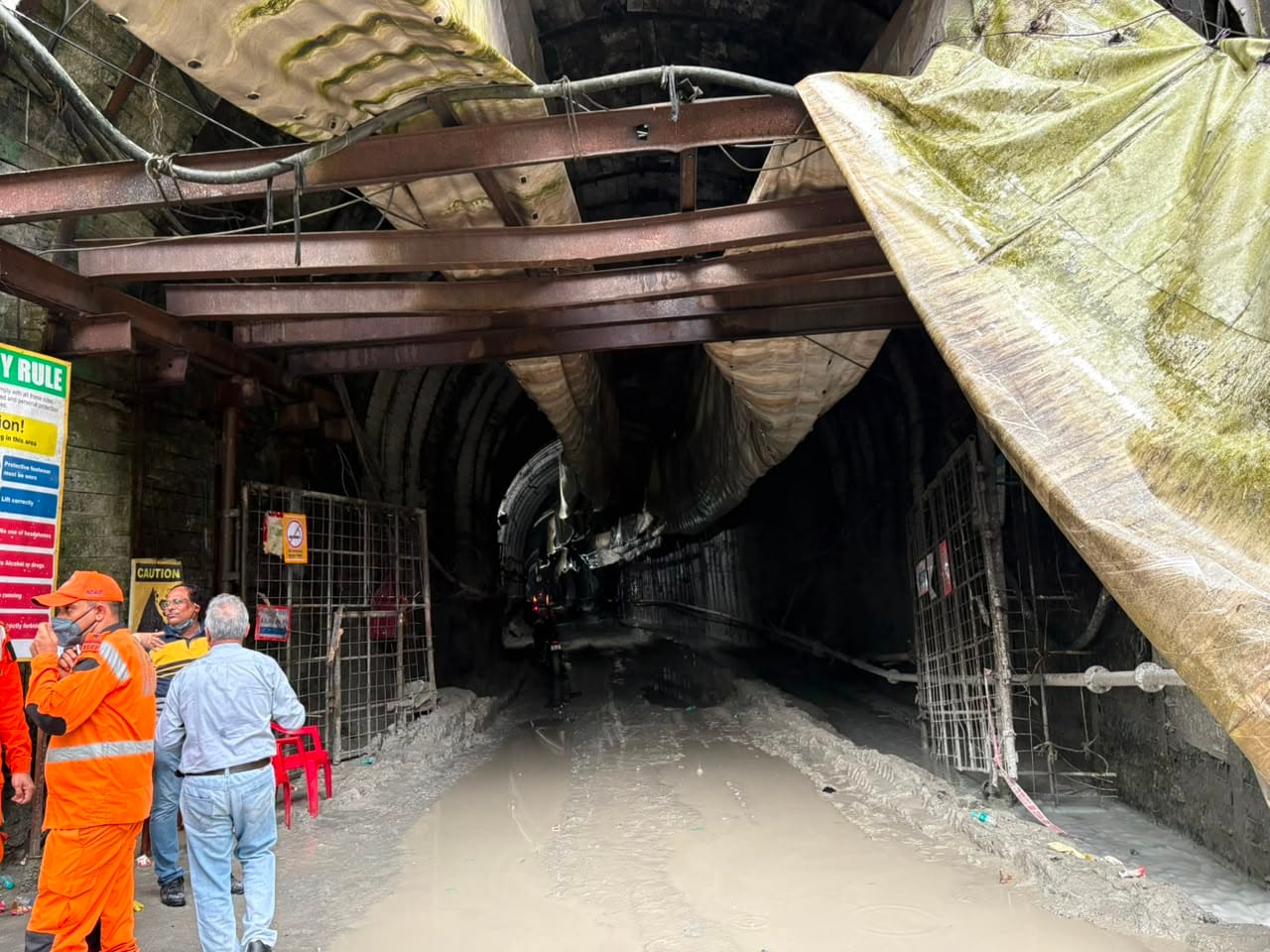
Roughly 1.5 km inside the National Hydroelectric Power Corporation (NHPC)’s under-construction tunnel in Namchi district, an explosion rippled through the underground passage, filled it with toxic gases and trapped the workers inside.
“All 25 bodies have been recovered,” an NHPC officer told ThePrint Thursday morning. “Some workers who were closer to the tunnel entrance managed to escape.”
Of the 25 killed, two were NHPC officers, three were consultants from ARX Global Network, one was an NHPC contract driver, and the remaining were construction workers.
Sikkim Chief Minister Prem Singh Tamang has ordered a Special Investigation Team (SIT) to determine what caused the explosion. Experts have also been brought in to reconstruct the sequence of events inside the tunnel.
“We have engaged a team of experts to find out what exactly happened and how. We will take action based on the findings,” Tamang said.
NHPC has announced an ex-gratia payment of Rs 5 lakh to the family of each deceased worker. The West Bengal government has also announced Rs 5 lakh in compensation for families of workers from the state who died in the blast, along with a civic volunteer job for an eligible member of each bereaved family.
Lack of safety
People have started talking about whether the tragedy could have been averted. A man in his early 40s who was present at the site, knew several workers and requested anonymity, alleged that methane gas had been leaking in the tunnel for nearly two months before the explosion.
“There were warnings earlier, but no one took them seriously,” he said, alleging that the disaster was the result of official inaction.
An NHPC executive rejected the allegation that there had been warning signs.
“That is not true. There were no warning signs,” the executive said. “Methane is not something we normally encounter in hydropower tunnels. This is the first time we have seen an incident like this. We are all shocked.”
In its official statement, NHPC said the explosion was caused by a “sudden burst of suspected methane gas trapped inside the rocks,” which ignited and filled the tunnel with dense fumes and toxic gases.
A construction worker who survived the blast said the site did not follow necessary safety precautions either.
Speaking to ThePrint on condition of anonymity, the worker claimed that even for minor injuries, workers had to be taken outside for treatment because no medical care was available inside the tunnel.
A local resident alleged that the safety of workers was not given enough priority.
He also said there had been concerns about gas leakage before the incident, though the NHPC team has denied this.
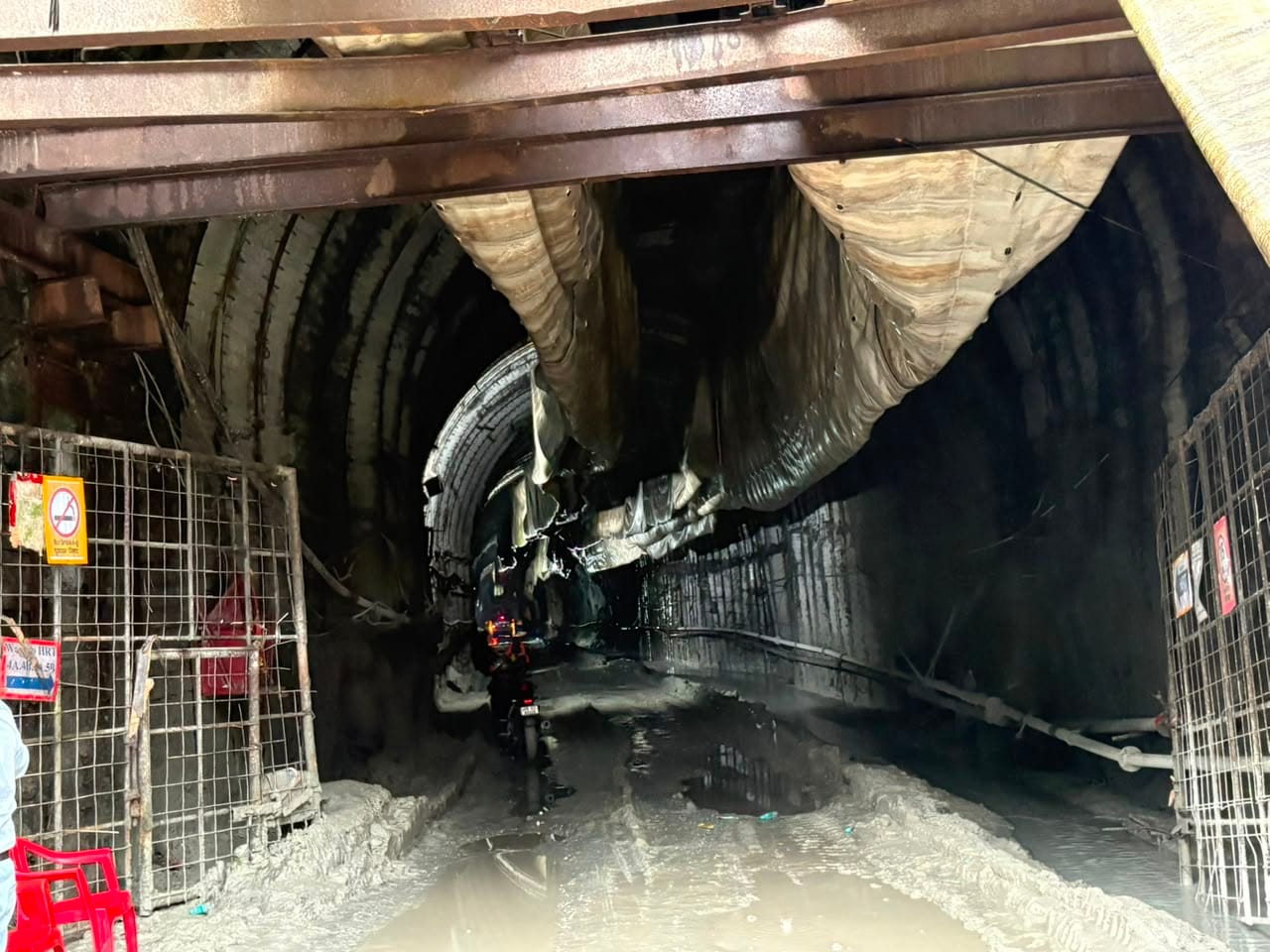
“The operation was extremely challenging because of the confined space, high levels of methane and carbon monoxide, waterlogging, and knee-deep slush. We had to move very cautiously while ensuring the bodies were recovered with dignity. With support from ECL and other agencies, we developed a joint strategy and completed the mission,” said Manish Ranjan, NDRF Commandant.
ThePrint repeatedly tried to speak to NHPC, but the company declined to comment officially.
The rescue mission
Every few hours, rescue teams entered the tunnel. And every time, they returned with tears streaming from their eyes and irritation in their noses.
The explosion occurred nearly 1.5 km inside, leaving workers with almost no chance to escape. The rescue happened in a dangerous environment—a narrow underground passage filled with methane, carbon monoxide, mud, unstable rock and poor visibility.
Alkem Laboratories Limited, a pharmaceutical company, had also joined the operation and helped in the rescue without charging any fee. One of its members said the toxic air inside the tunnel had made the work extraordinarily difficult. He said that the methane levels were so high that the biggest challenge was simply staying inside long enough to work.
But NDRF officials rejected this claim.
“Earlier, our oxygen cylinders lasted about 40 minutes. We have now arranged cylinders that last nearly one-and-a-half hours. Once the oxygen runs low, the teams return outside. They are not losing consciousness,” he said.
The emotional strain proved just as difficult to overcome.
“The other night, some JCB drivers simply left, saying they couldn’t continue and needed to sleep,” one official at the site said.
The search had eventually narrowed to a roughly 200-metre stretch where the remaining workers were trapped — all of whom have since been recovered.
The victims included workers from Sikkim, West Bengal, Uttarakhand and Assam.
While authorities had identified several of the deceased, post-mortem examinations were expected to determine the exact cause of death. One by one, families arrived at the nearby hospital to identify and take home the bodies of their loved ones.
‘I can still smell it’
When the explosion ripped through the tunnel, Upen Barla (27) was just a few meters away. He is from Jharkhand and has been working on the project since 2022. His job was to spray concrete onto the tunnel walls after blasting, strengthening the rock surface so that loose stones would not fall.
On the day of the accident, he and his team were carrying out their routine work, wearing their helmets and gumboots.
“When the blast happened, both my gumboots flew off. We were all thrown. I was standing in one corner and fell into the drainage channel,” he recalled. “The force of the explosion hurled workers across the tunnel. And then came darkness.”
He wasn’t badly hurt and started running. Then he saw two of his friends lying there, crying.
“There was blood everywhere. Water had filled the tunnel. Everyone was injured,” he said. “The operator switched on the lights and told us to stay strong. We picked them up and carried them outside.”
He says he will never return and will go straight to his village.
The memories of what he saw inside the tunnel had made that decision irreversible.
“The workers were closest to the blast,” he said. “Some had lost their legs, some their hands. I saw it with my own eyes.”
He said he had barely been able to eat or sleep, haunted by the sights and smell of the disaster. Fourteen of the men who died were people he had lived and worked alongside, and the memories kept returning every time he closed his eyes.
He chose not to tell his family what he had been through. When he returned to his village, everyone was relieved to see him alive. Many hugged him and said they were grateful that he had made it home safely.
Upen cautiously shared what he believed may have happened inside the tunnel, stressing that it was only his personal view.
“I think the NHPC officials had gone inside because the tunnel face wasn’t moving forward. It had been stuck for a long time, and there was some noise coming from inside. We had sealed that section and couldn’t go further. They were carrying out some tests. I think that’s why it happened. Otherwise, we had been working there for years and nothing like this had ever happened,” he said.
(Edited by Prashant Dixit)