






Jalandhar: By Class 11, Canada had already become part of Manveer’s plan. Study there, get a job and earn enough to help his father realise his dream: owning 10-20 acres of farmland. So Manveer began working multiple jobs in Punjab, saving every rupee he could towards going to Canada.
“I wanted to go abroad and do everything on my own. My father is very fond of farming, but our circumstances pushed him into the transport business,” he said.
But by the time Manveer finished Class 12, he had begun to question that dream. A relative struggling to find work while waiting for his permanent residency fell into depression. Manveer knew his family would not be able to support him if things went wrong.
For years, Canada’s international student system offered a clear route: pay for an education, work after graduation, and build a life in the country.
But the system that brought large numbers of international students and temporary workers to Canada under Justin Trudeau’s Liberal government has become much more restrictive. Ottawa has tightened work rules, introduced study-permit caps and moved to reduce the number of temporary residents. After cutting the 2024 study-permit target by 35 per cent from 2023, the government cut the 2025 limit by another 10 per cent.
One key part of the international-student boom was the public-private college model. Under this setup, private colleges delivered the programmes, while students received credentials from public colleges. The model exploded in popularity, especially among students from India, until Ottawa began dismantling it. From 15 May 2024, students enrolling in these programmes were no longer eligible for a post-graduation work permit (PGWP).
Much like the Trump administration in the US restricting how long foreign students can stay after graduation, Canada is scrapping an old assumption: that studying abroad naturally guarantees a path to permanent residency.
This realisation has already hit a breaking point. In Calgary, hundreds of Indian graduates, mostly from Punjab, staged weeks of protests and hunger strikes after their PGWP applications were refused. Refusal letters cited the private-college programmes as “non-credit”, making the graduates ineligible for the permits.
For their families back home, the consequences go beyond a denied work permit. What happens when a pathway pursued at a cost of tens of thousands of dollars changes after years have already been invested? The Punjabi-Canada dream, long celebrated as a marker of upward mobility, status and economic success, is fracturing. For the first time, leaving home no longer guarantees a better life.
The ground reality has changed
For Gaurang, 24, Saskatchewan was supposed to offer a better shot at permanent residency.
He had been told that the province’s smaller population meant greater demand for workers and, therefore, a clearer path to PR. The plan was simple: move to where people were needed, work, get permanent residency and build a life.
He arrived in Saskatchewan in 2022. But the province he entered was already changing.
Soon after arriving, Gaurang attended a Nagar Kirtan where about 3,000 Indians gathered. Three years later, at the same event, he saw more than 15,000.
He had studied Business Management and spent four years trying to make the study-work-PR pathway work. He eventually returned to Jalandhar last year and now helps with his family business.
Garima’s journey captures this exhausting reality. She arrived in Canada in 2018 as a determined 18-year-old, ready to study, work, and build a future. Six-and-a-half years later, after juggling multiple colleges, clocking 50-hour workweeks, and enduring Winnipeg’s brutal winters in isolation, she gave up and returned to India. Canada had given her independence, but the dream had devolved into a punishing, endless cycle of survival.
I carry my permanent resident card in my pocket, in case someone doesn’t believe me when I say I got PR and chose not to go back
Now back home, she occasionally misses her Canadian freedom, but is relieved to have escaped the constant anxiety. She is now pursuing a BA course at Lakshat Rai DAV College in Jagraon.
Sahil, 27, also from Jalandhar, came back after a very different Canadian experience.
He arrived on a visitor visa and, unlike many newcomers, did not begin with financial hardship. Through his father’s connections, he entered a well-established family network with construction and trucking businesses, hundreds of trucks and a lifestyle that most immigrants would take years to build.
“It took me five months to merge. I saw the lifestyle of Canada. It takes 20 years for a new person to reach that lifestyle,” he said.
Yet even with that head start, Sahil found himself chasing the same thing as many other immigrants: permanent residency.
He was told trucking could offer a route. So he went to Toronto, obtained a commercial truck-driving licence and entered an industry he had never imagined working in.
“The employer charged me $40,000 for an LMIA. He saw that I had 20 days left [on his visitor status]. I wanted it,” said Sahil.
The Labour Market Impact Assessment (LMIA) document allowed him to move from visitor status to a work permit. For the next two years, the road became his home. He drove long-haul routes across the US, travelling through states including Pennsylvania, Illinois and California.
“I stayed on the roads. I didn’t see the house once. My struggle started from here. You get paid by miles,” he said.
What began as a way to build work experience and secure PR gradually changed how he saw Canada. He eventually left trucking and returned to Jalandhar, where he now runs a used and high-end car business.
“I’ve lost so much interest in Canada that I don’t want to go back now,” he said.
Sahil has since obtained the Canadian PR he spent years pursuing. But it has not made Canada the obvious destination he once imagined. He can stay in Jalandhar, where he has a business and family, or return to Canada and start again.
“I carry my PR card in my pocket, in case someone doesn’t believe me when I say I got PR and chose not to go back,” he said.
Punjab’s Canada dream
Few migration corridors have shaped a region as deeply as the one between Punjab and Canada.
By 2022, Canada’s international student boom had acquired a distinctly Punjabi character. Indians accounted for over 40 per cent of all new study permits issued that year; out of 2.26 lakh Indian students who received visas, around 1.36 lakh were from Punjab. For these families, a Canadian visa came to represent a better future. An entire generation grew up watching relatives leave, send money home to build houses or buy land, and return loaded with foreign-made gifts. With local opportunities drying up, Canada became the definitive escape hatch—a chance to earn, build status, and support the family back home.
But sending a child abroad was rarely just an individual decision. On cue, a massive industry rose to meet the demand.
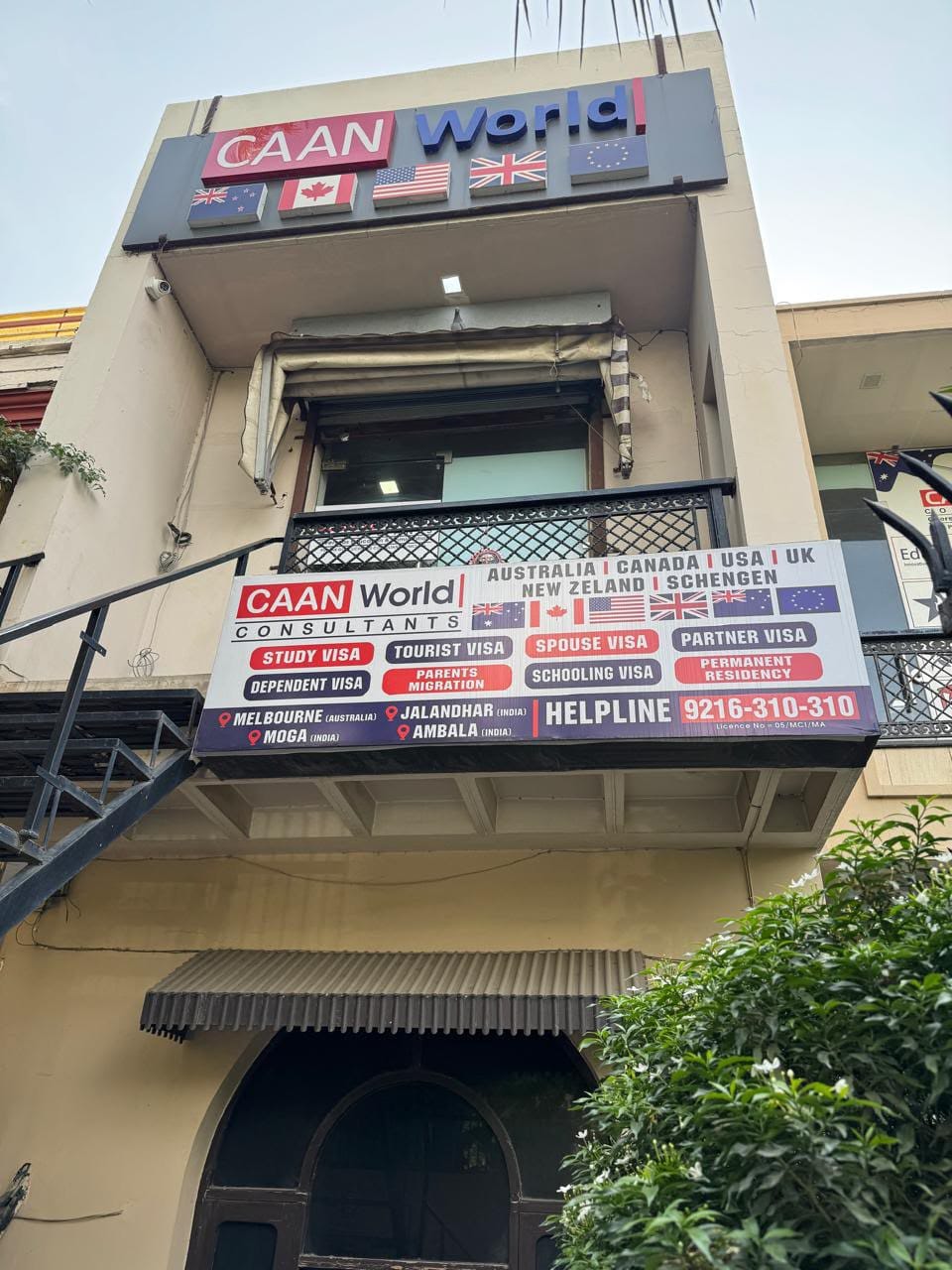
A ubiquitous, well-oiled machinery of immigration consultants and agents became the gatekeepers of Punjab’s Canada dream, serving both the talented and the desperate. They arranged loans, helped with IELTS preparation, prepared students for visa interviews and, through networks in Canada, helped identify colleges and jobs. For many students, an agent’s office was their only guide to a complex foreign system.
This total dependence spawned a thriving grey market built on promises that the Canadian system could not always deliver.
One of the most common was the promise of certainty: guaranteed admission, a work permit after graduation and, eventually, permanent residency. Students were routinely told that certain private colleges “always give PGWP,” even when the programmes were completely ineligible.
The great Canadian dream had been reduced to a commodity.
Buying the Canada dream
As the traditional routes to permanent residency narrowed, the pressure to get to Canada became an opportunity to sell expensive packages that promised to get students through the door first, then figure out the rest later.
Neeraj Sharma, who has worked in the immigration field for decades, said students were often willing to pay anywhere between Rs 8 lakh and Rs 15 lakh.
“Students are offered expensive packages that cover the entire process of going to Canada, including admission and other requirements. But the cost can be far higher than what the process would involve if they applied independently. In some cases, a course sold for $33,000 or $40,000 may actually cost only around $5,000 at a community college,” he said.
The business was so lucrative that a few who had used the student route and built lives in Canada set up or invested in private colleges that recruit international students, sharma added.
At the peak of the student boom, private institutions outnumbered public ones. IRCC data shows that between 2022 and 2023, 485 of the 603 private designated learning institutions that received study permit applications were private career colleges offering short-term vocational training, diplomas, and trade certificates.
By the end of 2023, Canada had more than one million international students, including more than half a million in Ontario, with “tens of thousands” in Brampton alone, most of them from India.
Another immigration agent, Jaspal Singh, said the focus for some students had shifted from choosing a course that matched their academic interests or career goals to finding a programme that was cheap and easy to complete.
“In Jalandhar, there are some [consultants] who I can still say are very safe and clean. But some feel they don’t have to do any real work. They have become like a showroom. They have glass-fronted offices, multiple floors and a very elaborate setup. The actual consultant is still normal,” he said.

Kanwar Singh Sierah, a Regulated Canadian Immigration Consultant, told ThePrint that the growth of the system created commercial incentives for recruiters and private college operators. He alleged the number of institutions involved in international education eventually crossed 1,100, and estimated that it may later have risen to around 1,500.
He alleged that some recruiters in India were also connected to the Canadian institutions to which they directed students, allowing the same interests to operate on both sides of the process.
“These private colleges were already struggling financially and, in some cases, were up for sale. They were then acquired by people who already had established resources, channels, and pipelines for bringing large numbers of international students to Canada,” he said. “I won’t say all the clients were forged. But they basically channelled all those people through their own college. And through this package deal, they were able to beat their competition.”
Sierah said the economics of the international-student system made the model particularly attractive.
“A refugee won’t bring $30,000, but then students were made to bring $30,000. One year’s fees were approximately $18,000 to $20,000, plus a GIC of $10,000, which no person would get any interest on. The banks used that money. So, basically, these private colleges were bringing a lot of money in circulation in the economy, and that was the whole purpose behind it,” he said.
Sierah also alleged that some recruiters had gone further by acquiring interests in colleges themselves.
“Kaagaz bejhne vale bhi vo, kaagaz check karne vale bhi vo, aur 100% commission khane vaale bhi vo (Those who send the papers are the same ones who check the papers, and they are also the ones who pocket 100% of the commission),” he said. “Punjab ki zameen biki taaki inke colleges bandh na ho (Punjab’s land was sold off so that their colleges would not have to shut down),” he said.
He pointed to seminars held in India, including in Punjab, where immigration businesses promoted Canadian colleges.
“They ran an immigration company and organised seminars themselves, told people, ‘Look, a Canadian college has come here. Its officials are here. We have such strong connections with this college.’ When they presented that image in the villages of Punjab, people trusted them more. They believed they were genuine and well connected,” he said.
Cheap courses, big promises
The private career-college sector that grew alongside Canada’s international-student boom was a diverse one. For international students, many of these colleges offered something traditional universities and public colleges often could not: relatively short programmes, flexible enrolment and classes scheduled around work.
At some colleges, evening classes allowed students to work during the day in retail, warehouses, restaurants and the gig economy. Online and hybrid teaching expanded that flexibility further, particularly after the pandemic.
The range of courses was broad. Business programmes included Business Administration, Supply Chain and Logistics, and Supply Chain Operations. Healthcare programmes trained students for roles such as personal support workers, health-care assistants, medical office administrators, pharmacy assistants, dental assistants and mental-health workers. Other popular options included Early Childhood Assistant and Educational Assistant programmes, commercial truck-driver training including Class A/MELT licences, and courses in IT, cybersecurity, digital marketing, medical esthetics, massage therapy, hospitality and tourism.
Many programmes could be completed within months rather than years. Business programmes typically lasted eight months to two years, while healthcare courses often ran for six to 12 months. Evening, weekend, hybrid or online classes allowed students to work alongside their studies.
But the system had weaknesses.
In Ontario, under the Private Career Colleges Act, 2005, colleges had to register and have their vocational programmes approved before offering them to students, with requirements covering areas such as financial protection, programme delivery and student safeguards.
Yet a 2021 audit by Ontario’s Auditor General found that the province was not effectively checking whether colleges were delivering programmes as approved. About 30 per cent of college campuses had not been inspected within the ministry’s own three-year target, while nearly 1,400 outdated programmes were still being delivered. The audit also found that the ministry did not have sufficient data to assess whether the supply of programmes matched local labour-market needs. A 2026 Auditor General audit found that only one-quarter of registered private career colleges offering commercial truck-driver training had been inspected. It also identified problems with how the ministry checked instructors, programme delivery and compliance.
The crackdown and the black market
The tipping point came in 2023, when the scale of fraud in Canada’s international-student system became impossible to ignore.
One of the most prominent cases was that of Brijesh Mishra, a Jalandhar-based immigration agent linked to fraudulent acceptance letters used in applications by around 700 Indian students. The Canada Border Services Agency charged him with immigration offences. He later pleaded guilty and was sentenced to three years in prison.
Canadian authorities also began investigating thousands of study-permit applications linked to fraudulent Letters of Acceptance. Nearly 1,550 applications were eventually linked to fraudulent letters, most involving Indian applicants. The scandal forced Canada to strengthen verification of acceptance letters and made it harder for students to enter through questionable routes.
But the fraud exposed a larger problem: an international-student system in which education, employment and immigration had become closely intertwined.
The rapid expansion of public-private college partnerships had created strong financial incentives to bring in international students. Private partners recruited and delivered programmes; public colleges gained international enrolment and tuition revenue; recruiters and agents earned from bringing students into the system. For students, the appeal went beyond the classroom. A Canadian course could mean a post-graduation work permit, Canadian work experience and, potentially, a route to permanent residence.
By 2024, Ottawa had begun pulling apart that system. Canada capped new study permits, introduced provincial sign-off for many applications, tightened checks on acceptance letters and removed PGWP eligibility for students entering certain public-private curriculum-licensing programmes. Ontario followed by freezing new public-private partnerships and beginning to wind down existing ones.
The changes put pressure on an industry that had expanded rapidly. As international enrolment fell, colleges began cutting programmes and staff, while some private colleges faced regulatory action or closure, leaving students scrambling to complete their courses or protect their immigration status.
A 2026 paper, The Rise and Fall of Public College-Private Partnerships in Ontario, describes this as a “moral hazard”: public colleges and private partners had incentives to expand international enrolment, while much of the reputational and regulatory risk ultimately fell on the government and the wider education system.
The scale of the collapse also began attracting sustained scrutiny in Canadian media. CBC’s The Fifth Estate examined overseas recruitment networks and the role of agents in steering students towards Canadian colleges. Global News, CityNews and other outlets followed the collapse of public-private partnerships, college closures and the financial strain caused by falling international enrollment. Online, the conversation was even more charged, with terms such as “college scam”, “ghost college” and “diploma mill” spreading widely.
For students who had already built their plans around the old system, the changes came too late. The course they had chosen, the money they had spent and the work permit they expected after graduation could no longer be treated as parts of a predictable pathway.
When staying becomes the goal
For many international students, the harder part was finding a way to stay in Canada.
That uncertainty has shaped the work of Vikram Singh, co-founder of the Naujawan Support Network (NSN), which helps international students and immigrant workers dealing with unpaid wages, workplace exploitation and immigration problems.
“Most students spend years moving from job to job. They need work to survive, so PR comes second. They work in warehouses, restaurants, shops and security, whatever they can find, but often not the jobs that help them qualify for PR,” he said.
Jaspreet Singh, founding president of the International Sikh Students Association, said some workers who cannot find qualifying employment are pushed towards arrangements in which an employer puts them on the payroll for work they are not actually doing, in exchange for thousands of dollars.
“In the next few years, hundreds of thousands of Indian students will see their work permits expire. Some will be eligible for the PGWP, but many will not. So the situation is going to become even worse. There is a possibility that many of them will have to return to India. Canada brought in so many students all at once, but it did not have the capacity to absorb them then, and it does not have that capacity now,” he said.
For Jaspreet, the consequences have gone beyond immigration paperwork. He has watched young people struggle with severe financial and emotional pressure, and has seen some become involved in the drug trade as they tried to survive. He has also encountered cases involving women being pushed into sex work and trafficking amid financial insecurity, unsafe housing and fears over their immigration status.
In 2024, a 21-year-old woman from Punjab came to Canada after being promised that her tuition would be covered if she worked at a clothing manufacturer. Later, her employer allegedly threatened to stop paying her fees and deport her unless she had sex with men, including truck drivers. She eventually escaped with help from the Kaur Movement Foundation.
As the conventional pathway closes, some students are looking elsewhere. Official data show Indians were the largest group of asylum claimants among people holding study permits or study-permit extensions in both 2024 and 2025. There were 4,256 Indian claimants in 2024, falling to 3,815 in 2025.
For Vikram, that uncertainty is personal. He is still waiting for his own PR. He continues to work as an automotive technician, while watching the immigration rules and the economy determine whether his trade will eventually be enough.
Seven years in Canada, coming home empty-handed
Partap Singh Bajwa, Leader of Opposition in the Punjab Assembly, said the scale of migration reflects deeper economic problems in the state. He doesn’t regard studying abroad as a problem, but finds it worrying that young people consider leaving the state as their only path to a secure future.
“Punjab needs a serious employment and investment strategy centred on manufacturing, agro-processing, services, technology, tourism and new enterprises. Equally important is improving education and vocational training so that young people have skills employers actually value,” he told ThePrint.
For a family in Jalandhar, sending their son to Canada was never a dream of settling abroad.
After completing his B.Tech, their son could not find a job in Punjab. He did not want to leave India, but his parents felt that staying back offered him little chance of building a career. His sister was already living in Canada after marriage, which made the decision easier.
He left for Canada on 1 January 2019. Seven years later, he is preparing to return.
The son, now in his late 20s, first studied for a Bachelor of Arts, worked part-time and later received a three-year work permit, allowing him to work full-time.
He had about 480 points for permanent residence and was waiting for the required threshold, which the family understood to be around 490. Instead, the threshold suddenly climbed.
They eventually decided it made more sense for him to come home and find work in India rather than spend another year in Canada trying to collect points he might never reach.
But the father said the hardest part has not been the money or even the change in plans.
“The children worry and don’t tell us what they are going through. They think we have already spent so much money so now they can’t come back. How will they face everyone? What will they tell people?” he said.
(Edited by Prashant Dixit)