





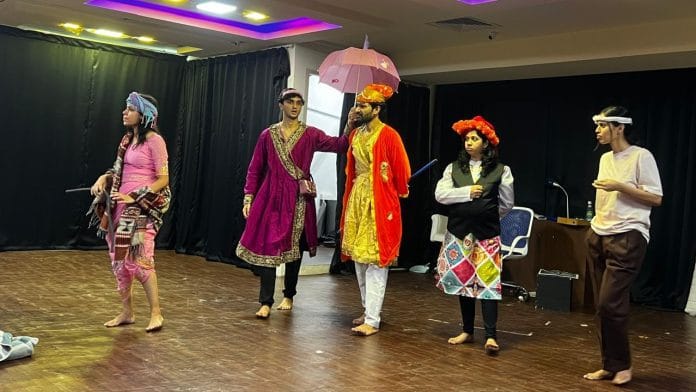

New Delhi: Every evening, students at the National School of Drama’s new Mumbai centre come down from class to the tea stall on the ground floor of the building, which is also home to several production and creative houses.
“The atmosphere is such that some creative director is sitting there at the stall… It is like that all around,” said Ananya Raj, one of fifteen students in the centre’s first batch.
“Somewhere you also feel by looking that ‘okay, it’s not like an alien thought’, for even the tea stall became a networking space here,” she said.
This is what NSD’s Mumbai centre is actually selling. For nearly six decades, the National School of Drama has trained generations of India’s actors through a Delhi-based, entrance-exam-based, free theatre education system. Its new Mumbai branch inverts almost every part of that model: no entrance exam, fees running up to Rs 5 lakh, courses as short as three months, and a location within walking distance of Bollywood’s production houses. The move has opened NSD’s training to people who could never have accessed it before — and it has triggered an argument within Indian theatre over what happens to the institution’s rigour, and its identity, once it starts operating like this.
For Raj, the decision came down to a conversation with her father. She had her sights set on the Film and Television Institute of India (FTII) or NSD in Delhi, but he pointed her towards NSD’s newly opened Mumbai centre instead. If she eventually wanted to work in Mumbai, he asked, why not train there itself?
“He was the one who pushed me to go to Mumbai. And then I thought it to be a really good opportunity, because you are living in Mumbai, and it was an acting course. It is not completely for theatre, it’s for the camera too,” she said.
Raj had been doing theatre since childhood, in school, and had continued it through her engineering degree at Dayananda Sagar College in Bangalore, where she joined a theatre group that performed Nukkad Natak and other amateur theatre. She later took a job in Jamshedpur, but found she couldn’t follow her passion. So she quit, joined Path Theatre Group, and worked in several zero-budget films. She describes the last “nine months” of training in Mumbai as “really transformative”, saying that she came from a small town and “at the same time, there is so much hunger here.”
The Mumbai centre opened in November 2025 with two courses: a one-year, full-time diploma programme in acting, and a three-month, part-time acting course focused on on-camera performance skills.
It was an initiative of actor Chittaranjan Tripathy after he became the director of NSD. Tripathy had worked in several films and series, including Talvar, Raktanchal, Chhapaak and Sacred Games, and in nearly 30 films, so he knew the need for such a training centre in Mumbai. The other option was Goa.
“From a marketability point of view, Mumbai is a very big point. So, if a training facility is set up in Mumbai, many people will benefit from it,” he told ThePrint.
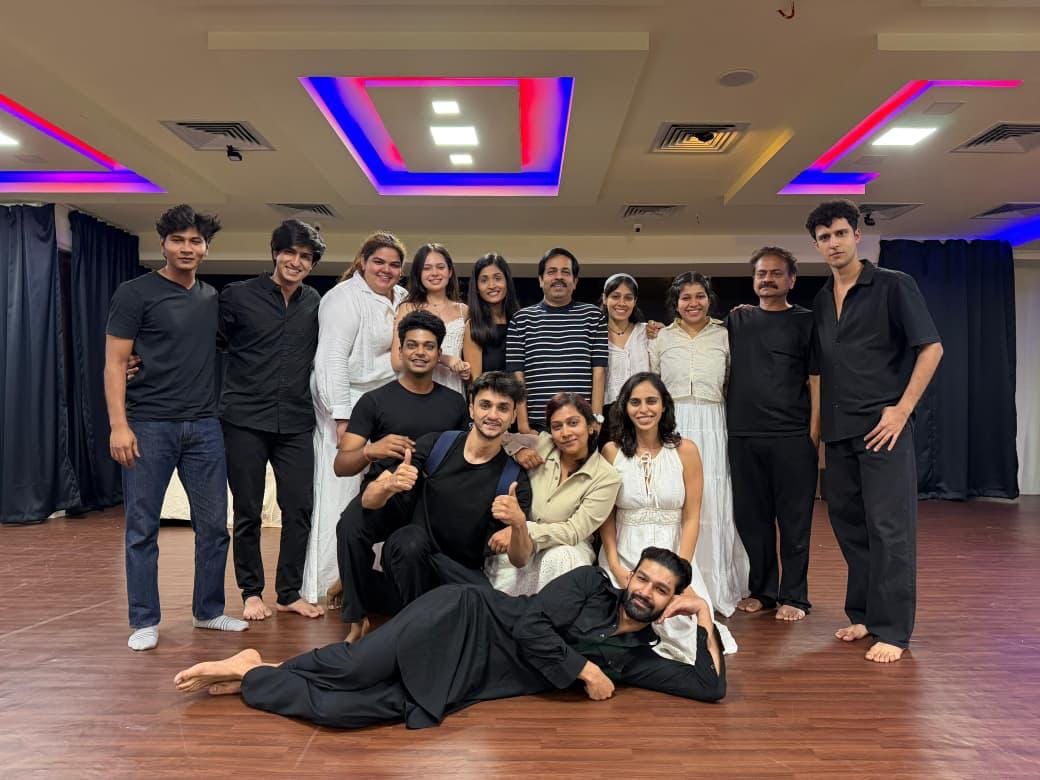
Admission to NSD’s Delhi campus and its regional centres in Bengaluru, Varanasi and Gangtok happens through the Joint Entrance Examination (JEE). Students are allotted campuses and programmes based on their ranks. The three-year diploma programme in Delhi is highly competitive, with students expected to have a strong understanding of the craft.
The existing programmes require a significant time commitment, making them difficult for working professionals to pursue alongside their careers. This is where the Mumbai centre differs. Applicants do not have to appear for the NSD JEE; instead, the centre runs a separate screening process, and its three-month programme is designed to allow working professionals to participate.
Tripathy said the idea was to democratise and decentralise NSD’s training process, allowing more people to learn the craft.
“People who couldn’t make it after such huge competition, or those who are 50, 55, or 18 years old can join. We kept the age factor in Mumbai from 18 to 60. If someone is a 12th pass or doing their graduation and can manage it, they can join. The centre was opened keeping all such things in mind,” he said.
But actor and theatre director Avijit Dutt raises questions about what this move could mean for the institution’s identity and the idea of NSD as a national centre with a distinct legacy.
“The Moscow Art Theatre is based in Moscow. RADA is based in London, as is LAMDA. NSD is always a Delhi institution. Does it not dilute the equity by putting it up in other parts of the country?” he said.
That expansion isn’t stopping at Mumbai. Planning is under way for new regional campuses in Goa, Bhubaneswar, Chennai, Udaipur, Indore and Bhopal, though locations are not yet confirmed.
“Discussions are going on in many other states. As things materialise, we will keep moving forward,” NSD Dean Shantanu Bose said. Bihar’s is already confirmed: on September 1, the state government said it would provide suitable land for an NSD campus and bear 50 per cent of the construction cost.
Inside the classroom
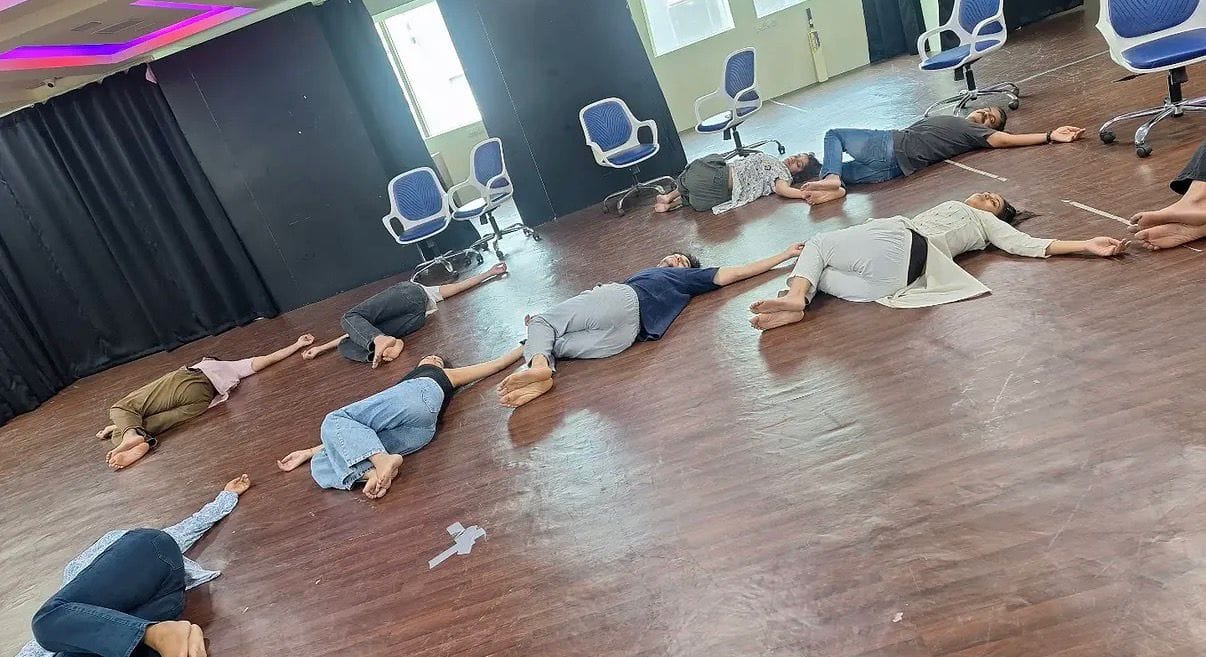
Raj took admission in the one-year course. During the initial months of training, the classes focused on body movement, speech and physical theatre — the course had a touch of theatre but focused more on realism and human behaviour. Classes ran from 8 am till 6 pm, starting with a body movement class for three hours, then, depending on the guest faculty invited, a monologue or scene class, which continued for the rest of the day.
“I gave auditions but I was in my own bubble,” she said, recalling her time in Jamshedpur. But NSD’s Mumbai centre gave her easier access to the industry in which she had always wanted to work.
Now, she is frequently giving auditions at better production houses. People she had auditioned for would later meet her again at the NSD building.
In the three-year degree course in Delhi, subjects such as modern Indian drama, classical Indian drama and aesthetics, world drama, theatre music, theatre architecture, scenic design and stage technology, costume design and stage lighting are covered, along with practical work. NSD Dean Shantanu Bose clarified that in the three-year course, theory accounts for just 25 per cent and the rest is practical, which is why the practical component of the main course is far more extensive than at the regional centres. He said they try to teach what can be covered within the short time frame of the newer courses.
“Mumbai courses across all centres are different from NSD’s main three-year course. They have short-term, smaller focuses, and we try to fulfil that focus,” he said.
What a shorter course costs
At the Delhi campus, students do not have to pay any fees, and all students receive scholarships, provided by the Ministry of Culture, to support them financially. Bose said these courses cost less because the institute already has the infrastructure and faculty for the main course in place. However, students must pay Rs 5 lakh to enrol in the one-year course in Mumbai.
“We don’t own a building there either… so for all these expenses, conducting the same course costs more in Mumbai than it does in Delhi,” he said. Whatever money comes from these courses, he said, gets invested back into the centre. “The government does not give us any separate grant for this,” he said.
For theatre director and actor Asmit, the difference is not simply about what can be covered in a shorter course, but about what students may miss when the time available for training is reduced. He believes a degree course gives students a more comprehensive perspective of their craft and the time to explore different aspects of it, particularly when they invest years of their lives learning a profession.
“In any profession, to be called a professional, you have to spend a certain amount of time practicing that industry or stream. That’s why engineering takes 4 years from you, commerce or any other stream of arts demands 3 years. A Ph.D. takes 5-7 years,” he said.
He argues that when the time of training is reduced, the avenues for exploration become limited. “You (student) won’t be able to think about it from every possible angle. You will only focus on things that are necessary for an industry… This means that a person whose profit depends on this tells you how you are supposed to live,” he said.
On the fees model specifically, Asmit is blunter: “You are treating education like an industry… You have to reach your targets. You have to collect Rs 5 lakh from each of the available seats to reach your target. So your pursuit is not art. Your pursuit is profit,” he said.
Also read: The Golden Era of FM radio is over. YouTube killed the radio star
The three-month programme
The three-month course is more compact and specifically designed for working professionals. Timings run from 6 pm to 10 pm, with a total of 20 students. One of them is Rajat Bajaj, who joined after taking several short-term acting courses at NSD Delhi, where he performed in several plays, including The Toths by Shantanu Bose, Aadhe Adhure Deities by Abdul Latif Khatana, and Rakt Kalyan, directed by Chiman Das.
For him, moving to Mumbai was not just about the course. Had he stayed in Delhi, he would have just been waiting for casting directors to come for auditions. “Doing the course there presented a great opportunity to connect with different production houses and casting directors within the same timeframe,” he said.
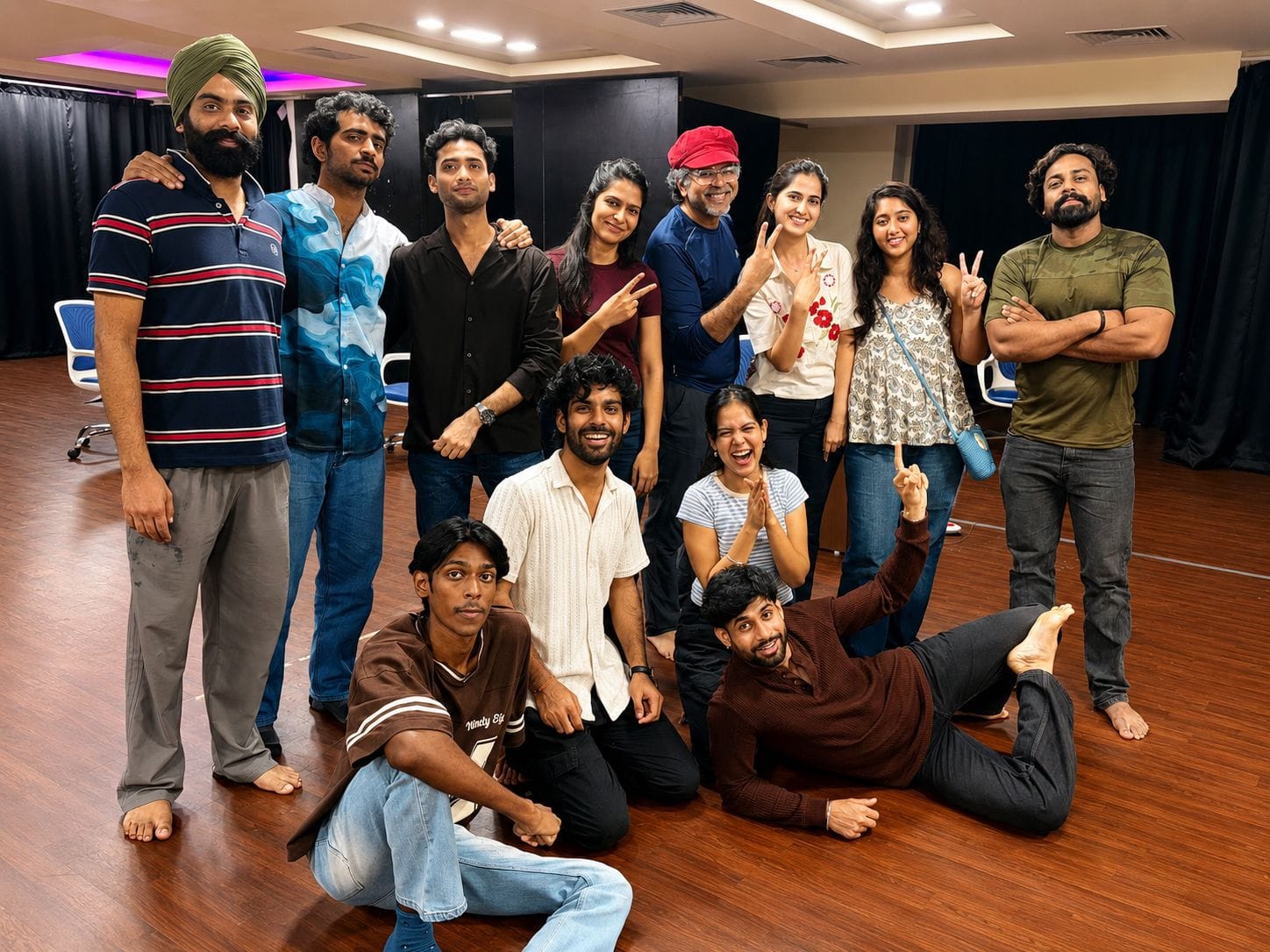
During his time in Delhi, he spotted auditions through online platforms, but they never resulted in anything. For him, a physical audition has a different impact, as the presence of the casting director “leaves a distinct and lasting impression.”
Most sessions in his course run four hours, and are conducted by industry professionals chosen by the director and dean — among them Ranjan Singh, who has worked with Balaji for decades. Students watch films, are given scripts and asked to act.
Compared with Delhi, where the focus was stronger on stage performance for a live audience, Bajaj found the Mumbai course more focused on the requirements of acting for the camera. “In Mumbai, the training includes yoga, dance, and specifically camera acting — understanding camera angles, mid-shots, wide shots, and how to moderate your expressions,” he said.
He said he got a chance to learn more simply because the atmosphere had changed — his batchmates were working in daily soaps and films, which helped him understand the challenges and nuances of the craft.
“Major production houses like Yash Raj, Balaji, and Four Lions are all within a two-minute walk. It makes networking and dropping off profiles much easier,” he said.
But the three-month course has also raised questions about how much of the rigour associated with NSD can be retained in a shorter, part-time format. Avijit Dutt sees the Mumbai centre as an attempt to “test the waters”: “They’re doing a part-time course. And this is going to be for even working professionals. So that means the rigour of NSD won’t be present here,” he said.
Also read: Dwarka was Delhi’s middle class dream. Now it’s fighting traffic, garbage, water woes daily
Beyond the camera
With the first batch set to complete their training and enter the industry in about two months, Tripathy does not want their learning to end with the camera. He also wants them to perform at theatres like Prithvi.
“Suppose you have a scene where you have to cry — will you laugh in cinema and cry on stage?” he said, adding that in both crafts, they are trying to bring reality to the stage, just through different mediums.
He revealed that NSD has approached Prithvi Theatre several times but has not yet received a response. Prithvi Theatre holds an important place in contemporary theatre across India, and Tripathy considers it a “pilgrimage site.”
“The day we receive Mr Kapoor’s grace, we will succeed in staging our play at Prithvi… but we were never considered capable enough,” he said. “If they show mercy, they will grant permission. For us, Prithvi is a very big deal, a very important place with its own significance.”
Kunal Kapoor, who currently manages Prithvi Theatre — operational around 300 days a year with nearly 600 shows — has a different view of the role of the theatre.
“We are Prithvi Theatre, we are not teachers, we don’t teach,” he said, adding that a degree cannot make someone an artist.
“If you are an artist like a painter, you will learn the mixing of colours — what happens when you mix this color and that color — you will learn light and shade, right?” He argues that art is a “talent and skill” that no degree or formal education can help with, unless one is pursuing professions such as medicine or law, where a degree is required.
“Art is performance art. There are many artists, for example, who haven’t had any training. They have become very good artists — both painters, singers, and actors,” he said.
(Edited by Prashant Dixit)