





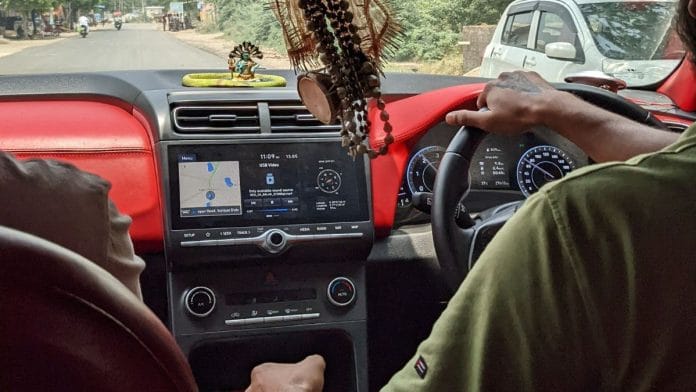

Mumbai: Nandu Yadav stopped listening to FM more than three years ago.
“It feels like ads are playing all the time. You hardly get to hear any songs,” said Yadav, a Mumbai-based cab driver. “Sometimes, you can listen for half an hour and maybe get five minutes of songs and two minutes of talking, and you don’t even know when that will come. There’s no point.”
Now, when he wants music on the road, he uses his phone. He watches YouTube when he is not driving, and splits a YouTube Premium subscription with a friend because they both hate ads.
Radio companies are feeling that shift too. In May, HT Media said it was surrendering five FM licences, including Radio One frequencies in Delhi, Mumbai, and Bengaluru, Radio Nasha in Mumbai and Fever in Chennai. Along with one licence surrendered earlier, the group has now given up six loss-making frequencies, saying they had become “financially and strategically unviable”.
The decision came even as private FM remains spread across the country, with 390 channels operating in 120 cities as of March 2026.
The bind is simple. Listeners have more ways than ever to spend the hours they once spent with FM. Advertisers can follow them to digital platforms, where targeting and measurement are easier. But radio broadcasters still have to pay for licences, spectrum, transmission, and music. For India, that matters because private FM has grown over two decades into a network of local stations across cities and towns. As its economics weaken, companies are forced to decide which frequencies are still worth paying for and what the business should become when the listener no longer comes to FM.
The pressure began before the Covid-19 pandemic. Data from the Telecom Regulatory Authority of India (TRAI) shows private FM advertising revenue peaked at Rs 2,382 crore in 2018-19, then fell to Rs 1,903 crore in 2019-20. The pandemic pushed it down to Rs 941 crore the following year. By 2024-25, it had recovered to Rs 1,819 crore, still below its pre-lockdown peak.
“Radio as a sector is under a lot of pressure,” HT Media group CFO Piyush Gupta told investors after the licence surrenders in June.
ThePrint sent detailed questions to Fever Network about the licence surrenders and its broader radio strategy, but is yet to receive a response.
When the frequency was everything
Private FM was still new in India at the turn of the century. The government opened FM broadcasting to private companies in 1999. Under the first phase, 21 private channels went on air across 12 cities. By 2011, that had expanded to 242 channels across 85 cities. The business was growing too: FICCI-KPMG estimated the industry at Rs 1,000 crore in 2010 and Rs 1,720 crore by 2014.
Long before Akash Banerjee became the political satirist behind The Deshbhakt, he was ‘Dr Love’ on late-night Delhi radio. He began hosting Dil Chahta Hai on Radio Mirchi while still in college in the early 2000s.
On a busy day, Banerjee said, he could go through around 400 recorded messages and about 50 emails from listeners. Callers could also become his eyes on the city. If he wanted to know what traffic looked like at ITO or elsewhere in Delhi, their responses would quickly become an on-air update.
“It gives you the feeling that this radio station is listening to me. This radio station is putting my voice out,” Banerjee said. “And that’s what is the charm of radio. It’s a hyperlocal medium.”
Radio was also finding other ways to make people tune in. When journalist and storyteller Neelesh Misra launched Yaadon Ka Idiot Box in 2011, he remembers being told there was no appointment listening on radio, that the medium was about Bollywood and nobody wanted to hear stories there.
“Radio has self-inflicted wounds,” Misra said. “Radio executives have worked hard to kill radio business because they didn’t work on content. They took the audience for granted.”
As the programme became popular, Misra said, the ads around it grew. He remembers objecting when a four-minute segment of a story could be followed by a 12-minute ad break. Years later, while driving near Lucknow, he realised the station playing in the background had run almost nothing but advertisements for close to an hour.
“So for one hour, you are playing ads, and you are expecting the medium to survive,” he said.
Driving in Haji Ali traffic, Yadav makes much the same complaint from his cab today. The difference is that he can now leave.
Salil Kumar, CEO of India Today Group Digital, sees that change as tied to control. A listener can make their own playlist and choose exactly what they want to hear. Radio still offers the same programme to everyone.
Advertisers have more choice too. “Radio can give me strong reach, but the problem is that it has very weak attribution,” Kumar said.
Schweta Kumar, PR Director at The Communication Council, a marketing agency in New Delhi, agrees that radio “may no longer command the same share of brand spends that it once did”, particularly in metros, where digital, social media, and influencer-led platforms have taken a larger share.
Audience data also suggests that radio is stronger among older listeners. The Indian Music Industry’s 2022 Digital Music Study found that 54.9 per cent of respondents listened to radio. The figure rose to 68 per cent among people aged 35-44 and 62 per cent among those aged 25-34.
Measuring how listenership has changed over time is harder. In an April 2024 consultation paper, TRAI said that India has no integrated listenership data for AIR and private FM. The existing Radio Audience Measurement system covers only four major cities, while broader audience measurement through the Indian Readership Survey has not been updated for radio since 2019.
Also read: Dwarka was Delhi’s middle class dream. Now it’s fighting traffic, garbage, water woes daily
The cost of staying on air
For most Phase 3 stations, the annual fee paid to the government is over 4 per cent of gross revenue or 2.5 per cent of the one-time entry fee determined through the auction. Revenue can fall. That auction-linked floor does not. In recommendations published in September 2023, the TRAI has said the system can leave operators paying a disproportionately large share of revenue simply to stay on air and has recommended moving to a 4 per cent revenue-share formula.
“You’re basically looking at a huge cost of licence, spectrum, transmission, and on top of it, you’re paying royalties for music,” Salil Kumar said.
According to Banerjee, private FM never got the one kind of programming that could have strengthened its local advantage: independently produced news. Under the government’s Phase 3 policy, private stations cannot produce their own news and current-affairs programmes, though traffic, weather, and some local information are allowed.
“What is the traffic in my area? What is the rain situation in my area?” Banerjee said. During floods and natural disasters, he added, “radio stations really, really shine.”
Misra is less convinced that the news restriction explains radio’s decline.
“Current events have constantly been discussed by radio,” he said. To blame radio’s problems on the absence of news, he added, is “an extreme oversimplification”.
Also read: Bengaluru startup builds India’s 1st private nuclear fusion tokamak. Next step is a reactor
The new radio model
Radio companies are now finding more ways to make money beyond the broadcast.
Khushboo Pandey, an RJ at Radio Mirchi in Lucknow, saw that first-hand. For a campaign around Adani Airport Holdings Limited, she began by asking listeners on air to remember their first flights. Mirchi then parked a “music taxi” outside Lucknow airport, where Pandey hosted her evening show. The campaign also moved onto social media, with RJs making branded content for their own accounts.
“It has to go with the RJ’s page,” Pandey said. “Brands want the RJ’s reach.”
Mirchi’s parent company, Entertainment Network (India) Limited, follows much the same strategy. In a May 2026 investor presentation, it called its offering “integrated local solutions” across “Radio + Digital + Ground” and described more than 130 RJs as “hyperlocal influencers”. Its digital business grew 84 per cent in 2025-26, while digital revenue was equivalent to 48.4 per cent of core radio revenue, up from 26.3 per cent a year earlier.
ThePrint sent questions to Mirchi and ENIL about its programming, digital strategy, advertising and the changing role of RJs but did not receive a response.
Schweta Kumar confirmed that radio is increasingly used “as part of an integrated campaign, often alongside digital and influencer activations”.
Sometimes social media sends listeners back to FM too. One of Pandey’s Instagram reels received around 1.8 crore views. Afterward, she said, people messaged asking whether she was an RJ and then began listening to her show. One of her listeners, 12-year-old Awan, found her on Instagram first.
Twenty years ago, the frequency was often how a listener discovered the RJ. With young audience members such as Awan, the route now runs backward.
Radio companies no longer need every person who leaves FM to return in order to make money from that relationship. They can sell an RJ’s social media reach, events, and digital campaigns. And when a frequency itself stops making financial sense, as HT Media found, it can be surrendered.
Yadav has already found other ways to fill the hours he spends on the road. If there is an RJ he wants to hear, he does not have to wait for her show to come on.
He can find her on YouTube.
Tarini Unnikrishnan is an alum of ThePrint School of Journalism.
(Edited by Prasanna Bachchhav)