



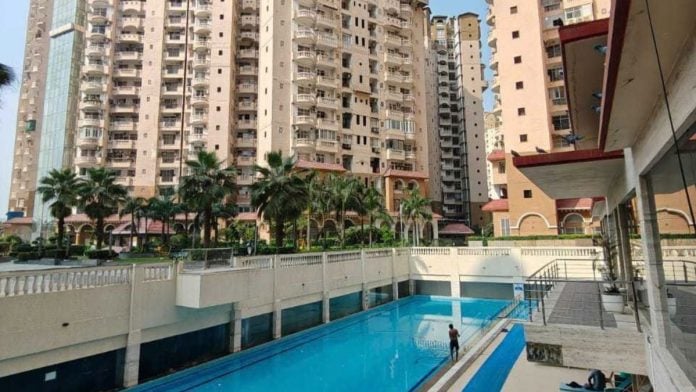
Noida: Amit lives in Noida’s Golf City. The house the 34-year-old rented was earlier occupied by the owner, who had access to the gated society’s common areas without paying any additional amount. But as soon as Amit moved in, the rules seemed to have changed.
Despite paying the fixed Rs 3,000 maintenance charges, Amit says he is now required to pay an additional Rs 700 for gym and another Rs 800 for the swimming pool.
“The owner was living there, paying the maintenance and using the amenities. But as soon as a tenant enters the same house, they are charged extra for using the same facilities,” said Amit, who works for an MNC.
Swimming pools, gyms, clubhouses, community halls and sports courts — formed part of amenities that elevated the status of a gated community in Noida and Gurugram to that of luxury living. These lifestyle upgrades, however, come with a fine print. The rules over their access has opened a new front of battles among the residents and the Residents Welfare Associations (RWAs) or the Apartment owners association (AOA) in these societies.
Tenants, particularly, are finding out that access to common areas and amenities comes with a growing list of RWA regulations, additional charges, booking requirements, membership conditions and restricted access.
RWAs and management committees, however, said that such rules are necessary for maintenance, security, crowd management and equitable use.
“Unfortunately, disputes over use of common amenities are increasingly becoming a source of friction between residents, tenants and apartment associations,” said Sanjay Lal, President, Federation of Apartment Owners Associations (FAOA), the umbrella body that governs flat owners’ rights.
“An RWA or AOA is an institution created to manage the affairs of the community. It is not the owner of the common areas and facilities. Office-bearers are elected to administer the community, not to exercise personal authority over fellow residents,” added Lal.
For Amit, the issue is not simply about the additional amount. It is about the distinction being made between a homeowner and a tenant, living in the same apartment and using the same facilities.
Who gets access?
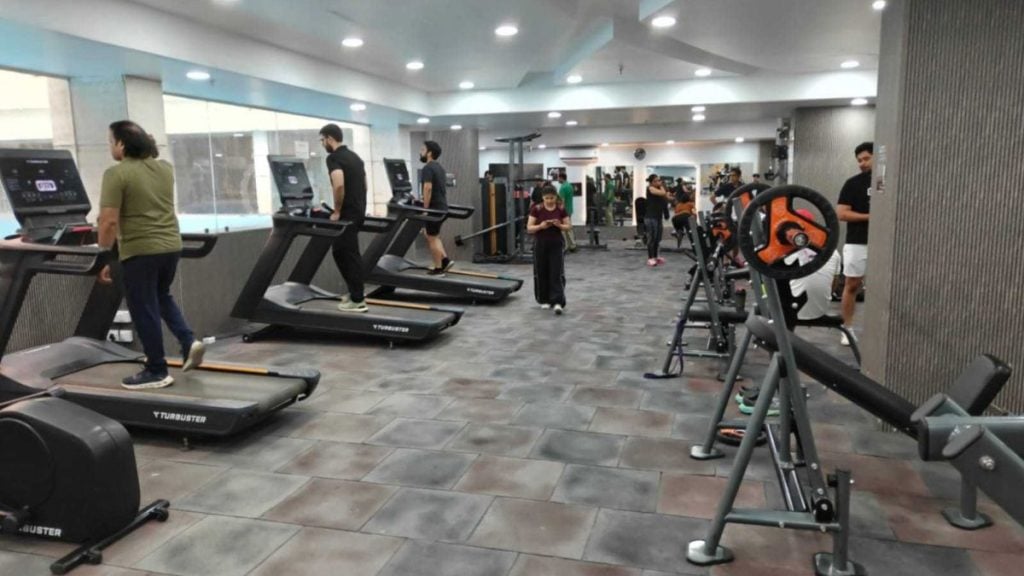
Maintenance charges are a regular part of apartment living in metro cities and are collected by RWAs to ensure the upkeep of common areas and facilities. But asking tenants to pay additional charges for using these amenities has become a serious bone of contention in Noida’s high-rises.
The apartment remains the same. The gym remains the same. The swimming pool remains the same. But, according to Amit, the cost of accessing them changes depending on who is occupying the house.
A notice issued by Golf City’s RWA in April 2026 is testament to the difference in access and charges for tenants and homeowners. It stated that the society’s swimming pool would be open for residents from May and that tenants could access it free of charge. But tenants would have to pay a fee.
“We are pleased to inform you that the society swimming pool will be open to residents starting from 1st of May,” the notice read. “Charges for Tenants: ₹700 per person for the season!”
In another gated society in Noida, the timings for the gym and swimming pool are causing disputes among residents and the RWA. In a society in Noida’s Sector 75, the facilities can only be used for one hour at a time, with separate timings for men and women.
“My husband and I have the same office timings and other commitments, but we still can’t use the facilities together. They are simply making rules without consulting the residents, no matter how many problems those rules create for us,” said 43-year-old Misha Sharma.
A member of the AOA defended the rules and their timing, saying that they were made after discussions with the residents and that no residents had raised concerns about the timings or the separate pool timings for men and women.
“Different timings for men and women in the pools are mostly wanted by the residents themselves. If one resident wants to use the pool at a specific time or with her husband, that doesn’t mean every other woman will be comfortable with this,” the RWA member added, saying that the time management also allows more residents to use the amenities because the area has limited space and not many people can use them at the same time.
The debate over access to amenities has taken a different turn in Supertech Capetown in Noida’s Sector 74. Here, charges are different for individuals and their families.
While an individual resident is charged Rs 500 per month for using the society’s amenities and common areas, a family is charged Rs 1,000 per month, irrespective of the number of family members using the facilities.
“A family of four is charged Rs 1,000, while as an individual I have to pay Rs 500. This is in addition to the maintenance charges of Rs 4,000 per month. This is how RWAs fool tenants,” said 42-year-old Kush Singh, a resident of Supertech Capetown.
The dispute is not limited to disparity in fee structure for tenants and home-owners. In some housing societies in Noida and Gurugram, it extends to different charges for different family members —whether parents or siblings— of the same resident.
“I live with my sister, and the RWA still told me that I cannot use the gym because I don’t count as a family member,” said a resident of Amrapali Sapphire, Sector 45, Noida, requesting anonymity.
A member of the society’s Apartment Owners Association (AOA), however, defended the rule. He said that family members can be granted access after they submit documents that establish their relationship with the registered resident.
“Only members related by blood are allowed to use the amenities. Outsiders are not allowed because it creates overcrowding and can lead to damage to the equipment and the area,” the AOA member said, requesting anonymity.
RWAs and AOAs in the NCR have denied allegations of arbitrarily imposing additional charges, saying that regulations and maintenance fees are necessary to keep common facilities functional.
“Rules are important to regulate the use of facilities and run the society smoothly,” said an RWA member of a Gurugram society. “The maintenance charges are used to maintain the equipment and facilities that residents use. Without rules and adequate funds, how will societies provide and maintain these facilities?”
Atul Gulati, President of URJA (United Residents Joint Action), an apex collective of Resident Welfare Associations in Noida, said that society members are generally permitted to use the amenities, while guests are also allowed to access them when accompanied by a member.
Group housing societies typically charge residents a monthly maintenance or subscription fee, he said, which covers the upkeep and use of various common amenities and facilities within the society. But the rules around the access to those amenities vary from society to society.
“There are no government-mandated rules governing the use of these amenities. In most societies, the rules are framed internally by the management and resident members, based on the needs and preferences of the community,” Gulati said.
RWA reality check
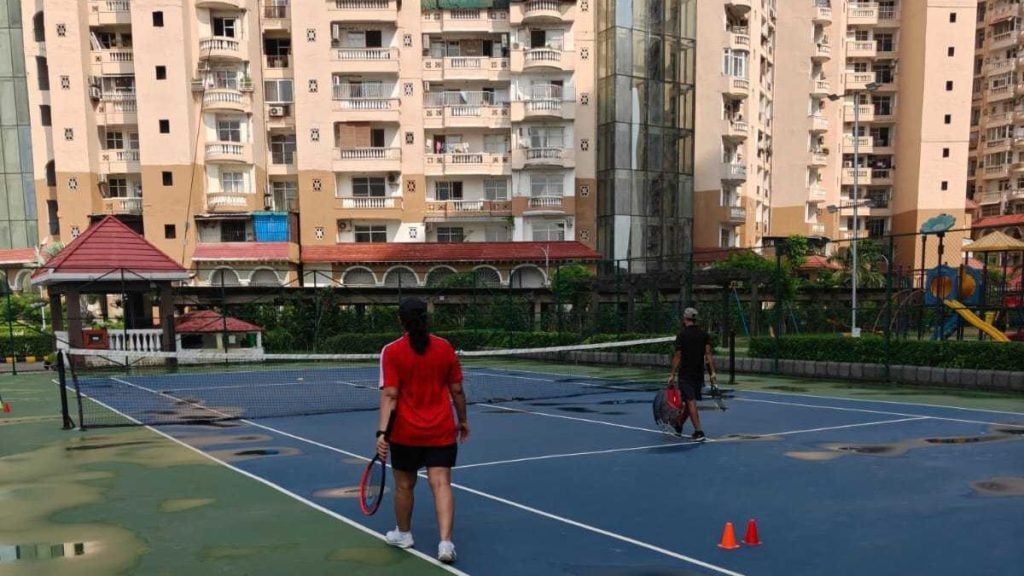
About 40 km away in Gurugram, residents and tenants are battling similar arbitrary regulations.
Atul Gulati lives in a 3BHK house in Orchid Petals in Gurugram’s Sector 49. A new rule framed by the RWA required his mother to pay Rs 4,000 to attend a Dandiya Night at the society’s common park. This left him shocked.
The event was organised by the society RWA and was free for all residents. But Gulati added that when she went to the RWA for the event pass he was charged Rs 4,000 for two members of his family.
“The amenities and the events organized inside the society premises were part of our housing rights, for which we give maintenance. But now, RWA’s dictatorship is giving us a reality check, with new rules and charges every other day,” claimed Gulati.
“Because my mother’s name is not on the residents’ list, she is not considered part of the society and, according to the RWA, neither is my family,” he said. “We had to get paid tickets.”
However, RWA president Rajeev Asthana denied the allegation and said that the paid passes were only meant for outsiders whom residents wanted to bring to the event. He added that the number of paid passes was limited to help manage the crowd.
“The event was completely free for residents. There were only a limited number of paid passes for residents who wanted to bring friends or relatives from outside the society. No resident was asked to pay to attend the event,” Asthana said.
Showing the payment details Gulati further added that he also took up the matter with the RWA and raised his concerns in the residents’ WhatsApp groups.
“When I raised the issue and exposed the RWA, I was removed from the residents’ WhatsApp group,” claimed Gulati. He further claimed that he found several outsiders, including relatives of RWA members, attending the event without being charged.
He later raised the issue before other residents and questioned the difference in the implementation of a rule.
“RWAs expect residents to silently follow whatever they say or any new rules they make. The moment someone raises their voice or questions them, they start targeting that person,” alleged Gulati. He said he had no choice but to pay the amount so that his mother could attend the event.
Clubhouses for senior citizens
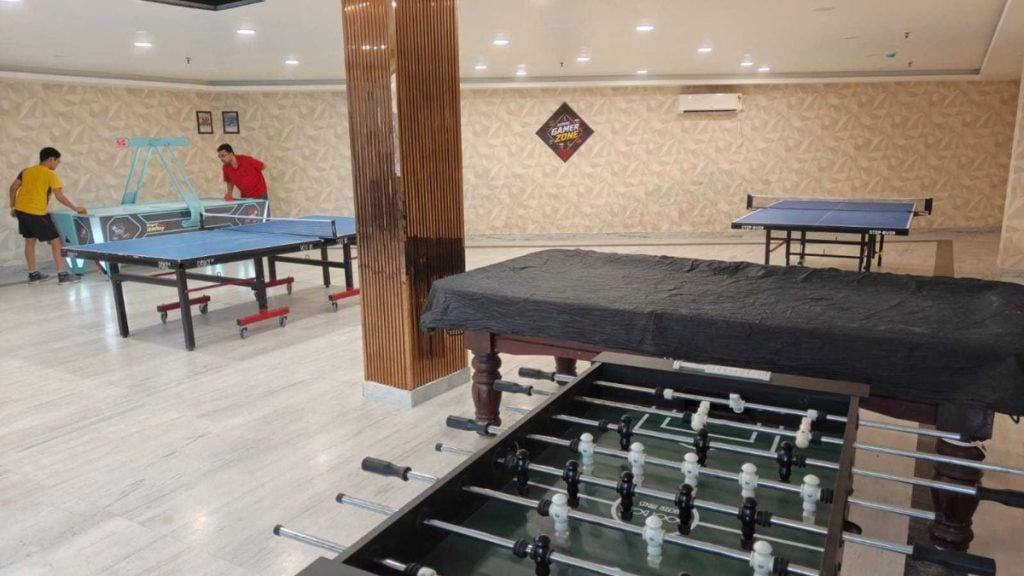
Vibha Mishra of Amrapali Sapphire, found a familiar routine in the clubhouse of her society after retirement. The 63-year-old joins a group of senior residents there almost every day — discussing the news or TV shows, chatting about their day, or simply listening to stories from each other’s lives.
This routine, which continued for nearly two years, has now been disrupted after the society’s AOA asked senior citizens to not gather in the clubhouse every day.
“Sometimes, the weather is too hot; other times too cold; and often it is simply not appropriate to sit outside in the garden. We mostly gather in the clubhouse as a group and chat. But the AOA members have now asked us not to sit there,” said Mishra.
Residents alleged that the RWA is renting out the space for commercial events but the association denied the allegations and said there was a renovation in process.
For nearly four months, it has become a subject of discussion—and disagreement—on the society’s WhatsApp groups.
For many senior residents, the clubhouse is more than just a common facility. It has become a social space where they meet their peers and neighbours, they exchange stories and spend a few hours together without having to travel far from home.
“Senior citizens cannot go far away, and when we finally have an open place to sit together, they have now taken this decision without holding any meeting or asking the residents,” said Mishra. “We are also part of this society and we pay maintenance,” she added.
An AOA member of Amrapali Noida, however, denied the allegations. He told ThePrint that renovation work has been underway in parts of the clubhouse and that residents have not been stopped from sitting in or using other areas of the facility.
“These are all fake allegations that people are trying to circulate just to blame the AOA, whose members work as volunteers for the society,” the AOA member said, requesting anonymity. “No one has been stopped from sitting in or entering the clubhouse.”
Also Read: Security guards vs delivery agents is a new source of tension across Delhi-NCR societies
Not only Delhi-NCR problem
Tenants and owners of smaller homes are facing similar disputes in Bengaluru too, and the complaints are all over social media. A tenant’s post over restricted access to common amenities went viral in April this year.
In the post, the tenant alleged that despite paying full maintenance charges, the housing society management barred residents of 1BHK and 1RK units from using the gym and the swimming pool.
As the post gained traction, several others posted their experiences of what they described as “differential treatment” of tenants, particularly male tenants, in the city’s gated societies.
“This is a very common problem for male tenants. We pay maintenance, rent and everything else they ask for, but when it comes to facilities, we are not allowed to use them,” said Sarthak, 36, an accountant with a private company who has rented a 2BHK in Kammasandra, Electronic City phase 1.
According to a Bengaluru-based realtor associated with several housing societies, the issue is much more complicated than what meets the eye.
“In some societies, smaller flats like 1BHKs are not legally approved. Many of these units are rented out, and the owners or occupants do not contribute to the society’s maintenance in the same way. They may pay the builder directly, and that is one reason why some societies do not allow them to use common areas,” said the realtor, requesting anonymity.
Also Read: Ghaziabad society residents protest Airbnb-style short-term rentals—‘this is not hotel’
The debate beyond access
Disputes and disagreements over access to common areas, rules governing their use, and maintenance charges have found their way into residents’ WhatsApp groups and social media forums.
The random increase in maintenance charges is a major flashpoint between RWAs and residents. Several residents have questioned why they are repeatedly asked to pay additional amounts for repairs, renovations and new installations.
“Despite paying thousands of rupees as maintenance charges, every other day the RWA comes up with an increase in maintenance or asks residents to contribute money for renovation or a new setup, which was never discussed with us earlier,” claimed Arpita Tripathi, a resident of Sector 54, Gurugram.
For some residents, the frustration percolates from the RWA’s of their housing society to their attempts to seek the government’s intervention.
Kavita Jha, who has been living in Amrapali Sapphire since 2020, said she has approached the district registrar’s office and the district magistrate’s office several times with complaints about issues in her society. The responses have either faced prolonged delays or found no resolution.
For routine disputes with the AOA and other problems within the society, Jha no longer approaches the district registrar’s office or the CM window. Instead, she now writes directly to Uttar Pradesh Chief Minister Yogi Adityanath through his social media handles.
“Societies need the attention of the government and the Chief Minister. Nobody resolves our problems and people are not getting justice on many issues,” said Jha. “The government should also focus on issues in housing societies and work towards resolving them.”
(Edited by Aakriti Handa)