





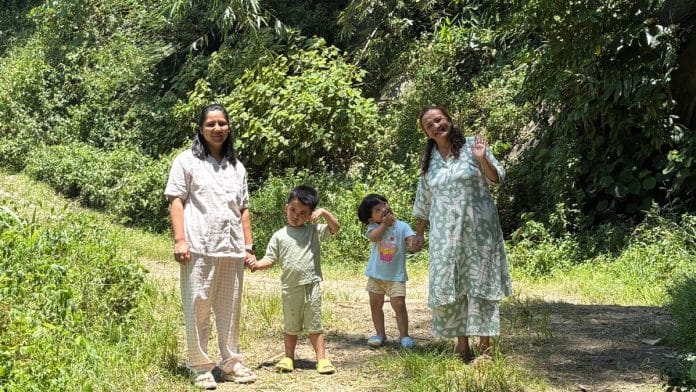


Sikkim: On 12 October 2024, as she waited for her pregnancy test, Beenu Basnit sat before a temple, crying and reciting the Hanuman Chalisa. She was too frightened of another disappointment. So her husband went to the clinic for the blood test while she prayed.
It was the fear built over 14 years of trying to have a child. Years of doctors, treatments, and waiting, with no baby to take home. Basnit, now 36, had endometriosis and had almost begun to accept that motherhood might not happen for her.
Then, in 2023, the Sikkim government launched the Vatsalya scheme. It provided financial support for fertility treatment. For Basnit, it offered an option she had never considered within reach — IVF
Like many, IVF, or in vitro fertilisation, was never part of her journey. The treatment, which can cost lakhs of rupees, seemed inaccessible.
“I was getting financial support from the government, so I thought, why not give it a try? I was ready for everything—the medicines, the injections, the pain. I thought, this is my chance, so I went for IVF,” she said.
The report came back positive. It was Dussehra. She conceived after a single IVF cycle and gave birth to a son in 2024. But on that October morning, before she knew any of this for certain, she could only pray.
Basnit’s story is also a window into a much bigger change taking place in Sikkim.
For decades, India’s population policy was driven by the fear of too many people. States such as Rajasthan, Haryana, Chhattisgarh, Andhra Pradesh, and Odisha even restricted people with more than two children from contesting panchayat and other local-body elections.
Sikkim now finds itself confronting the opposite problem — too few children.
The state’s total fertility rate has nearly halved over the past three decades. From 2.75 children per woman in the early 1990s to 1.1 in the National Family Health Survey (2019–21), and now to just 1.0 in NFHS-6.
The fall has prompted the government to ask a different question: why are fewer people having children, and what can the state do for those who want them?
The reasons, Sikkim Health Minister GT Dhungel said, are not always medical. They are also psychosocial and economic. Women are marrying later and prioritising education and careers, while the rising cost of raising a child is making larger families less attractive. Some couples choose to have just one child, while others do not want children at all. And for those who do, fertility treatment can be expensive and difficult to access.
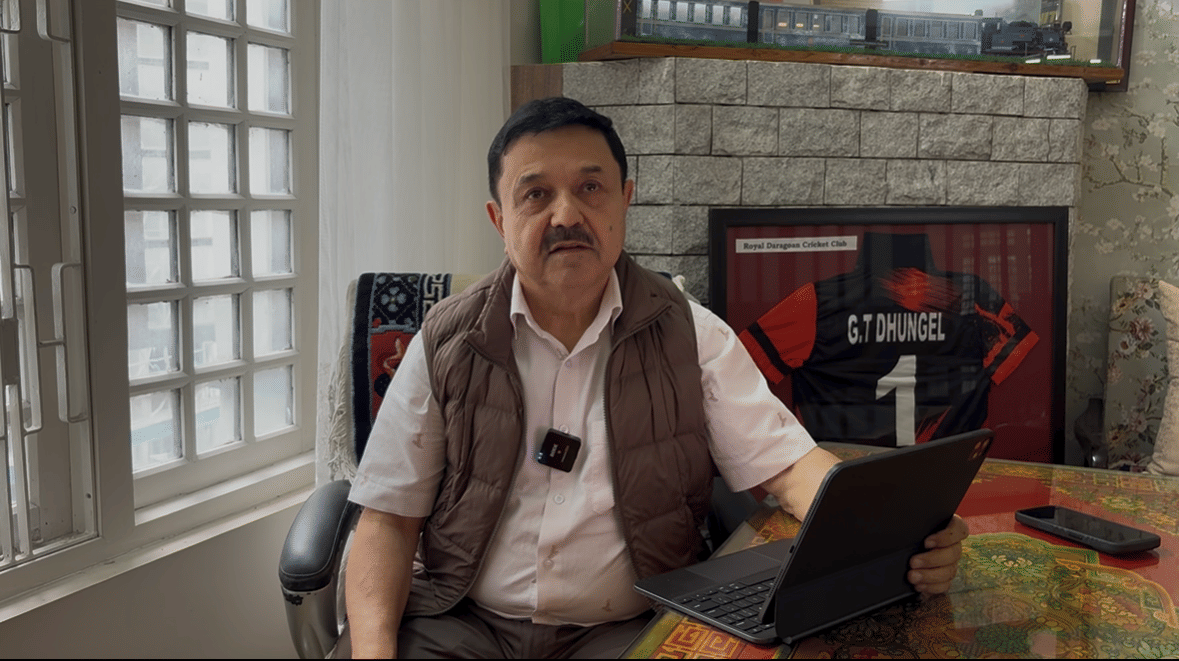
For Amit Kumar Sharma, sociologist and a professor at Jawaharlal Nehru University (JNU), Sikkim’s fertility problem dates back to British rule in the 1890s.
“The story of Sikkim’s falling fertility does not begin in 1975, when the state became part of India. It began much earlier, around 1890, when the British established Sikkim as a protectorate. In my view, that is where the first attempts to regulate the local population started. It is not a story of one day, but a process that has unfolded over more than a century,” said Sharma.
He said that the British did not only influence administration; they also changed education and social thinking. In tribal societies, having more children was traditionally seen as a blessing. Gradually, those ideas gave way to new thinking that encouraged later marriage and delayed childbearing. This change has been taking place for generations.
Now the fertility crisis has prompted Sikkim toward a policy that would have seemed unusual a generation ago. It is now encouraging people to have children — the more, the merrier.
Vatsalya gives eligible couples Rs 3 lakh for IVF and other assisted fertility treatment. But officials acknowledge that financial assistance alone cannot solve the problem. Treatment can cost more than the government support, while couples from Sikkim often have to travel to Siliguri or metro cities, adding the cost of accommodation, food, and travel.
The state is now trying to bring treatment closer to home. A government-assisted reproductive technology centre is being developed in Sikkim, while a study with the Indian Council of Medical Research (ICMR) and the National Institute for Research in Reproductive and Child Health (NIRRCH) is examining the social, economic, and cultural reasons behind the state’s falling fertility rate.
One generation is being wiped off, and there is a threat that it could go extinct. But we cannot tell people to marry early or have children early
– an official from Sikkim’s Planning and Development Department
The concern, officials say, goes beyond population numbers. Sikkim has multiple ethnic communities, each with its own languages, traditions, and cultural identities. There is growing concern that a shrinking population could eventually make these identities harder to sustain.
That is why the state’s response stretches beyond IVF. It includes maternity and fertility support, research into why people are having fewer children, and schemes such as Mero Rukh Mero Santati that ask people to plant 108 tree saplings to celebrate the birth of every newborn child and a financial deposit of Rs 10,800 is given by the state government for the child’s future.
The state’s approach also places it in a much larger global conversation. Countries such as Japan, South Korea, Italy, and Hungary have spent years trying to raise fertility through cash incentives, childcare support, parental leave, and fertility treatment. Yet South Korea, despite extensive state intervention, continues to have one of the world’s lowest fertility rates. It stands as a reminder that money alone cannot persuade people to become parents.
For Sikkim, the current challenge is dispersed. The questions are how to persuade people to have more children, how to make parenthood easier for those who want it — through affordable fertility treatment, childcare, housing, workplace support, and the freedom to balance family with a career.
“One generation is being wiped off, and there is a threat that it could go extinct. But we cannot tell people to marry early or have children early. For women here, settling down doesn’t just mean getting married. It also means building a career and becoming financially independent,” said an official from the Planning and Development Department of the Sikkim Government.
“What we can do is give people support and freedom of choice. Financial assistance can help those who want children but cannot afford fertility treatment. Sending people outside the state is only a short-term solution. We need to build that support here, in Sikkim.”
The first attempt
In West Pandam village, Vivek Chhetri’s house is surrounded by trees and mountains, large enough for the family and the two children who, a few years ago, were still only a hope. Today, the 3-year-old twins — a boy and a girl — race around the house. Their grandmother fusses over them, showering them with the kind of affection that comes after years of waiting.
For Vivek, 32, that life began when he and his 36-year-old wife, Pranita, first began consulting doctors; the Vatsalya scheme had not yet been introduced. By the time they began IVF treatment, the Chhetris learned that the government would help pay for it.
“It felt like things were finally aligning in our favour,” Vivek said.
But once they began IVF, the process was anything but easy.
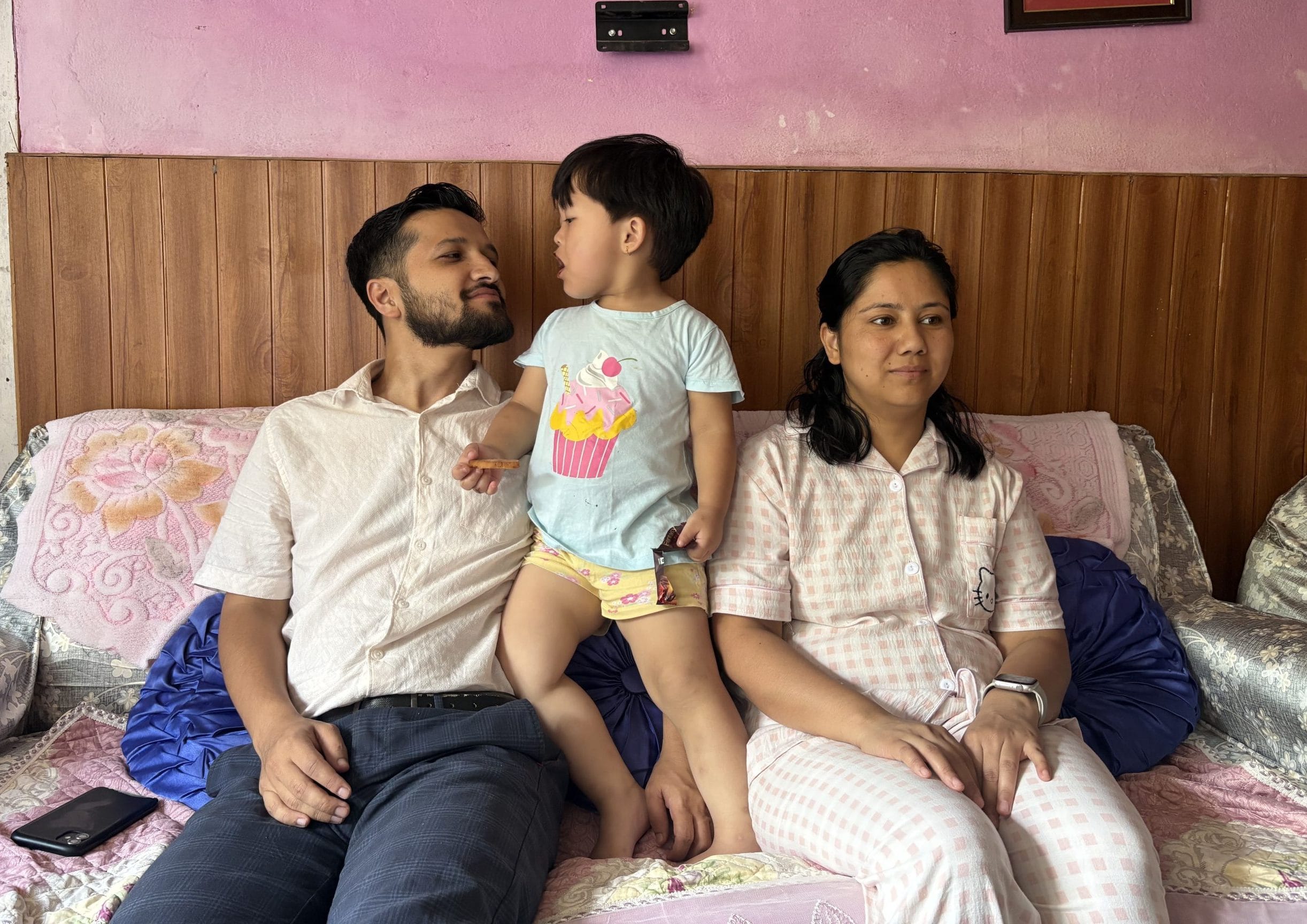
Pranita, an ophthalmic technician, travelled repeatedly from Sikkim to Siliguri by taxi, spending days there and enduring the injections and medicines that came with the treatment.
“My struggle was mostly the heat in Siliguri. My wife was the one who went through the pain. She would travel by taxi from morning to evening, and the injections were very painful. Just watching her go through it was painful for me,” said Vivek.
Pranita has endometriosis, and for her, discipline was not something to compromise over. She said she made sure she took every medicine and every injection at the same time each day, following the schedule down to the hour. She knew this was their last hope and was prepared to do everything she could.
The first attempt worked.
Vivek said even the doctors were surprised. A friend of Pranita had undergone IVF seven or eight times before conceiving, but Pranita became pregnant in her first cycle.
The treatment, however, cost them around Rs 10 lakh — far more than the government assistance. But for Vivek, who is a district panchayat chairperson, the government support was about more than the money. It helped break the silence around IVF and made a treatment that was once rarely discussed increasingly accepted in their community.
Motherhood and career
In Sikkim, one generation of women is living fundamentally different lives from the one before it. Their mothers married in their teens. But they studied, built careers, travelled, chose their partners, and married later. IVF enters the story because biology and changing social aspirations are now colliding.
For Pranita, delaying marriage never felt unusual. Her parents encouraged education and employment over early marriage and left the decision entirely to her. She spent eight years working before marrying in 2020.
“My mother never forced me,” she said. “She didn’t even look for a groom. She got me married when I was ready.”
Pranita’s mother belonged to a generation for which adulthood began much earlier. She got married at the age of 16.
As a teenager, Pranita wanted to become a teacher. She pursued higher studies and trained in Delhi before eventually finding work as an ophthalmic technician. Financial independence was her first step into adulthood. She cherished the eight years she spent living and working on her own across Sikkim.
“My 20s were spent working rather than preparing for marriage. I lived away from home in Gangtok and Namchi, travelled across India with my future husband and never fixed an age by which I wanted to marry or have children. Several of my friends remain unmarried even today,” she said.
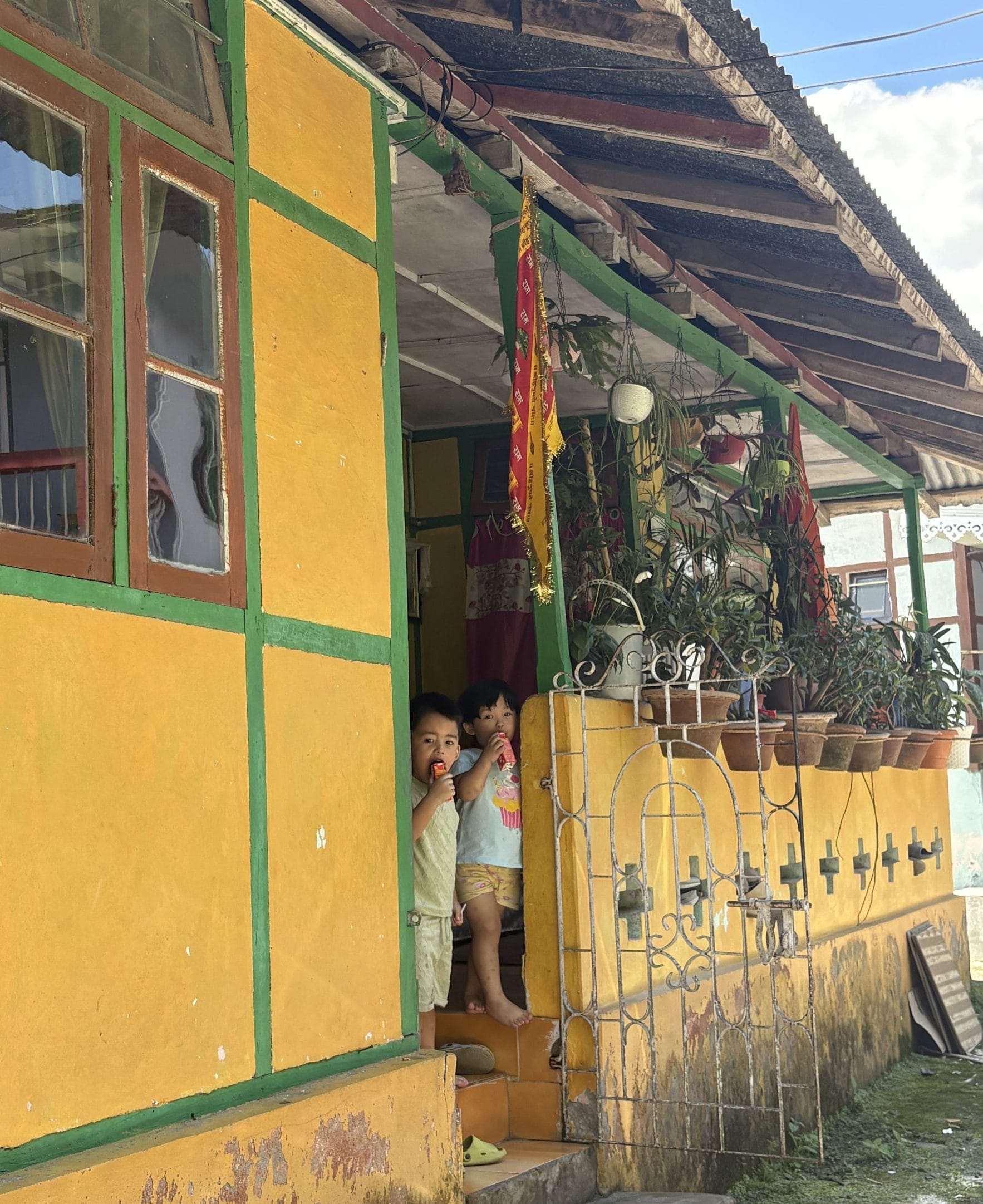
Motherhood changed Pranita in ways she never expected. The woman who once loved travelling and lived independently for years now spends her days following her children around — handing them snacks, wiping their faces, settling little demands, and barely finding a quiet moment to sit, especially when guests are around. She laughs that she is always behind her children and is still trying to steal a few moments for herself.
“The changes have come so much that the life before feels like the previous life.”
Sometimes Pranita misses the years she lived alone while working in Sikkim, when her time belonged only to her. But she does not regret the life she has now.
Social acceptance
For years, Dilli Ram (40) kept his IVF journey to himself.
He and his wife had spent 12 years of their marriage trying to have a child. She conceived in 2016, but miscarried three months later. After a series of visits to doctors and gynaecologists, they were eventually advised to try IVF in Siliguri.
But IVF was not something people in Sikkim openly discussed then. Couples travelled outside the state for treatment and, Ram said, often kept it private, unsure of what others might say.
The biggest thing is social acceptance. That may be the change Vatsalya has brought to Sikkim. The scheme has not made IVF cheap, easy or guaranteed. But it has helped turn a treatment people once hid into one they are increasingly willing to talk about and seek
– a mother of twins born through IVF
“At that time, there was no social acceptance. Even if someone had undergone IVF and it was successful, people didn’t talk about it. One or two people would quietly go outside the state for treatment. We could not express it. The thought was always, ‘What will people say tomorrow?’” said Ram.
The treatment cost the couple around Rs 7 lakh, even after they saved money by staying in cheaper accommodation in Siliguri. The government support covered part of the cost, while medicines and injections added to the bill even after the treatment succeeded.
And after years of waiting, the couple got more than they had hoped for — twins, a daughter and a son.
Now, Ram can name several friends who have gone through IVF. Some conceived on their first attempt, some needed several tries, and some failed before succeeding later. For him, that is evidence of how much the conversation has changed.
“The biggest thing is social acceptance. That may be the change Vatsalya has brought to Sikkim. The scheme has not made IVF cheap, easy or guaranteed. But it has helped turn a treatment people once hid into one they are increasingly willing to talk about and seek,” said the mother.
The cost of waiting
There is a larger shift that fertility specialists across Sikkim say they now see every day. Women are studying longer, entering the workforce, and marrying later than their mothers did. While that has expanded opportunities, it has also meant that many begin trying for children at an age when fertility has already begun to decline.
For more than a decade, doctor Bandana Pradhan Subba has watched couples in Sikkim arrive at her clinic carrying the same problem but very different fears.
When she began working in fertility care, IVF was not available in Gangtok. She would start patients on basic medicines, carry out preliminary tests, and when they needed more advanced treatment, send them to Siliguri. Even the initial investigations for IVF had to be done outside the state.
That began to change gradually. She started IUI, or intrauterine insemination, in Sikkim in 2020 and, three years later, opened Noblestride Fertility & Diagnostic Centre, an IVF facility in Gangtok. Since then, she said, more than 50 IVF babies have been delivered in Sikkim, while her earlier fertility work, including ovulation induction and IUI, has resulted in more than 500 deliveries.
For many couples, Subba said, the first question when IVF is suggested is not whether it might work, but whether they can afford it. Some delay treatment for years, waiting until they feel financially secure enough to take the plunge.
“By the time a woman feels financially secure enough to start treatment, she may already be 40 or older. Those five years can make a big difference to egg quality. That is why timing is so important,” she said.
Vatsalya, she said, has changed that calculation for many couples. Even partial financial assistance can give people the push to seek treatment earlier rather than keep postponing it.
But money is only part of what has changed.
For years, infertility was often treated as a problem belonging to women. Subba said husbands would sometimes assume that if their wife was visiting a gynaecologist or fertility specialist, the problem must be hers. She now sees more couples arriving together, a shift she considers an important sign of growing awareness.
But the bigger challenge she sees in Sikkim begins much earlier — with when people marry, when they decide to have children, and how long they wait before seeking help.
Subba sees many women who have spent years building careers and becoming financially independent. In Sikkim, she said, women who do not marry early generally do not face the same social pressure they might elsewhere. That freedom, however, can collide with biology later.
A woman may marry in her early 30s and decide to spend another few years establishing herself before starting a family. By the time she seeks help, she may be in her late 30s or 40s.
Subba increasingly tells such women not to wait indefinitely.
“If you’re already married, preserve your embryos. You can try for a natural pregnancy five years later, and if it doesn’t work, you still have your own embryos. We can treat many fertility problems, but we cannot turn back your biological clock,” said Subba. A significant share of her patients are over 35, and some are already over 40.
She also recalled an older couple who had been married for nearly 20 years and had almost given up on having a child. They changed their minds after hearing that IVF was now available in Sikkim.
Subba said that the state is only beginning to piece together what is driving its fertility decline and what it will take to respond to it.
She wants more research into whether living at high altitudes, along with other environmental factors, could be affecting egg and sperm quality. The problem is also tied to education, careers, marriage, money, geography, access to treatment, and the changing choices of women themselves.
“It pains me to see women coming here to terminate pregnancies when I have seen so many women struggle for years to conceive. I tell them, if they don’t want the pregnancy, they can donate their eggs instead. Many of them are happy to do so,” Subba said.
Also read: Ladakh designers are turning Himalayan heritage into high fashion. Bollywood is now noticing
Hope and loss
The growing acceptance of IVF has not erased the questions around it. Some still wonder whether a child was conceived using a donor egg or sperm, or why the child does not resemble the parents.
But for the couples undergoing treatment, the bigger struggle is often what happens before and after the procedure.
For eight years, Sameer and his wife waited to become parents.
When her periods became irregular, he took her from one doctor to another across Sikkim. The tests showed little until one finally found blockages in both her fallopian tubes.
“The doctor told me that this is the last option. You have to do IVF. Normally, it won’t be possible,” Sameer said.
IVF offered them a way forward, but it came at a price they could barely afford. The treatment in Siliguri cost them around Rs 12-13 lakh, including rent, food, and medicines. Sameer said they raised the money by giving up a piece of land near their home and through income from contract work.
Then, for the first time in eight years, they had a reason to believe they would bring home a baby.
Three months after the IVF, his wife was pregnant. There was a heartbeat. A baby was growing.
Then they went for another ultrasound a month later. The heartbeat was gone.
The loss left the family shattered. His wife was grieving, his mother was away, his father was alone, and his mother-in-law was calling from Darjeeling.
After the pregnancy loss, he said he stopped the medicines prescribed for his wife because he was worried about their side effects and later turned to supplements sold through the direct-selling company he had joined after losing his work as a tourist guide. He said they have helped other couples and is now hoping they will help his wife too.
But the loss has not disappeared.
Sameer still has the ultrasound image of the baby on his phone.
“I have my baby’s photo. The one that had come in the ultrasound. It is still with me. I haven’t even deleted it. Sometimes, I see it.”
He had saved everything he could when the pregnancy finally came — even the positive report and a urine pregnancy test he had taken in his excitement.
The baby is gone. The picture remains.
(Edited by Aamaan Alam Khan)