



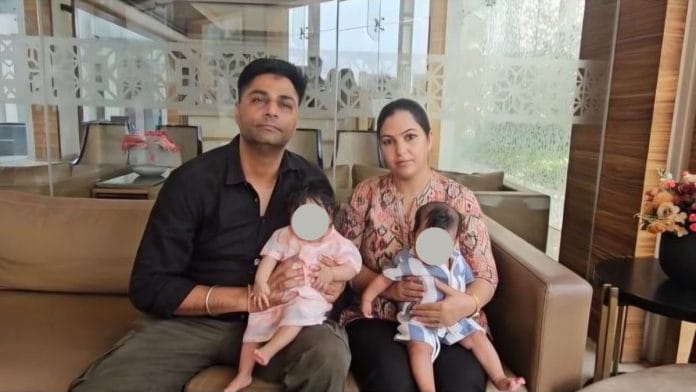
New Delhi: When Gurugram residents Rahul and Meenu Rathore received DNA test results showing that the twins born after an IVF procedure were not biologically theirs, it opened the floodgates to the secret, opaque, and troubling world of fertility clinics in India. Messages poured in from other couples claiming botched procedures, poor record-keeping, unexplained donor involvement, and a lack of accountability at the clinics.
Such cases have laid bare the dark underbelly of India’s booming but weakly regulated IVF industry where the promise of parenthood often collides with patchy oversight.
While the Assisted Reproductive Technology (ART) Act was introduced in 2021 to bring order to the sector, ThePrint found that several fertility clinics in Delhi and Gurugram whose applications had been rejected by the National ART and Surrogacy Registry continue to offer fertility services.
At these clinics, questions about their registration status were met with confusion, evasive answers and repeated refusals to connect with doctors or management. Some receptionists claimed registrations were “under process”. Others said they were unaware of the clinics’ status altogether. Yet appointments, consultations and fertility services continued uninterrupted.
This exposes a widening gap between regulation and enforcement in an industry that has expanded rapidly over the past decade, even in two and three-tier cities. According to data available on the ART registry portal, 7,732 applications have been received from ART clinics across India since 2021. Of these, 4,188 have been approved while 719 have been rejected.
Still, the IVF industry is expanding at a breakneck pace. It was valued at $1.06 billion in 2023 and was projected to grow at a CAGR of 7.8 per cent from 2024 to 2030, according to Grand View Research. Alongside that growth, however, have come mounting allegations of embryo mix-ups and clinics operating despite regulatory red flags.
Last year in July, an illegal IVF centre in Gurugram’s Sushant Lok was busted by the health department and recovered around 84 embryos. In 2023, the National Consumer Disputes Redressal Commission imposed a Rs 1.5-crore penalty on a West Delhi hospital in a sperm-mixing case, observing that fertility clinics had proliferated faster than oversight mechanisms and made it mandatory for them to issue a DNA profile of the newborns.
For many couples, the consequences are devastating. IVF is an emotionally and physically gruelling process borne largely by women, who undergo months of hormone injections, procedures and repeated medical interventions. Yet several families told ThePrint that even basic safeguards, transparency and counselling remain elusive, including DNA.
Surrogacy lawyers say the malpractices at the clinics are rampant.
“The most common malpractice we see is embryo swapping, as fertility centres often do not maintain proper records of embryos, and this is happening on a large scale,” Supreme Court lawyer Mohini Priya, who represents cases related to surrogacy and ART law, said. “In cases where couples opt for donors, clinics allow intending parents to choose their donors, which goes against ART laws. Most of these clinics are also unregistered.”
For some couples, these regulatory failures became visible after months of treatment, a pregnancy — and finally, a DNA test.
Hope, then heartbreak
Balvinder Kaur was five months pregnant when she got to know that the baby in her womb was not biologically hers.
The 40-year-old, a Delhi native who moved to New Zealand with her husband Ravinder Singh in 2018, had undergone IVF at a fertility clinic in west Delhi’s Janakpuri in November 2024 on the recommendation of her sister-in-law.
The treatment initially appeared to be going as planned. Doctors retrieved six embryos. The first transfer, in January 2025, failed.
“It was a miscarriage of sorts,” Kaur said.
The couple returned to New Zealand before travelling back to India in April for a second embryo transfer. This time, the pregnancy was successful.
“We got all the blood tests done and it came positive. We were so excited,” said Kaur.
Five months later, a routine scan in New Zealand revealed that the foetus had Tetralogy of Fallot (TOF), a congenital heart defect that could require open-heart surgery soon after birth.
Alarmed, Kaur contacted the Delhi clinic.
“My question was simple. How did the baby get heart issues when the doctor transferred the embryo after checking chromosomal abnormalities?” she asked. “The doctor had said that they transferred a healthy A grade embryo.”
The clinic doubled down and suggested that the couple can terminate the pregnancy if they wanted.
“The doctor said it can happen in rare cases and asked us to go for a D&C because the baby has a lot of complications,” Kaur recalled.
Unconvinced, the couple opted for a DNA test. The results turned her world upside down.
“We found that the DNA of the baby does not match with either of us. It meant it was not our embryo. We were shattered,” Kaur said, her voice heavy with anguish.
Days later, she underwent dilation and curettage (D&C) and buried the ashes of a child that was never biologically theirs in the garden of their home.
Rejected on paper, open for business
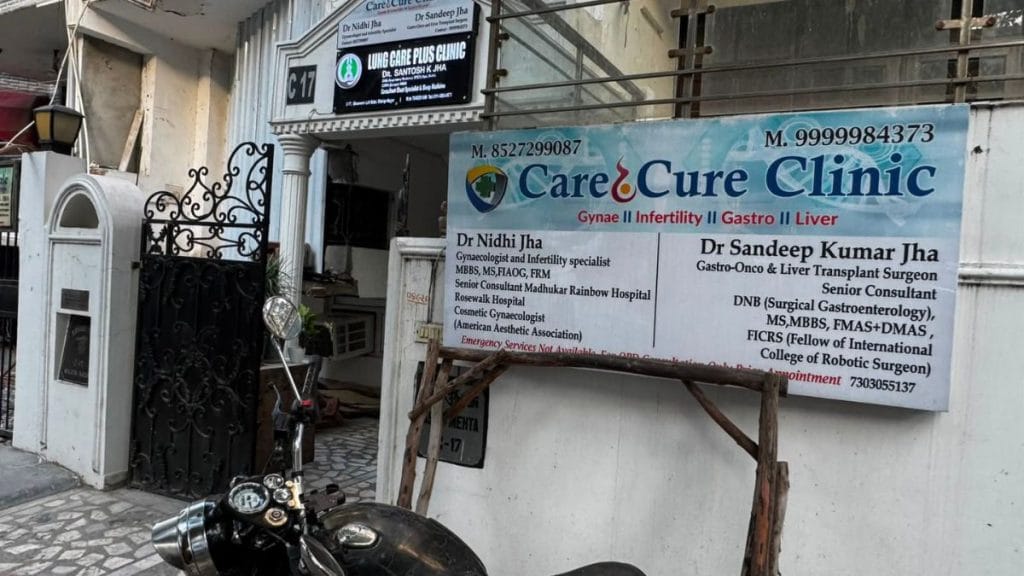
On a humid evening at Care and Cure clinic in south Delhi’s Malviya Nagar, a woman sat outside Dr Nidhi Jha’s consultation room with her newborn baby. The child, conceived through IVF, had been delivered prematurely at seven months.
But according to the National ART and Surrogacy Registry, the clinic’s application to provide Assisted Reproductive Technology (ART) services had been rejected across all three categories of registration. Under the ART framework, Level 1 clinics can offer basic infertility treatments such as intrauterine insemination (IUI), while Levels 2 and 3 are required for IVF procedures and more complex embryo, egg and sperm handling.
When asked about the rejection, Dr Jha maintained that IVF procedures were not carried out at the clinic.
“I only consult here. I perform IVF procedures at different centres,” she told ThePrint.
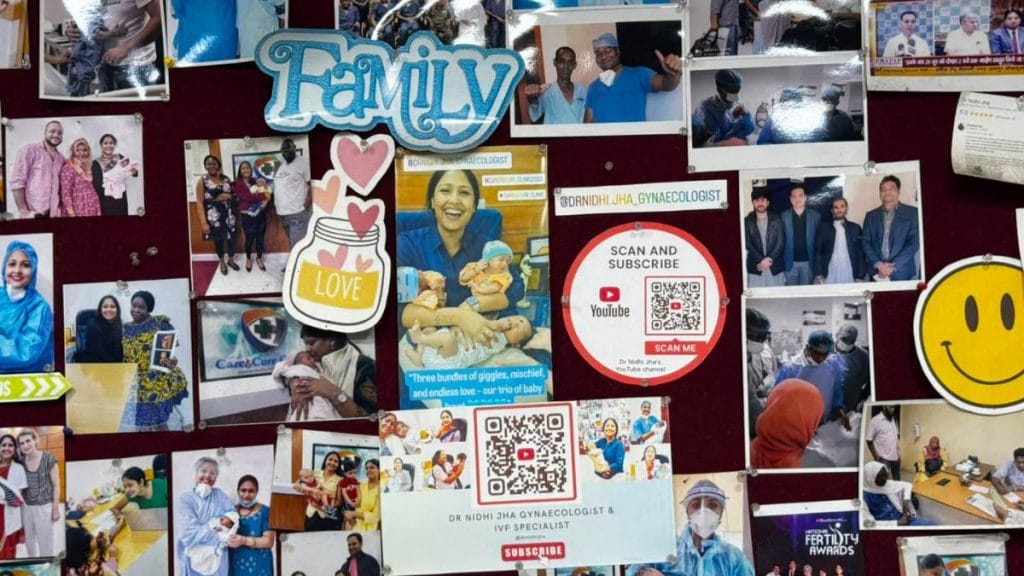
Yet the clinic’s walls tell a different story.
Photographs of babies and smiling mothers posing with Dr Jha conceived through IVF line the reception area. On social media, Dr Jha describes herself as a “fertility expert”, regularly posts videos explaining IVF procedures and tags Care and Cure in those posts.
Asked why the clinic’s application had been rejected, she attributed it to paperwork.
“I had applied for Level ART registration but I did not fill the form properly. And the printed form was to be registered at the registry office. So I dropped it,” said Jha. “I thought I am going to expand the clinic and come up with Level 2 so I should directly go for the same later.”
Her clinic was not an isolated case.
The ART registry, maintained by the Department of Health Research and the National Informatics Centre, publicly lists clinics whose applications have been approved, rejected or remain under process. A cross-check by ThePrint found multiple clinics marked as “Rejected” continuing to advertise and offer fertility services.
Some attributed it to administrative delays. Others claimed ignorance.
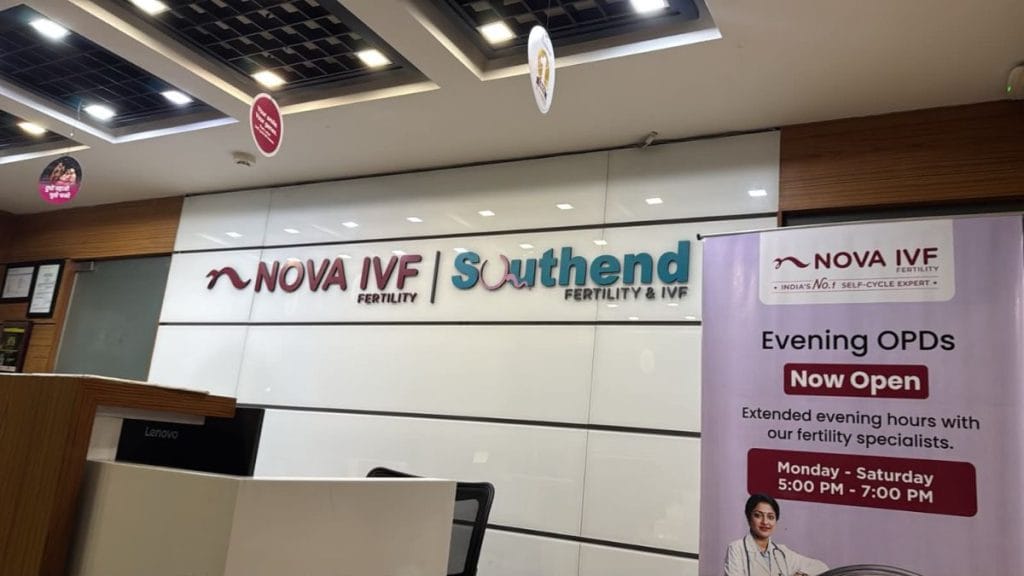
At Nova IVF Fertility in Vasant Vihar, officials said the apparent discrepancy stemmed from a corporate restructuring.
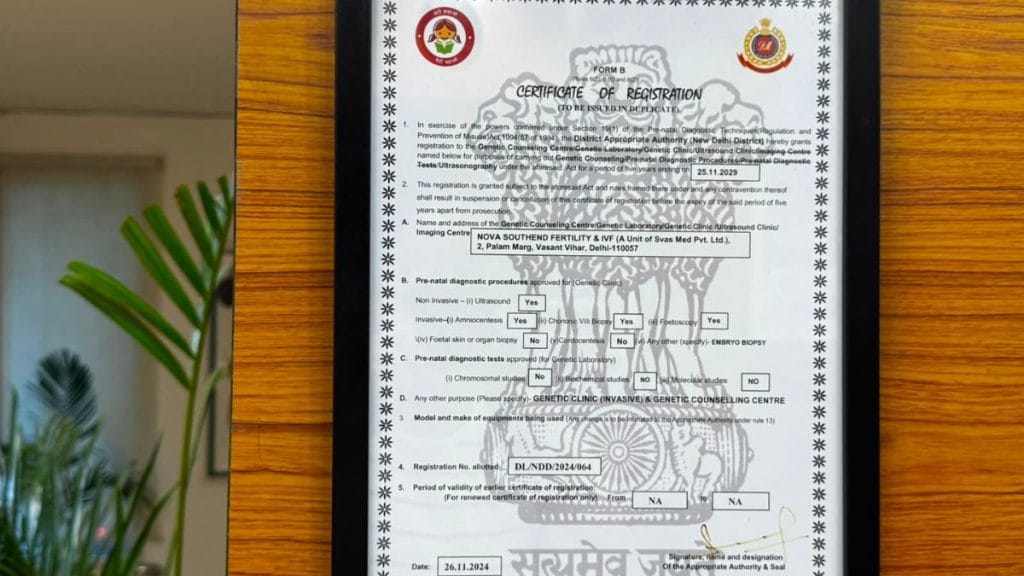
According to the clinic, it had initially applied under the name “Nova Fertility Clinic”, which was rejected because the centre was then operating jointly with Southend Fertility. A fresh application under the Southend name was approved. Following a merger, the clinic reverted to the Nova branding and plans to apply again.
“We cannot keep patients waiting, especially those already undergoing treatment, until the certification process is completed,” a clinic representative said.
Nova IVF has a government approved certificate, after merging with Southend now.
ThePrint also contacted 10 clinics on the phone listed as rejected on the registry.
At The Fertilife in Gurugram’s DLF Phase IV, a staff member confirmed that IVF services were available. Asked how the clinic was operating despite its rejected status, the response changed repeatedly.
Initially, the receiver said only preliminary consultations were conducted there and that IVF procedures took place elsewhere. When asked where those procedures were performed, no answer was provided.
The staff member later acknowledged that even the clinic’s Level 1 registration had not been approved.
“Our Level 1 registration is under process. We have not received any official communication yet,” the caller said, adding that approval was expected soon.
Prime IVF Centre in Gurugram offered a different explanation.
“We have been running the clinic for years. We don’t know about the registry status. We will check and get back to you,” a staff member said.
Not every clinic on the rejected list continues to operate. Dynamic Fertility & IVF Centre and Milann – The Fertility Centre, both in Gurugram, have shut shop.
The business of hope
The industry’s rapid expansion is visible long before one steps inside a fertility clinic.
Across Delhi-NCR, IVF advertisements have spilled onto auto-rickshaws, roadside walls, flyovers and billboards, promising “affordable IVF packages”, “guaranteed success” and “parenthood within reach”. In several neighbourhoods, these advertisements now compete for space with the ubiquitous Baba Bengali wall paintings.
Inside the clinics, the sales pitch becomes more personal.
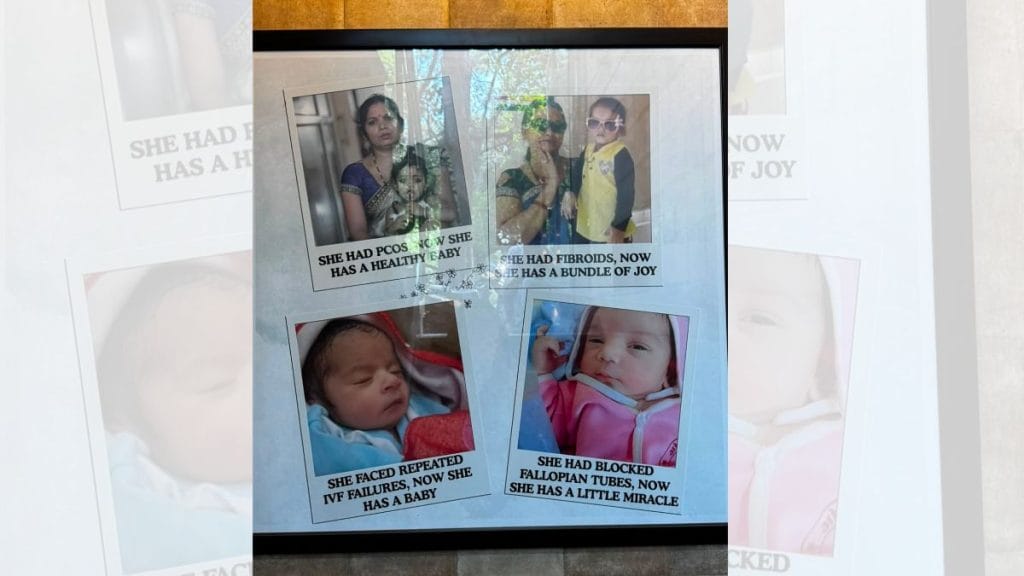
Glass-panelled reception areas are lined with photographs of smiling parents cradling newborns. Testimonials cover the walls: She had PCOS, now she has a healthy baby. She had fibroids, now she has a bundle of joy. Three failed IVF cycles, now she’s a mother.
The message is unmistakable: whatever the obstacle, IVF has an answer.
Conspicuously absent from that narrative, however, are men. Although infertility affects both partners, nearly every advertisement, testimonial and counselling session framed the woman as both the problem and the solution.
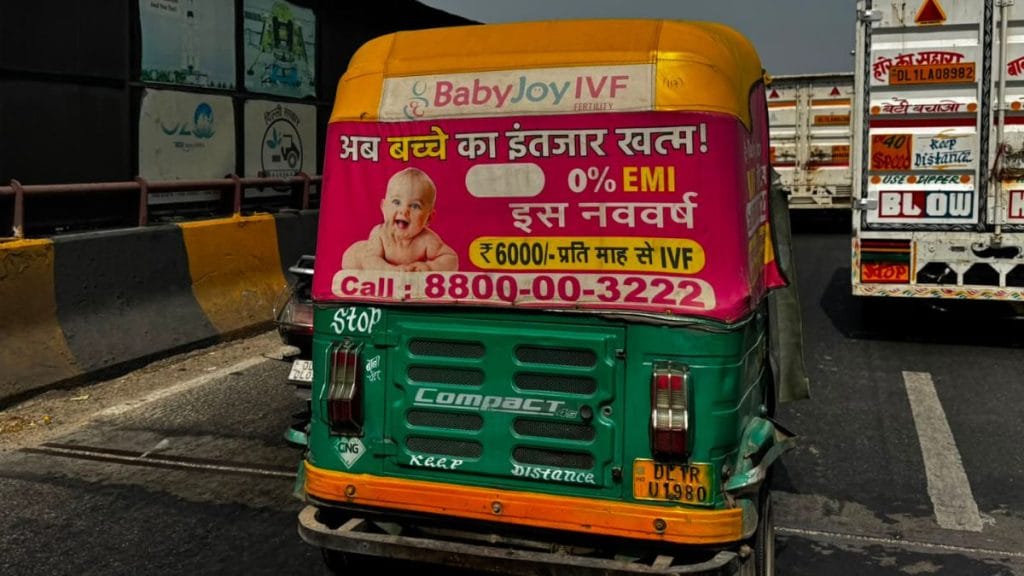
The demand has turned fertility treatment into one of India’s fastest-growing healthcare businesses. Clinics increasingly advertise zero-interest EMI schemes and easy financing, lowering the barrier to procedures that can cost several lakh rupees. What was once concentrated in metropolitan cities has rapidly expanded into tier-two and tier-three towns, where fertility centres now market themselves as offering metropolitan expertise closer to home. Several doctors, too, are not IVF specialists but gynaecologists or urologists who later transitioned to IVF.
Lawyers say that as competition intensifies, many clinics have begun functioning less like specialised medical facilities and more like high-volume businesses, where the pressure to promise success can sometimes eclipse questions of transparency.
“You see IVF clinics everywhere. Every 200 metres, you will find one IVF centre in South Extension,” Supreme Court advocate Priya said. “But how many are registered? Do they have proper labs to store embryos? Are embryos being properly marked and inspected? These are basic checks that are often missing.”
The disquiet is visible online as well. Reddit is flooded with anonymous accounts of people recounting their harrowing IVF experiences.
“All fertility clinics are operating like assembly lines where they have rate cards to the extent of first try, second try and third try with upfront payment,” one comment read. “Even if a couple wants to conceive through a donor sperm they still try to push for IVF as the profits are higher.”
‘Whose child was I carrying?’
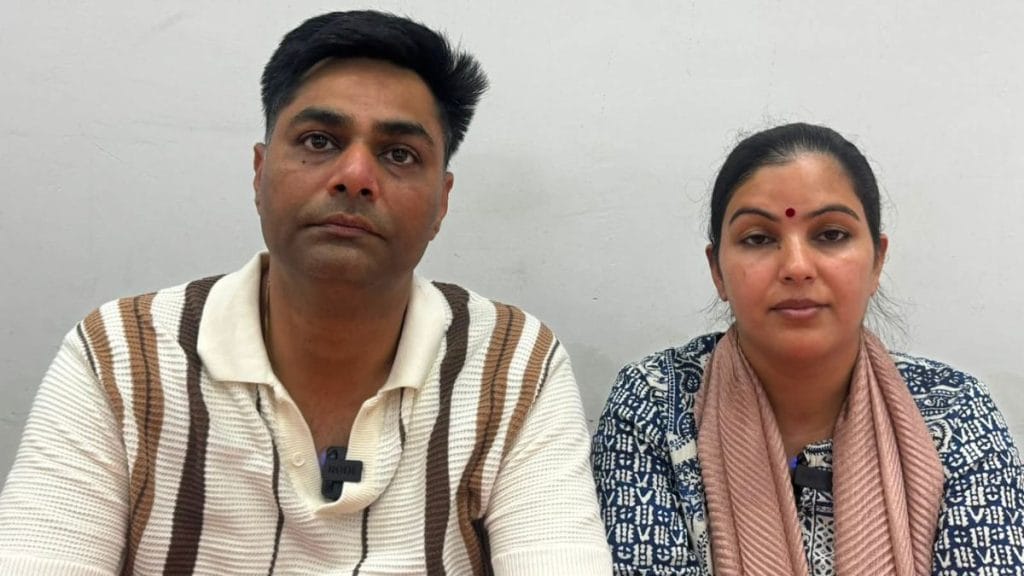
When Meenu gave birth to twins in January this year, she believed years of infertility treatment had finally ended in joy.
The first doubts came not from doctors, but from family within just three days of the twins’ birth.
“My sister said one of the babies’ eyes looked like those of a Northeastern child,” recalled Rahul Rathore, 41, the father. “She compared the baby’s photograph with pictures of our elder daughter as a child, and the doubts only grew.”
Rahul and Meenu already have two daughters, aged 14 and 4, both conceived naturally. The twins had been conceived through IVF at SCI IVF Hospital in Greater Kailash last year in April.
Troubled by their family’s observations, Rahul contacted the clinic.
“They kept saying it wasn’t possible and repeatedly told us not to go for a DNA test,” he claimed.
The couple got one done anyway.
The results showed that neither Rahul nor Meenu was biologically related to the twins.
Since then, the couple have been searching for their own biological children as well as the parents of the twins — now six-months-old — they were handed after birth. Their social media accounts have become a running chronicle of that search, documenting visits to police stations, courts and government offices as they pursue legal action against the clinic.
The emotional toll, Meenu says, has outlasted the physical ordeal of IVF.
The hormone injections she took for months left lasting pain in her stomach and thighs. But the deeper wound, she says, is knowing she carried someone else’s children for nine months.
“Whenever I think about those nine months, the hopes we had, the room we were preparing for our babies, it breaks my heart,” Meenu said, breaking down. “Now I have only one question: Whose child was I carrying?”
The investigation widens
As the couple searched for answers, their battle moved from the clinic to the courts.
Rahul and Meenu approached the police on 17 January, days after receiving the DNA test results. When no FIR was registered, they moved the Saket court.
On 23 May, Metropolitan Magistrate Devanshi Janmeja directed Delhi Police to register an FIR against the IVF clinic and its doctor, observing that the allegations went far beyond medical negligence.
In her order, the magistrate noted that the facts “hint at commission of grave and heinous cognisable offences,” including possible forgery and violations of statutory IVF guidelines. The court further observed that the investigation would also have to examine whether the case pointed to a larger conspiracy involving child trafficking or kidnapping, since the whereabouts of the couple’s biological children remained unknown.
Earlier this month, Delhi Police busted an alleged child trafficking racket operating across north India and arrested 12 people. Among those arrested was the owner of an IVF hospital in Rohini.
The clinic challenged the magistrate’s order before the sessions court, delaying the investigation for weeks.
On 5 June, Additional Sessions Judge Vishal Singh dismissed the clinic’s revision petition, clearing the way for the investigation to proceed.
Also Read: Lal Dora villages are a parallel city in Delhi. No one wants to fix this dirty secret
Small towns, big business
Five years ago, a patient walked into former Haryana Chief Medical Officer and now activist Ramesh Punia’s IVF clinic in Hisar. Doctors had told the man his sperm count was low. He underwent three rounds of IVF. None worked. The patient went back disappointed.
Looking back, Punia says the industry he encountered then bears little resemblance to the one he sees today.
“Back then, the industry was new and such malpractice like swapping wouldn’t take place. We wouldn’t use semen from any other donor,” he said. “But now, the picture has changed.”
The transformation is visible across Haryana. Fertility clinics have proliferated in cities such as Hisar, Panipat and Karnal, attracting not just urban residents but couples from surrounding villages, all drawn by the promise of parenthood.
In these IVF centres, Punia says, the answer is never a ‘no’ — even for a male child.
“The clinics are assuring 100 per cent male child. And the parents don’t know whose semen has been used to get it — it is not shared,” he said. “And the families don’t inquire because they are happy to have a boy.”
The Assisted Reproductive Technology (ART) Act prohibits sex selection and prescribes stringent punishment for practices such as the sale of embryos or gametes and other unlawful activities involving assisted reproduction.
Yet Punia alleged that some clinics continue to exploit Haryana’s long-standing preference for male children.
Advocate Priya says the clinics don’t want to lose money, so they often drive questionable practices. In several cases, she said, even when the egg or sperm quality is poor, families are not informed.
“So even if they lose track of one of the embryos. They just need to plant another embryo and make money out of it,” she said.
Priya also recalled a case in which a couple discovered their four-year-old child was not biologically theirs only after the child developed a rare cancer that required genetic testing. Despite repeatedly approaching the clinic, she said, they were unable to trace the biological parents before the child died.
Under the ART law, fertility clinics are required to counsel couples about the procedure, explain its risks, costs and chances of success, and ensure patients make an informed decision before treatment begins.
Several couples, however, said that counselling often fell short of those requirements.
At a fertility centre in Saket, a woman from Faridabad said she had no idea she would need hormone injections in her abdomen at the same time every day for weeks before her eggs could be retrieved. Now they have to find a hospital nearby that could administer the injections at the same time every day.
“The pain was unbearable. Nobody prepared me for it,” she said. “During counselling, they only painted a rosy picture that I would soon have a baby in my lap.”
One case, many voices
Like many IVF patients battling stigma and shame, Balvinder Kaur kept her treatment a secret. It took another family’s story to convince her to tell her own.
Like Rahul and Meenu, Kaur had told only a handful of relatives that she had undergone IVF after years of trying for a second child. She already has an 11-year-old.
First, they only posted negative reviews against the clinic.
“We travelled from overseas with the hope of having our own biological child and we clearly want to state that we never consented to, nor requested, any donor egg, donor sperm or donor embryo at any stage of the treatment,” the review read.
It was only after watching Rahul and Meenu speak publicly about their alleged embryo mix-up that Kaur decided it was enough.
“After hearing the testimony of Rahul and Meenu, we feel emboldened,” she said. “We are going to file a police complaint against the clinic and fight the case till the end.”
She claims the clinic later offered the couple Rs 25 lakh. Three embryos that belong to them, she said, are still with the clinic.
“We said no, we want our embryos back,” she said. “We want accountability.”
(Edited by Stela Dey)