







New Delhi: For Subnesh Singh Tomar, the goal is to rise within the system he already knows inside out.
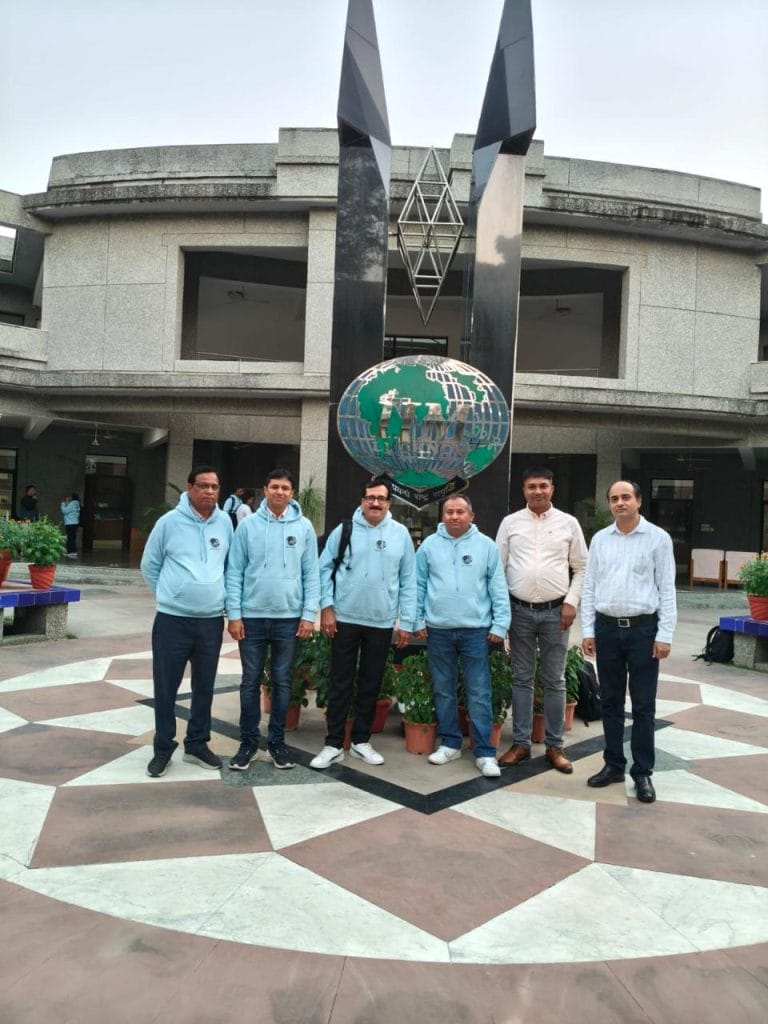
A textile engineer with 27 years of experience across companies like Trident, Welspun, and Reliance, Tomar is currently working as vice president and spinning plant head at Himatsingka Group in Hassan, Karnataka. But after decades in operations, he said he hit a ceiling.
“I realised that only handling manufacturing and operations is not sufficient,” he said. “If I want to move to the next level, CEO or COO, you need a complete understanding of business.”
That realisation led him to the Executive General Management Programme (EGMP) at IIM Lucknow, a one-year course he is currently pursuing for around Rs 4.5 lakh plus taxes. Designed for working professionals, it combines weekly online classes with two five-day campus immersions.
The result, Tomar said, was a shift in perspective. After years of focusing on production and efficiency, the course has pushed him to think in terms of strategy–why investments are made, how businesses position themselves, and where they are headed.
Exposure to finance and marketing, in particular, has reshaped his understanding. What once seemed like functional silos now appear interconnected. Balance sheets, cash flow, pricing and positioning are no longer abstract ideas but tools that influence everyday decision-making.
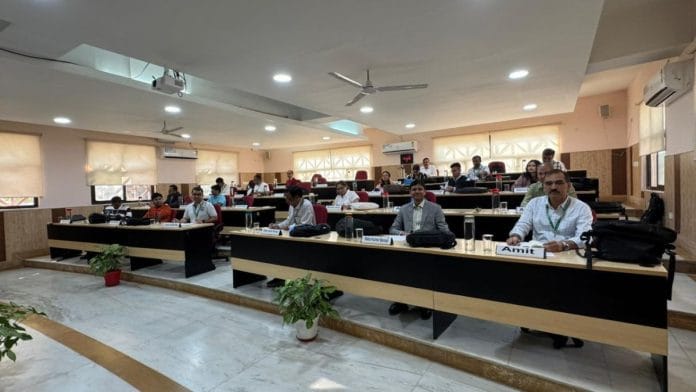
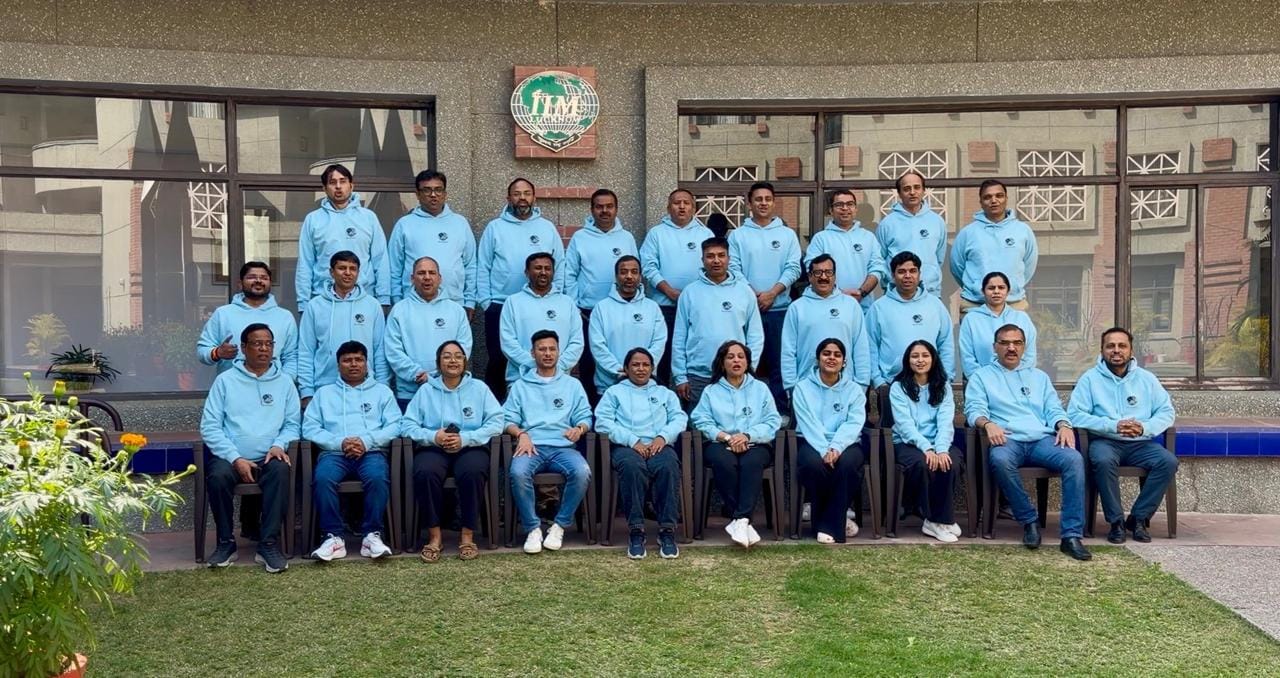
The management programme brings together professionals from across sectors—IT, supply chain management, NGOs, even public-sector engineering —with experience ranging from a few years to several decades. “That is the beauty,” Tomar said. “You learn not just from faculty, but from each other.”
Tomar’s experience reflects a broader shift in India’s professional landscape, where executive education programmes have emerged as a booming segment of higher education. Offered by IIMs and other institutions, these courses compress elements of management education and skill development into weeks or months–often priced at a premium.
As they scale, so do questions about their purpose. For participants, they promise upskilling and career acceleration—and access to prestigious campuses. For institutions, they are fast-growing, high-fee offerings.
That aspiration is increasingly visible online. LinkedIn feeds are dotted with posts announcing course completions, campus visits, and milestone moments—often framed as the fulfillment of a long-held ambition to study at institutions like the IIMs, even if only briefly. These programmes offer learning and access to a brand long associated with prestige.
In a job market where tens of thousands of employees can be let go in minutes and AI-driven automation is reshaping roles every year, and loyalty is no longer a guarantee of job security, mid-career professionals are responding by committing to continuous learning—turning job market volatility into a reason to stand out rather than fall behind.
At IIM Lucknow, the demand for such programmes is no longer experimental but steady, with the institute running upwards of 80 courses each year. Professor Kshitiz Awasthi, one of the programme directors, described the EGMP as an attempt to bridge a familiar gap—technical expertise without a wider management perspective, offering exposure across marketing, finance, HR, and strategy.
He pointed to a broader shift in demand toward shorter, trend-driven courses, especially in areas of Artificial Intelligence and digital transformation. “There is definitely a surge in upskilling programmes that create a kind of urgency or FOMO,” Awasthi said. He predicts that in two or three years, these courses will be replaced with newer ones, because those who need these skills will have acquired them from one source or another.
At the same time, general management programmes continue to see steady enrolment—particularly from professionals like Tomar, who are not looking to pivot industries, but to better understand and lead within them.
That shift is already visible in how Tomar works. His approach to leadership, he said, has moved away from a top-down style to a more collaborative one, especially when managing younger teams.
At 50, the programme is both an investment and a recalibration for Tomar. “I am investing in myself at this stage, so definitely I have to encash it,” he said. “Either in my current company or elsewhere. Through this course, I am branding myself.”
More than anything, he frames it as a necessity–staying updated, he said, is now tied as much to relevance as it is to respect.
A familiar idea, newly packaged
Broadly, these programmes fall into three categories. At one end are one-year executive MBAs such as the Post Graduate Programme in Management for Executives (PGPX) or EPGP, positioned as alternatives to full-time MBAs for experienced professionals. Then there are longer executive diplomas and general management programmes, typically spanning several months to a year. The shortest courses are management development programmes (MDPs), ranging from a few days to two months, designed as targeted interventions in specific skills or domains.
According to educationist Maheshwer Peri, founder and chairman of Careers360, a higher education discovery and counselling platform, the rise of executive and mid-career programmes is less a new trend than a repackaging of something that has always existed. “Reskilling and relearning have always been the case,” he said. It’s just that earlier these courses were built into jobs, and now they are being externalised and sold as up-skilling initiatives.
Amit Karna, professor of strategy at IIM Ahmedabad, also pointed out that the emphasis on executive education predates the flagship MBA itself. “At IIM Ahmedabad, we started in 1961, and for the first three years we only did executive education,” he said. The MBA programme was introduced later, in 1964, once the institute had developed a clearer understanding of industry’s needs.
What has changed is the structure and the urgency. As workplaces evolve rapidly, keeping up with new technologies and systems has become essential. Upskilling is necessary to remain relevant.
“Technology has made delivery easier and more people can participate. That is why it is being noticed more now,” said Karna. Periodic training has long existed in fields such as civil services and the military, but is now becoming more widespread across professions. What was once largely limited to senior executives and government employees is now spreading across the workforce. “Even mid and junior management are enrolling. That is the real shift.”
As industries evolve, so does the demand for continuous learning. But Karna is clear about the limits. Full-time MBAs remain more transformational–better suited for switching sectors or making large career jumps. Executive education, by contrast, works within an existing trajectory, helping professionals reposition rather than reinvent themselves.
Switching lanes
Samridhi Singh was almost moved by a poetic idea when she decided to take a break from her journalism career at the age of 23. She had been working as a trainee subeditor at the Indian Express for nine months. She wanted to start an artisanal sarees label rooted in the heirlooms of Jammu and Kashmir. She had the creative vision but no formal business training.
Then an advertisement for an executive programme at IIM Ahmedabad popped up on her Instagram feed.
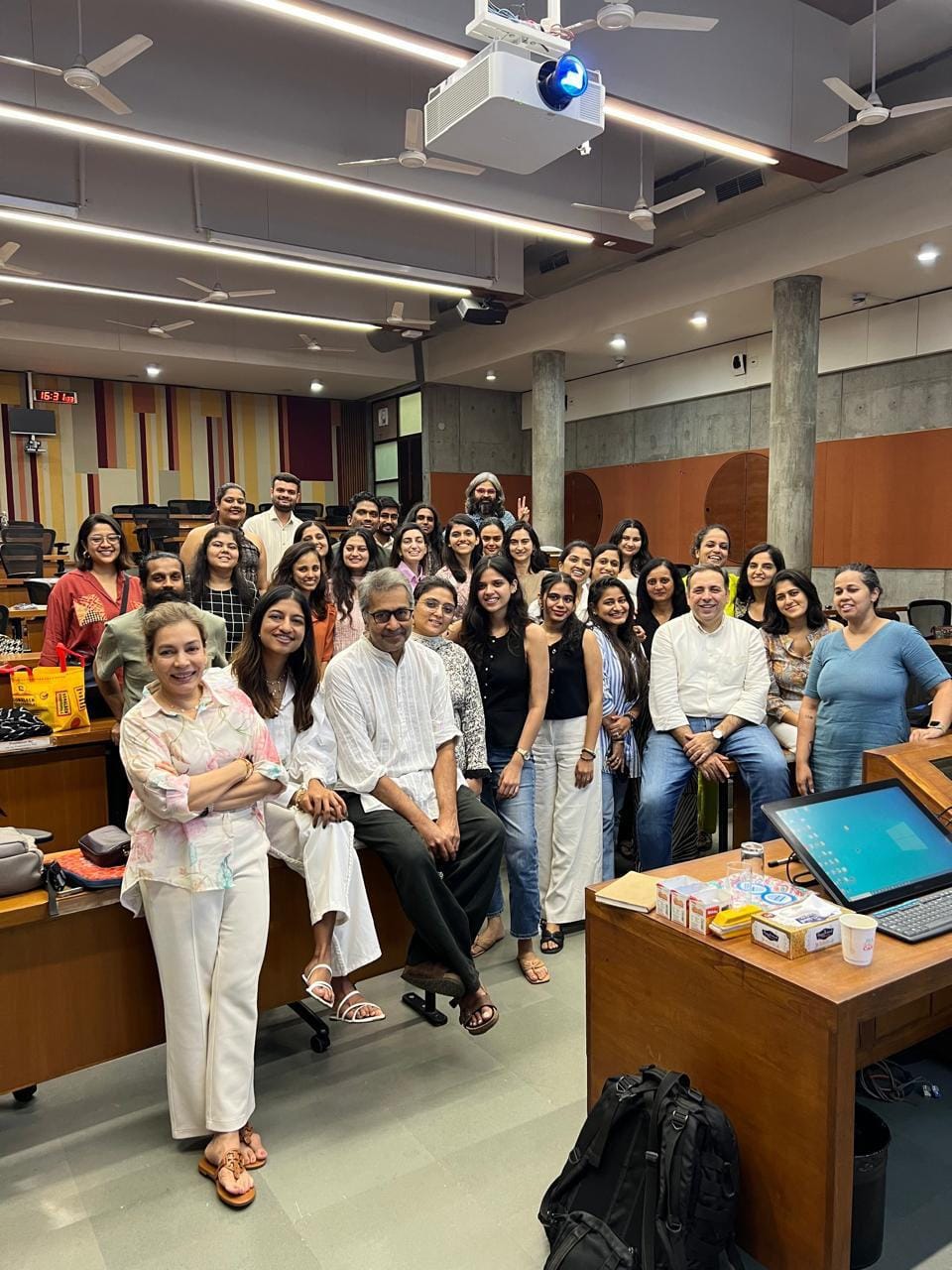
Months later, seated in a cohort of around 30 professionals—architects, fashion designers, graphic designers and entrepreneurs—Singh found herself on campus, she said she “could not have imagined accessing otherwise.” The Creative and Cultural Businesses Programme, focused on creative entrepreneurship, became a turning point. “IIM was the launch of the idea,” she said.
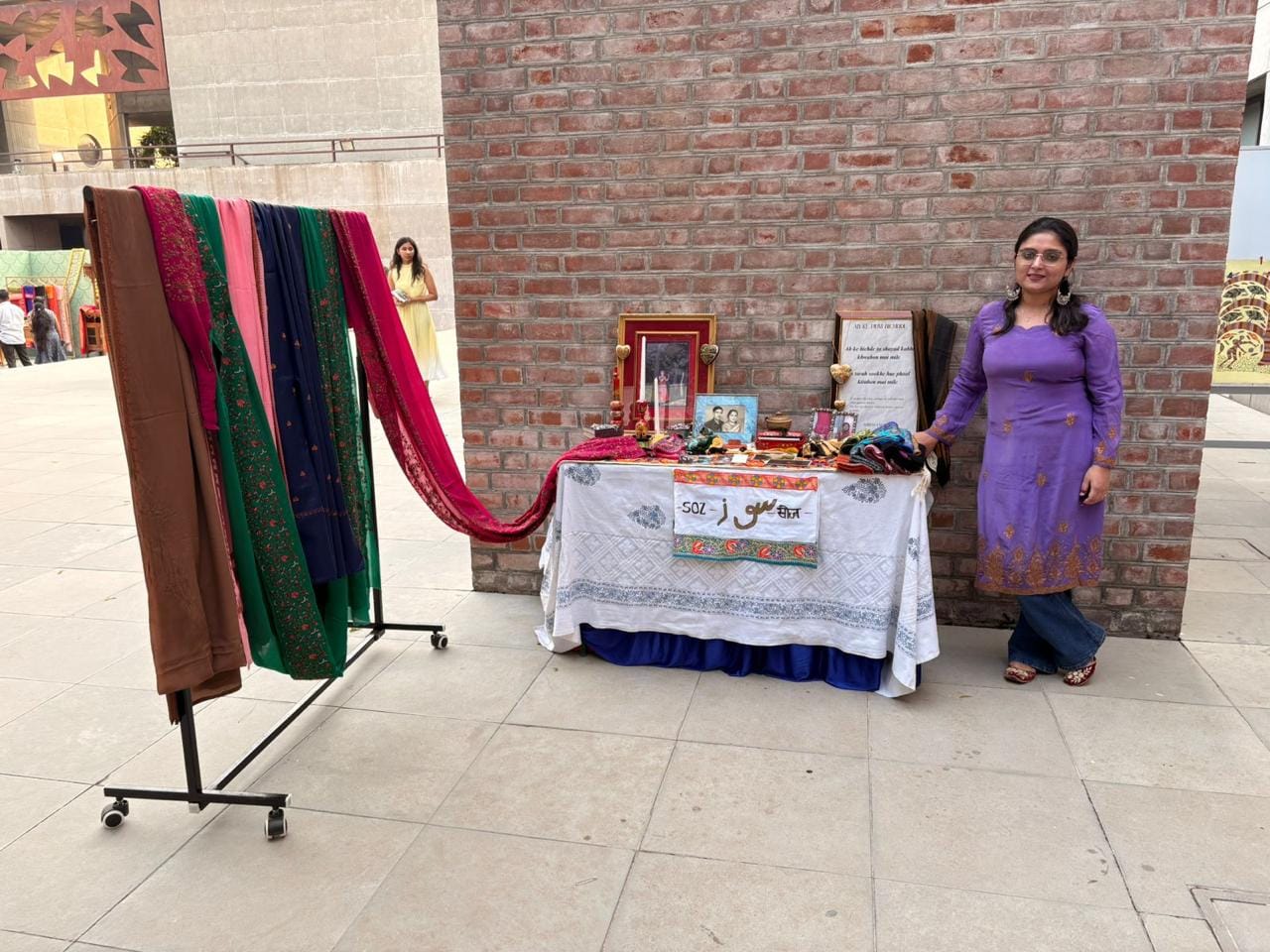
Her brand, Soz, is still in the works. But the course, she added, gave her direction—and a framework to think about turning a creative instinct into a business. The programme Singh enrolled in is a 15-day executive course spread over six months, with three on-campus modules and assignments in between. Admission involves a nomination form, statement of purpose, and an interview. The fee: Rs 5.6 lakh.
The group of participants is small and deliberately diverse, with many already running or scaling ventures. As a former journalist, the experience both exciting and disorienting for Singh. The discomfort became part of the learning process, she said.
She was surrounded by far more experienced peers. Case discussions, peer exchanges and sessions with faculty and industry experts pushed Singh to engage with the “business side” of creative work–something she had not encountered before.
The IIM programme is structured more like a guided application process. There are no formal grades; instead, participants are expected to develop and refine their ideas between campus immersions, culminating in a final showcase.
Unlike Tomar, whose objective is more incremental—to move up within the same field with a broader business lens—Singh entered her course with a nascent idea and a desire to build something new.
The appeal of the IIM tag, she admitted, was hard to ignore. Although a “once in a lifetime experience,” it was not enough on its own. “It’s a very expensive course. The name cannot be the only reason. You have to know what you’re going to get out of it.”
For Singh, the programme did not immediately translate into a finished product. But it helped shape an idea.
How these programmes actually work
Unlike traditional degrees, these executive programmes are built for speed and flexibility. “They are more like express formats,” Karna said—ranging from a few days to several months, often in blended formats, where participants come to campus for short immersive modules while completing the rest online. The appeal lies in their ability to deliver targeted learning in a compressed timeline, allowing professionals to “invest in themselves” without disrupting their careers.
The classroom itself reflects a wide mix of experience and backgrounds. While IIMs traditionally catered to senior executives, participants now range from mid-level managers to early-career professionals looking to broaden their skill sets. Many are transitioning into general management or leadership roles.
In many cases, the investment is not even individual. A significant number of participants are sponsored by their employers, with companies increasingly using executive education as part of internal training and leadership development. Others enrol independently, treating it as a personal investment in career growth.
Beyond IIMs, a crowded market
It’s not just the IIMs tapping into the demand for mid-career upskilling. Private institutions like Mumbai’s Narsee Monjee Institute of Management Studies (NMIMS), SP Jain Institute of Management and Research (SPJIMR), and Indian School of Business (ISB) in Hyderabad and Mohali have also built a parallel ecosystem of executive education programmes and executive MBAs—often more flexible, and in some cases, more accessible.
Subhankar Chanda, a 33-year-old assistant general manager at Allianz Partners, pursued a 15-month executive MBA from NMIMS in 2021 because of his circumstances. He had initially planned to do a regular MBA. But when the pandemic pushed programmes online, the value of a full-time, campus-based experience began to feel uncertain.
The executive programme allowed him to continue working while studying, at a significantly lower cost. While a full-time MBA from a top institute can cost upwards of Rs 30-35 lakh, executive programmes typically fall in the Rs 7-14 lakh range.
Instead of taking on a large loan, Chanda preferred to preserve capital for a future business. The trade-off was clear: flexibility and affordability over campus experience.
The programme, largely online, still offered structured peer engagement through live sessions and alumni platforms. That network, he said, was one of its biggest strengths.
“We had people across levels, from startup professionals to senior executives, even director-level people in multinational firms,” he said. “That kind of peer learning adds a lot.”
But one can’t be sure that they will graduate with a job in hand. NMIMS, for instance, did not offer campus placements—a key distinction from some IIM executive courses.
Even so, the brand value of the degree translated into tangible gains. Chanda said he saw a 20-25 per cent salary hike after completing the course, and after switching organisations later, a bigger jump of around 50 per cent. Among his peers, he added, some reported hikes of as much as 70-80 per cent.
However, the lack of a fully immersive campus experience remains a limitation. If given the choice, Chanda said he would still recommend a full-time MBA for the depth of exposure and networks it offers.
Executive programmes, then, occupy a middle ground: a pragmatic choice for those who cannot step away from work, or are constrained by cost and timing, but not always a substitute for the depth and networks of a traditional MBA.
Do they really transform careers?
According to Maheshwar Peri, an executive education is always helpful because it shows the recruiter that the candidate is serious.
“It shows that you are serious about your career, that you are upskilling yourself and willing to put in that effort to stay relevant,” he said. The signal it sends, to employers and peers alike, can be as important as the knowledge itself.
However, while such programmes can add weight to a resume and signal seriousness, they rarely replace experience or fundamentally change career trajectories.
“In lateral recruitment, people don’t look at what your qualifications are. They look at your work and your portfolio,” said Peri.
For those looking to switch industries or make a big jump, full-time MBA programmes remain better suited. Executive education, by contrast, tends to work incrementally—helping professionals sharpen skills, broaden perspectives, and position themselves better within their existing paths.
Returns seem to be uneven. Not every expensive course delivers results, though in niche fields, such as algorithmic trading or emerging technologies, not keeping up can leave professionals out of sync altogether.
As the market grows, concerns around “credential collection” have also emerged, with professionals stacking multiple certificates without necessarily building depth. But Peri said that employers are not easily misled. In the end, the certificate may open a door, but it is the work that determines how far it leads.
A major and growing revenue stream
Beyond pedagogy, executive education has become a significant financial pillar for institutions like the IIMs. “At IIM Ahmedabad, we run around 100 to 120 open programmes every year,” Karna said. “In addition, there are roughly 200 customised programmes designed for specific companies.”
Together, these programmes bring in an estimated 5,000 to 7,000 participants annually, with blended courses that combine in-person classroom sessions with online learning components, alone accounting for over 1,200 learners.
The customised segment, in particular, is expanding rapidly. “Companies are increasingly investing in training their employees,” he said. “They want programmes tailored to their specific needs.”
These may include leadership training, strategy modules, or long-term learning journeys combining classroom sessions, projects and on-the-job application. Learning and development teams within companies now play a central role in deciding whether to send employees to open programmes or commission customised ones.
This creates a steady and scalable revenue stream for institutions like IIMs, one that runs parallel to—and in some cases rivals—their flagship degree programmes. “Almost all the IIMs have been increasing their income from executive education,” Karna said. Fees for some courses can go up to Rs 9 lakh.
At IIM Ahmedabad, in 2019-2020, executive education programmes contributed Rs 10,257.71 lakh—around 39.97 per cent of total academic receipts. Over the next five years, their share increased significantly. By 2023-2024, according to the latest annual report, earnings from executive education had overtaken those from traditional programmes, accounting for nearly half, 49.20 per cent, of all academic receipts. This marks an increase of 9.23 per cent in just five years.
This is not an isolated trend. Short-term executive programmes have already become a major revenue stream for institutions. “The non-core programmes generate more revenue than the core programmes,” Peri said. “In the top five IIMs, only about 35 per cent of revenue is coming from MBA fees.”
Also read: Foreign universities in India are selling half-baked dreams. ‘Can’t even get you internships’
What gets taught and what comes next
As the executive education space expands, maintaining quality becomes critical. At IIM Ahmedabad, Karna said this is ensured through internal reviews and constant industry engagement. Course outlines are reviewed by faculty, feedback is continuously incorporated, and programmes are updated regularly. Faculty members also take up consulting jobs—it helps keep their teaching plans relevant.
“The faculty are constantly in touch with the market through consulting, alumni, industry leaders—that’s how we keep our ears to the ground,” Karna said.
This feedback loop shapes both the curriculum. As demand evolves, institutes are increasingly designing courses around emerging areas—particularly AI, digital transformation, entrepreneurship and new business models.
At the same time, differentiation is becoming more important. Indian institutions are increasingly entering the executive education space, and IIMs are experimenting with niche programmes tailored to specific audiences—from creative industries and design thinking to specialised courses for family businesses and next-generation leaders.
Ultimately, the challenge is one of relevance—both for institutions and for professionals enrolling in these programmes. As industries continue to evolve, so too will the demand for new kinds of skills. And for many mid-career professionals, these programmes are becoming a way to keep up.
(Edited by Ratan Priya)