





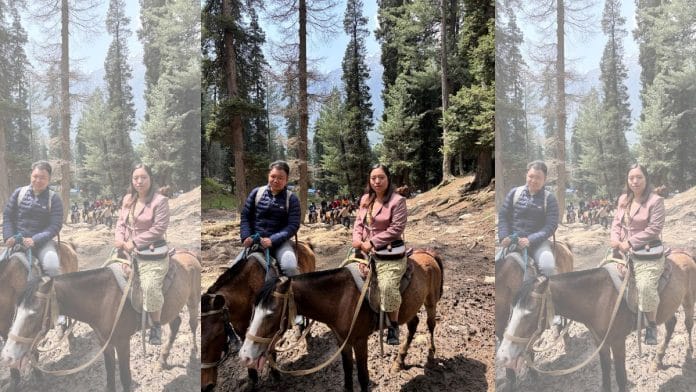

New Delhi: All Tage Adu is left with is a photograph of his brother, Tage Hailyang and his newly married wife Charo Kamhua Tage sitting on a pony in Kashmir, all dressed up in new clothes and surrounded by stately deodar trees. It was their honeymoon trip — a celebration of a new life and a final farewell to an Air Force posting in the Valley. It was the trip that was supposed to take them home to a new beginning in Assam. Instead, it changed everything.
“I have lived my life hoping that my younger brother is alive, and is not dead. It gives me so much pain to even remember the details…” Tage Adu said.
It’s been one year since the 22 April massacre in the Baisaran Valley. The dust has settled over the meadows of Pahalgam, but for the families of the 26 victims the trauma is as fresh as ever. They return to the attack every time the police or the government makes a statement, reels are pushed on social media, or when Operation Sindoor finds a mention in any political rally. For Tage’s family, he was one of the brightest and smartest young men in the family, had lived across India, and had dreams to achieve. But his death came too soon, they said.

On 22 April 2025, terrorists killed 25 Indians—24 tourists and a Kashmiri local—and 1 Nepalese tourist at the Baisaran meadows in Pahalgam before fleeing the tourist spot. Eyewitness accounts indicate victims were singled out on the basis of religion, shot at close range in front of their families.
At the time of the attack, Prime Minister Modi was in Saudi Arabia on an official visit and United States Vice-President J.D. Vance was visiting India. Lashkar-e-Taiba (LeT) offshoot The Resistance Front (TRF) claimed responsibility for the attack.
The Cabinet Committee of Security (CCS) chaired by PM Modi met the day after the attack and in a statement highlighted a potential link to Pakistan, saying “cross-border linkages of the terrorist attack were brought out” in a briefing it received.
Also Read: ‘Why go to Switzerland when we have our own’—Pahalgam victim’s words ring in Bengaluru family’s ears
The boy who brought change
Corporal Tage Hailyang was quiet, but he was the anchor of his family. The sixth of the 12 children born to farmers in Lower Tajang Village, Lower Subansiri, Arunachal Pradesh, he was a man of few words, but had understanding of almost everything, his brother says, recalling their childhood.
“He was the one the family knew would ‘bring change.’ He spent his childhood in boarding schools in Haryana, and completed his graduation from Arunachal. Then, in 2017 he joined the Air Force,” he said.
By 2022, Hailyang was posted in Kashmir. He had spent nearly a decade in service, and had managed to slowly improve his family’s financial situation. In December 2024, he got married.
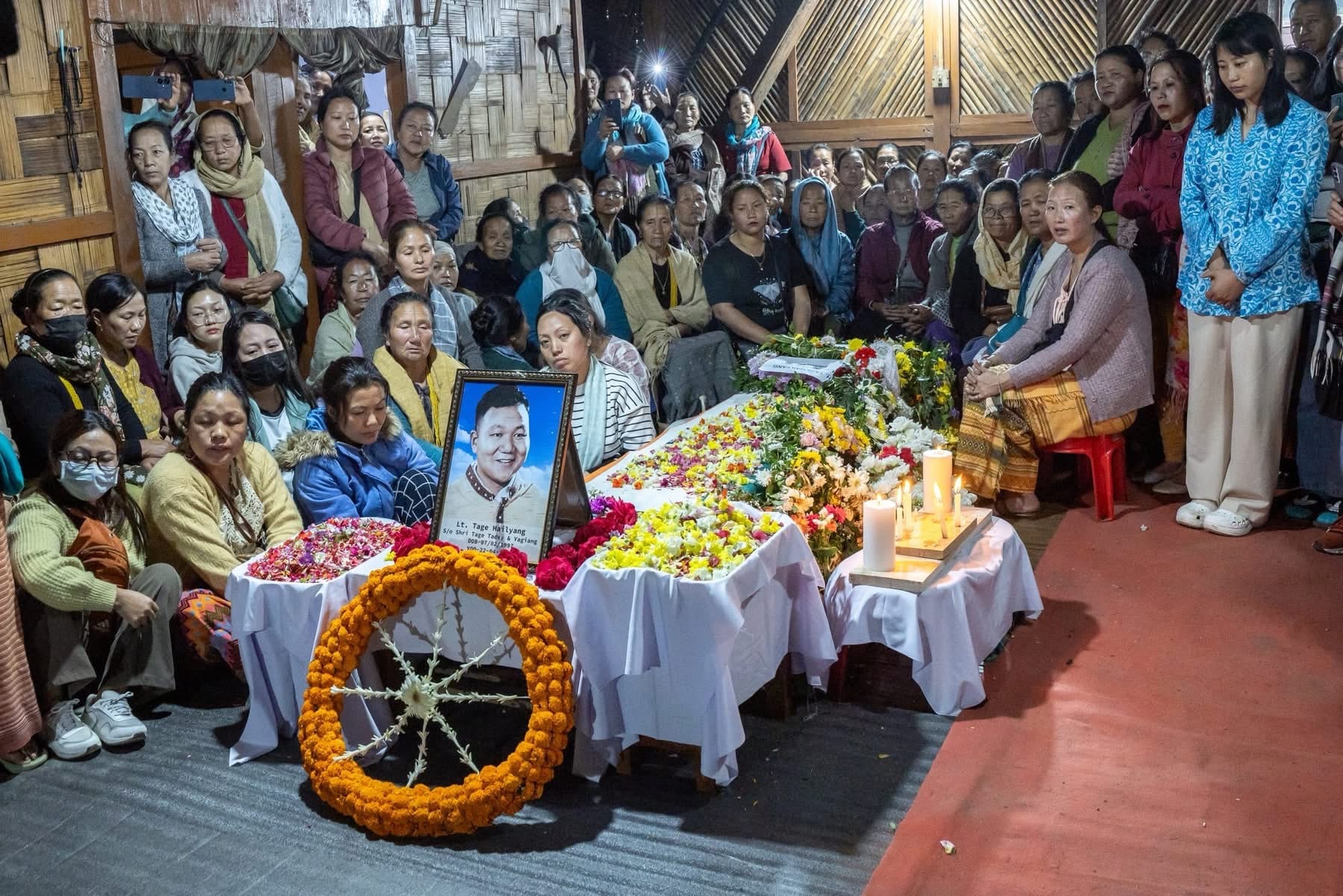
The 20 April 2025, was supposed to be his last day in Kashmir. He had been transferred to Dibrugarh, Assam.
“It was like a honeymoon. He wanted to show his wife the beauty of the Valley one last time before they shifted base. They bought new clothes and were super-excited. On April 22, seeing the weather was clear, they headed to Pahalgam,” he said.
Missed calls and messages
The tragedy began as a rumour on social media. Recalling the dreadful afternoon, Tage Adu says he read a post about an ‘accident’ in Pahalgam on Facebook. He felt uneasy.
“I knew my brother was there. I dialled his number. Then I dialled it again, and again. I made like 50 calls, just praying someone would answer. The phone kept ringing,” he said. Searching for answers, he switched on TV news. By then, the initial news reports claimed only one died.
Now, the family started desperately looking for hope. Adu’s brother, Mali was stationed nearby with the Indian Army in Jammu, but military protocol meant he couldn’t just leave to find his brother.
Even as the family kept their eyes glued to TV and social media updates, Adu’s phone was finally answered. This was around 6 pm.
“What happened? Who are you?” the person on the other side told Adu. “I asked them if my brother is alive.” They told me he was alive.
“But I knew this was a lie. By now news reports claimed many had died. I feel the caller did not want to break my heart, and lied to me,” he said.
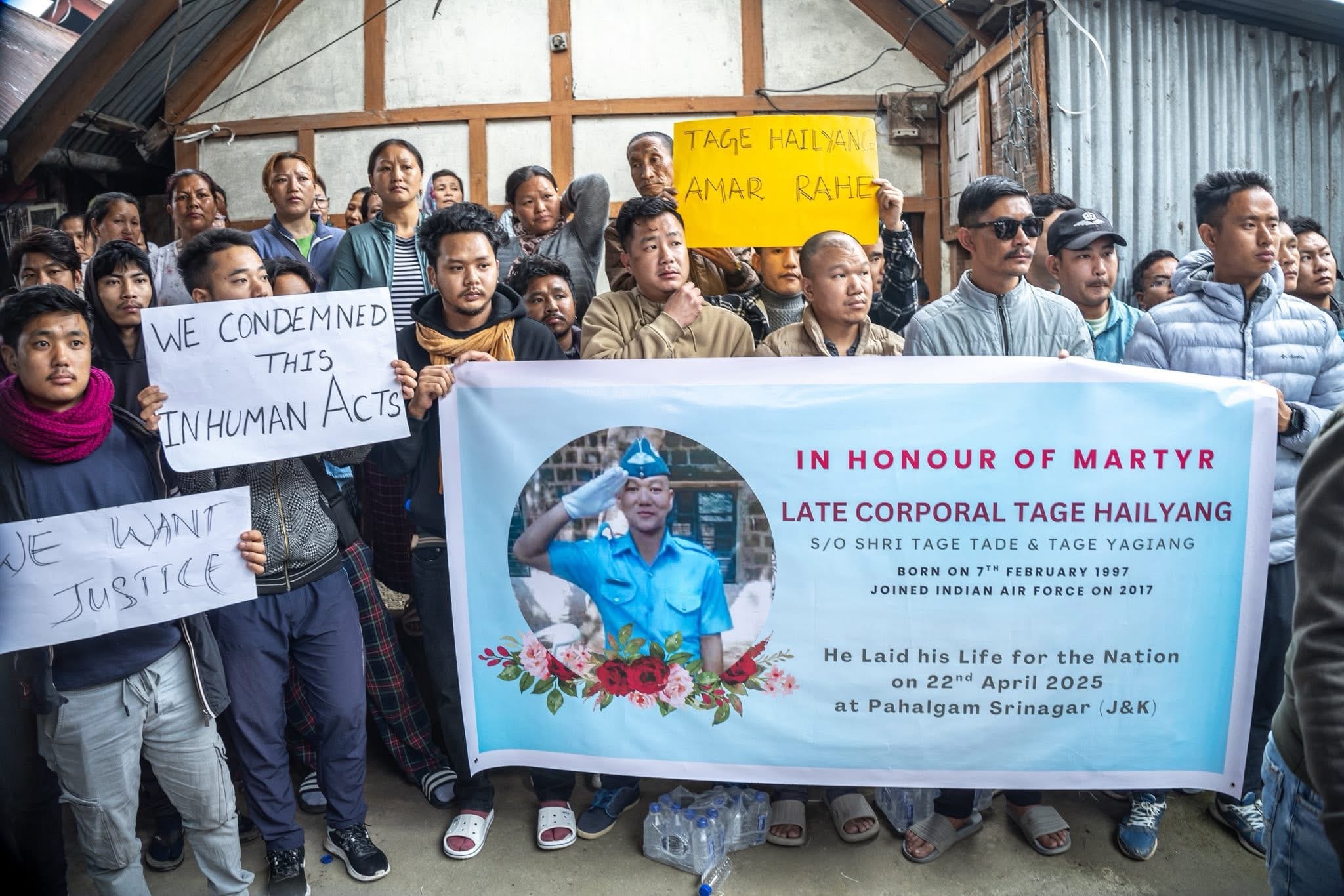
By around 8 pm, he finally saw his brother’s name on a Facebook post. “The truth was just unavoidable. Hailyang, my chota bhai (younger brother), is gone. I spent that night scanning social media, making calls. I kept looking at my phone, waiting for Hailyang to call me, and tell me he is alive…”
Even today, the family maintains a heavy, guarded silence. Hailyang’s wife rarely discusses the sequence of events with her family. The only time she did, was when the National Investigation Agency (NIA) was questioning her about what had happened. That is when Adu got to know that his brother could have run for safety, but he chose to stay and help others escape. “He was a soldier,” he said. Hailyang’s wife returned to her home after the attack.
(Edited by Nardeep Singh Dahiya)