


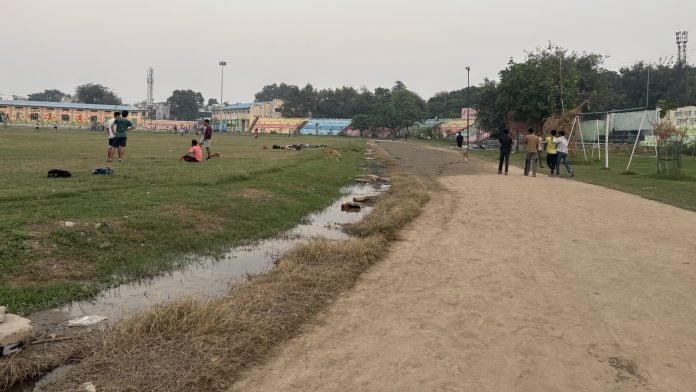
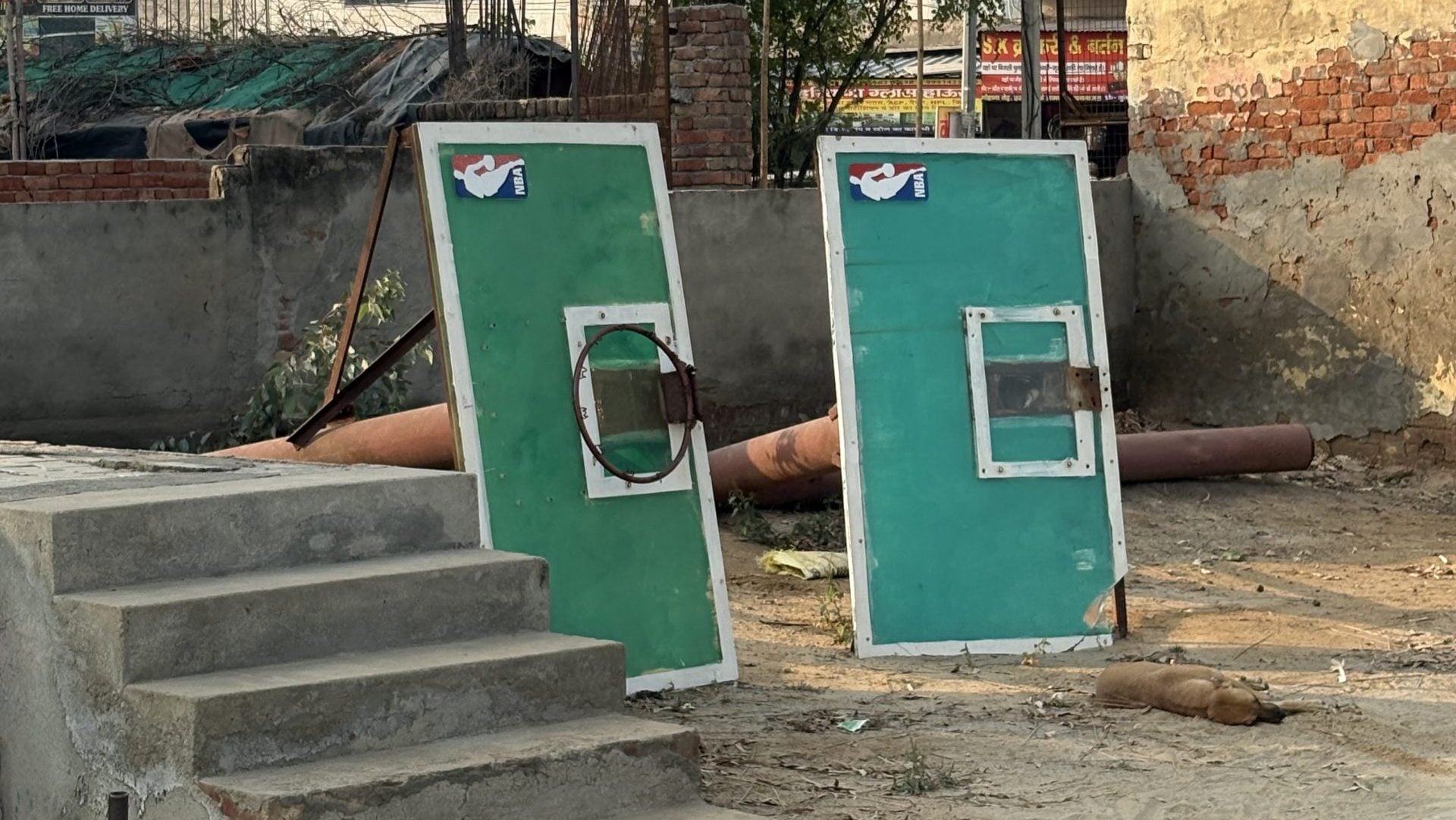
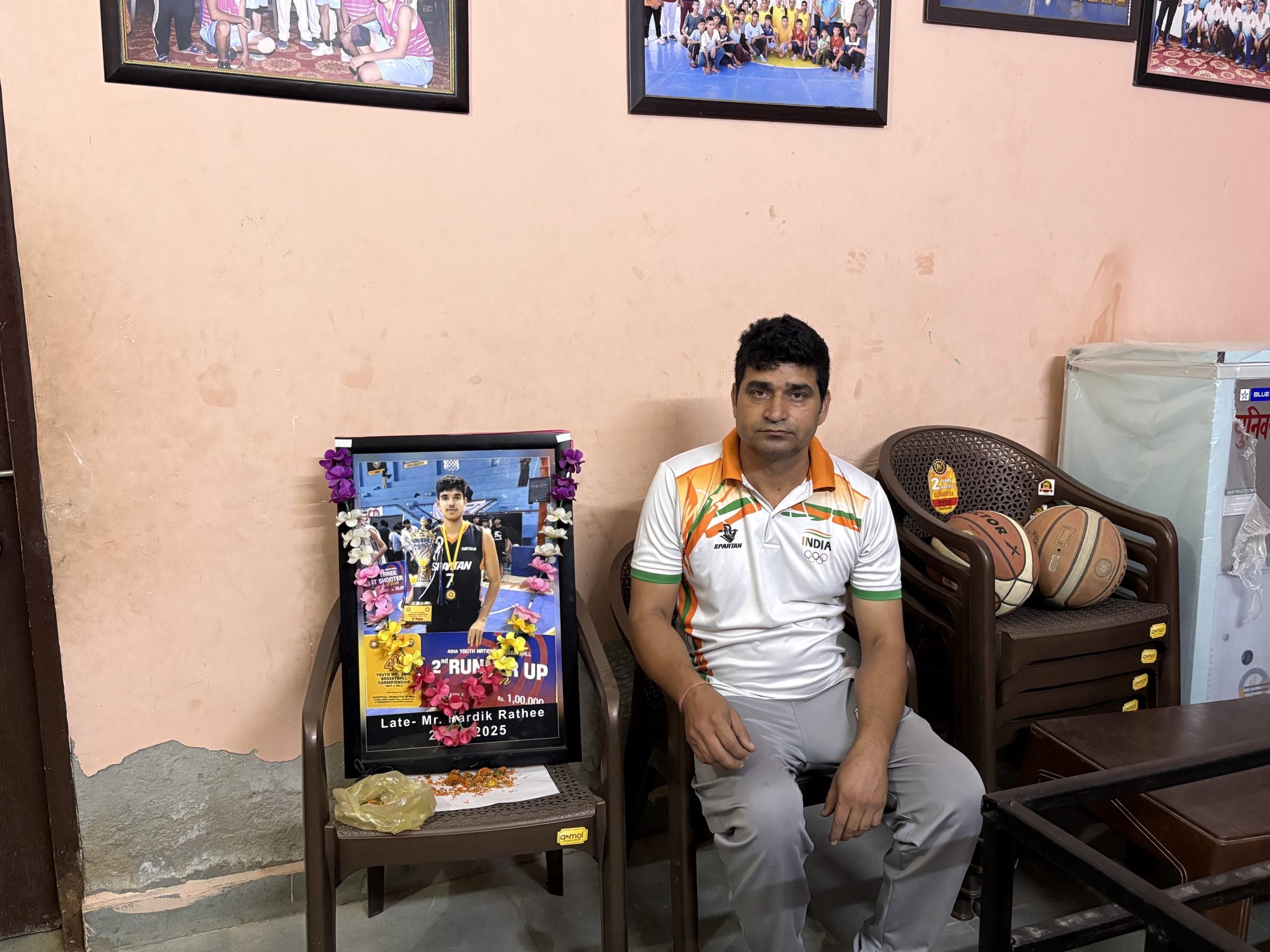
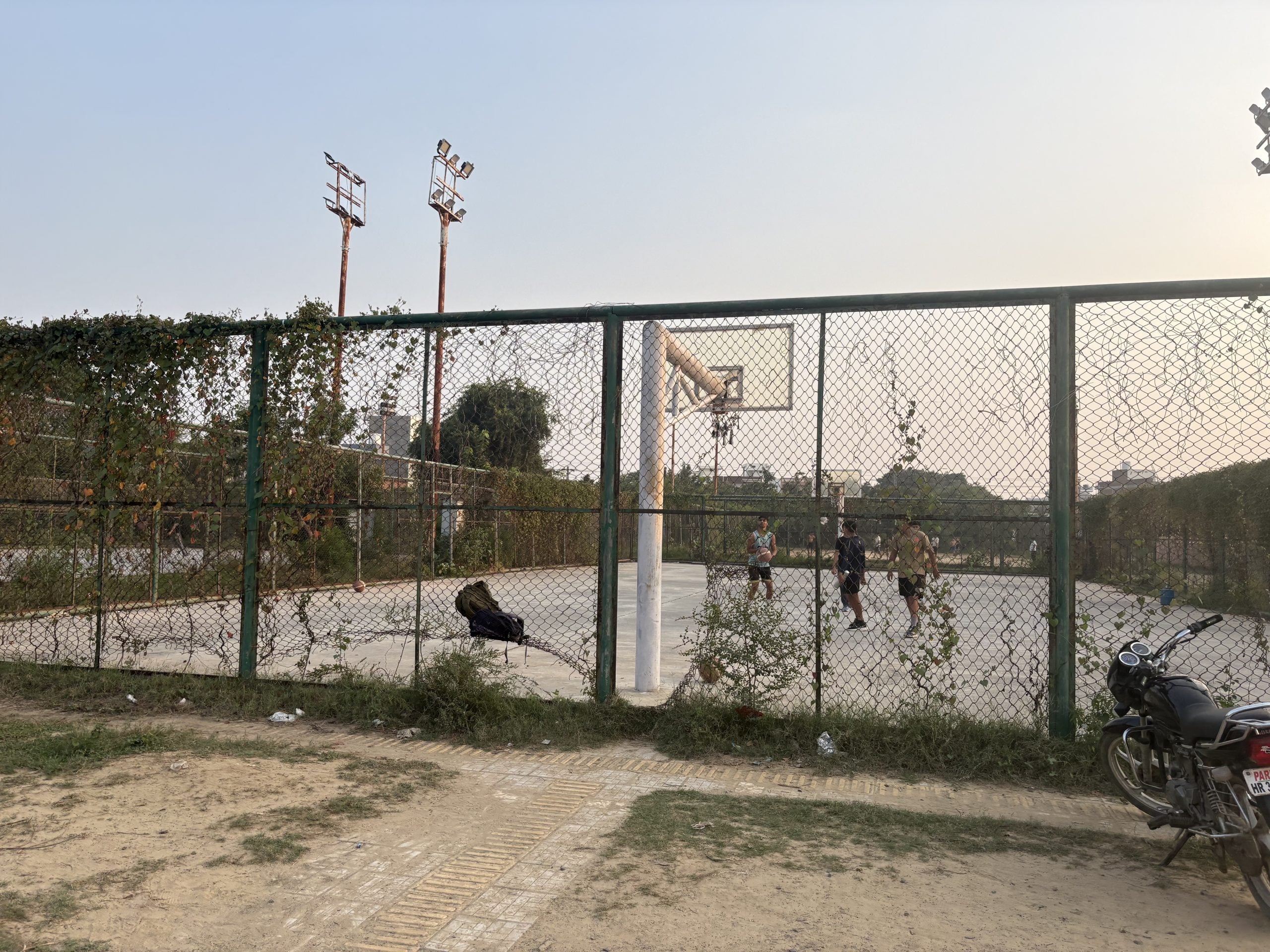
The rusted basketball pole that killed 15-year-old Hardik Rathi still lies in a corner of the gram panchayat stadium in Haryana’s Lakhan Majra. It is a painful reminder for his father, Sandeep Rathi, of the day his son went for basketball practice and never returned. Hardik had already competed in seven national championships. Even a fever had not kept him away from the court that day.
The pole had been rusting for years and had not been repaired despite repeated complaints. An FIR was registered on 7 December 2025, Rohtak’s District Sports Officer was suspended, and inquiries were ordered by the district administration and Haryana Human Rights Commission. However, no final findings fixing responsibility have been publicly established.
Haryana boasts of a sporting reputation like no other state in India. From Bhiwani, often called the ‘nursery of boxing,’ to the wrestling and kabaddi belts of Rohtak, Jhajjar and Sonipat, and the hockey hubs of Shahabad and Hisar, sport has become part of the identity of several villages and towns in the state. But that reputation stands shakily on top of creaking sports infrastructure. And it all begins with the pitiable state of Haryana’s stadiums in villages and towns.
From Asian Games gold medal winners high jumper Bhim Singh and boxer Hawa Singh in the early years to international wrestlers, boxers Vijender Singh, the Phogat sisters, Neeraj Chopra, Manu Bhaker and Sakshi Malik, the stories have been one of individual enterprise and grit but also a Herculean struggle for infrastructure, training and financial support.
Across Haryana, stadiums built to nurture future champions are falling into disrepair. Playing fields are overgrown, courts are strewn with thorns and equipment lies rusting. Children train on uneven, muddy grounds, while some stadiums have become little more than spaces for morning walks. Coaches are either absent or turn up irregularly. In several villages, former athletes and coaches are spending their own money on equipment, chasing officials for repair funds and training youngsters with little government support. Even athletes with national and international medals say they struggle to find jobs.
Tamanna from Bhiwani is one example of a medal-winning athlete struggling to secure government employment. Other examples include athletes such as Manjit Chahal, an Asian Games gold medallist, and Renu Chhikara, a national-level athletics medallist, who have also raised concerns over delays or difficulties in securing government jobs despite their sporting achievements.
Former chief minister Bhupinder Singh Hooda said his government had expanded rural sports facilities, established academies, introduced scholarships for young athletes and linked sporting achievements to government jobs. His government’s initiatives included 232 mini stadia and Rajiv Gandhi Gramin Khel Parisars across the state. By 2013-14, 158 of the 227 sports complexes under construction had been completed.
“The idea was to take sports beyond a handful of established centres and make them accessible to children in villages, while giving Haryana’s young people a constructive direction at a time when neighbouring Punjab was struggling with drug abuse,” Hooda told ThePrint. “Children used to come to stadiums in the morning, run and compete. Now, there is no such stadium where you see crowds of children. Earlier, qualified coaches used to come. This government has completely ignored these facilities. They don’t care about them.”
There is a saying in Haryana, “Ghar phoonk kar hi khiladi banta hai (one has to burn down one’s own house to make a sportsperson).” It captures the financial sacrifices families make, often dipping into their savings and stretching their means to give their children a shot at sporting success.
For Hardik’s father, that struggle has taken on a different meaning. Since his son’s death, Sandeep has been fighting to improve sporting facilities in Lakhan Majra. He now heads the Shaheed Hardik Memorial Trust, a registered body formed by villagers to monitor facilities, identify repair needs and press the authorities to act.
Sandeep has been regularly approaching Haryana government authorities to seek additional funds for the development and improvement of sports facilities at the stadium.
“Budgets are provided, but there is nobody to ensure that the money is used properly. Our village has the talent to produce world-class players. We have children who play kabaddi, basketball and hockey, but the facilities are not enough. The children have to work hard on their own. Whatever medals they have won, they have done so through their own efforts. Even those who have got jobs have managed it on their own,” said another resident also named Sandeep, a local schoolteacher who once trained at the same ground and now coaches children there.
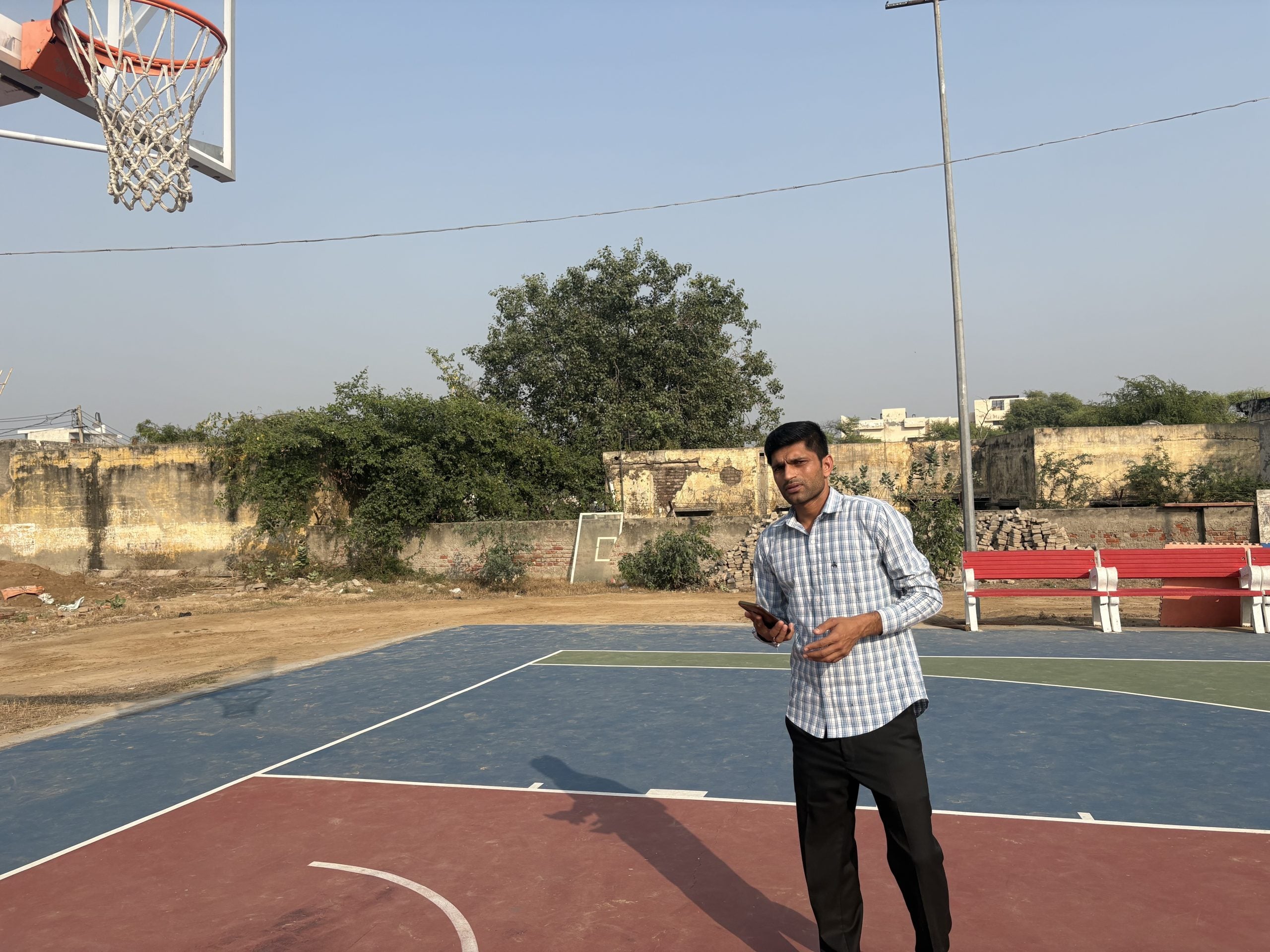
The teacher and other villagers have also stepped in to maintain the stadium. Through crowdfunding, they have built a drinking-water facility for players, taking on responsibilities that should have rested with the government.
Athletes compete with morning walkers for space
On the running track at Rohtak’s Rajiv Gandhi Sports Complex, athletes preparing for competitions have to share space with morning walkers, children, elderly residents out for a stroll and young men training for Army recruitment. Some sit around the track, while others spend hours on the grass. The seats lining it are largely unusable, their surfaces covered in bird droppings.
Athletes often have to work around the crowds to find time and space to train.
Kiran Pahar, a 26-year-old sprinter, times her training to avoid the crowds, arriving around 3 pm when the track is relatively empty and wrapping up by 5 or 6 pm, as visitors begin to stream in.
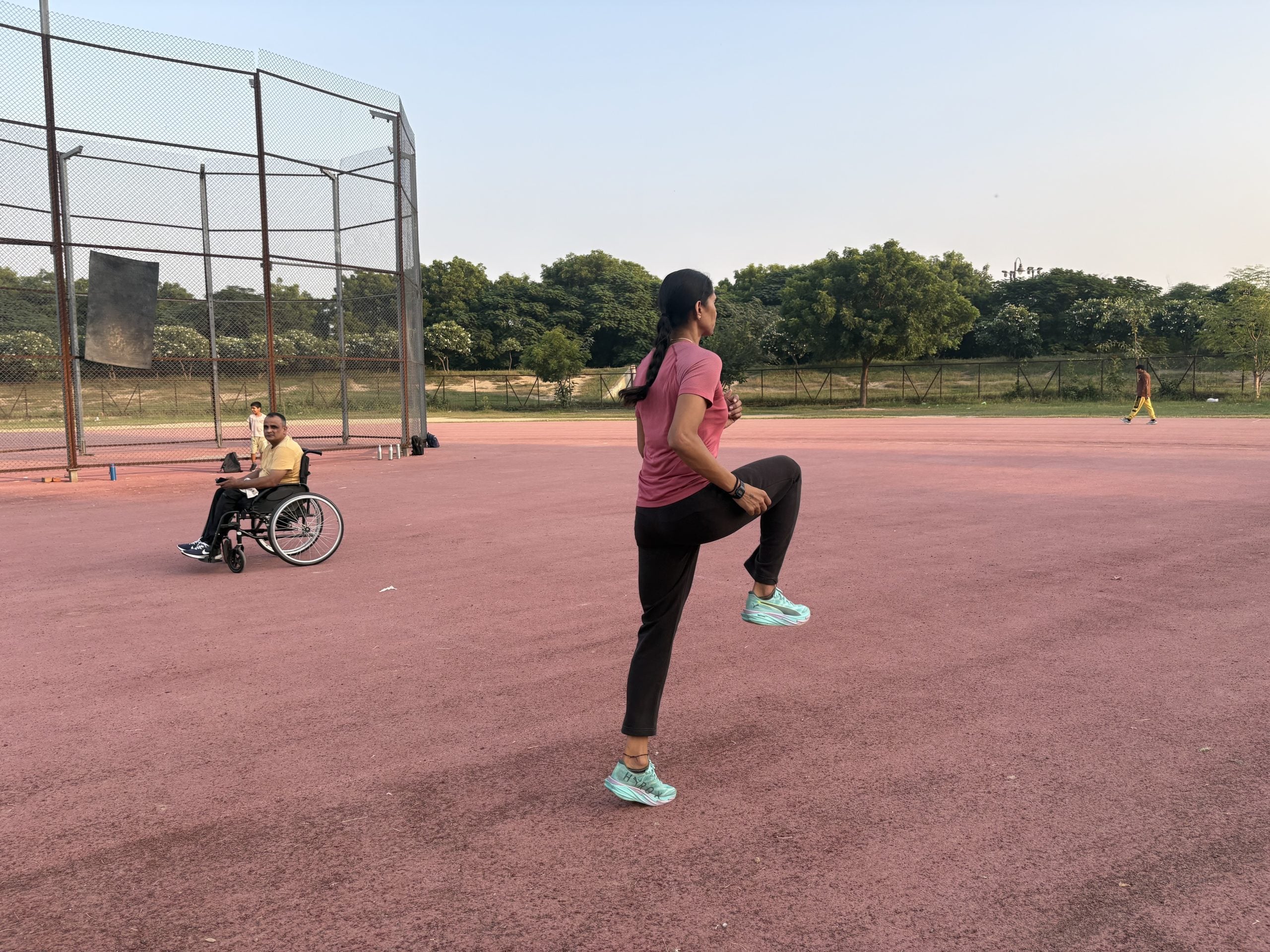
“The track itself is damaged, and we do not even have hurdles. We have had to buy our own, but they are kept at another stadium and get damaged when other children use them. We don’t have a gym here either, so we have to pay for that separately. Even the basic facilities are missing. All we have is a track, and even that is in a poor condition,” she said, gesturing towards the synthetic track, whose surface is visibly damaged and worn out in several places.
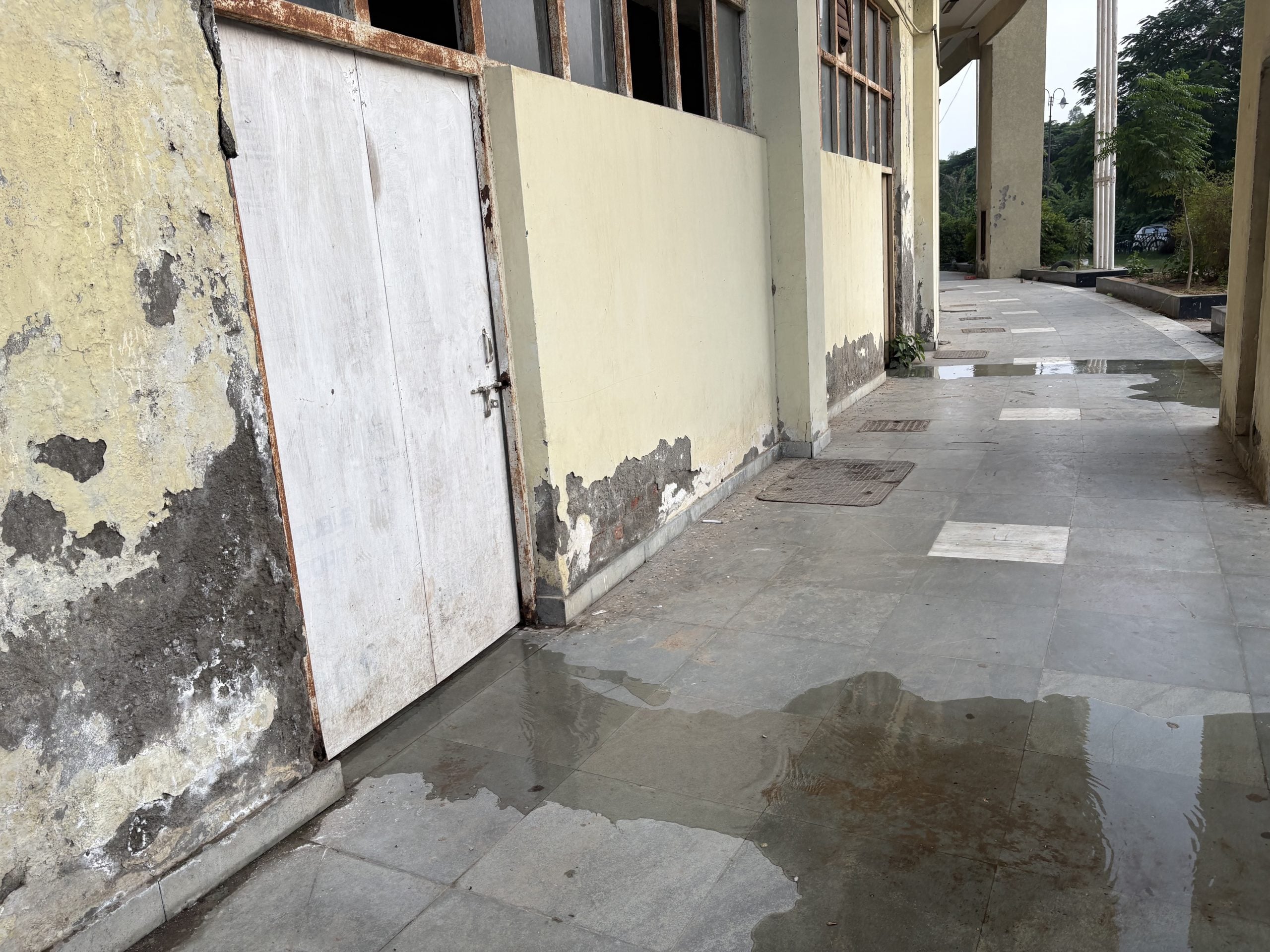
She said athletes cannot use the washrooms and changing rooms freely, forcing them to seek secluded spots around the stadium when they need to relieve themselves.
“Even when we need to use the washroom, we are sometimes not allowed inside. There are Olympians and Asian Games medallists training here, yet we cannot access basic facilities. The washrooms are not properly maintained, and there is no reliable water supply. We have to carry drinking water from home,” she said.
She has been training at the complex since 2021 and said the condition of the facilities has barely changed. The lack of facilities, she said, is also holding back talented children, particularly girls, who cannot afford private coaching or access to the infrastructure needed to progress.
Spread across more than 90 acres, the Rajiv Gandhi Sports Complex in Sector 6 was developed by the Haryana Shahari Vikas Pradhikaran (HSVP) and completed in 2012. It was conceived as a multi-sport facility, with an athletics stadium, synthetic track, swimming pools, indoor sports facilities and grounds for football, hockey, cricket and other disciplines.
Designed to accommodate 30,000 spectators, the complex now presents a stark contrast to its original vision. The seats lining the track are caked in pigeon droppings and largely unusable, while water spills out of the washrooms onto the floors.
The stadium has two synthetic tracks, one meant to be reserved for athletes and the other for public use, but in practice, there is little distinction between the two, with both open to everyone.
A government coach at the complex, who requested anonymity, said the lack of maintenance is as serious as the shortage of coaches. Despite the stadium’s size, he said, it has only two or three security guards and no cleaning staff.
He also questioned why repeated visits and inspections by senior officials have failed to bring lasting improvements. The problem, he said, is that the concerns raised by coaches working directly with athletes rarely translate into action.
“Senior officers have visited me many times in the last 12 years. They have spent time here, inspected the facilities and discussed these problems with me. But what happens afterwards? A few days later, everything goes back to the way it was. The officers at the top do not know what is happening on the ground. Those below them do not always tell them the truth. Nothing changes,” he said.
A private coach who trains some of the athletes at the facility said that government stadiums are increasingly being used as public recreational spaces, often at the expense of dedicated training facilities for athletes. He questioned the emphasis on winning Olympic medals when coaches training young athletes receive little institutional support.
“They want Olympic medals for a country of 140 crore people. We have the talent, and we have won medals, but what is happening on the ground? We do not even have basic facilities for our athletes. How can we expect them to win more medals if we do not provide them with the support and infrastructure they need?” he said.
Stadiums without coaches, athletes left to train themselves
For children in Haryana’s villages, getting access to a stadium does not necessarily mean getting the facilities needed to train. Grounds may exist, but coaches are often absent, equipment is inadequate, and even basic upkeep is neglected.
“There are around 163 stadiums in Haryana’s villages, but facilities remain inadequate. A stadium needs a gym and a coach, yet there is a shortage of coaches. In Mahendargarh, seven or eight Rajiv Gandhi stadiums do not have coaches at all. Even where a coach is appointed, he visits only once every eight to 10 days. Children manage their training routine for two or three days, but are then left on their own. This is why parents turn to private academies,” said race walker and Olympian Sandeep Kumar Punia.
The lack of maintenance is visible even on the grounds where children are expected to train. Punia pointed to the stadium in his native village of Sureti Jakhal, in Mahendragarh district. During the monsoon, he said, grass grows so tall that those preparing for police or Army recruitment clear it themselves and mark out a 400-metre track to practise running. Otherwise, the ground remains overgrown with grass.
Jagdish Singh, a boxing coach in Bhiwani who retired from the Sports Authority of India (SAI) in February, said this neglect is not confined to village grounds. Having coached since 1986, he has seen facilities deteriorate even in places that have produced some of the country’s leading athletes. In rural areas, he said, some stadiums have little beyond a signboard bearing their name.
In 2003, Singh set up the Bhiwani Boxing Club (BBC), using his provident fund savings and mortgaging his house and land to secure a Rs 4 lakh loan from a Gramin Bank. The club, equipped with a 25-metre track, a multi-purpose gym, three punching bags and a mobile boxing ring, went on to help put Bhiwani on India’s boxing map. At the 2004 Athens Olympics, three of India’s four boxing qualifiers were from Bhiwani, earning the district the nickname ‘Cuba of India’. Singh received the Dronacharya Award in 2008 for his work as a boxing coach.
At Bhiwani’s stadium, Singh said, the surface of the running tracks has been repeatedly disturbed during preparations for official visits and functions, but not properly repaired afterwards. Athletes training on the uneven ground risk twisting their feet or getting injured. Drinking water and usable toilets remain difficult to find at several facilities, making conditions especially difficult for women athletes.
“The Bhiwani stadium is in a terrible condition. Whenever the chief minister or prime minister visits, the administration puts red clay on the track for the programme. Afterwards, machines are brought in to level the ground, but a damaged track cannot be repaired simply by running a machine over it. They even laid one-and-a-half inches of stones on the track to drain water and covered them with sand. We are the ones who have to train here every morning, stumbling over the uneven surface and risking a twisted foot. They prepare the stadium for VIP visits, not for the sportspersons who use it every day,” he said.
Singh said he has submitted two written complaints to the district administration about the condition of the track but has received no response.
Waterlogged tracks, broken courts and cattle on the grounds
“A pot fills drop by drop; if we do not save water, a crisis will follow,” reads a slogan painted on a wall at Jind’s Arjun Stadium. But right in front of it lies a heap of garbage, and a low-lying stretch of the ground turns into a pool of stagnant water every monsoon.
A coach at the stadium explained that the problem is tied to the surrounding neighbourhood. Residential colonies, shops, a theatre and a hospital have come up around the facility.
“During heavy rain, water accumulates in the neighbourhood, so residents break a section of the stadium’s boundary wall to divert it into the grounds. But the water stays there for days. The problem is that if the administration fills the depression and repairs the wall, the water will have nowhere to go and will flood the neighbourhood instead. For now, the stadium is bearing the brunt of the flooding, but the water takes days to drain. The ground remains waterlogged, leaving children with little space to practise,” he said.
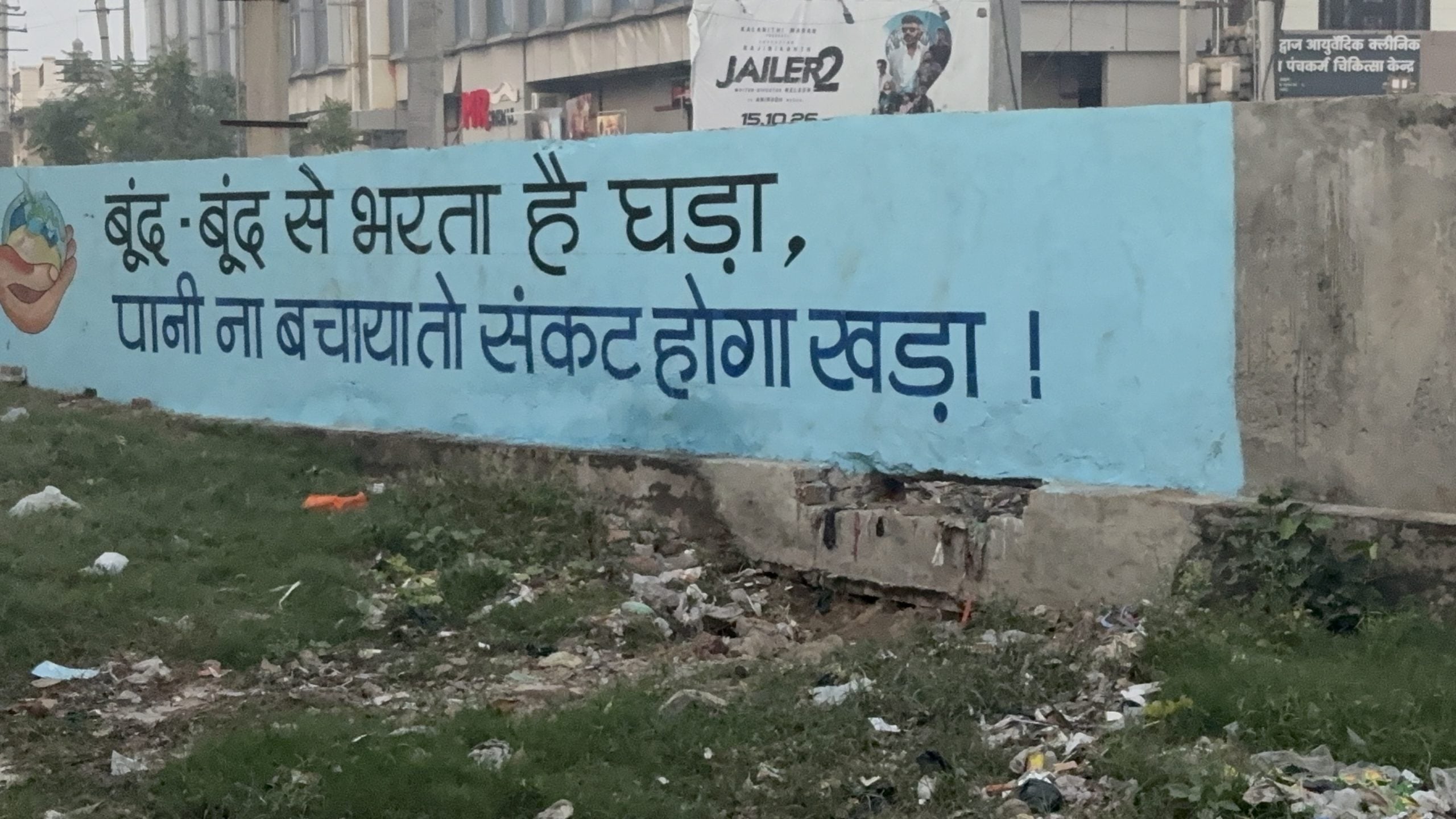
The waterlogging is only one of the problems at Arjun Stadium. Sections of its mud running track remain wet long after the monsoon showers. A stretch of around 200-300 metres was submerged during the rains. Monkeys could be seen drinking from the stagnant water.
At Eklavya Stadium, another district-level facility in Jind, the problem begins with a running track that was supposed to be ready months ago. Construction of a synthetic track had been under way for nearly a year, with a May 2026 completion deadline. But the work remains unfinished.
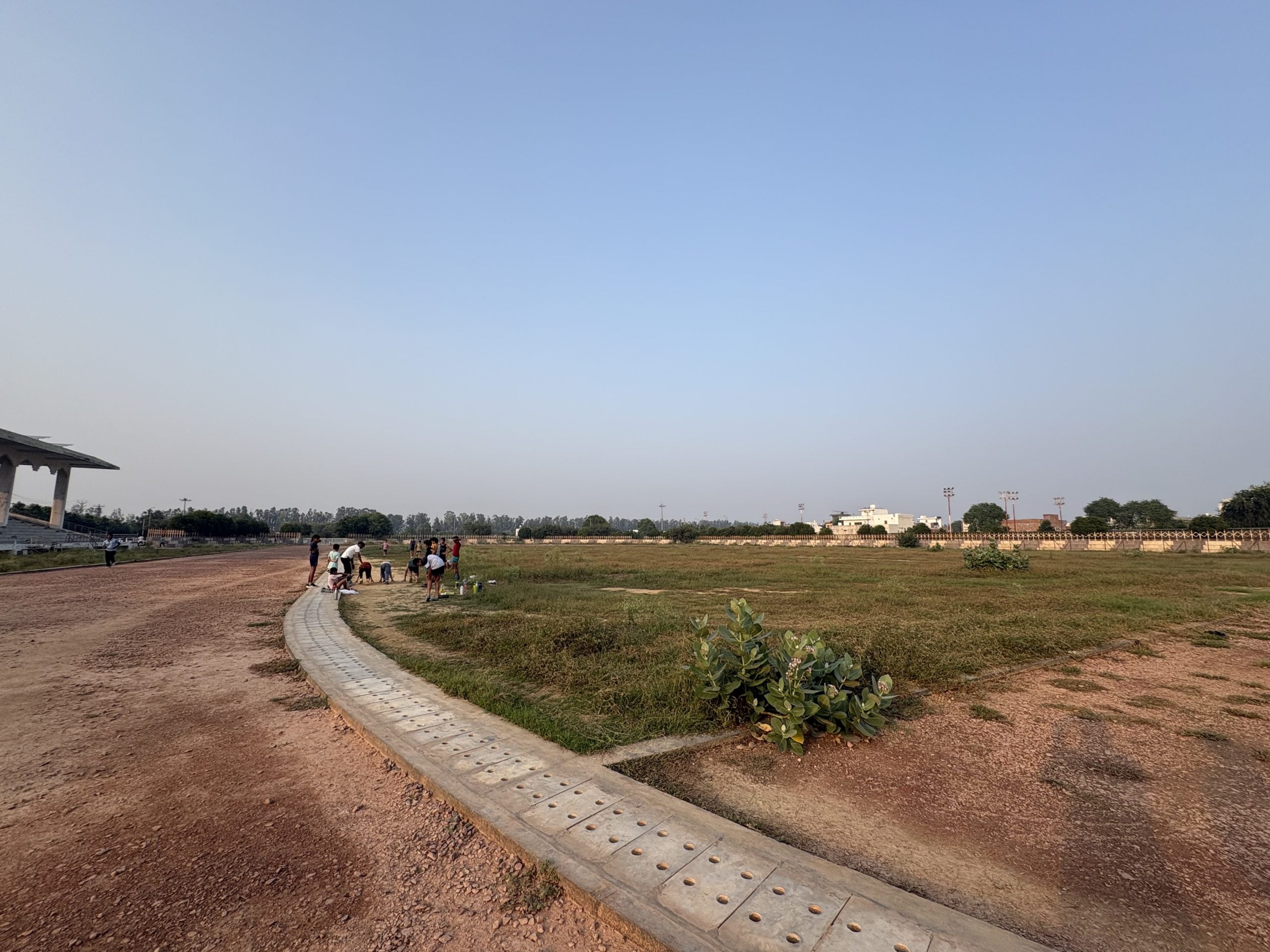
The stadium has designated courts for several sports, but their condition raises questions about how many are actually being used.
The grills and wire fencing around the courts are rusted or broken, with vegetation growing through them. The volleyball court is in disrepair, and cattle wander around the premises. The kho-kho ground is difficult to identify. Shooting practice is among the few organised activities taking place, with children training under a coach. Football, too, is being played, with a coach working with young players.
“Whatever the conditions, the children keep working hard and practising. We also work with them as much as we can. At the grassroots level, we do whatever is within our capacity to help them,” said the football coach.
The situation is not very different at the village-level Rajiv Gandhi Stadium in Karsindu. Built in 2008, the facility has produced players who have gone on to join the Army and Haryana Police. Their names are displayed on boards at the stadium. Yet, villagers said there was no government coach posted at the stadium, while cattle grazed freely across the grounds in the absence of a watchman to keep them out.
The basketball and handball poles are rusted, while the nets and goalposts needed to play are missing. The basketball equipment is in poor condition, and thorny weeds have spread across parts of the ground, making it difficult to walk barefoot. Stray dogs have also made themselves at home around the kabaddi ground. Equipment meant for an open-air gym and children’s play area lies unused in a corner.
Suresh, a resident who visits the stadium for his morning walks and exercise, said the kabaddi and wrestling grounds are in relatively better condition. He also pointed to broken gym equipment and the absence of regular coaching.
The villagers have had to fill some of these gaps themselves. Residents and former players have stepped in to improve the stadium’s facilities. They helped set up a drinking-water facility and install the stadium signboard. Former players who have since secured government jobs have also contributed to painting and maintaining rooms within the complex.
New stadiums planned as existing facilities await repairs
Data shared by Haryana’s Sports Department with ThePrint show that Haryana currently has 21 district-level stadiums, 25 sub-divisional stadiums, three state-level stadiums and 163 Rajiv Gandhi rural stadiums. The three state-level facilities are in Panchkula, Rohtak and Faridabad.
The department said that an assessment of maintenance and repair requirements for 2025-26 had put the budget at Rs 114 crore, covering works such as track maintenance, repairs, toilets and drinking-water facilities.
Meanwhile, the state plans to build new stadiums, even as it has acknowledged that existing facilities are not assessed on a regular basis.
For 2026-27, the government has earmarked Rs 100 crore for the construction of 21 new stadiums, with the amount allocated to the Public Works Department (Buildings and Roads). The state has also announced that every district will have a synthetic athletics track. The government has identified 124 acres of land in Palwal for a proposed international stadium.
But Haryana’s record of announcing sports facilities in villages after Olympic performances offers a reason to look beyond the proposed construction figures.
After wrestler Sakshi Malik won bronze at the 2016 Rio Olympics, chief minister Manohar Lal Khattar announced a stadium and sports nursery in her native village, Mokhra, in Rohtak district. The stadium, however, remained incomplete years later. In May 2026, a report by Amar Ujala found that around 250 athletes came there regularly to prepare for athletics, kabaddi and volleyball, but lacked even basic facilities such as drinking water and toilets.
In 2021, after wrestler Ravi Dahiya won silver at the Tokyo Olympics, Khattar announced an indoor wrestling stadium with modern facilities in his native village, Nahri, in Sonipat district. However, work on the project began only in 2026.
There have been similar announcements for other Olympians.
A Rs 10-crore stadium in Neeraj Chopra’s native village of Khandra, in Panipat district, was announced in May 2022. However, the project is yet to materialise.
A local resident of the village told ThePrint that a stadium, a wrestling hall and a library were planned for the village, but none of the three has been built so far. The villagers have met the chief minister and approached government officials several times to raise the issue, but work on the projects is yet to begin.
In 2012, following shooter Gagan Narang’s London Olympics bronze, the Haryana government announced a Rs 1 crore grant for a sports complex in his ancestral village, Shimla Gujran, in Panipat district.
“We started work on the stadium two years ago, but it has been stalled for nearly 10 years because Rs 35 lakh is still pending. The money has not been released by the government. At present, the ground is overgrown with grass and weeds. We had it cleaned once, but it is still not being used properly by children,” said Kuldeep Singh, a representative of the sarpanch of Shimla Gujran village.
Frustration goes beyond money
The problems facing Haryana’s stadiums are not limited to poor infrastructure, inadequate maintenance or the absence of basic facilities. Coaches and athletes also point to a gap in the way the state deploys its coaching staff, with appointments often failing to match the sporting interests and needs of individual villages.
“Even if a stadium has a government coach, it may not be for the sport children in that village want to play. You may have a basketball coach, while most children want to play kabaddi, or children interested in handball and volleyball but no coaches for those sports. What is the point of having a coach if only one or two children turn up for training? The appointments need to match the sporting interests of the villages,” a government coach based in Rohtak said.
He also pointed to the geographical mismatch in postings, saying some coaches were assigned to stadiums 25-30 km from where they lived, only to find one or two children turning up for training. For team sports, he said, this made it difficult to conduct meaningful sessions, as a team could require at least 25-30 players.
The shortage is reflected in the government’s own figures. In February 2026, the Haryana government informed the Assembly that only 583 of the 1,584 sanctioned coaching posts in the state were filled, leaving 1,001 vacant. The state had 245 sports stadiums under the Sports Department.
The financial comparison has also become a point of discussion in the state. Gujarat’s 2026-27 budget provides Rs 2,006 crore for its Sports, Youth and Cultural Activities Department, including Rs 1,331 crore specifically for sports. Haryana’s reported Sports and Youth Affairs departmental outlay for 2026-27 is Rs 688.42 crore. The two budgets cover different departments, but the difference has raised questions among sporting stakeholders about Haryana’s spending on sports facilities and development, given the state’s record of producing top athletes.
For those working on the ground, the frustration goes beyond money or administrative arrangements. At the Rohtak stadium, the government coach said he had repeatedly raised concerns with officials but felt little had changed. He described the situation as one in which those working at the grassroots understood the problems but had little say in decisions taken higher up.
There is a particular sense of heartbreak in the way coaches and athletes speak about these facilities. Their accounts are marked by hurt and a feeling of abandonment
“The state celebrates its athletes when they win medals but leaves behind the children, coaches and local sporting communities who make those victories possible,” he said.
Haryana’s plans to upgrade its sports infrastructure
The government’s plan includes developing three stadiums to international standards–in Panchkula, Palwal and Rohtak. While Panchkula already has a National Centre of Excellence, land acquisition for the proposed facility in Palwal has been completed.
The government has also decided to assess the condition of existing stadiums and identify repair and maintenance requirements. The decision was taken at a meeting in October this year.
The government has also decided to assess the condition of existing stadiums and identify what repairs and maintenance they need. The decision was taken at a meeting in October 2026.
“Rajiv Gandhi stadiums have been assessed for 360-degree mapping. We have taken a decision to conduct 360-degree mapping of sports infrastructure. The existing status of stadiums will be mapped. The gaps will be identified and filled. The reports will be completed. The government has allocated Rs 114 crore for work on village-level stadiums across Haryana, with the Public Works Department (PWD) involved in carrying out the work,” Haryana Sports Minister Gaurav Gautam told ThePrint.
The proposed allocation is meant to address infrastructure and maintenance requirements across the state
The allocation is intended to address infrastructure gaps and maintenance needs across the state.
Sandeep Parashar, sports adviser to Haryana’s sports minister, said Haryana had invested in sports infrastructure much earlier than several other states, with significant work taking place between 2005 and 2010. He argued that states such as Odisha, Madhya Pradesh and Uttarakhand were now making similar investments as they sought to improve their sporting performance.
He cited Odisha’s investment in hockey as an example of how focused support for a particular sport could improve results.
“Odisha adopted hockey as a priority sport. It developed the game and supported the team through training and competitions for two to three years. After that, hockey’s performance improved considerably at the World Cup. But five to six of the women athletes in the team were from Haryana. Because of the grassroots,” he said.
Parashar said Haryana’s strength had traditionally been in wrestling and boxing, where much of its sporting talent was identified and developed at the grassroots level.
He explained that the state’s sports nurseries were intended to identify raw talent in villages and blocks and prepare young athletes for higher levels of competition.
“Our sports nurseries identify raw talent and prepare athletes for the next level. At this stage, they do not need international-level infrastructure; they need basic facilities where their skills can be developed. The idea is to groom as many athletes as possible and move those who progress to the next level. Our nursery scheme feeds athletes into the National Centres of Excellence, which, in turn, feed them into national camps for international competitions,” he said.
(Edited By Raunaq Lekhi)