



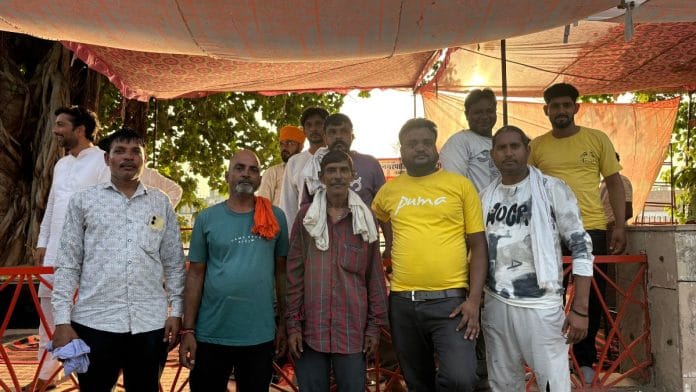
Haryana: For more than two decades, Beddo, a 54-year-old sanitation worker in Jind, has cleaned Haryana’s streets, drains and public spaces. She has worked through VIP visits, putting in long hours to keep the city spotless. Yet she says she still does not own a home, cannot afford to educate her children, and does not know whether she will have a job tomorrow.
“Even after working for 20 years, we are not in a position to retire and sit at home. We have worked all our lives, but could not save a single penny,” said Beddo to ThePrint.
Now, she has stopped working.
In 1968, the Memphis sanitation workers’ strike became a national confrontation because it forced a city to challenge the people whose labour it depended on but whose lives it had treated as expendable. Nearly six decades later, Haryana’s sanitation workers are asking a similar question: if the work is permanent, why isn’t the worker?
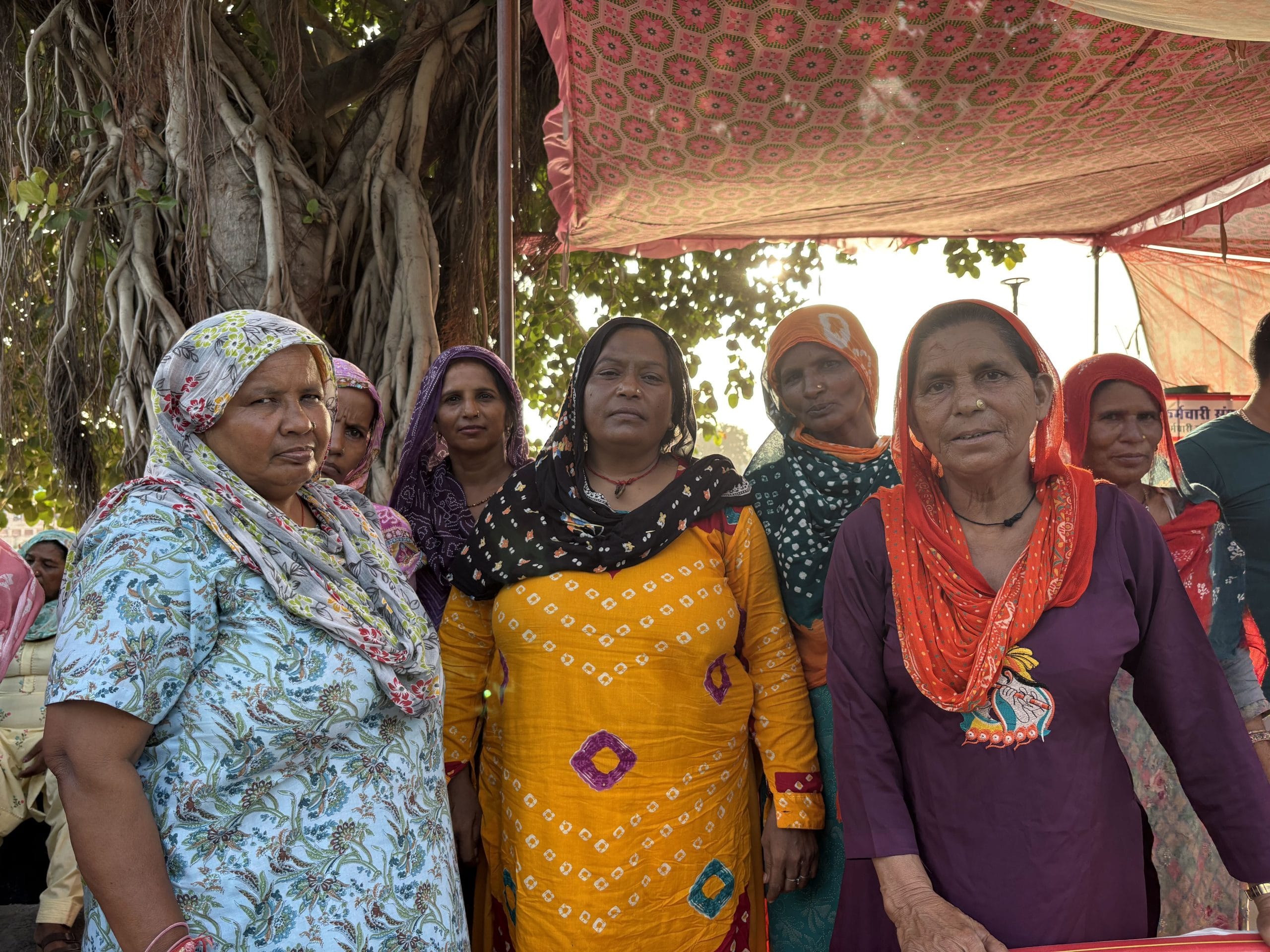
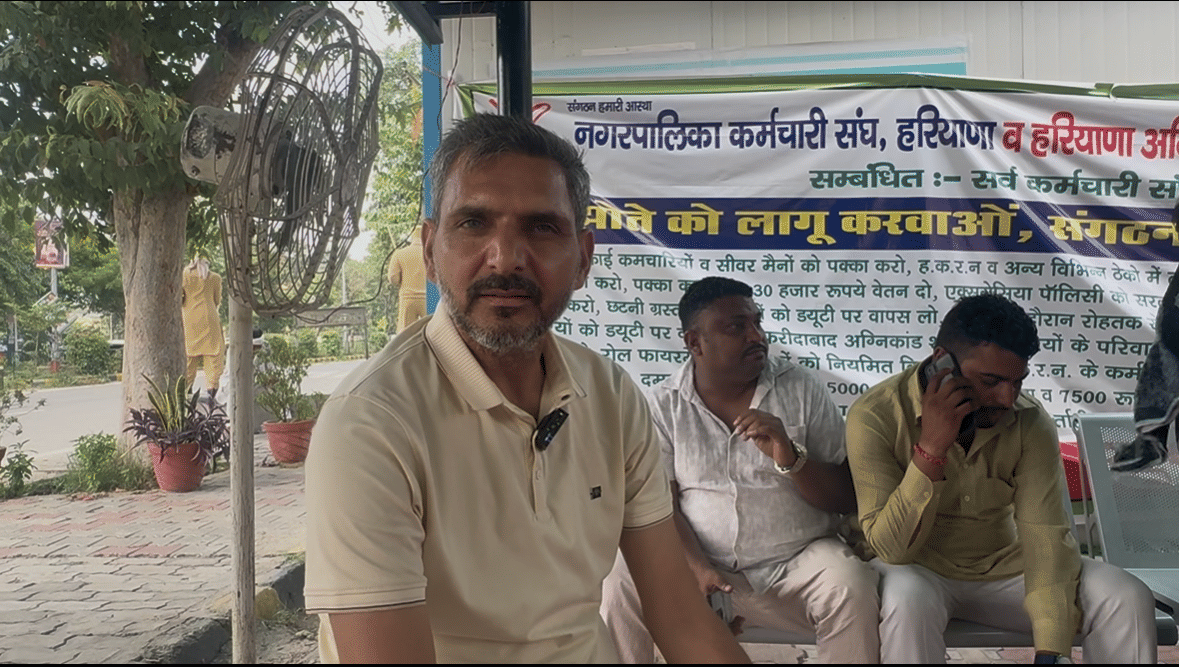
Across the state, sanitation workers are in the second month of a strike that began on 6 August as a three-day protest. Their fight over working conditions has grown into a statewide civic crisis. The strike, which has now extended till 13 September, demands fair wages, permanent jobs and a secure future.
Two months of deadlock
Garbage has piled up in residential areas and markets; attempts to bring in replacement workers have triggered confrontations, and police have been deployed; FIRs have been registered, workers have shaved their heads, and the government has begun suspending and dismissing workers who refuse to return.
Two sanitation workers, Kuldeep, from Karnal, and Rohit, from Kurukshetra, died during the ongoing strike. Their union says the pressure surrounding the protest contributed to their deaths.
On one side is a government that says it has already accepted most of the workers’ demands. On the other are workers who say the one demand that matters most, permanent employment, remains unmet. Neither side appears ready to back down.
For some, the protest gave the confidence to speak openly about working conditions they had endured for years.
Workers say years of low wages, insecure employment and caste discrimination have made it increasingly difficult to support their families.
Many say poorly paid work has forced them to borrow to keep their households running.
“The expenses are increasing, but the income is the same. I have to adjust my household expenses. I take loans from people and banks and give them back the next month. This is the cycle I’ve been stuck in for years now, and there is no way out,” a worker on the strike said.
For them, the absence of job security has meant years of debt, anxiety and the fear that their children will inherit the same broom.
The government ordered workers back by 5 September and began taking disciplinary action. By 10 September, 84 contractual sanitation workers had been dismissed and 24 regular workers suspended. This has only deepened the standoff.
A large part of the sanitation workforce that keeps its cities running has spent years working without the security that comes with a permanent government job. The state’s own figures show that 13,093 sanitation workers are currently on municipal rolls, while workers employed through contractors make up an even larger workforce.
But this is not the first time Haryana’s sanitation workers have brought the state’s municipal machinery to a halt. They went on a major strike in 2018, when around 25,000 sanitation workers and 5,000 other municipal employees stopped work over regularisation, outsourcing and equal pay. Before that, sanitation workers had gone on a prolonged strike in 1996.
The fact that the same demands keep returning is what makes the present crisis even more dire.
What each side says
Urban Local Bodies Minister Vipul Goel told the Assembly that 12 of the 13 demands by the sanitation workers had been accepted, including minimum wages, ESI and EPF, risk allowance, accident insurance, compassionate assistance and promotion opportunities.
Chief Minister Nayab Singh Saini has also said the government is continuously working to resolve workers’ concerns.
According to Naresh Shastri, state president of the Nagar Palika Karamchari Sangh Haryana, the government is offering job security through the Haryana Kaushal Rozgar Nigam. However, the Chief Minister has said in the Assembly that this is an alternative arrangement.
“If the government itself calls it temporary, why should we accept it? We are asking for permanent employment, not another temporary system,” Shastri said in a conversation with ThePrint.
According to Shastri, Haryana has around 21,000 regular sanitation posts, out of which about 6,800 are currently vacant. He said the state needs at least 50,000 additional posts to meet its sanitation needs, based on government norms requiring one sanitation worker for every 400 people.
For workers, the problem is the nature of work itself — low-paid, insecure, and still deeply tied to caste. For Shastri, caste cannot be separated from that cycle.
“Caste is deeply connected to sanitation work in India. We feel that sanitation workers continue to remain trapped in this work because they are kept poor and have limited access to education. If they remain poor and uneducated, it becomes much harder for them and their children to move beyond this work,” he said.
A family in mourning
For workers earning as little as Rs 7,000-9,000 a month, staying away from work is not an easy political choice. Many have no savings to fall back on. A few days without wages can mean borrowing for food, and losing the job can mean losing a family’s only income.
This fear has become painfully real for Kuldeep’s family.
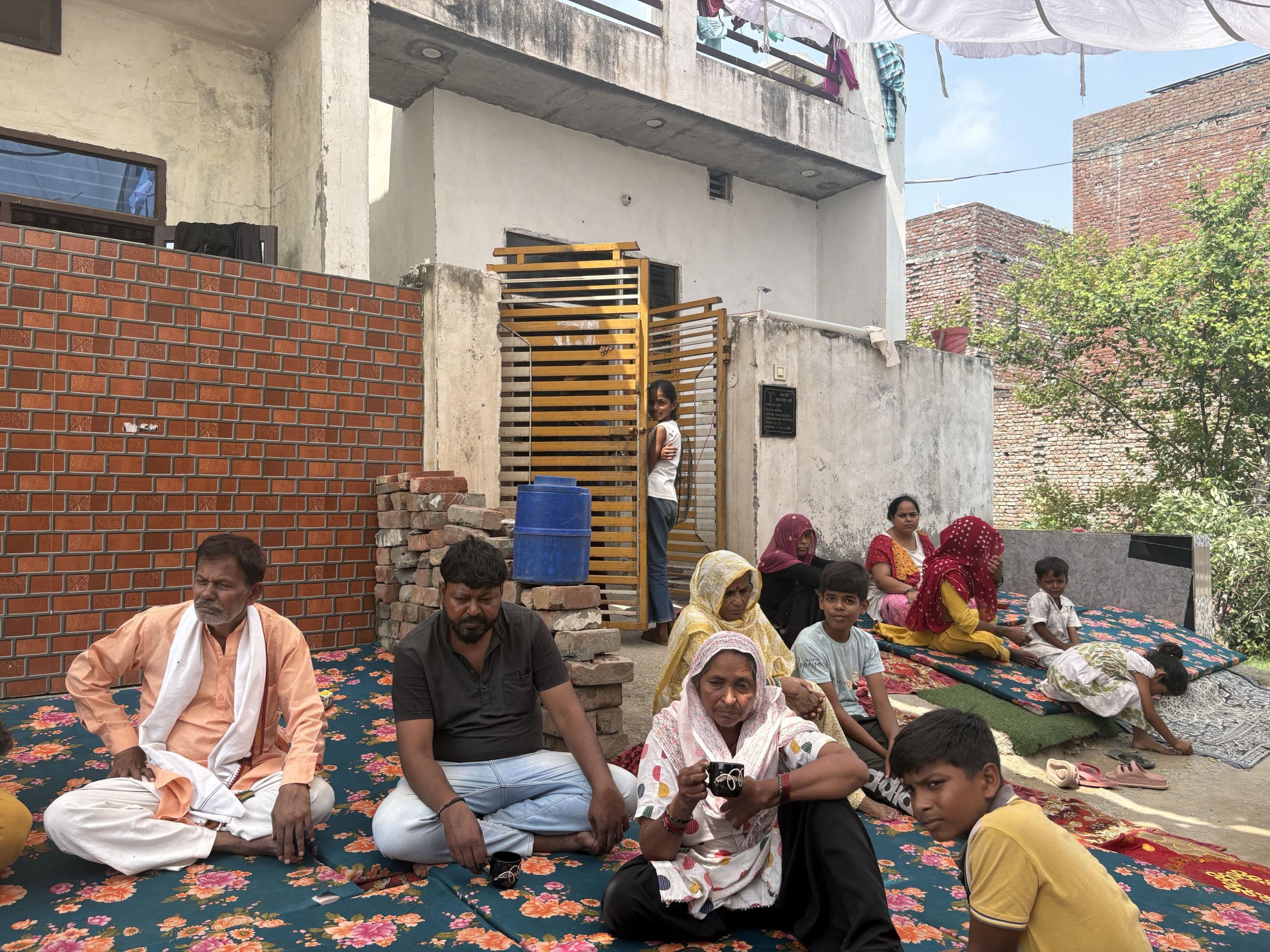
Outside his one-room house in Karnal, people have gathered to mourn him. His three children, aged 12, 10 and 8, move through the crowd, serving water and tea. They still seem too young to understand what has happened to their father.
Kuldeep had been attending the strike every day. According to his family, job uncertainty and his children’s future had left him under considerable stress. On 4 September, he suffered a heart attack and died.
His elder brother Sandeep, 38, is now left to support the three children. He already has five daughters of his own, an unwell wife, and a monthly salary of about Rs 18,000 as a sanitation worker on the municipal payroll.
“I have to take care of my children and his children. These children’s lives have been ruined. The health of the house has been ruined,” he told The Print.
Kuldeep’s wife had died at 26. He raised the children alone and was their only earner. He had also borrowed money to build their small house — around Rs 7-8 lakh of the loan remains to be repaid.
“I used to talk to him. He would say, ‘My head is aching a lot.’ I knew he was under a lot of tension. He was worried about his family and his children,” Sandeep said.
Kuldeep was not the only worker to die during the agitation. According to the protesters, Rohit, 26, died of a heart attack while sitting at the protest in Thanesar, Kurukshetra. He lived in a rented house and left behind two children.
For the workers, the fear is not just about what happens when they die. The bigger concern is what is happening while they are alive. A contractor can take away their job, illness means losing a day’s pay, and decades of work still leave them with nothing when they decide to retire.
A lifetime of cleaning, nothing saved
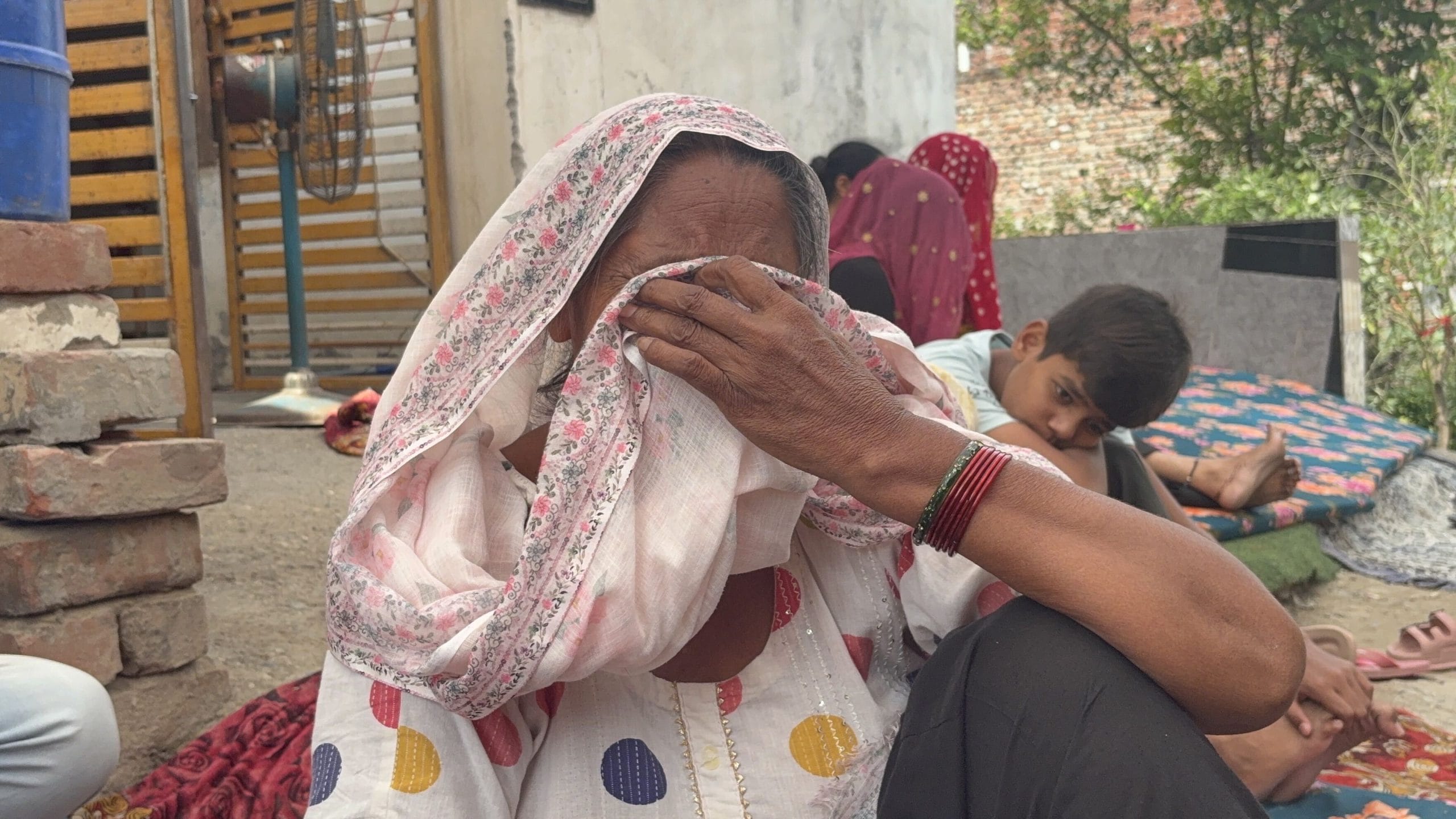
Beddo has spent more than 20 years cleaning Jind. She started as a contract worker earning Rs 1,200 a month. Her wages rose to Rs 4,000 and then Rs 8,000 before she was brought on the payroll in 2014. She now earns about Rs 18,000.
After two decades, she said, she still cannot afford to stop working.
Beddo wants her children to study and find work outside sanitation. But private schools are unaffordable, while government schools, she said, often lack teachers and basic facilities. Low wages make even transport and other education costs difficult to meet.
“It feels like the government does not want our children to study and move ahead. They want us to spend our whole lives sweeping, and then expect our children to pick up the broom after us. I have spent my entire life cleaning garbage, and even today, all I have in my hands is garbage.”, she says.
Poonam, 50, who has worked as a sanitation worker for more than 15 years, has seen the same cycle up close. She said she was given a termination notice during the strike but did not go to the office to collect it.
It isn’t the termination letter itself that worries her, but what it has done to her ability to get by.
“Now that I have received the termination letter, even if I go to someone and ask to borrow money, they refuse. They say, ‘You don’t have a job anymore, so how can we lend you money?’ I can’t even run my household anymore,” she told ThePrint.
Divided by contract, divided by pay
The demand for permanent employment is not new. Sanjeev Dhanda, district president of the Sarv Karamchari Sangh in Jind, said sanitation workers have been raising the issue for years, including the demand that contractual workers be regularised after completing three years of service.
The system has instead kept workers divided between regular employees, municipal payroll workers and those hired through contractors.
The protesting workers said a regular, full-time sanitation worker can earn around Rs 50,000 a month, while those on the municipal payroll earn around Rs 18,000. Contract workers can earn as little as Rs 7,000-9,000 a month.
Contract workers said contractors can remove them if they are absent or refuse assigned work. Many of them have no fixed holidays or paid leave; even a few days away due to illness can mean losing wages.
Their demands have also grown over the years. Alongside regularisation, they are seeking better wages and arrears, risk and uniform allowances, ESI and EPF coverage, compassionate appointments for families of workers who die on duty, revised ex-gratia and retirement benefits, and opportunities to move into clerical posts.
According to the Sarv Karamchari Sangh union, many of these demands were included in an agreement with the government on 13 May. But the government has not implemented them on the ground yet.
On 6 September, the government announced an in-principle decision to bring 13,093 sanitation workers employed on municipal rolls under the Haryana Contractual Employees (Security of Service) Act, 2024.
The proposal would provide service security till 60 years of age, along with benefits including annual dearness allowance, death-cum-retirement gratuity, maternity leave and ex-gratia assistance. The government also announced an in-principle risk allowance of Rs 2,000 a month.
For the union, however, this is still not a permanent job.
“The government’s offer stops short of regularisation. They are giving security under a contractual law, but they are not making them permanent employees. We want the May 13 agreement to be implemented through written orders. Until that happens, there is no guarantee that what has been promised will actually be implemented,” Sushil Gujjar, district president of the SKS Haryana in Karnal, told ThePrint.
Caste, contracts and no way out
Pawan, 40, has worked as a contract sanitation worker for about 20 years in Jind. When he started, he earned around Rs 5,000-6,000 a month. His wages have since risen to about Rs 8,000, but the job conditions have changed little, he said.
“If there is a ministerial programme or some other work, and he takes leave or is absent for five or 10 days, they fire him and tell him not to come back,” he said about contract workers.
Workers said they are also often asked to take on work beyond their regular duties, including cleaning private homes. Refusing, they said, can bring threats of dismissal.
However, Anuradha Saini, Chairperson of the Municipal Council in Jind, refutes these claims.
“There is no such thing happening. And even if there is, workers should come to us and tell us about it, and we will take action. We are completely supportive of the workers, but they also need to understand that the government is doing whatever it can,” she said in a conversation with ThePrint.
The workers said the insecurity of the job is compounded by caste discrimination. Most of them, they said, belong to the Valmiki community and are routinely told that sanitation work is meant for their caste.
“They tell us to our faces, ‘You belong to this caste, this is the work you are meant to do. If you don’t do it, who will?’” said one worker on the strike. “And then people say casteism doesn’t exist. How can you say that when most of the workers are from the Valmiki community?” a worker participating in the strike told ThePrint.
For Poonam, the termination notice has made an already difficult situation even more precarious. She also cares for around 65 dogs, feeding them before and after work. If she loses her job, she said, she fears she will no longer be able to feed them either.
Edited by Maryam Hassan