



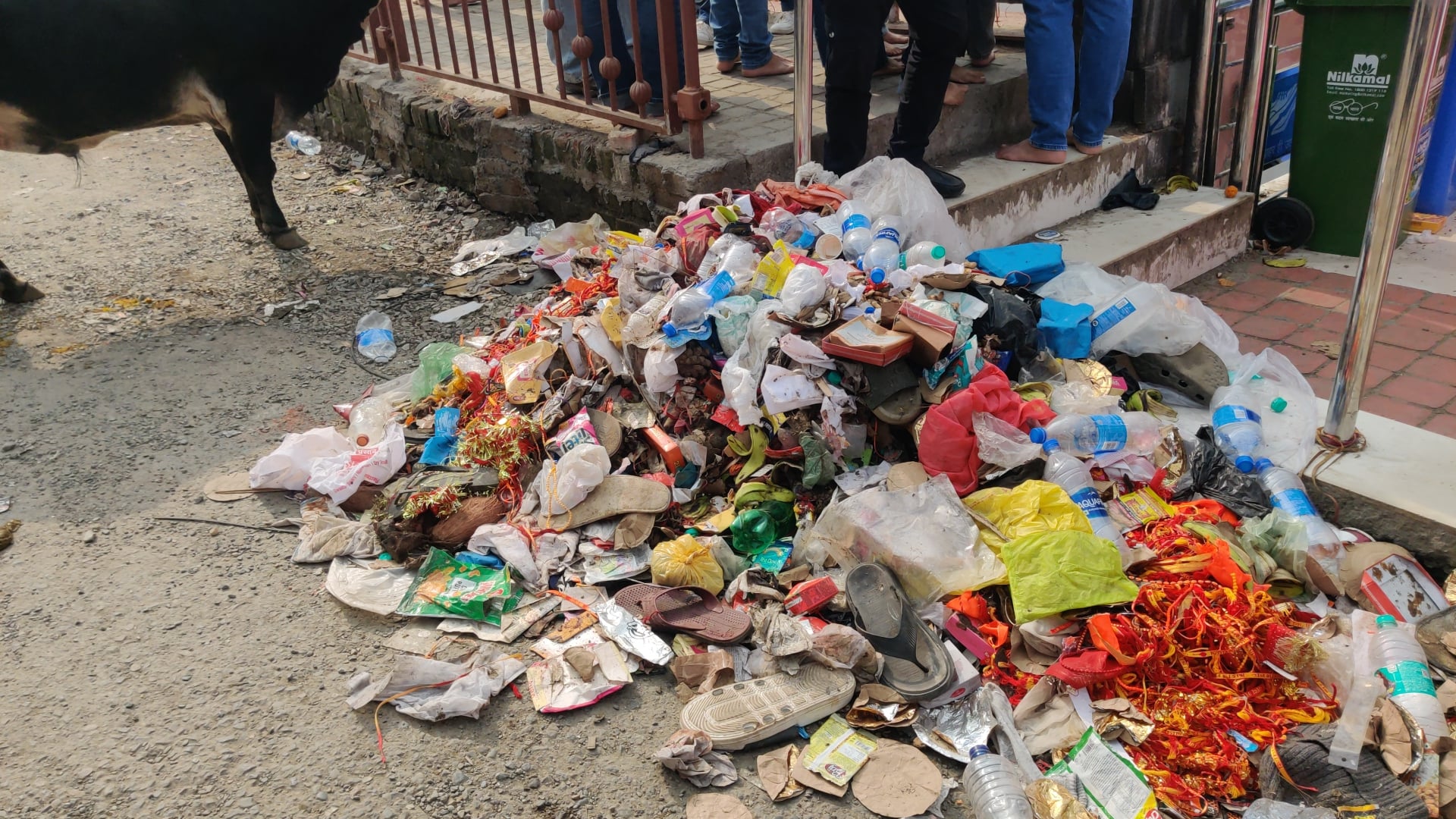
Nainital: From the kitchen of his restaurant, just a few steps from the famous Kainchi Dham in Nainital, Kundan Negi watched the rush build over the weekend starting with Gandhi Jayanti. At one point, half of his kitchen was piled with garbage while chefs continued cooking food in the remaining space, trying to keep up with the stream of customers.
The smell of rotting waste mixed with the food being prepared as the kitchen staff worked around bags of garbage that had nowhere else to go.
The image has stayed with him. The town that was part of conversations among professionals and techies because of Steve Jobs’ visit in 1974 is now reeling under the unprecedented frenzy generated by the success of Hanuman Ansh, a Hindi film on Neem Karoli Baba’s life. This weekend, it was in a paralysing chokehold. From a small ashram town to one of India’s most sought-after pilgrimage destinations this season, Kainchi Dham was not prepared for the scale of the rush.
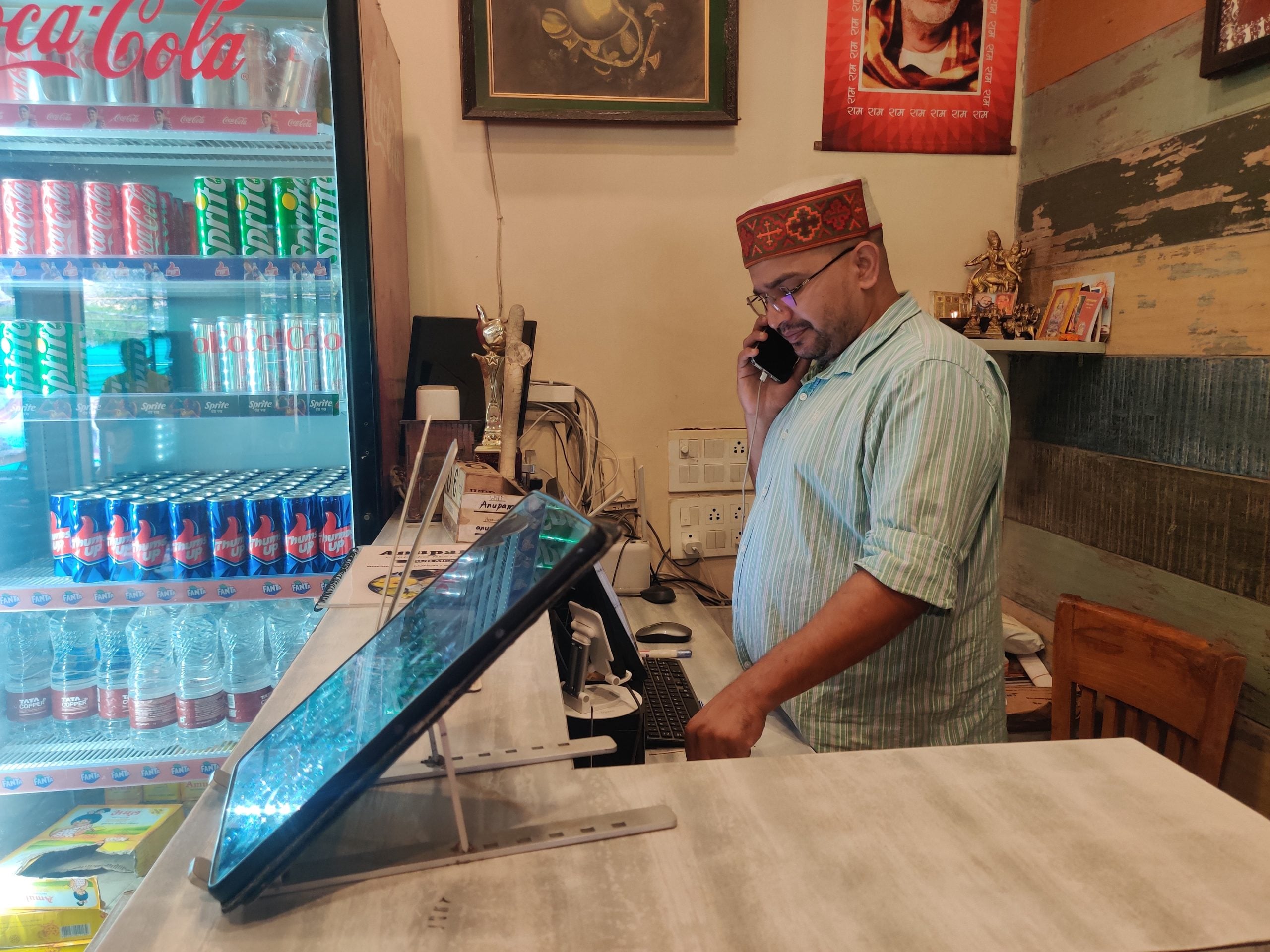
“We all have businesses here because of Kainchi Dham, but this was a terrible experience for us. All the basic supplies—from milk and cooking gas to garbage collection—were disrupted. Nothing was moving. Kainchi Dham had never experienced this kind of rush before, and it led to total chaos,” said Negi, who runs Anupam Restaurant, one of the first eateries to open near the shrine, about five years ago.
For Negi, the long weekend around Gandhi Jayanti was a test of how much Kainchi Dham could take. There’s only so much love its fragile infrastructure can take. For local businesses like his, the surge in pilgrims is normally good news. More devotees mean more customers, more meals served and more money coming into a small hill settlement built around the temple.
But this time, the numbers overwhelmed even businesses that stood to gain from the rush.
From a quiet ashram to a viral pilgrimage
Neem Karoli Baba, the bearded mystic who lived simply in the Kumaon hills, became a spiritual figure whose reputation spread far beyond India, drawing devotees from around the world—including, famously, Steve Jobs. Jobs did not meet Baba, but spent time at the ashram and later spoke about how his experience in India influenced his thinking.
Kainchi Dham, once a quiet spiritual retreat tucked away in Uttarakhand’s Kumaon hills, has emerged as a fast-growing pilgrimage and tourist hotspot, fuelled by social media virality, celebrity visits and the Rs 400-crore-plus success of Hanuman Ansh. But the rush collided with clogged roads, inadequate parking, too few toilets and disrupted supplies—even as the government races to build bridges, parking facilities and a bypass to accommodate the crowds.
The Gandhi Jayanti weekend showed the other side of Kainchi Dham’s rapid rise: when tens of thousands of people arrive at once, even the basic systems that keep the pilgrimage economy running—roads, supplies, waste collection and parking—begin to buckle. It overwhelmed the local ecosystem.
On the narrow mountain road leading to Kainchi Dham, the pilgrimage begins well before the ashram comes into sight. Cars with Delhi, UP, Punjab and Haryana number plates crawled around hairpin bends. Young men and women got out of SUVs and walked the last stretch when traffic stopped moving. Some carried flowers and prasad, others took their phones out, recording the hills and making reels. From the crowd came chants of “Neem Karoli Baba ki Jai” and “Jai Shree Ram”.
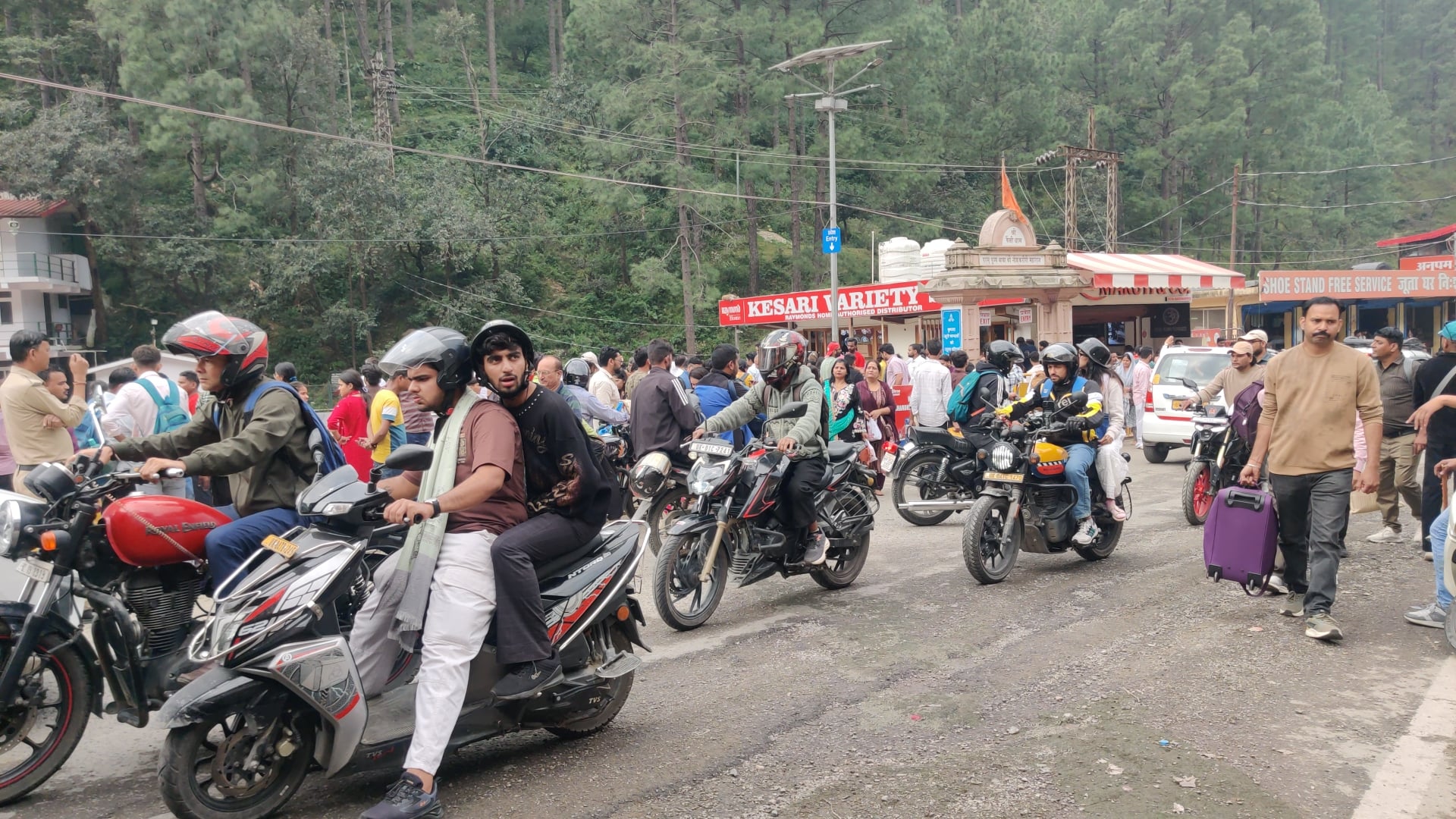
For a generation that discovered Neem Karoli Baba through Instagram, celebrity stories and, more recently, the success of Hanuman Ansh, Kainchi Dham is no longer just an ashram tucked away in the Kumaon hills. It is a destination young Indians increasingly want to experience for themselves.
The boom is part of a wider expansion of religious tourism in India, with projects and pilgrimage hubs ranging from the Kashi Vishwanath and Mahakal corridors to the Ram Janmabhoomi temple in Ayodhya, Khatu Shyam in Rajasthan, the Vindhya corridor in Mirzapur, the Kedarnath redevelopment and the under-construction Banke Bihari corridor in Vrindavan.
“Five years ago, Kainchi Dham was still a relatively controlled pilgrimage destination. It was known among devotees, but it remained a hidden gem of the Kumaon hills. Then the word started spreading rapidly through social media, young travellers and celebrity visits. Hanuman Ansh gave that momentum another big push, bringing the story of Neem Karoli Baba to an entirely new audience,” said Radha, a 61-year-old tea-shop owner who was among the rare people alive who saw Neem Karoli Baba.
The people who remember a quieter Kainchi
Radha Devi still remembers Kainchi from a time when there were no queues, barricades or streams of cars winding up the mountain road. She was a child when she first met Neem Karoli Baba. Even a decade ago, she said, only a few hundred people would visit the ashram, mostly families. Since the Covid-19 pandemic, the profile has changed, with increasingly more young people arriving.
“Baba liked peace. He lived a very simple, normal life,” said Radha, who has spent decades around the shrine. She said today, the quiet Kainchi she remembers is difficult to recognise.
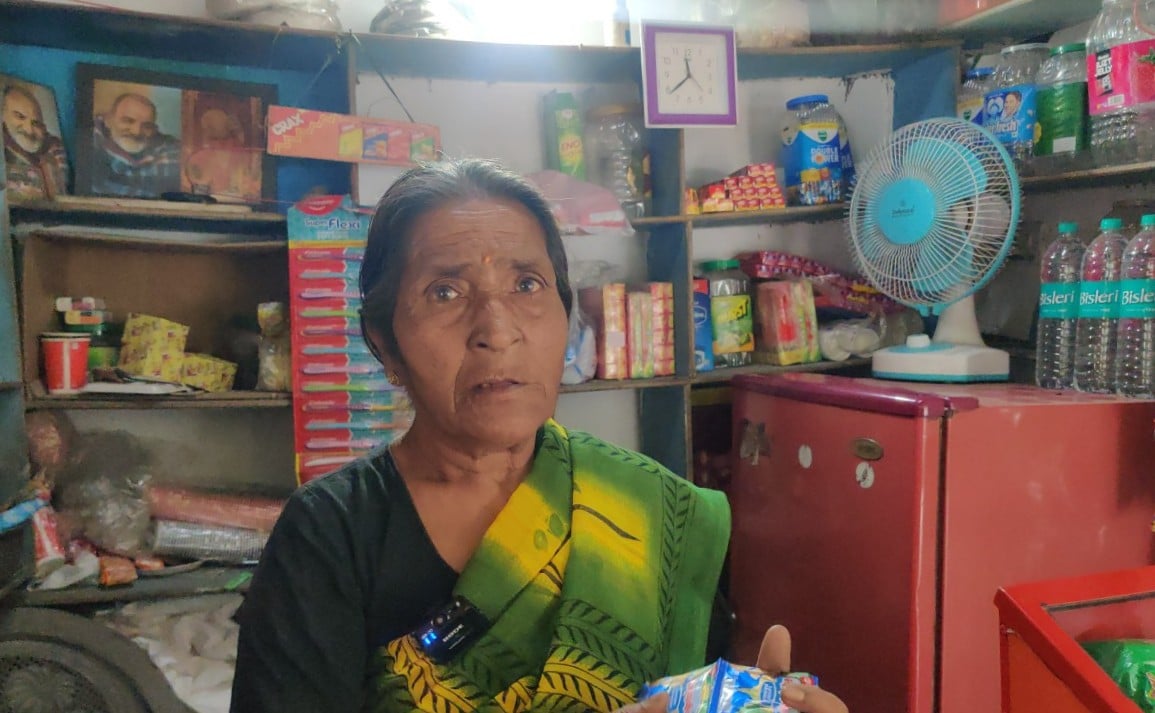
For her, the biggest change is not simply the number of visitors but who they are—younger, more likely to have discovered the ashram online and increasingly arriving as part of a short trip to the hills.
The numbers tell the story better than any Instagram reel or videos of long queues surfaced on social media.
Kainchi Dham saw 24.34 lakh visitors in the first six months of 2026, according to the district administration, three times the roughly eight lakh visitors the shrine used to receive in an entire year. India’s demographic dividend appears to be making its way to the temple queue: nearly two-thirds of Kainchi Dham’s visitors are aged 15-30.
A pilgrimage built around the weekend
For people who grew up around Kainchi, the change is visible far beyond the temple gates.
Kainchi, Bhowali, Bhimtal and even Nainital are now feeling the aftershocks of the economic boom—in hotels, homestays, restaurants, taxis, parking lots, and roadside shops.
A hundred-metre stretch around the ashram is broken and pockmarked with potholes. Dust rises with every passing wheel, settling over roadside shops and pilgrims.
Yet this is the road through which the bulk of visitors must pass to reach the ashram.
Radha runs a tea shop near the ashram.
“Earlier, it was not like this. Now it feels as if there is a festival every day,” she said.
That transformation did not happen overnight.
Neem Karoli Baba, born Lakshman Das, established the Kainchi ashram in the 1960s. The Hanuman temple was consecrated on 15 June 1964, and Kainchi eventually became the principal ashram associated with the final years of his life.
For decades, the shrine’s fame travelled largely through word of mouth and the stories of devotees. Then came the internet.
And with it came a new way of discovering Neem Karoli Baba—not only through traditional devotees, but through Silicon Valley founders, celebrities, influencers and young Indians looking for a different kind of spirituality.
The story that has perhaps done the most to make Kainchi globally recognisable is the one involving Steve Jobs.
During Prime Minister Narendra Modi’s 2015 visit to Facebook’s headquarters in California, Mark Zuckerberg recalled a difficult period in his life and said Jobs had advised him to visit Neem Karoli Baba’s ashram in India.
The story travelled far beyond the technology world.
It gave Kainchi an unusual new association: a Himalayan shrine connected, however indirectly, with the world’s most recognisable technology entrepreneurs.
Then came celebrity visits.
Virat Kohli and Anushka Sharma visited Kainchi Dham in 2022 with their daughter.
“That visit became another turning point in the shrine’s popularity,” said Radha.
For young visitors, however, it is not necessarily the celebrity story that matters. It is the reel. Faith now has a digital itinerary.
“Astha ne arthvyastha ke sath avyavastha ka roop le lia”—faith has taken the form of disorder alongside the economy—said Negi, who left his events job in Bangalore to start a restaurant in 2021.
The government is trying to build for a crowd that is still growing
Negi’s decision to invest in Kainchi once looked premature.
He recalled that when he started planning his business, people laughed and asked why he was investing there and who would come to the place.
“But all were proved wrong. But this is not a sustainable thing for this place. There is very little infrastructure to cater the huge crowd,” he said, adding that on an ordinary day 20-25k people are visiting the shrine but during the recent long weekend it was more than double.
The infrastructure now being built around Kainchi reflects how quickly that calculation has changed.
The movement of pilgrims is funnelled across the Shipra river through a bridge that currently serves as the only route into and out of the ashram. With the same narrow bridge handling both entry and exit, even a surge in pedestrians can quickly slow movement.
Under the Manaskhand Mandir Mala Mission, an approximately Rs 40-crore package for Kainchi Dham includes a multi-level parking facility, a meditation centre and pathways. The new parking facility is planned to accommodate around 400 vehicles.
The larger traffic intervention is the 18.15-km Kainchi Dham bypass, which will connect the area towards Rati Ghat and the Almora highway. It includes a 74.15-metre motor bridge for which Rs 9.63 crore was sanctioned. In January 2026, the state government said 8 km of the bypass had been completed, while another 10.15 km was under construction, with completion expected by the end of this year.
But the question is whether these additions can keep pace with the speed at which Kainchi’s popularity is growing.
On Tuesday, senior officials including the district magistrate, SP and SSP were in an urgent meeting called by Kumaon Commissioner Deepak Rawat to address the overcrowding and traffic congestion. One district official involved in the response said he had received several calls from senior officers asking for a plan to manage the rush.
The administration has proposed introducing a pre-booking and registration system through the Tourism Department’s UTDB portal to track daily footfall.
The official said the much larger intervention is the 18.15-km bypass intended to take traffic away from Kainchi Dham and provide an alternative route towards the Almora side.
“The project includes a bridge across the Shipra and has been pushed as a long-term answer to the jams that now routinely build up around the shrine,” said the official.
The pressure is not confined to traffic. Just beyond the crowded gates, the mountains fall quiet again, but locals say the growing stream of pilgrims and vehicles is beginning to affect the surrounding environment.
“The crowd and the large number of vehicles have created an environmental concern for this place. These mountains are very fragile, and the constant noise and movement are affecting the surroundings,” said Dinesh Goswami, a local resident.
For a new generation, the pilgrimage starts with a film
For 21-year-old Manoj Kumar, Kainchi Dham began not with a family tradition or a religious journey, but on a cinema screen.
A pharma company employee in Haridwar, Kumar travelled with his friend Shubham Patel from Haridwar to Kathgodam by train and then took a shared cab to Kainchi Dham. The two, from Lakhimpur Kheri, carried little more than backpacks and had set themselves a budget of about Rs 500 each.
Hanuman Ansh is a devotional biographical drama inspired by Neem Karoli Baba’s life and spiritual journey. It follows young Lakshminarayan after he leaves home in search of God and answers to suffering and death, taking him through temples, forests, rivers and villages before he turns towards bhakti and seva.
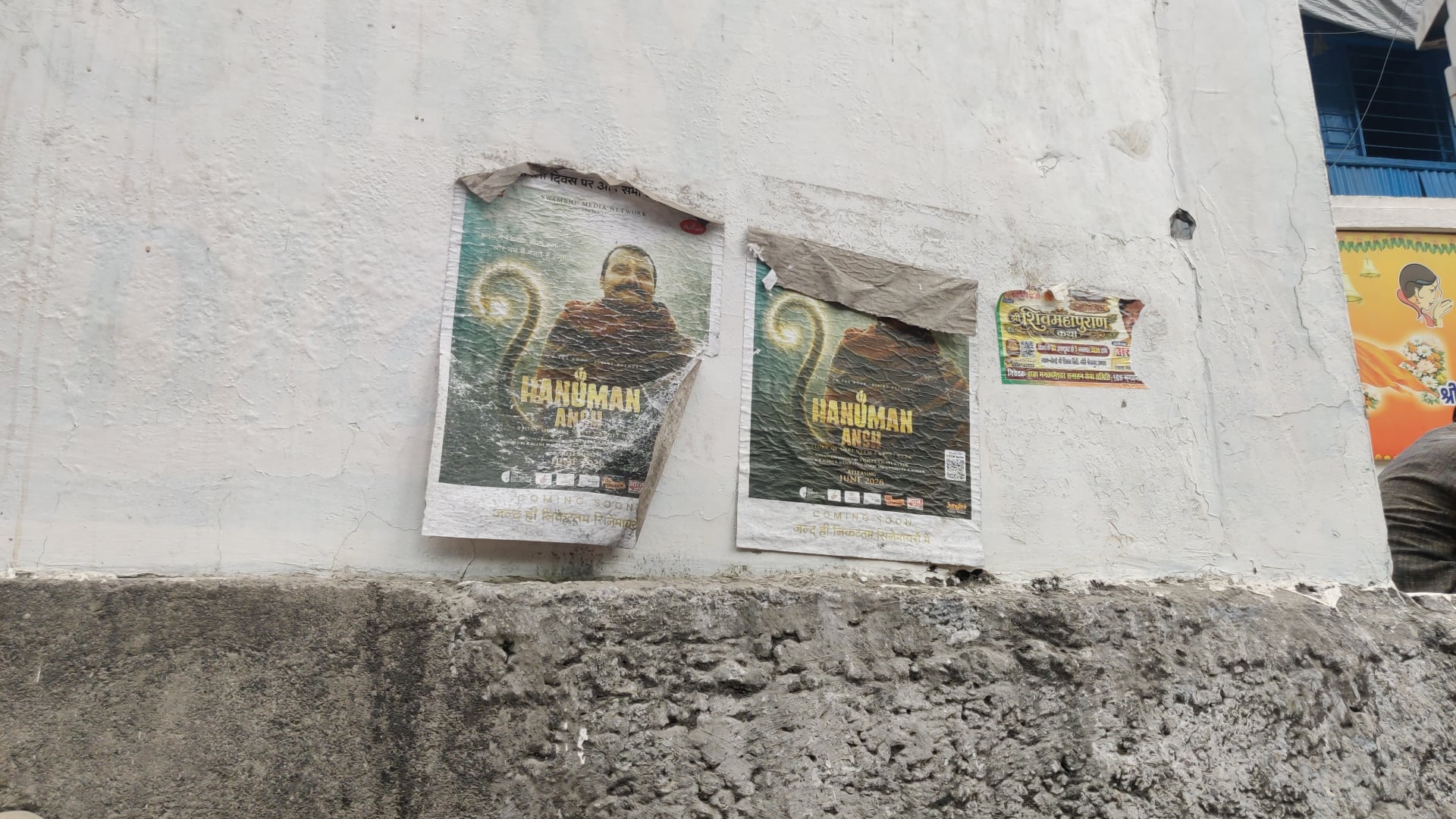
The film also dramatises the story of the young ascetic being thrown off a British-era train for travelling without a ticket. When the train reportedly refuses to move after his removal, he agrees to return only after officials apologise—a story associated with the origin of Neem Karoli railway station.
After watching the film last month, Kumar became curious about Neem Karoli Baba and the stories of the miracles associated with him. He kept thinking about visiting the place he had seen in the film. So, on Monday, he and his friend Shubham Patel made the journey to Kainchi Dham.
For young travellers like them, Kainchi Dham is still an affordable destination: a train journey, a simple meal and a few hours at the shrine can be enough to make the trip. But for Kumar, the journey was about more than a low-cost getaway.
“The movie brought me here. I was deeply influenced by the chamatkars shown in it. After watching it, I started planning a visit. It is very peaceful here and I am feeling very good,” he said, folding his hands before the shrine. Kumar said this place serves both things: religious tourism and mountain tourism.
He then joined the growing chorus of devotees, raising his voice in a simple invocation: “Baba ki jai.”
Kumar is part of a visitor profile that the Uttarakhand tourism department’s carrying-capacity study captures clearly. Nearly 59% of visitors surveyed were first-timers, about 67% were aged 15-30 and 82.4% came from outside Uttarakhand.
This is not necessarily the traditional pilgrimage model of spending several days at a religious site. Nearly 64% of devotees surveyed came for darshan and returned the same day.
Kainchi is increasingly becoming a stop on a weekend itinerary: darshan, lunch, a photograph, a few reels and then back to the city.
The crowd was mixed, with people coming with their families and as couples, but mostly under the age of 40. The number plates offered another clue to the changing geography of the pilgrimage, with many vehicles from UP, Delhi and Haryana.
On Instagram, reels pair footage of the ashram with devotional music and captions such as “Once you start believing in miracles, you will reach here anyway”. Some users have even begun creating AI-generated images of themselves with Neem Karoli Baba, set to songs from Hanuman Ansh.
A pilgrimage is becoming a brand, and a business
There is also a new visual economy around Neem Karoli Baba.
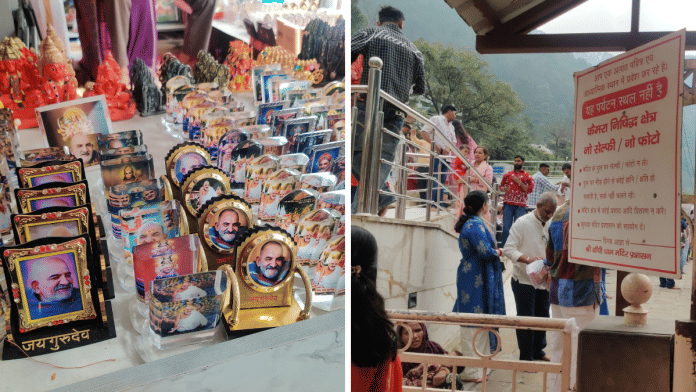
The devotion has given rise to a thriving merchandise industry—decor items, souvenirs, keychains, badges, stickers and photographs. His image appears on calendars, posters, clothing and devotional material. The checked blanket associated with him has itself become a recognisable symbol.
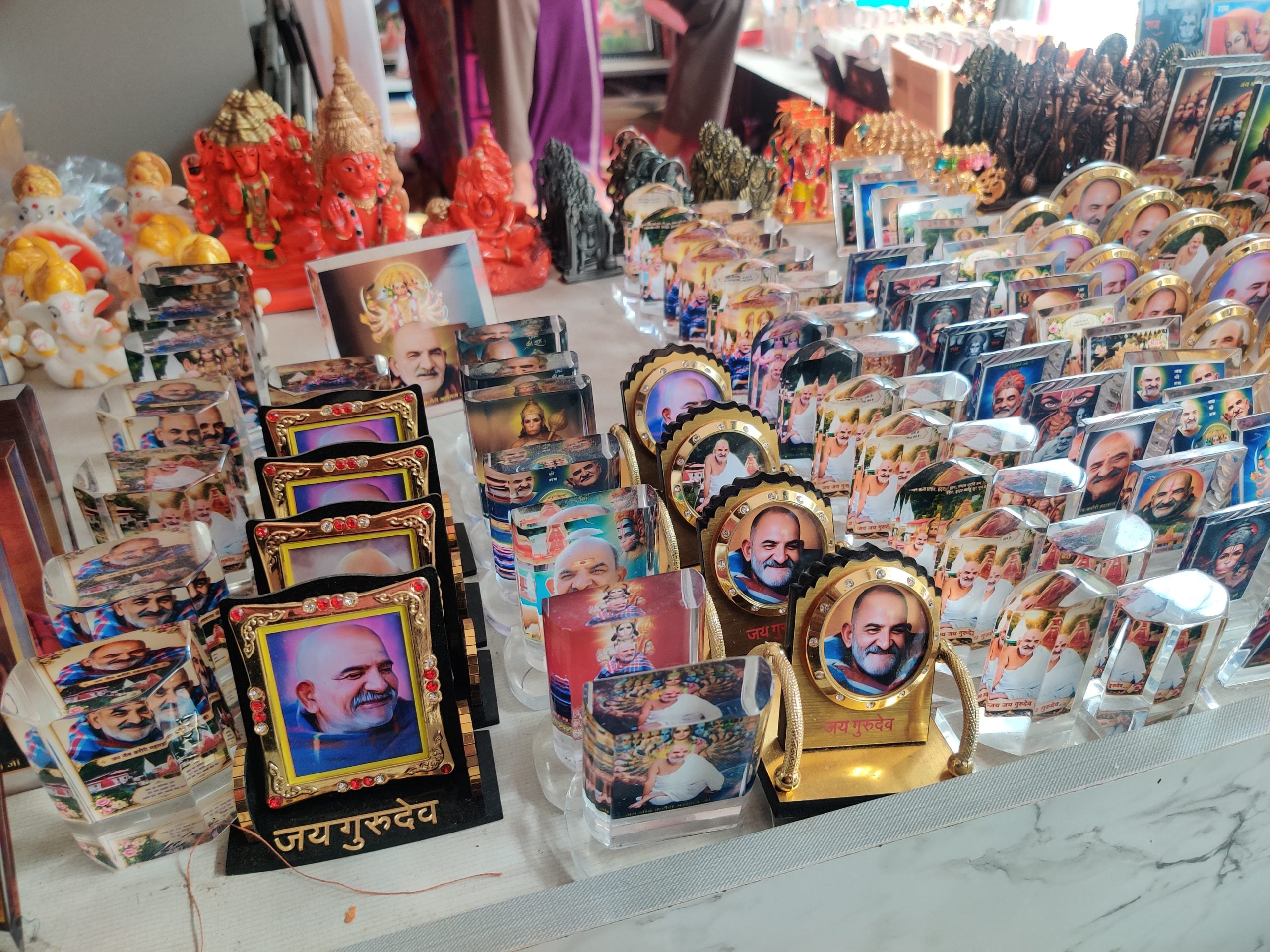
His photographs, sayings and stories circulate alongside travel videos and devotional music. The visual language is strikingly contemporary: young visitors in jeans and sneakers standing before the ashram, influencers documenting their journey and reels turning a relatively remote Himalayan shrine into a recognisable digital location.
The 2026 film Hanuman Ansh, based on Neem Karoli Baba, has its own devotional soundtrack, including Maine Tere Hi Bharose, Jai Hanuman, Raam Bhajan Ki Or and Hriday Mein Jinke Sitaram.
Individual artists have also begun releasing devotional music around Baba. A 2025 nine-song album, Neem Karoli Baba Kainchi Dham, includes tracks such as Neem Karoli Baba Ki Mahima, Baba Neem Karoli Mere Dil Mein and Ram Ram Baba Naam.
Inside the ashram, the transformation is more controlled. Some areas remain closed to tourists. Visitors queue outside rooms believed to have been used by Neem Karoli Baba, where a statue of the saint is placed. They are not allowed to linger and are directed towards the exit, where the temple administration distributes prasad of black chickpeas. Old photographs of Baba hang on the walls.
The result is an unusual mix: a tightly managed spiritual space surrounded by a rapidly expanding pilgrimage economy outside its gates.
The boom is good for business. But most visitors don’t stay
Follow the road away from the shrine and the economic transformation becomes easier to see.
Hotels and homestays have proliferated around Kainchi, Bhowali and Bhimtal. Restaurants serve travellers who arrive for a few hours. Negi started a hotel, Anukampa, in June, catering to VIP tourists with rooms ranging from super deluxe to suite categories.
Around a dozen hotels have opened in Kainchi Dham over the past two years. During the recent peak period, rooms that normally cost Rs 2,000-3,000 a night were being offered for as much as Rs 7,000.
Local businesses are already feeling the difference. With visitor numbers rising, the increased movement of pilgrims is generating employment and business for hotels, restaurants, homestays and taxi operators in Kainchi, Bhowali, Bhimtal and Nainital.
But there is a catch. The majority of devotees do not stay overnight.
“That means Kainchi receives the pressure of a major tourist destination without necessarily receiving the economic benefits of long-stay tourism,” said Negi, who also started the hotel near his restaurant.
For residents, meanwhile, the cost of the boom is measured in smaller disruptions.
During the recent long weekend, the milk that normally arrived at Radha’s doorstep in the morning reached only in the afternoon, held up by the traffic choking the roads around the shrine.
For residents, the problem goes beyond delayed supplies. Kainchi Dham itself has limited medical facilities, Radha said, forcing villagers to travel 8-10 km when they need a medical check-up or treatment.
“If crowds continue to come at this scale, the suffering of local people will increase day by day. The government needs to intervene urgently,” she said, adding that the government should consider mechanisms such as visitor registration and limits during periods of extreme rush.
The shrine administration, meanwhile, says it is aware that the recent rush was a warning of what could lie ahead.
A sevadar at the shrine told ThePrint that the administration has been in continuous discussions with the district authorities to find ways of managing the growing number of visitors without disrupting the lives of people living around Kainchi.
“We had not expected such a large crowd during the weekend. We were surprised. But there were several reasons — the long weekend and the effect of the Hanuman Ansh film. We are in talks with the district administration to work out a long-term and sustainable plan for visitors,” the sevadar said, requesting anonymity.
Not every new visitor, however, leaves convinced.
Twenty-five-year-old Bimal Kumar, a student from Lucknow, came to Kainchi Dham on his bike after watching Hanuman Ansh. He had hoped for a spiritual experience similar to what he had encountered at Khatu Shyam and Vrindavan, but left disappointed.
“Kainchi Dham still lacks the vibe which I found at Khatu Shyam and Vrindavan,” he said.
Kumar said the biggest draw for him was its location near Nainital and Almora. After darshan, he planned to continue to Almora and stay in the hills. He had also come with a specific wish: to pray for a job.
That, perhaps, is the contradiction at the heart of Kainchi Dham’s transformation. It is attracting visitors who arrive looking for miracles, mountain experiences, celebrity stories and cinematic inspiration, often all at once.
The question now is whether the infrastructure, the local economy and the fragile mountain landscape can absorb the pilgrimage that social media and cinema have created.
Kainchi Dham’s fame has travelled faster than its roads can carry its visitors.
(Edited By Raunaq Lekhi)