



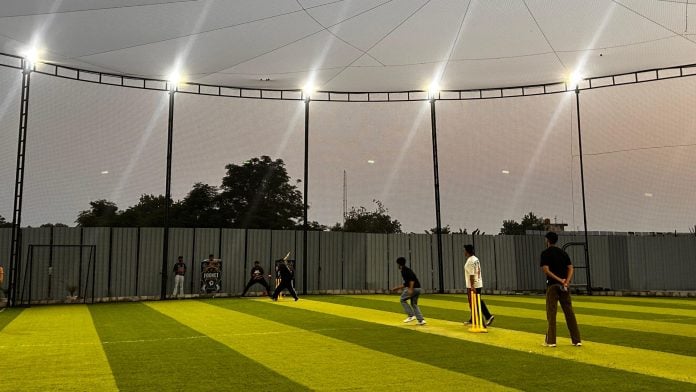
Gurugram: Gurugram’s rural belt has found a new business model. Not malls. Not tall glass-fronted corporate offices. Not the elite mega schools either. It is box cricket turf, a sports arena that matches the Gen Z appetite for sport, fun and, of course, virality. And it brings in big money for farmers leasing out their land. The turf is booked almost every evening, as groups turn up for a few overs, some friendly rivalry, and Instagram Reels.
“Gurugram has money. And the city’s people are always excited to try, invest and explore,” said Tanuj Sharma, co-founder of Urban Sports Adda, a premium outdoor multi-sport facility and corporate event venue.
Decades ago, farmland and open plots in Gurugram were often converted into cricket grounds, which became weekend and winter hotspots: children played in the afternoon sun, corporate employees escaped the monotony of their workweek, and families found an easy way to unwind. But Gurugram grew rapidly, and concrete replaced open spaces, leaving little room for conventional cricket.
At the same time, the appetite for newer, more energetic forms of recreation grew. People wanted something quicker, more social and, above all, more fun. Box cricket offered the familiarity of cricket in a more compact package: fewer players, shorter games and less running, but plenty of action. And the numbers suggest that the appeal is growing.
Box cricket bookings across Playo’s network rose from 4.62 lakh in January-August 2024 to 8.66 lakh in the same period in 2026, an 87.5 per cent increase in two years, as per a report shared by the platform. In August 2026 alone, bookings in metros and Tier-1 cities were up 16.1 per cent from a year earlier.
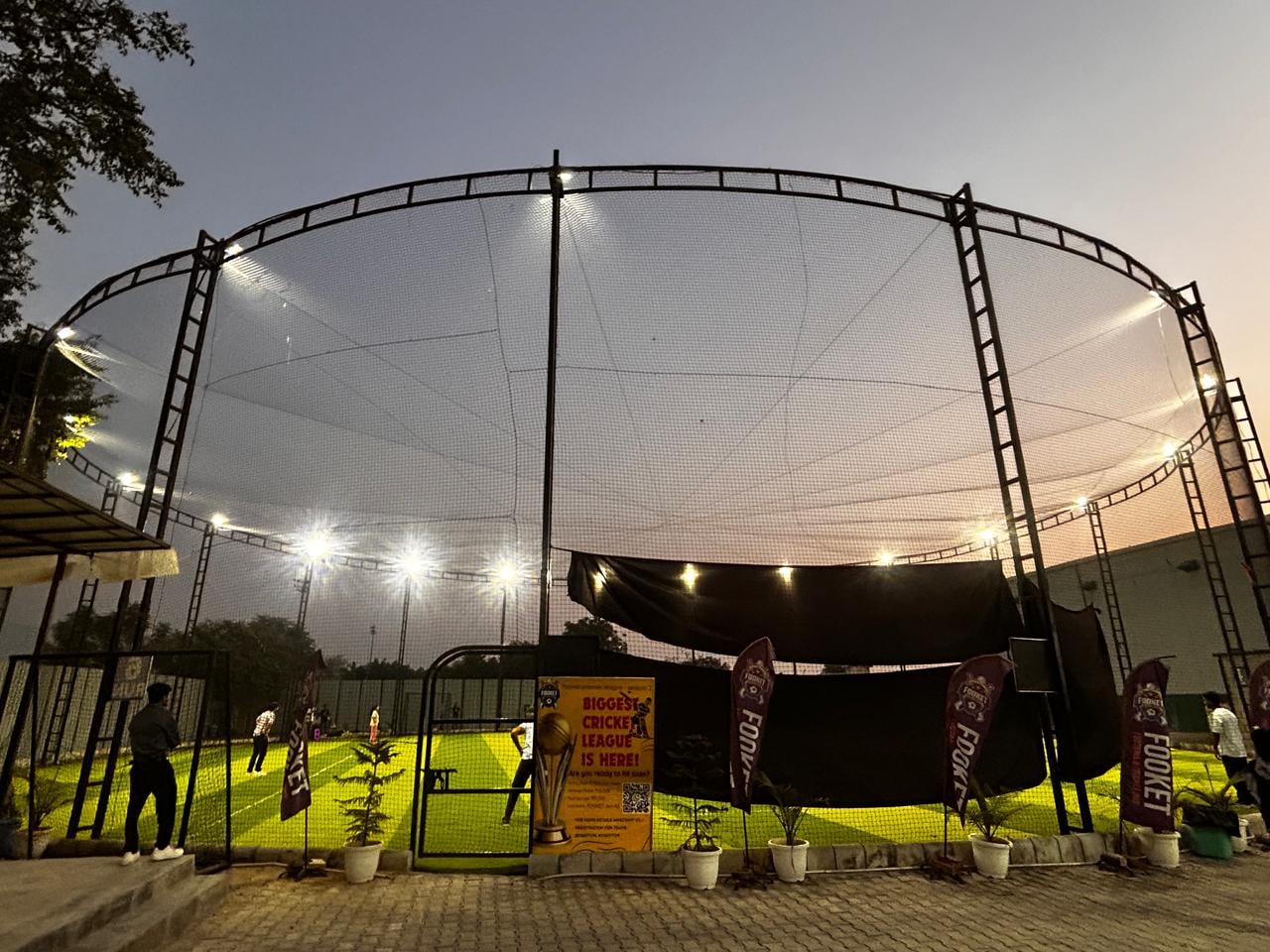
As Gurugram’s rural-urban fringe transformed, land rents rose, with landowners charging more than Rs 1 lakh a month to lease out an acre. The transformation has also created an unlikely ecosystem: a new breed of entrepreneurs building businesses around the city’s shrinking open spaces, catering to an urban population looking for newer ways to play, socialise and unwind.
The boom also depends on landowners leasing out fields for these facilities. As Baliawas villager Dharamvir puts it, “Our land has made all of this possible.”
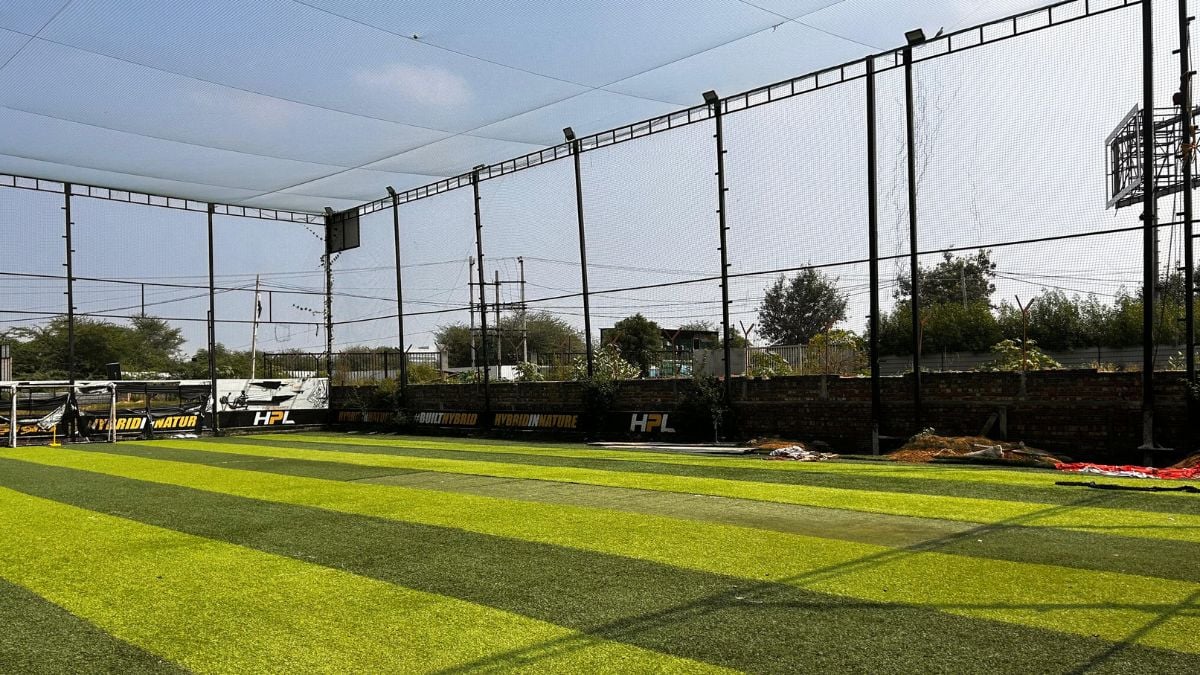
Building a box cricket turf can cost anywhere between Rs 15 lakh and Rs 50 lakh, depending on the materials used.
Saurabh Bhati, founder of Black Stallion Sports and Infra, has built around 300 box cricket turfs in India since 2020.
“Gurugram is changing very fast. There will be a lack of open space in future, and people have customised sports according to that. Instead of large conventional grounds, people are looking at smaller formats and using whatever space is available. That has created a whole new opportunity for sports infrastructure in the city,” he said.
Dual job entrepreneurs
By day, Tanuj Sharma is a school teacher in Faridabad. Come evening, he drives 30 km to Gurugram, where he manages four sports arenas that cater to the city’s after-work crowd. A sportsman himself, Sharma wanted to turn his passion for the game into a business. But his idea was different. He wanted to bring fun into the lives of corporate mazdoor working in the flashy buildings of Gurugram.
Part of Sharma’s daily routine is visiting the four centres he owns with his partner Vikas Dabas: Urban Akhara, Urban Sports Adda, Urban Racer and Urban Off-Roading. Their quest to find the ideal location brought them to Gurugram around 10 years ago. They looked for land with prospects of growth in Faridabad, and Noida too. The duo was convinced that, among all of Delhi NCR, Gurugram had the highest potential.
“Gurugram was the place we found land easily,” said Sharma. “It was after that our business started growing. Now ‘Urban’ is looking for more land in Gurugram to build more sports projects.”
Sharma studied physical education. Even when growing up and working as a head coach at Manav Rachna International Institute in Faridabad, he was always curious about the business side of sports and how it can thrive in a world of artificial intelligence. “AI cannot keep you fit or entertained, but sports can,” he said.
The four venues operating under the Urban brand cater to different kinds of activities. Urban Akhara focuses on ziplining, cycling, wall climbing and other adventure activities. Urban Racer offers go-karting, while Sports Adda brings together box cricket, pedal ball, pickleball, basketball and more. Urban Off-Roading offers a drive path in the Aravallis for adventure. Apart from Akhara, the three centres came up in 2025.
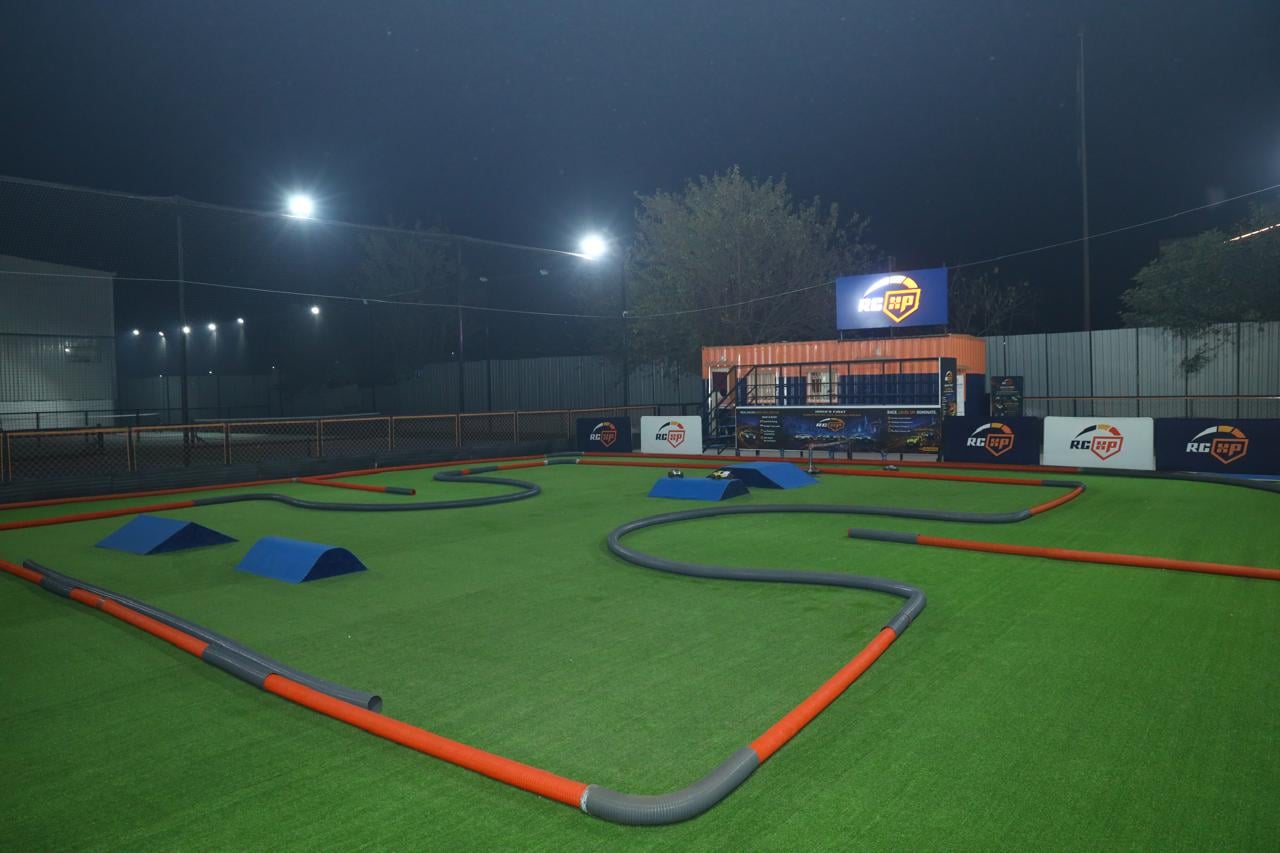
Ten years ago, Gurugram’s sports infrastructure started with a cricket ground. The trend now is multipurpose sports infrastructure, where several sports can be accommodated.
At around 6 pm, all the courts of Urban Sports Adda were thriving. A birthday party was on. For the first hour, more than 20 kids played at the box cricket turf, then, bored, shifted to the basketball court. The next stop was pickleball, with music and food all through.
While the kids were busy having fun, the adults made their way to the box cricket turf. But unlike conventional box cricket turfs, Sharma and his partner came up with a round turf, designed to add to the vibe of the game while giving players a feel closer to a traditional cricket ground.
Blinkit, Zomato, Amazon and American Express have held corporate events at the Urban sports centres.
The centres became a place for community building in a corporate world that can be isolating, and for people living away from home, in nuclear families or alone in the city.
Within a year of opening, Urban Sports Adda has held more than 20 corporate events, something Sharma said would have been difficult to achieve in Noida or Faridabad.
“Gurugram has an appetite for spending on sports, Noida has been more conservative. Faridabad has its badminton, but Gurugram is where you see the real shift–multiple sports, multiple activities, all coming together in one arena,” he said.
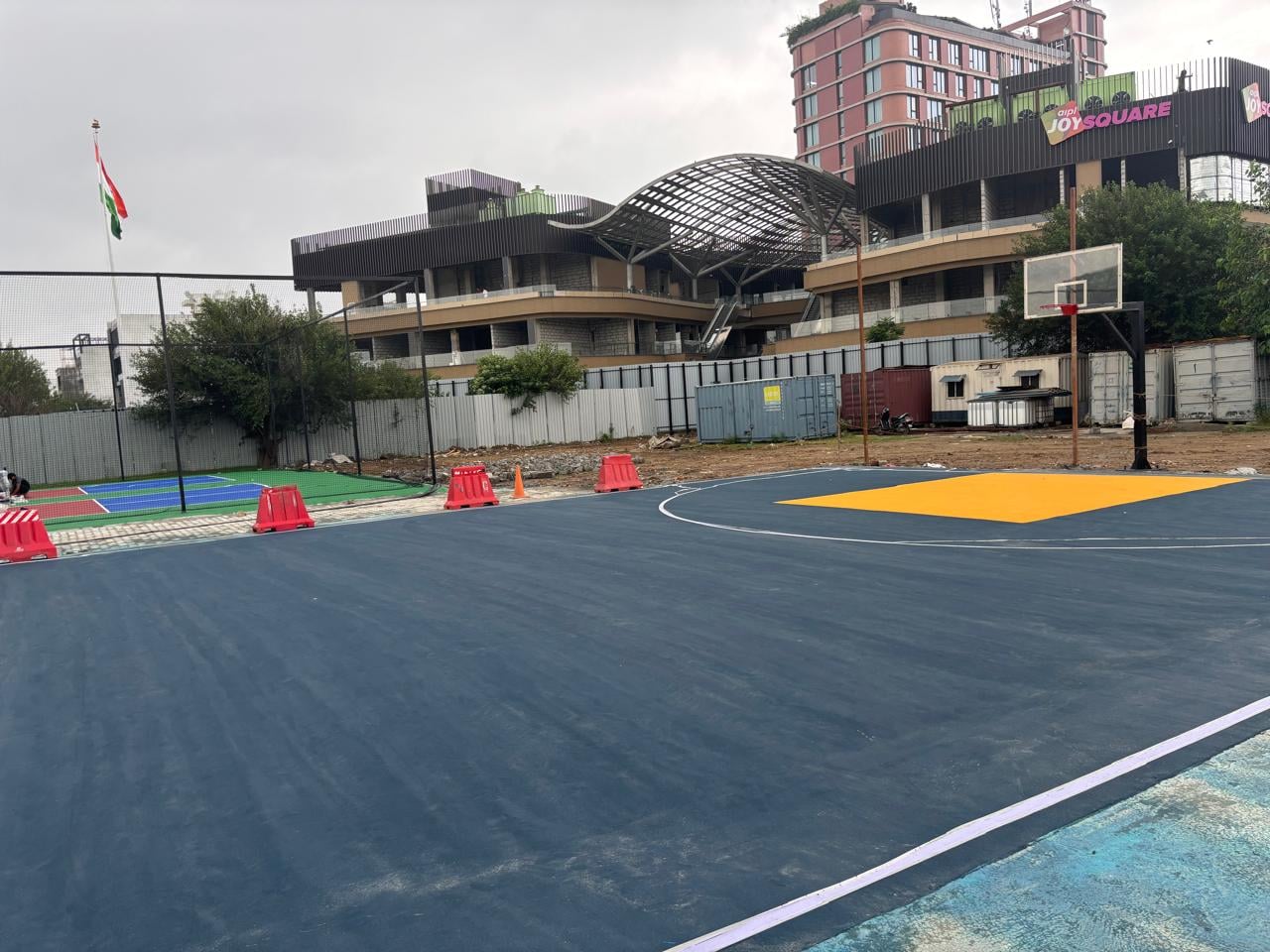
Of all the facilities Sharma and Dabas introduced, box cricket was the clear bestseller, second only to badminton. In Badshahpur, Baliawas and New Gurugram, the three major hubs of sports infrastructure, the telltale nets and strobe lights of box cricket turfs now dot the landscape.
The success of the Gurugram model also prompted Arora, a corporate employee and founder of The Box Cage, to open a new arena in the city. He leased a piece of land in Baliawas a month ago. Every evening after work, he heads to the facility to oversee operations, while his partner continues to run their Noida facility.
Why box cricket
For The Box Cage and Urban Sports Adda, box cricket emerged as the hero. Box cricket is gully cricket, reimagined for a generation with less space and more screens.
It was easy to understand, easy to play and, most importantly, easy to fit into Gurugram’s increasingly crowded urban life. Players no longer needed a full-sized cricket ground, a large group of friends or an entire evening to play. A smaller turf, floodlights and a handful of players were enough.
“If you talk about cricket, you have to play it on a ground, usually for four hours. For a corporate man who is not a regular sportsman and does not have much stamina, that is difficult,” said Arora, a cricket enthusiast and player.
At The Box Cage in Gurugram, the floodlights are on and the caretaker is setting up the ground for the 8 pm booking. Meanwhile, Arora’s phone keeps ringing—another caller looking to book the turf for 7 pm. At Rs 1,200 an hour, the ground is proving easy to rent out. And it is not just cricket on offer: when the stumps come down, the same turf transforms into a football pitch. Arora quickly goes through the app to show the booking that extends until 3 am.
In Noida, Arora leases a school property in the evenings. The Box Cage there broke even within a year. The two partners spent around Rs 50 lakh in 2024 and reported a profit of around Rs 10 lakh.
A month in, Arora is yet to turn a profit, but the arena is already bringing in enough revenue to cover its monthly expenses.
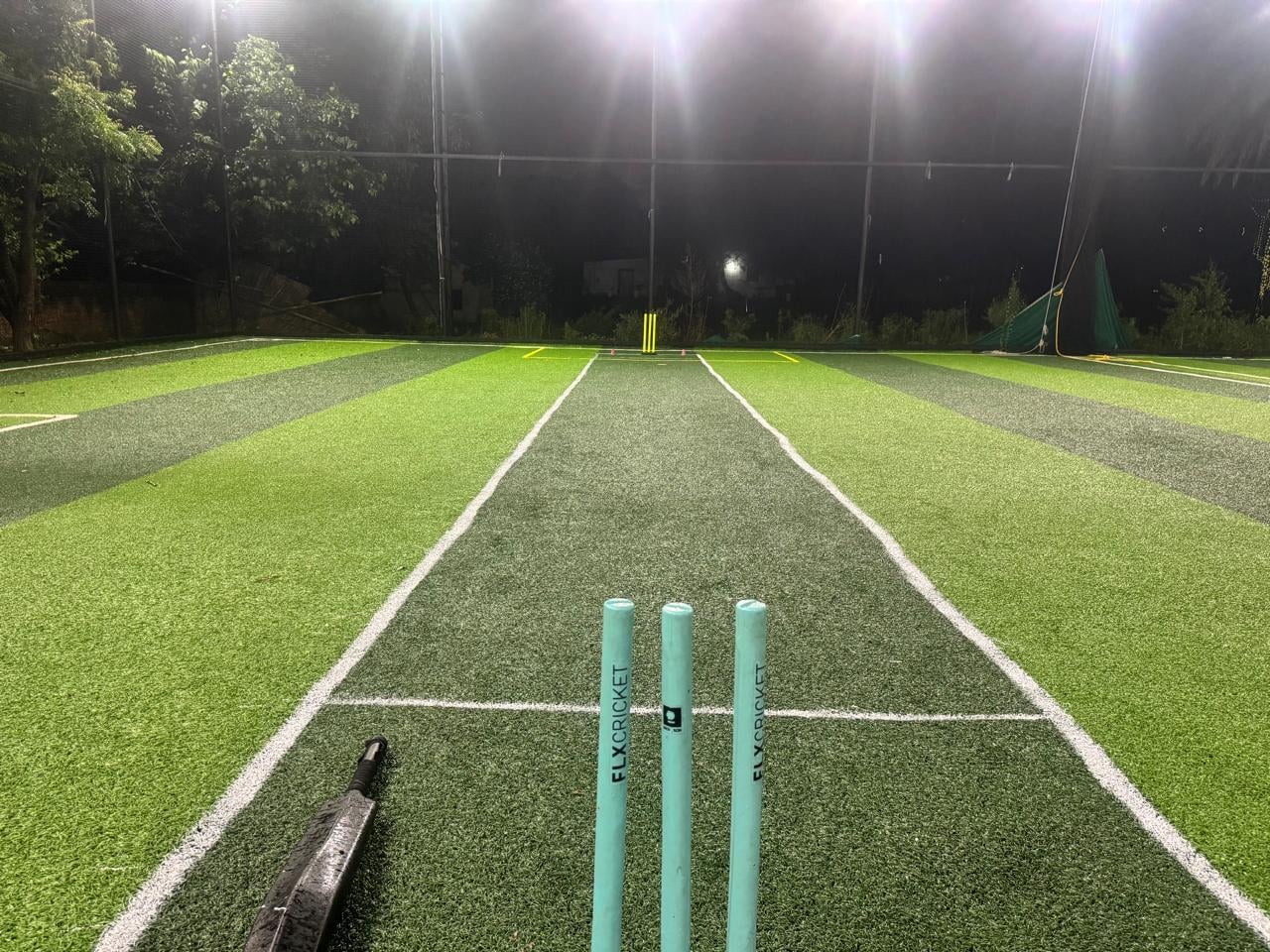
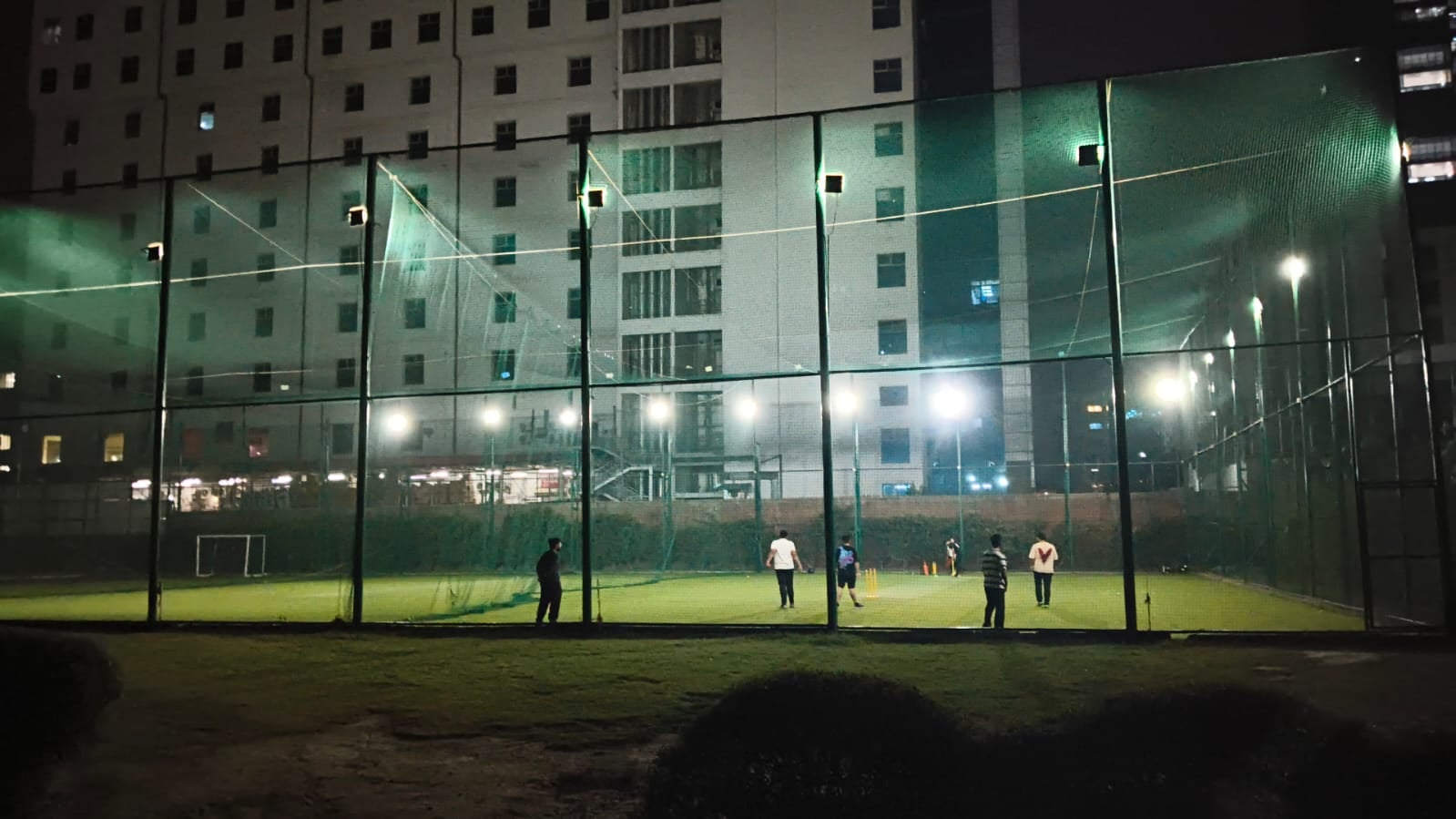
At Urban Sports Adda, a box cricket hour costs Rs 2,000, Rs 800 more than at The Box Cage. The property turned a 30 per cent profit within a year, with box cricket ranking third among its top profit-generating activities.
“It is one of the cheapest forms of entertainment people could find. If the team gets bigger in size, the amount of money automatically comes down,” said Arora.
At Urban Sports Adda, Infra 360 booked the box cricket arena for two hours after a hectic day at work, giving its employees a chance to swap deadlines for sixes.
The game begins with the same aggression as any cricket match. “Here goes a six! It is the fifth over, well done, players… and out!” One of the 16 employees commentates from the sidelines, while the others play with equal rigour.
Among the 16 was 25-year-old Kushagra Chaudhary, a reluctant cricketer with “minimal knowledge” of the game.
He first picked up box cricket while working in Surat, playing weekend games with office colleagues. After moving to Gurugram, it became his after-office fix.
“I liked it because we are not that professional players, and the ground doesn’t suit me that much. This seems pretty good while playing, and it’s comfortable,” he said.
Like many of his teammates, Kushagra grew up playing gully cricket. But on the turf, the mud is gone, the grass is artificial and the boundaries are closer, making the game easier, faster and, perhaps, more forgiving.
And here, the players make the rules. In gully cricket, a ball hitting the window on the seventh floor can count as a six; in box cricket, a straight hit to the opposite wicket can also earn six runs. The rules, much like the game itself, are improvised to fit the space.
“A healthy competition remains between us. Some of them are really good players. They used to play it before also. That is how they also gelled up more… I think it enhances that bonding,” he said.
Looking at the rising opportunities in the area, Ankit Kumar rented a box cricket turf in Baliawas. Kumar is a coach at the arena and at several other sports arenas in Gurugram; his evening job is managing Fluxon Sports. He takes classes on the turf by day, and by evening he is busy with a flood of bookings.
“From each event, Rs 15-20 lakh can come in. We target big companies. Corporates come, they have a time slot of five or six hours. They serve good food, there’s entertainment, people dance to DJs, and they organise physical activity challenges. It becomes a package charge of 2,000 rupees per person,” Kumar said.
After spending nearly Rs 15,000 on rent, Kumar was able to earn Rs 50,000 from the box cricket arena.
No roads, expensive infrastructure and hookah
Fluxon, Urban Sports Adda and The Box Cage have built their infrastructure on swathes of open land that were once sprawling farmlands of Jats and Gujjars. The wheat, rice and vegetable fields were soon replaced by concrete structures.
What stands there now is the aspiration of entrepreneurs who imagined sports as a solution to the loneliness epidemic plaguing Gurugram’s corporates.
A decade ago, when Tanuj Sharma began hunting for land in the area, an acre could be leased for a few thousand rupees. Today, the same acre commands Rs 1–1.5 lakh in rent. When Arora decided to expand his business, he looked for a property in Sector 99, but finally took one beside the main Baliawas road. He now leases around 3 acres there. One right turn from the Baliawas road, the rent is as high as Rs 3 lakh an acre.
“Property prices in the area have doubled over the years, and they will continue to rise as this part of Gurugram develops,” said Sharma.
Baliawas has seen a surge in sports arenas in recent years. Villagers trace the transformation to the arrival of Pathways School; some argue it was the cricket grounds, many of which have now been converted into sports centres.
“Baliawas has developed like this because of the sports facilities. Other villages also have sports, but here there are more grounds and more sports infrastructure,” said Dharamvir, a villager who grew wheat and other crops on the land and now sees an emerging city.
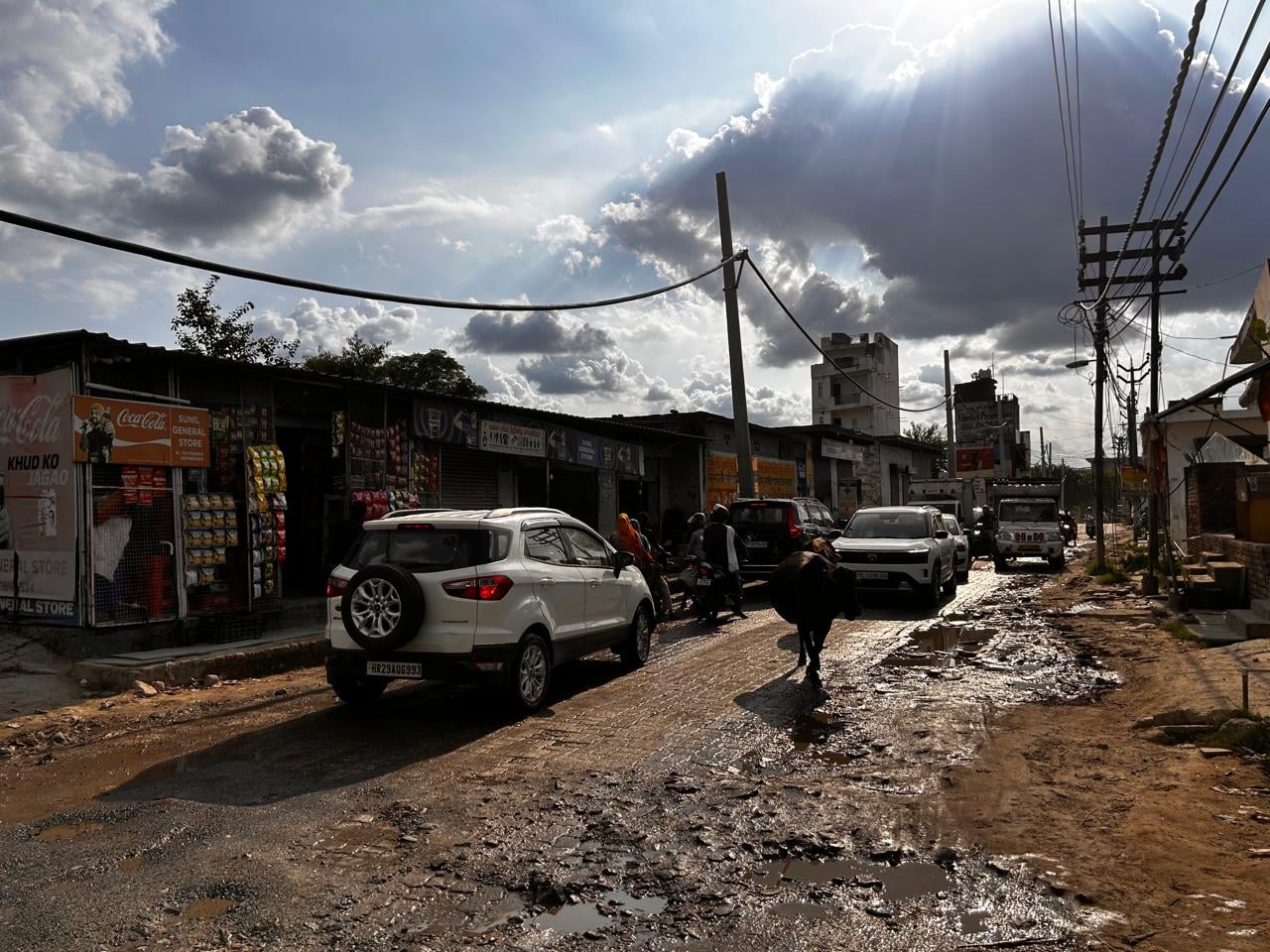
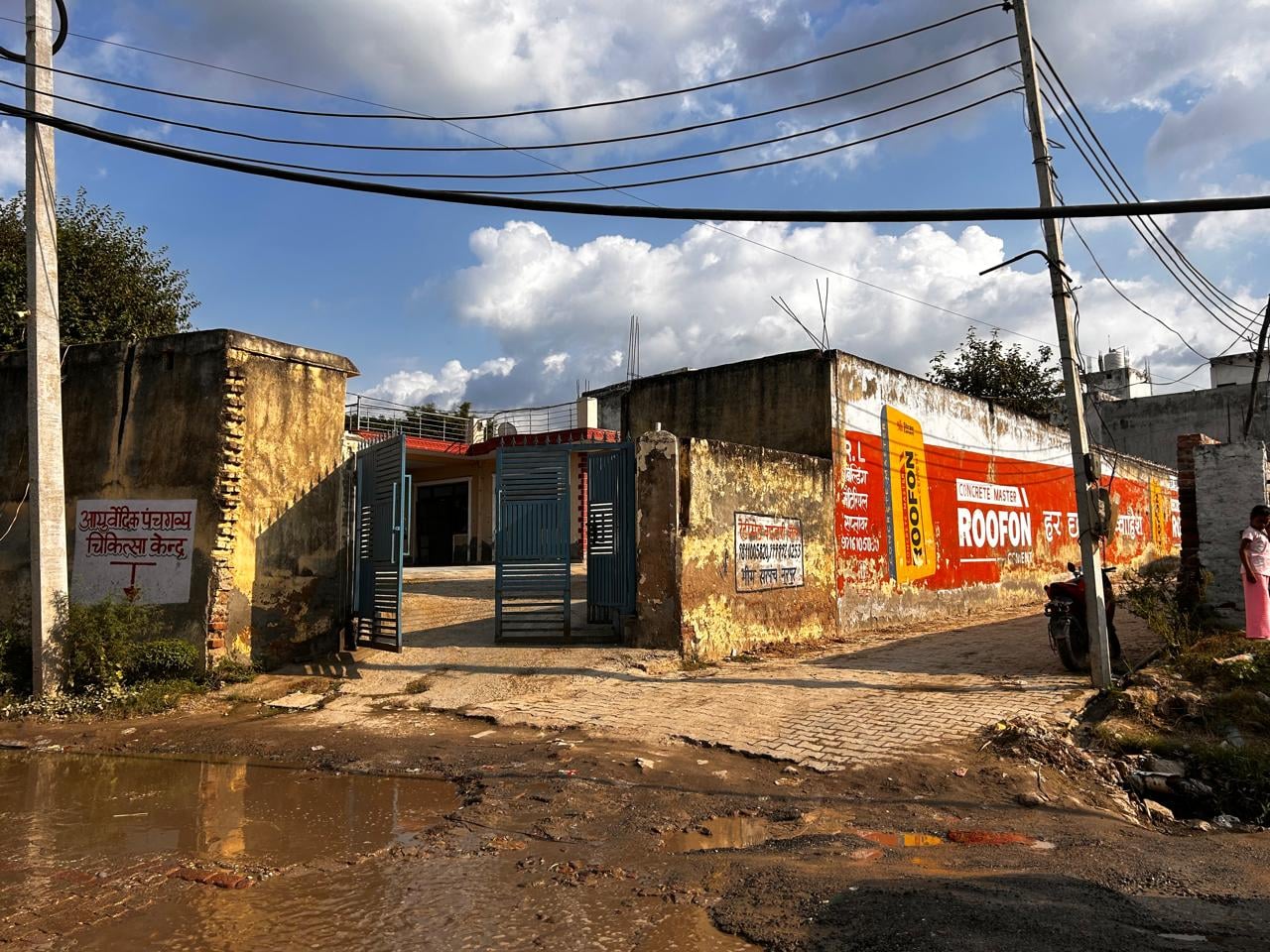
From a distance, it looks like a story of infrastructure and growth. On the ground, however, Baliawas tells a different story. Cars still struggle to squeeze through narrow, muddy roads. No street lights at night to show the way. There is a dispensary but no hospital, while cattle roam the streets.
The boom has also prompted small businesses to reinvent themselves for an increasingly affluent neighbourhood. Vikram Harsana, who was born and raised in Baliawas, once ran a modest omelette joint beside the main road. He is now revamping the property to match the changing surroundings, adding a gym, a lavish restaurant and a hangout joint. Harsana admits that most of the land in the village has gone to sports arenas, but says it is “bringing money to the village and villagers”.
In Baliawas, two worlds are colliding, much like the rest of the Millennium City. While young entrepreneurs cash in on the sports boom, landowners watch from their lawns, hookah in hand, cards on the table.
Seven years ago, evenings in Baliawas meant farmers returning home with their cattle. Today, evenings are spent smoking hookah on lawns, playing cards or catching a nap, as luxury SUVs stream into the village’s sports centres.
“We did not gain enough from this development,” said Dharamvir, though he quickly added that farming had become unviable anyway because stray cattle were destroying crops. Renting out land, he said, has helped them survive in the 21st century.
The price of land, however, has soared. An acre that cost Rs 2 crore a decade ago now sells for nearly Rs 35 crore.
As Dharamvir wraps up his card game with his friends, Fortuners and BMWs begin pulling up at a nearby sports centre.
“Humara gaon star se superstar ban gaya hai (Our village has gone from a star to a superstar),” he said.
(Edited by Prashant Dixit)