





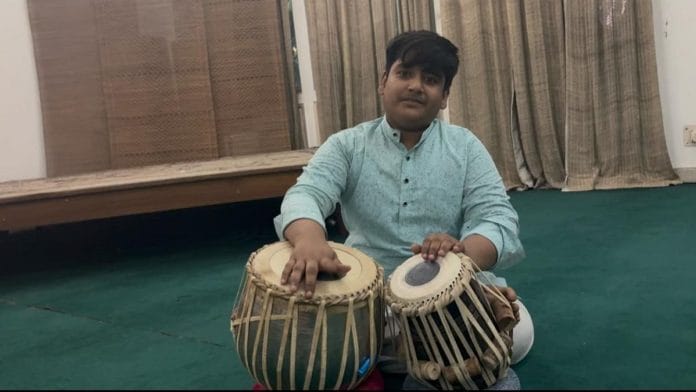


New Delhi: For years, 45-year-old Vinod Mishra was the man people stopped for directions. A security guard at a private company in Noida, he answered questions about where to park and which gate to use. Then, strangers began stopping him for a different reason: “Are you Shivansh’s father?”
His son, Shivansh, was three when he first asked for a dholki. Sensing his son’s gift, Mishra enrolled him a few years later at Gandharva Mahavidyalaya, a premier Delhi institution for Indian classical music training. The family, used to being overlooked, suddenly became visible. Shivansh now performs at events across the city. On his days off, Mishra takes the Metro with Shivansh to the music school and waits outside with other parents. They are all there with the urgent, fragile hope that music will open doors for their children. Sometimes, someone recognises him as Shivansh’s father, and the uniform fades. He is simply the father of a promising young tabla player. Through his son, Mishra has found a new sense of purpose.
Children like Shivansh could not always walk into a Delhi classroom and learn music without lineage or privilege. Gandharva Mahavidyalaya changed that. The school is the modern manifestation of a radical idea born 125 years ago in Lahore: music for the masses, not just the elite few.
In 1901, Pandit Vishnu Digambar Paluskar established the first Gandharva Mahavidyalaya to dismantle the elite monopoly of gharanas. He opened a structured, professional music education to all, irrespective of caste or class. Through Vinay Chandra Maudgalya, a student of Paluskar who set up a branch in Connaught Place, it remains the one pre-Partition import that has thrived, flourished, and become a central part of Delhi’s cultural landscape.
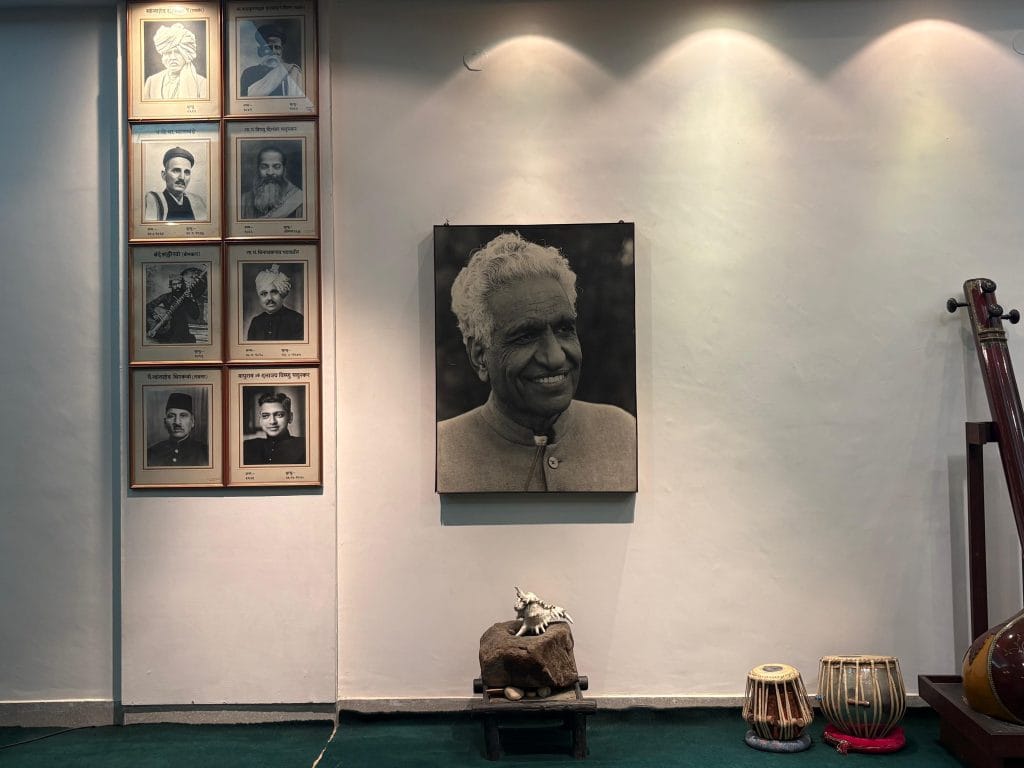
Today, that same idea continues to shape aspirations, but the dreams it carries have evolved.
Reality television shows such as Indian Idol and Sa Re Ga Ma Pa have ignited feverish ambitions among middle- and lower-income families. For them, these platforms represent a fighting chance for recognition, financial stability, and social mobility. Families arrive at the Mahavidyalaya with the hope that the rigorous training will become a stepping stone to something larger. The monthly fees of around Rs 3,000, or less, are affordable, and the dreams are limitless.
Nowadays, everyone has a craze for Bollywood… [thinking] you get results instantly. You don’t get results instantly
-Madhup Mudgal, principal, Gandharva Mahavidyalaya
To make music accessible to all, the school loosened the grip of gharanas—exclusive, secretive family lineages of musicians—with a formal syllabus and certifications.
“They have created newer compositions which are easier for students to learn. The idea was to bring music out of the gharana system—that was the main theme they started with,” said F Wasifuddin Dagar, an Indian classical singer of the Dhrupad genre and the son of dhrupad singer Nasir Faiyazuddin Dagar. “The gharana people have always maintained that music was meant to be taught within gharanas. Now everything has been reformatted into a degree-oriented system, designed around examinations and formal certification.”
But the institution’s break from the gharana system was not absolute, according to him.
“We have heard slogans like ‘down with gharanas’, but in reality, even they have drawn heavily from the gharana tradition,” Dagar added.
When Maudgalya brought this vision to Delhi in 1939, he began modestly from a three-room house near Regal Cinema. It quickly became a vital performance space, hosting concerts by some of the most influential figures in Hindustani classical music, from Pandit Bhimsen Joshi to Pandit Jasraj to Ustad Amjad Ali Khan, who gave a childhood performance here.
Since then, the Mahavidyalaya’s classical heft has also translated into contemporary pop-culture success. Mainstream stars such as Kailash Kher, Rekha Bhardwaj, and Neeti Mohan have spoken about building their vocal foundations here.
For Kiran Seth, founder of SPIC MACAY, the Gandharva Mahavidyalaya balances two parallel streams of learning.
“The Mahavidyalaya takes in students inclined toward the guru-shishya tradition and trains them to become artists. But alongside that, there is also learning for general awareness—just to play a little flute or understand a little music. If I know more about Raga Malkauns, it deepens my appreciation when someone performs it,” he said.

Also Read: Shubha Mudgal has a complaint. Industry reduces classical music to a relic
Music as mobility
Every evening at a small Shiv temple in Mandawali near Laxmi Nagar, a nine-year-old boy would sit with a dholki in his lap, following the rhythm of the aarti. He was just another child in the crowd at first. But over time, people noticed the way he played, and then they began to remember him. Five years later, that same boy is known across the neighbourhood as “the tabla player”.
“He has been coming here since he was very small, and he plays very well,” said the temple priest, recalling those early days. By the time he auditioned for Gandharva Mahavidyalaya, Shivansh already knew his way around the dholak. After he was selected, he switched to the tabla.
Now 14, Shivansh has moved from temple aartis to stage performances. He accompanies singers at ghazal, Sufi, and classical programmes, sometimes playing 15-20 events a month.
“There is no fixed price for art. I have never told anyone, ‘You must pay this much’,” said Shivansh’s elder brother Sujal Mishra. Nevertheless, the income is not insignificant.
After seeing me, some children from my neighbourhood also started learning. A few of them came to me saying they wanted to take admission at Gandharva Mahavidyalaya. Two of them managed to get in—I recommended them to my teachers and even went with them for their auditions
-Shivansh Mishra, 14-year-old tabla player
While neighbourhood gigs might pay nothing, well-organised events can bring in Rs 5,000-6,000, and week-long religious festivals up to Rs 12,000. Annually, Shivansh contributes nearly Rs 2 lakh to the family income through music.
The money helps, but the recognition has done more. For Vinod Mishra it has restored a sense of self-worth that had been worn down over years of drudgery.
“I had lost all my hopes with myself and my job,” he said.
When he watches music reality shows, he says he occasionally pictures Shivansh on the stage and himself in the audience. But he doesn’t allow himself to indulge in such reveries for very long. He doesn’t want to burden his son with expectations. It is a fine line he walks every day—between hope and restraint.
Shivansh has his own goals. Of a different life for his father.
“No, Papa, you should leave your job now, I’ll take care of the family,” he has told Mishra multiple times.
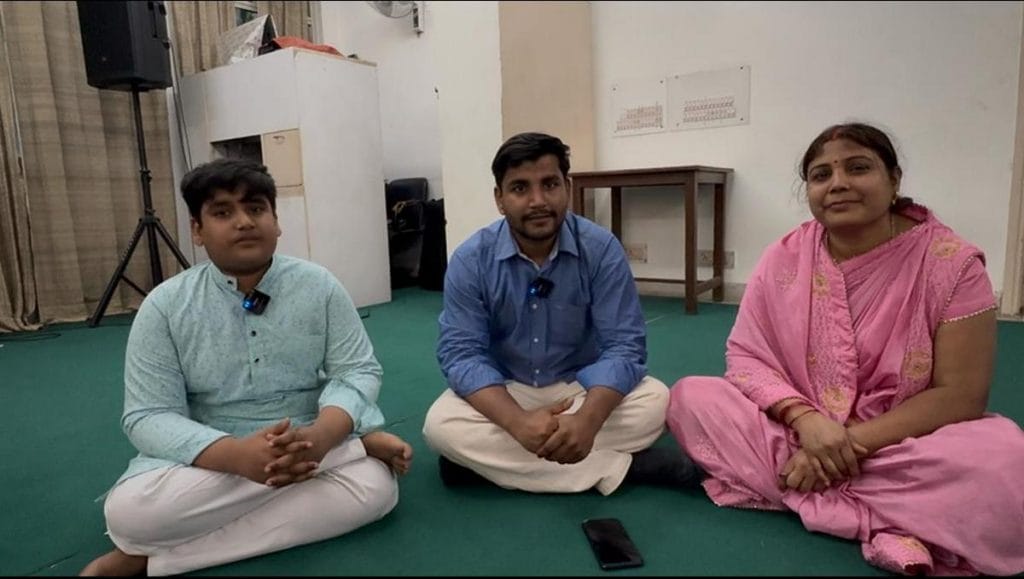
Mishra does not dismiss it. If Shivansh succeeds seriously in music, he says, perhaps he will not have to spend the rest of his days at a gate in Noida. Over time, resignation has given way to reimagining what life could look like.
Inspired by Shivansh, other children in Mandawali are now showing up at Gandharva Mahavidyalaya. Some have enrolled, others are preparing for auditions.
“After seeing me, some children from my neighbourhood also started learning. A few of them came to me saying they wanted to take admission at Gandharva Mahavidyalaya. Two of them managed to get in—I recommended them to my teachers and even went with them for their auditions,” he said.
A three-generation mission
Inside Gandharva Mahavidyalaya, which now occupies a two-storey brick building on Deen Dayal Upadhyaya Marg, the beat of a tabla spills out of one room, a tanpura hums softly in another, and a voice rises, searching, settling into its note. In another room, a Kathak class is in progress, students tapping their feet softly as they practise together.
Further down the corridor, an Odissi class is underway. Students practise with deep focus as the acclaimed Odissi dancer Madhavi Mudgal moves among them, gently correcting a gesture here, adjusting a posture there.
She and her brother Madhup Mudgal — a Padma Shri awardee and the school’s principal — are taking forward the mission their father, Vinay Chandra Maudgalya, inherited from his own guru Paluskar: that music was a discipline, a spiritual pursuit, and something that belonged to the public. At the turn of the 20th century, when Hindustani classical music lived almost entirely inside royal courts and hereditary lineages, that idea was almost revolutionary.
“I have been connected to it since my birth… I was born in Gandharva Vidyalaya,” said Madhavi, 74.
Growing up, the school was just a handful of rooms where rehearsals merged into daily life. Since then, it has become both a continuation and an expansion of Paluskar’s reform.
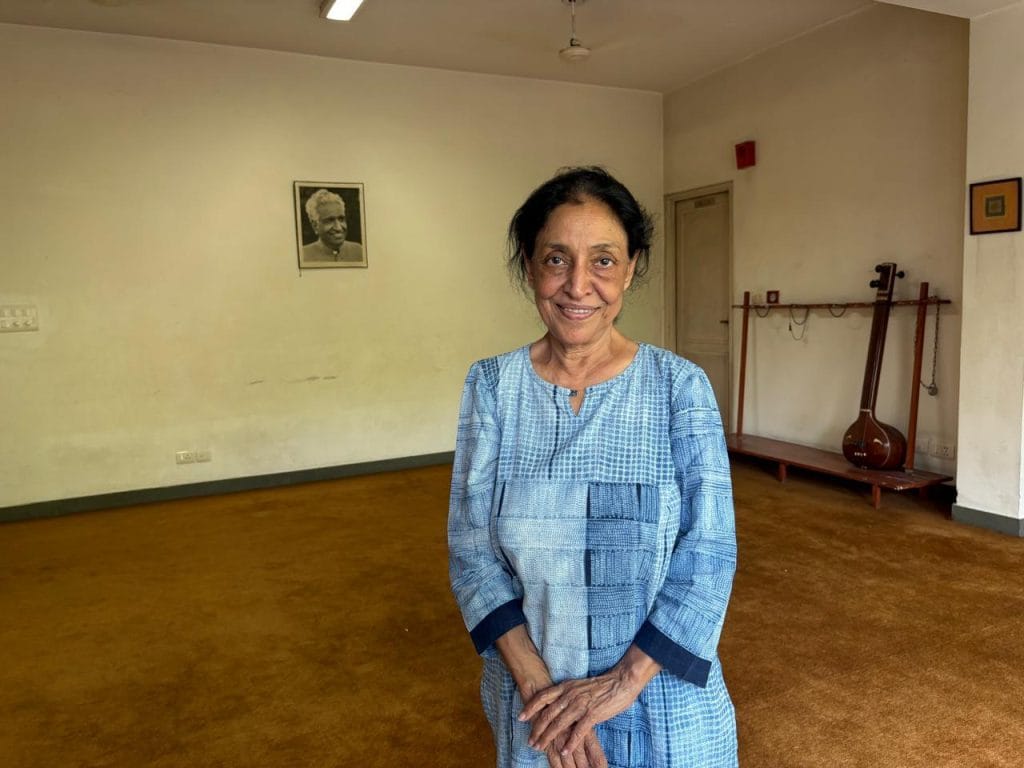
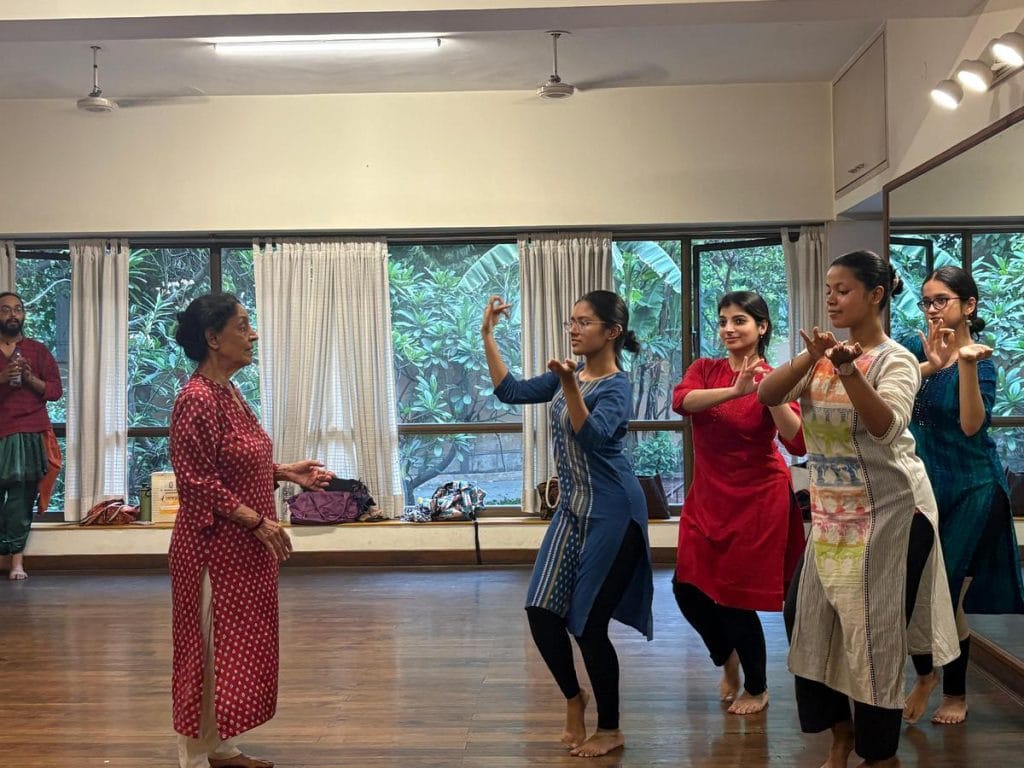
“All the great artists came to our school… we didn’t even know how big they were,” Madhavi said. Music conferences and festivals would draw large crowds who stayed for hours, sometimes from morning until late at night. The third generation grew up the same way as well.
Madhup’s daughter Sawani Mudgal, herself a classical vocalist, recalled a childhood that seems extraordinary only in hindsight. Growing up within the institution, she was surrounded by some of the greatest names in Indian classical music—artists like Zakir Hussain and Ravi Shankar—without fully realising who they were. They were simply part of the environment: staying there, eating together, moving in and out of daily life. Today, Sawani is the Mahavidyalaya’s director of administration. She also teaches there and conducts the children’s choir.
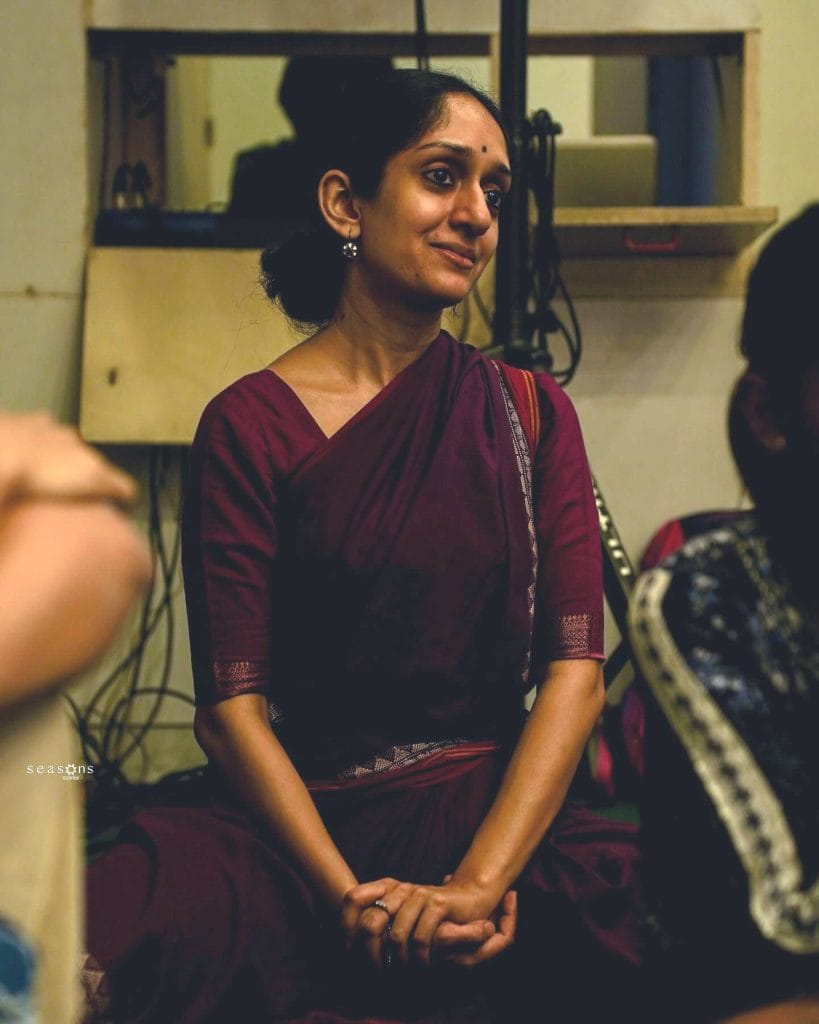
For principal Madhup Mudgal, preservation is not about resisting change, but about holding on to what matters.
“If I can preserve the old, then this is a great achievement,” he said.
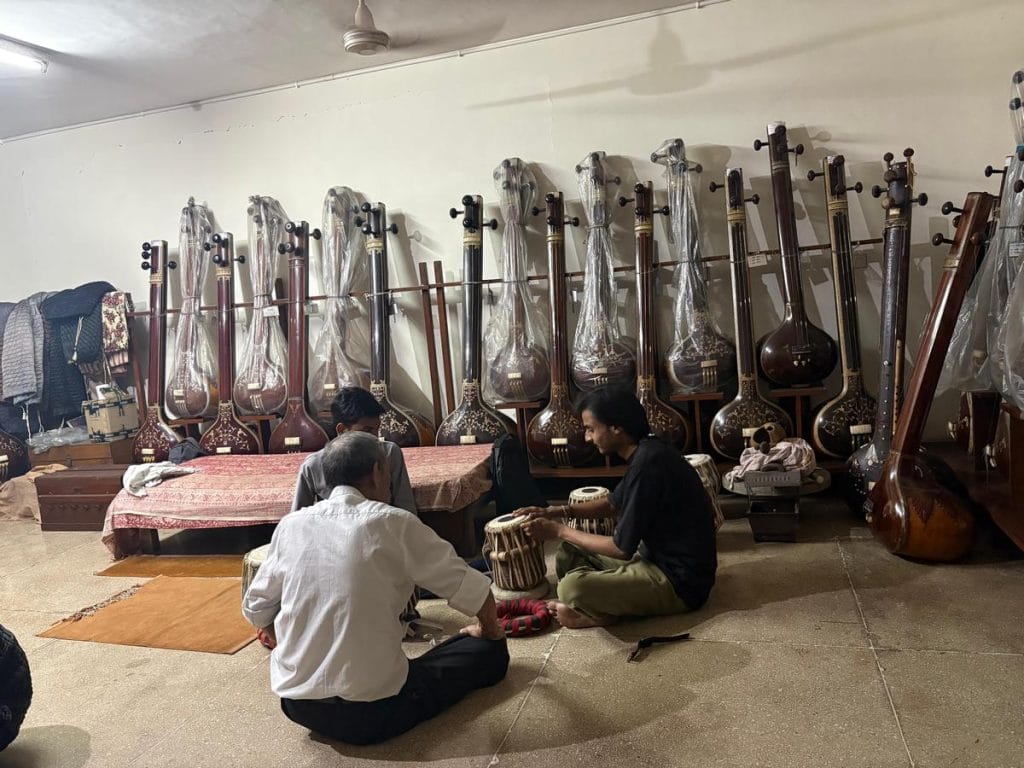
In a room full of tanpuras is 75-year-old Dewan Singh, who arrived as a domestic worker when he was just 10 and eventually became the school’s master instrument tuner, his ear honed by being around the music for years.
But more and more, the devotion to classical music within the walls has had to contend with the trend-driven appetite for instant stardom. One such turning point came in the 1990s, when Sadhana, a Doordarshan documentary series created by Anuradha Chaurasia, wife of flautist Hariprasad Chaurasia, unexpectedly created a frenzied wave of interest in learning classical music. It featured interviews of legendary musicians such as Ustad Bismillah Khan and Pandit Bhimsen Joshi.
“There was a surge in the admissions,” Madhup said. “At that time, we had to call the police. People were climbing the gates. The admissions were cancelled.”
While the institution stands for the democratization of music, Madhup is wary of a mindset that ignores the years of discipline behind the art.
“After seeing that, everyone thought about how easy it is. It started looking glamorous,” he said.
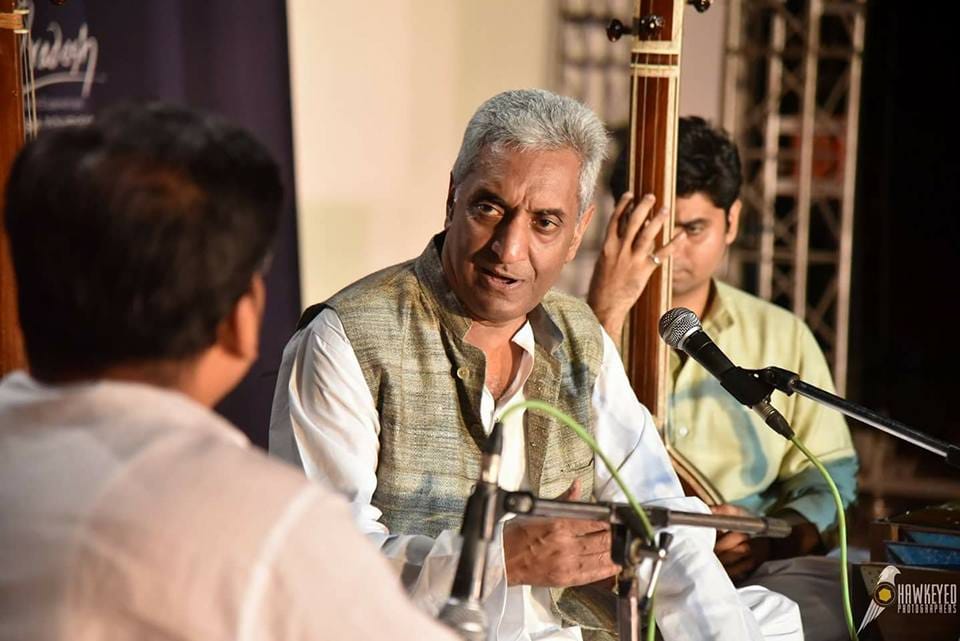
Over the years, he has seen students change. Earlier, classes were smaller, learning was slower, and expectations were different. Today, many arrive influenced by Bollywood, reality shows, and the idea of quick success.
“Nowadays, everyone has a craze for Bollywood… [thinking] you get results instantly. You don’t get results instantly,” he said.
Despite his concerns about shrinking patience and changing cultural habits, Madhup said audiences for the classical arts are growing again, especially when exceptional artists perform.
He pointed to a performance by Hindustani vocalist Venkatesh Kumar earlier this year at another venue, where a staggering crowd had turned up.
“For him, an unprecedented crowd was there,” Madhup said. “The programme had not started yet and people were standing there. I have never seen this.”
Between learning and livelihood
Outside the classrooms, the lesson rarely ends when the hour does. Students step out in small groups, repeating what they’ve just learned, correcting each other mid-sentence. Some softly hum a raag as they head toward the exit.
Students from all walks of life come here, from 12-year-olds clutching water bottles to college students and retirees learning music for the first time. Outside the classrooms, rows of footwear pile up unevenly—polished school shoes, worn rubber slippers, and dusty sandals. Some students arrive with parents in cars and scooters, others step out of autos or walk in from the nearby Metro station and bus stop.
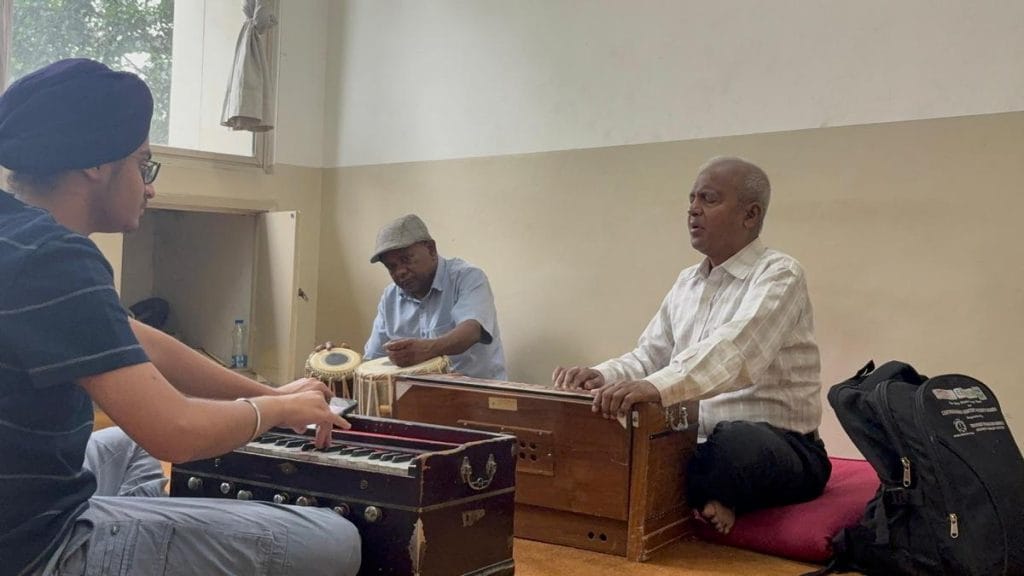
In the waiting areas, mothers arriving straight from office sit beside domestic workers, all waiting to collect their children after class.
Money is not a barrier. For students who cannot afford the fees, Madhup — affectionately called Bhaiya ji — often reduces them. Talent, he insists, should not be limited by funds.
But the meaning of learning itself has begun to shift. Students are driven by different motivations, according to Sawani.
“There can be two reasons. One is that they really want to learn. The other is that they are seeing that they can make a career in the future,” she said.
Access has widened, but aspiration has changed with it. Shows like Indian Idol have reframed classical music as a high-speed pathway to name and fame. Sometimes, parents have to be counselled.
“We sit with parents and help them understand the sadhana and effort it takes,” said Kathak teacher Moumala Nayak. “We tell them not to come here expecting easy money or fame, and to let the students focus.”
We sit with parents and help them understand the sadhana and effort it takes. We tell them not to come here expecting easy money or fame, and to let the students focus
– Moumala Nayak, Kathak teacher
But for 21-year-old Aditi Mishra, translating her learning into earning was a matter of necessity. Her father, who worked in field marketing and sales for a publishing house, had supported the family on his salary for years, until the pandemic led to a sizeable pay cut.
“During COVID, that work was completely shut down and now everything is online. So, the physical marketing has been reduced,” she said. With no other cushion, Aditi started teaching western music and dance, first to a handful of neighbourhood children in private classes, then at a school as a music teacher.
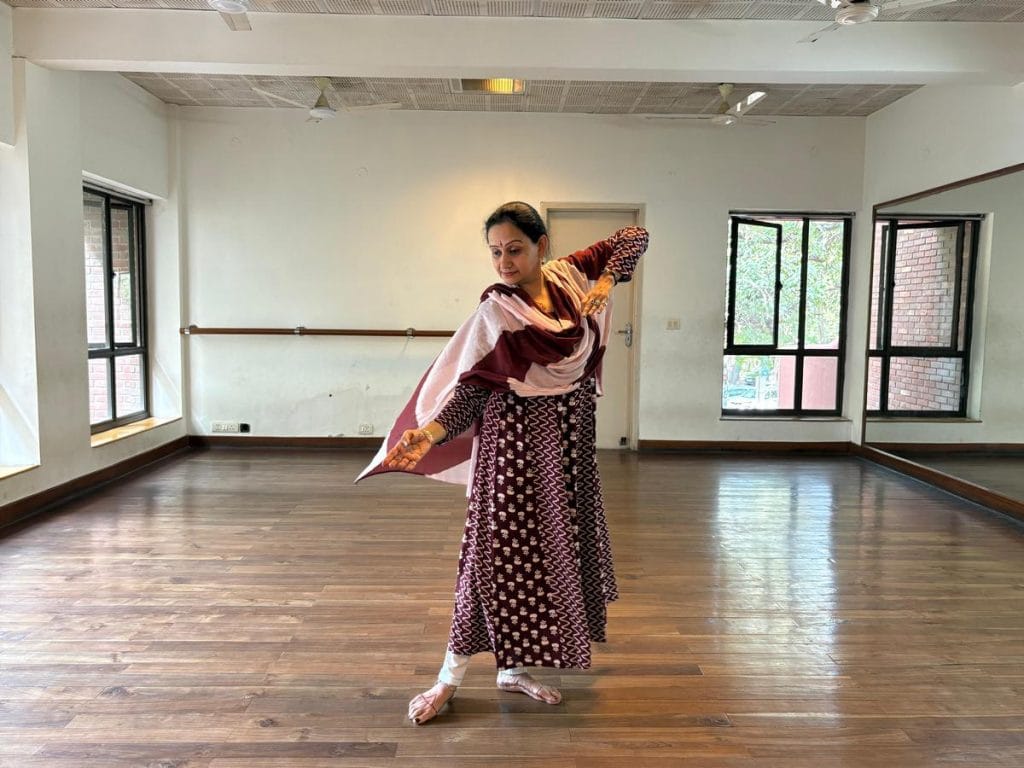
Her own education in the arts has been eclectic. At Gandharva, she learns Kathak, but had earlier trained in Bharatanatyam and music elsewhere. She is also currently pursuing a Bachelor’s in Performing Arts. The rest of the time, she teaches and performs wherever she can get gigs— cafe shows, small gatherings, weddings. It all adds up into a tidy income for the family.
“If there is a two-hour setup, then you can easily earn Rs 8,000-10,000,” she said. “If I add up everything in a month, I earn Rs 60,000-65,000. The financial burden is very low.”
In her household, the aspiration is not celebrity but to find a sustainable way to keep the art alive and pay the bills. Aditi’s mother, who is also trained in classical music, often talks about the family opening their own institution.
“Mom always has a permanent dialogue– just settle down for yourself,” Aditi added.
Sadhana and syllabus
Long before music education was organised into batches and credit hours, learning followed the guru-shishya parampara—an immersive, intimate rhythm without a curriculum or a clock.
“The guru-shishya parampara is all about complete surrender towards learning and immense respect for the Guru. Discipline was not forced through fear alone. It came from consistency, dedication, and the understanding that music is a lifelong sadhana,” said Neha Mishra, a former Gandharva Mahavidyalaya student who is now a classical music teacher.
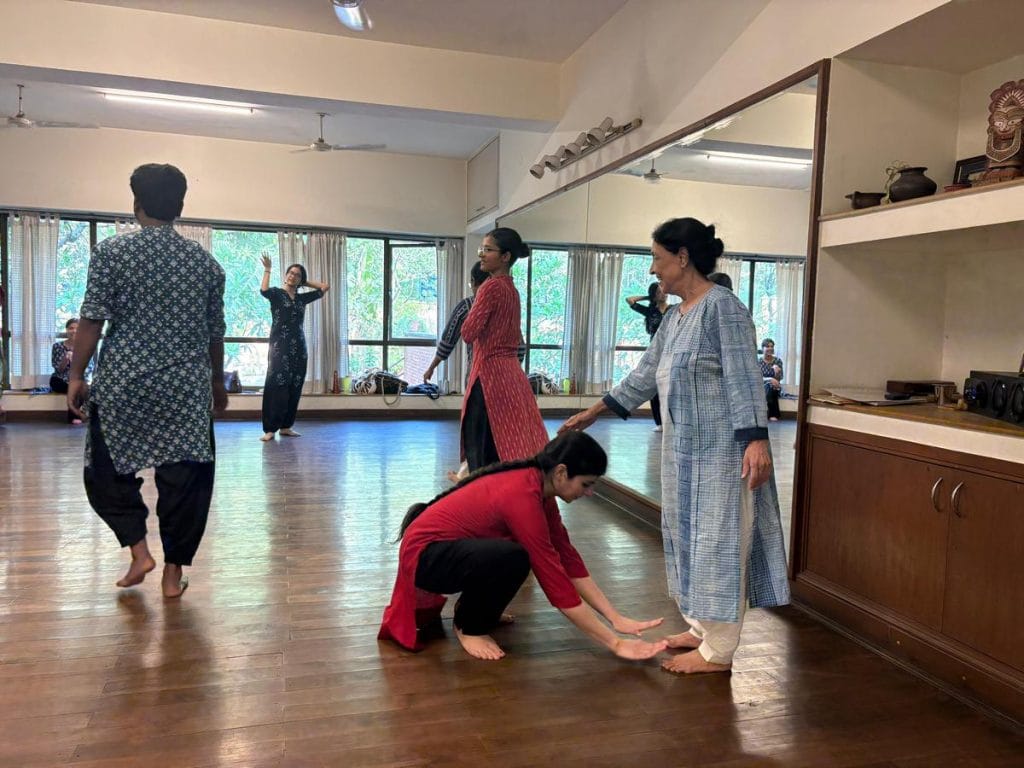
In that older tradition, the ‘classroom’ had no clear beginning or end. Learning didn’t stop with formal instruction. It continued through watching, imitating, and absorbing. A single line of a composition could take weeks or months to perfect.
The relationship between the guru and the shishya was itself central to the process. A guru was supposed to shape the student’s temperament, discipline, character, and way of thinking.
Today, traces of that tradition remain, but the structure of the classroom has changed. The learning is more organised, often divided between individual sessions and group classes.
“I was completely new to classical singing. Stepping into that first class brought a different kind of nervousness—the unfamiliar teacher, the new atmosphere, and the seriousness of the training. I still remember how I used to shiver while singing in class,” said Neha. “Our teacher was strict, but that strictness shaped us.”
We have heard slogans like ‘down with gharanas’, but in reality, even they have drawn heavily from the gharana tradition
-F Wasifuddin Dagar, Dhrupad singer
The challenge wasn’t just the instructor, but the daunting task of performing for an entire room of peers.
“I practised every single day before class, just to be able to sing properly and confidently. There was a constant sense of discipline and responsibility towards riyaaz,” Neha added.
In these modern classrooms, repetition is still the engine. A phrase is sung, interrupted, corrected, and repeated for weeks until it settles into the bone.
“There were times during training when I would practice for hours without realising how much time had passed… I wouldn’t feel sleepy or even hungry because my entire focus would be on understanding and perfecting that one thing,” said Mishra, recalling the intensity of her one-on-one training sessions.
But the experience varies by format.
While one-on-one sessions offer tailored focus, with no flaw overlooked, group classes have the advantage of a collective ear—students learn by listening to the mistakes of others and picking up different approaches in a shared musical space.
The catch, Mishra said, is pace. In a group, every student learns at a different speed, and personal rigour can get diluted.
The result is a system that swings between two worlds: the intensity of old-school sadhana and the shared experience of a common syllabus.
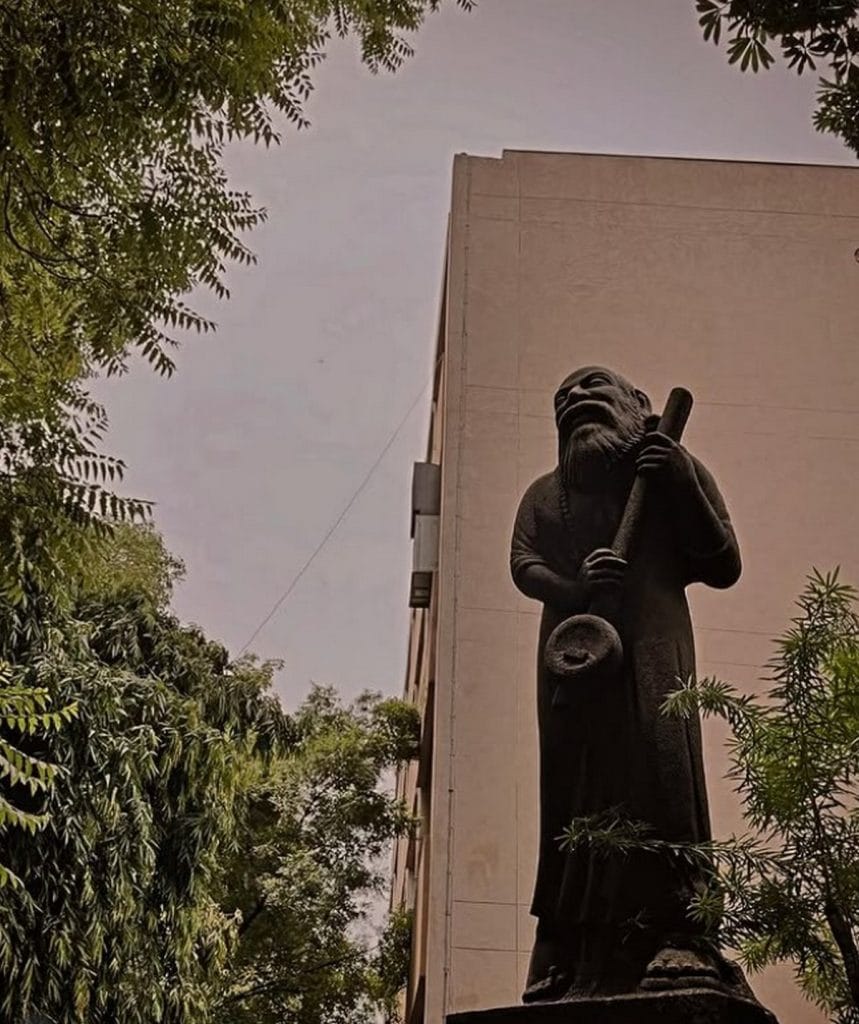
Also Read: A DDA flat baithak brings intimacy back to Indian classical music. Beyond scale, spectacle
A new rhythm
For Aarti Jain, the decision to send her daughter Noor, 12, to Gandharva Mahavidyalaya was never about ambition, visibility or the promise of a future career. Noor was introduced to Gandharva when she was five, through a children’s programme called Gunjan. Years later, after the lockdown, she auditioned and was accepted into the institution.
“We did not think about what would happen next. We put her in Odissi because she just wanted to learn it, and now it has become an obsession. She really has found her passion. When she walks around, she dances,” said Jain, a podcaster and digital editor of Nayi Dhara.
Over the years, Aarti has watched her daughter change in ways that go far beyond dance. The transformation is visible in her physical strength and flexibility, as well as her discipline and persistence.
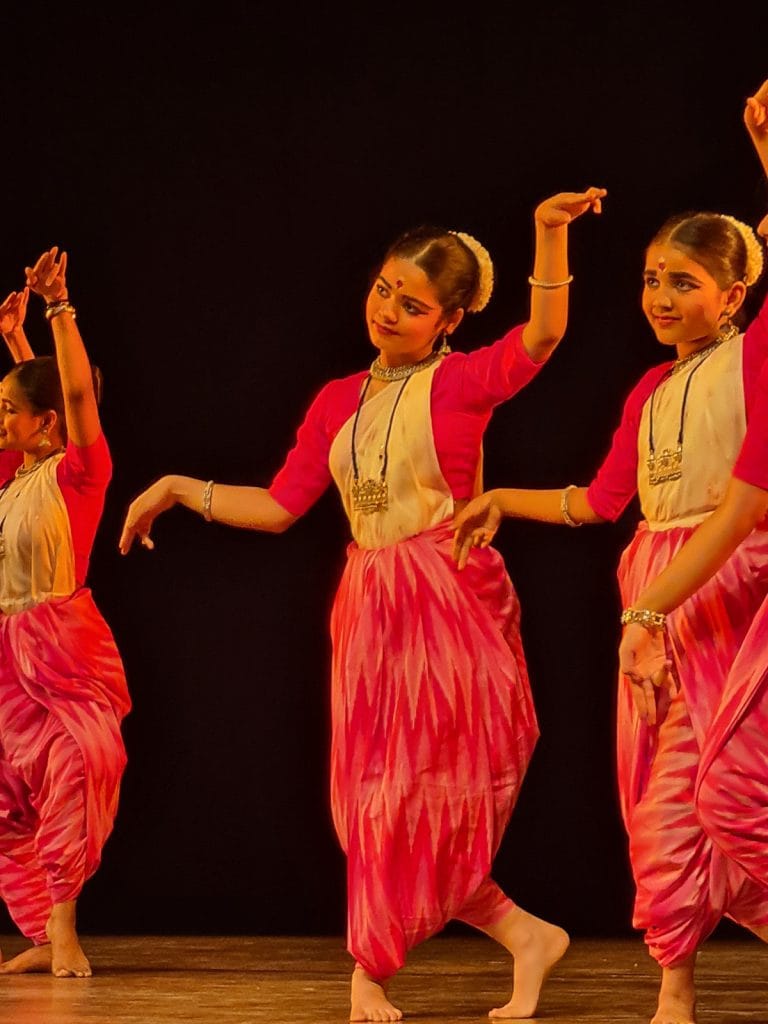
Jain recalled a moment that stayed with her. Noor, still very young at the time, once asked a question that caught her off guard.
“When I am not thinking about anything, then I am thinking of the rhythm. So what do normal people think?” Noor had asked.
Beyond performance or achievement, Gandharva offers something far more enduring– an inner anchor, a way of returning to oneself.
“No matter how difficult life gets, she will always have something to return to—the rhythm will stay with her,” said Jain.
(Edited by Asavari Singh)