



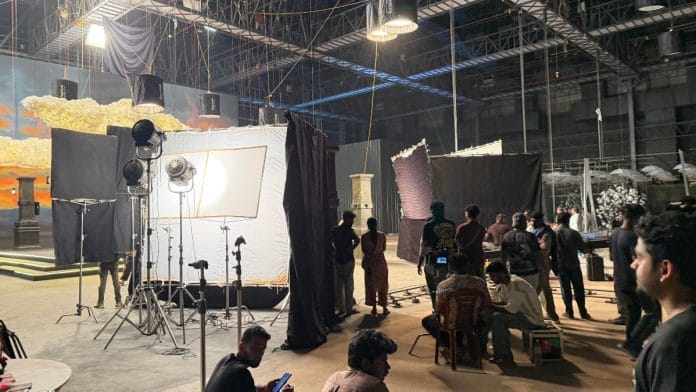

Kochi: Actor Ganapathi steps out of his vanity van onto what initially appears to be a barren stretch of land, with a single giant building. But the sprawling 45,000-square-foot facility, opened just a year ago on the outskirts of Kochi, is among the largest indoor shooting spaces to come up in Kerala’s film industry that has traditionally preferred real locations.
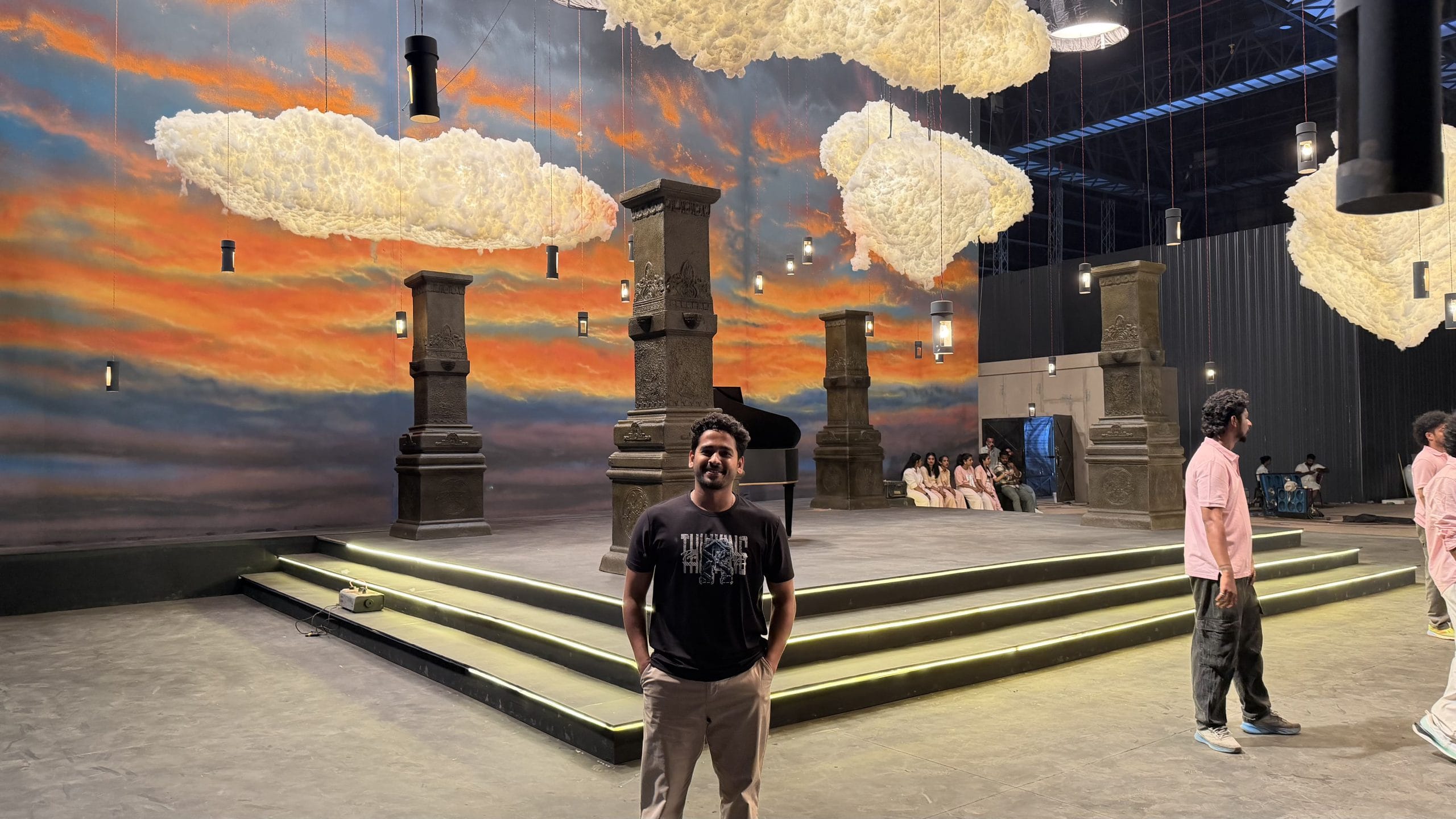
Inside, dancers rehearse their choreography while, across from a vast green screen, an elaborate set featuring a train and clouds stands ready for the cameras.
Malayalam cinema, long celebrated for turning Kerala’s streets, homes, backwaters, and plantations into film sets, is beginning to build something it once had little use for: studios.
“Studio culture is slowly becoming more popular in Malayalam cinema,” Geogin Mathew, owner of Threedots Film Studio, told ThePrint. “Earlier, most Malayalam films depended heavily on real locations. That is still one of our strengths, but now productions are also understanding the advantages of shooting inside a controlled studio environment.”
For decades, the state’s geography offered a variety of locations, from beaches and forests to old homes, towns, plantations and waterways. Kerala Tourism itself pitches the state’s landscapes as ready-made locations for films. But something has begun to change. The studio floor is quietly making a comeback not as one giant film city, but as a network of smaller, specialised production spaces.
The change is still nascent. Kochi has at best around 10 small-scale studio floors, and the bulk of Malayalam films continue to be shot outdoors. But as productions get bigger and more technically demanding, filmmakers are beginning to see value in controlled spaces for action sequences, elaborate sets, night shoots, VFX, and scenes requiring privacy or precise lighting.
This is not a Malayalam cinema trying to build Mumbai’s Film City or Hyderabad’s Ramoji Film City. Kerala’s emerging studio ecosystem is smaller, scattered, and more practical — shooting floors, equipment facilities, and production services growing around Kochi, alongside the location-driven filmmaking culture that remains one of Mollywood’s defining strengths.
Ganapathi has seen the gap first-hand. While shooting for his brother Chidambaram’s blockbuster hit Manjummel Boys in 2023, the production needed to construct a 45-foot cave but struggled to find a sufficiently large studio in Kerala.
“We had to put up a 45 feet cave but there were no studios. For subjects like this and big productions, we need some large-scale studios,” he said. “We don’t need studios for glam, which is quite common in Mumbai.”
A film studio rivalry
It has often taken two to tango in Malayalam cinema. If Mammootty and Mohanlal came to define the industry’s modern era, the earlier generation had its own formidable pair. During the formative decades of Malayalam cinema, particularly from the 1950s to the 1970s, two studios emerged as the industry’s great rivals: Udaya Studios and Merryland Studio.
In Ticket to Kerala: The Story of Malayalam Cinema, author SR Praveen writes about this “famous rivalry”, a competition that went beyond two production houses and became an important part of the story of how Malayalam cinema itself took shape.
Out of the 200 films which get produced in Malayalam cinema annually, around 150 are shot only outside. They are not dependent on floors
– actor-producer Vijay Babu
Udaya Studios was established in 1947 by producer-director Kunchacko and film distributor KV Koshy in Alappuzha. It is generally regarded as the first permanent film studio established in Kerala, with its early production being Vellinakshatram (1949).
Merryland Studio, on the other hand, was founded by P Subramaniam in 1951 at Nemom, Thiruvananthapuram. It was Kerala’s second major film studio and quickly became Udaya’s great rival. Merryland’s first production was Aathmasakhi (1952). At its peak, the five-and-a-half-acre studio employed around 80 people, becoming a major production centre. Subramaniam produced an extraordinary number of films — 69 between the mid-1950s and late 1970s.
If Udaya Studios made films based on Vadakkan Pattukal (North Malabar ballads), historical romances, and family stories, Merryland became particularly known for mythological and devotional films, including Bhakta Kuchela (1961), Sree Guruvayoorappan (1972), Swami Ayyappan (1975), and Sree Murugan (1977).
“And the rivalry was legendary,” Praveen told ThePrint. “Malayalam cinema was divided into two halves. Even actors, technicians had to pick one side.”
One particularly famous episode, which Praveen has also mentioned in his book, involved the 1961 films Bhaktha Kuchela from Merryland and Udaya’s Krishna Kuchela, both based on essentially the same story and released just nine days apart.
Merryland had beaten its rival to the theatres by a week and that head start proved decisive. While Bhaktha Kuchela became a box-office success, Krishna Kuchela, despite boasting Prem Nazir in the cast, failed to draw audiences. The episode was a perfect example of how fiercely the two studios competed.
“They reportedly agreed not to make films on the same subject after that,” Praveen said. “However, by late the 70s and early 80s, their influence started waning as a good part of film production moved to Madras.”
“This shift happened not because Udaya Studios and Merryland Studio were not equipped, but because many of the leading Malayalam stars moved to Madras. This is what I have heard,” Praveen added.
The studio infrastructure in Kerala was then largely used for television shows and advertisements. However, their move to Madras came with its fair bit of discrimination.
“In Madras studios, Tamil films would have the morning slots, then the consideration went to Telugu films. It was only at night, the studios were left for Malayalam films, depending on the popularity and reach. That’s where we started. So the likes of Prem Nazir and Sheela were forced to shoot at night,” said Ganapathi.
Hence, slowly the industry moved out of studios.
Actor-producer Vijay Babu paints the current picture.
“Out of the 200 films which get produced in Malayalam cinema annually, around 150 are shot only outside. They are not dependent on floors,” he said.
The actor admits that Malayalam filmmakers had to largely depend on Hyderabad and Chennai for studios as Kerala only has studio floors.
“We don’t have anything like a Ramoji or a Anapurna, we just have floors,” he added.
“We use it for maybe a fight sequence or a dance sequence. Otherwise, using studios for regular shoots is unheard in Malayalam. We depend on outdoor locations because it adds to the movie,” he added.
However, Mathew was quick to add that a facility like the Ramoji Film City requires a huge amount of land, investment, and continuous maintenance. And, Kerala has limitations when it comes to finding large areas of land in locations that are easily accessible.
“But I believe Kerala definitely needs a properly planned film city, not necessarily a copy of Ramoji. It should be designed specifically for the requirements of Malayalam cinema and also attract productions from other states and countries. It can combine shooting floors, permanent and temporary sets, backlots, equipment facilities, post-production and other production services in one ecosystem,” he said.
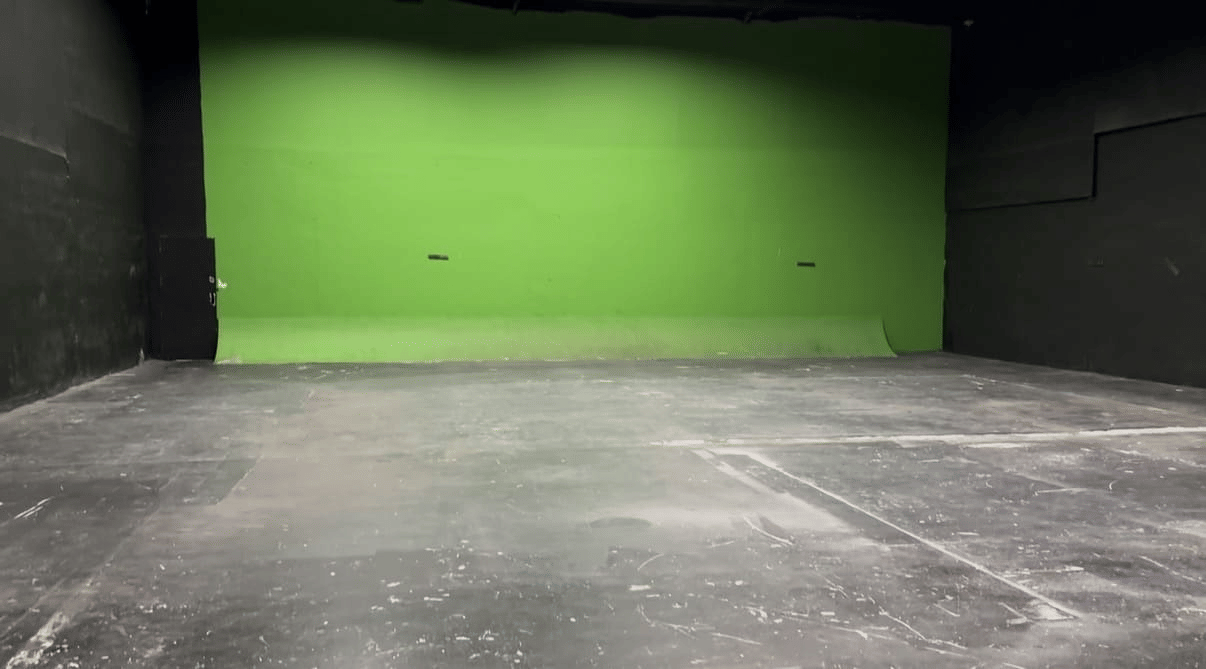
Mathew started with a small-scale studio to cater to the basic demands of the industry. However, Malayalam cinema’s appetite in terms of production grew. The success of some Malayalam films and their pan-India popularity tempted filmmakers and producers to have a bigger vision that was difficult to execute in a single-floor studio. Hence, Mathew expanded. Today, he has three different studio spaces, Pixels, White, and Black. So productions can choose depending on the scale and nature of the shoot.
“We also have makeup and costume spaces, reception, dining and other supporting facilities. The scope has significantly increased and very quickly too. Suddenly, the industry realised that the studio options were less. This made other people also invest in this business,” Mathew said.
Also read: Malayalam cinema never had it so good. Big box office hits, OTT global reach
Kochi, a film city in the making
Mathew started Threedots in 2010, and over the years, it has grown along with the industry. Today, the film studio does more than just provide a shooting floor. They offer professional cinema cameras, lenses, lighting, and other equipment.
“Running a studio is definitely not easy,” he said, highlighting that the investment doesn’t stop once the studio is built as air-conditioning, power, generator backup, electrical systems, maintenance, staff, cleaning, parking, and upgrading facilities are all continuous expenses.
“And cinema doesn’t have a fixed working pattern. Sometimes everything has to be arranged at very short notice. So you have to be flexible and available while still maintaining professional standards,” Mathew said.
And, the industry’s greatest asset turned out to be Kerala itself.
Kochi is the heart of the Malayalam film industry. It has emerged as the industry’s production and post-production nerve centre. Around 20 digital studios, sound and editing suites, and production floors have come up in the city in the last five years.
Chitranjali, established in Thiruvananthapuram in 1980, was started as a comprehensive production facility, with shooting floors, sets, outdoor units, and editing, dubbing, and sound-mixing facilities. But Malayalam cinema always had a dependence on Chennai for technical and post-production work for decades. Now, that has changed.
Kochi’s emergence as the industry’s heart in the last decade, with better connectivity and the establishment of facilities such as Lal Media, helped bring technical work back to Kerala. The result was an entire ecosystem of technicians, editors, sound designers, VFX artists, and production houses developing locally. Now the same ecosystem is beginning to extend to indoor shooting as well.
“The reason is simple. All the stars are now based in Kochi, even Mammootty lives in Kochi,” Praveen said.
Apart from Gokulam, there is VVM Studios in Kochi. Its shooting floor is more than 14,000 square feet, air-conditioned, and sound-installed. It’s also high enough for large jibs and has space for substantial sets too. It also offers chroma-key facilities and outdoor space. The facility had already identified the demand for larger controlled shooting spaces nearly a decade ago, when it opened with ambitions of developing into a Malayalam “Film City”.
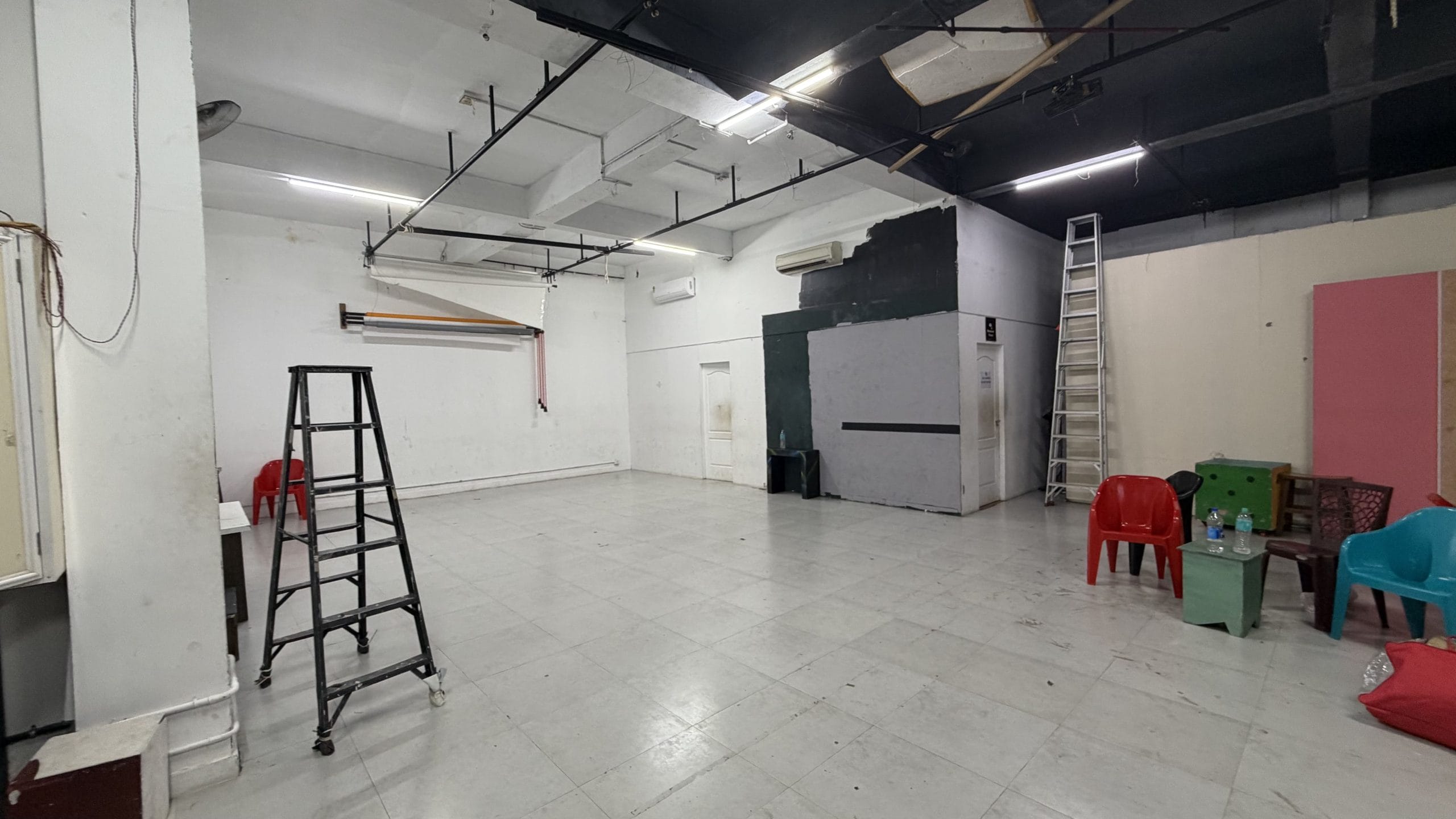
But, this new studio boom in Kerala isn’t just a bet on Malayalam cinema’s profitability. It is a bet on production itself. The old film studios were built around films. The new studios are built around everything that needs a camera. A feature film may occupy the floor for a month, an advertisement might need it for a day, a jewellery campaign or poster shoot might need it for six hours. So, the film industry is not the only customer.
“My studio is largely used for feature films, advertisements, photography, promotional shoots, look tests and other cinema-related work. For films, studios are mainly useful when the production needs complete control. Interior sets can be constructed here, and scenes that require controlled lighting, night effects, special setups or privacy can be shot comfortably,” Mathew said.
At the other end are smaller, flexible studios catering not just to fight and dance sequences of films but also advertisements, digital content, and promotional shoots. Kochi now has facilities offering rentable shooting floors with lighting, cameras, green screens, and production support.
Mathew is of the opinion that “Kerala has a lot more potential for professional studio infrastructure, and what we are seeing now is only the beginning.”
Yet the Malayalam industry is unlikely to abandon its location-driven filmmaking culture. The new studio floor is not replacing the Kerala landscape. It is just supplementing it.
Ganapathi also sees it that way. When his productions scout locations, he also looks for local people to play smaller roles rather than bringing in junior artists from agencies.
“When I travel for work to Mumbai, I have observed they want to make everything inside the studio. Now, here, when we go for recce to find the location, we also need the people,” he said. “I try to pick as many as the locals who want to act, from the area. This way we can have the flavour of the area, information about the land, and culture. It helps the film to grow and be more realistic,” he said.
(Edited by Aamaan Alam Khan)